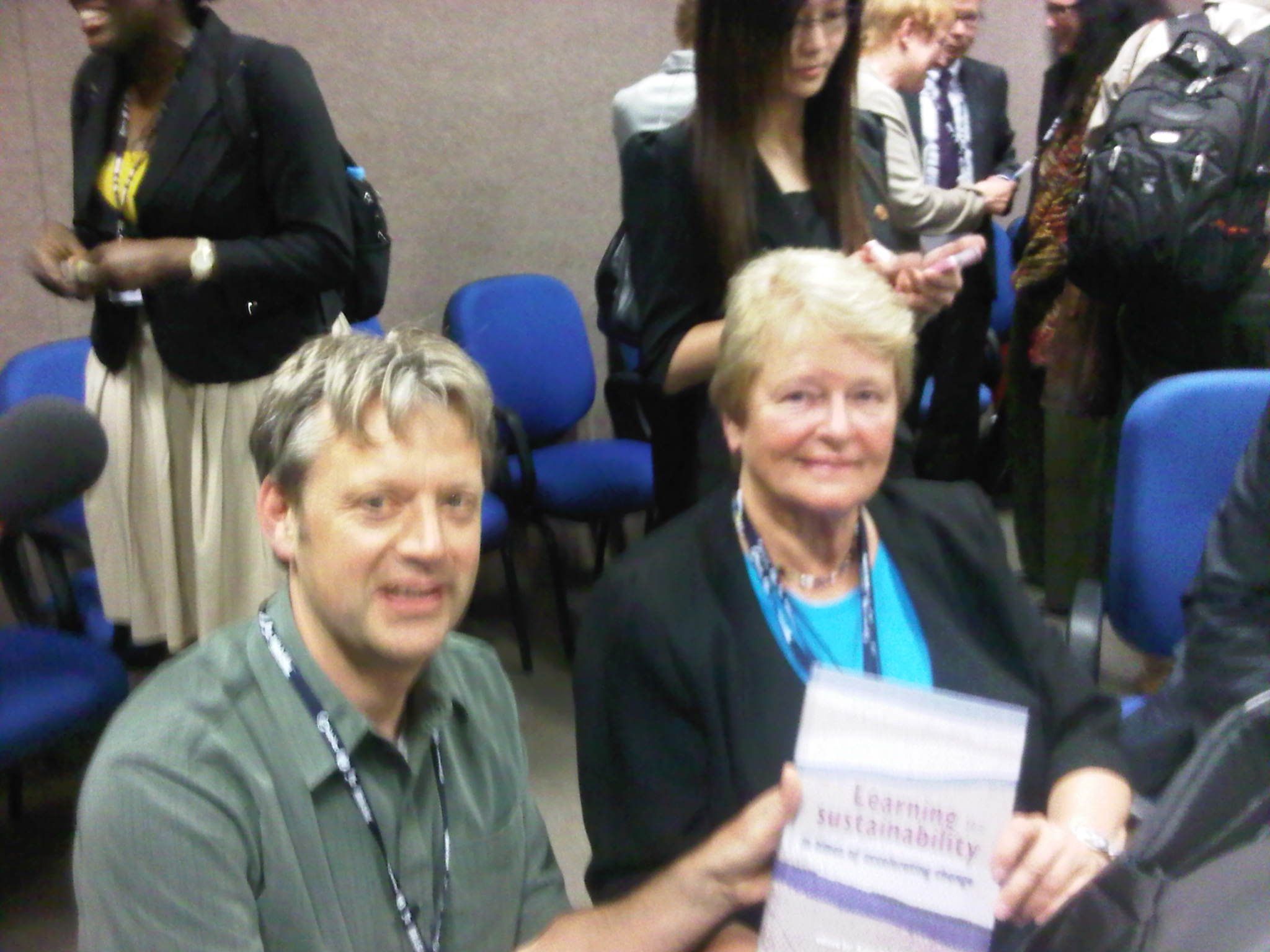
“Learning for sustainability in times of accelerating change” presented to Gro Brundtland at Rio +20

Just in time for Rio +20 we were able to finish a wonderful book project that involved many authors from four continents. The book, learning for sustainability in times of accelerating change, was presented at Rio +20 to former Norwegian Prime Minister and Chair of the infamous Brundtland Commission which made a first attempt to define “Sustainable Development” in the 1987 report “Our Common Future”.

Former Norwegian Prime Minister Gro Harlem Brundtland receives the first copy at Rio +20. Brundtland Chaired the World Commission on Environment and Development (WCED) that wrote “Our Common Future”, a report that introduced the term “sustainable development” well before the first Earth Summit was held in 1992.

On the publisher’s website the book is introduced as follows: We live in turbulent times, our world is changing at accelerating speed. Information is everywhere, but wisdom appears in short supply when trying to address key inter-related challenges of our time such as; runaway climate change, the loss of biodiversity, the depletion of natural resources, the on-going homogenization of culture, and rising inequity. Living in such times has implications for education and learning.  This book explores the possibilities of designing and facilitating learning-based change and transitions towards sustainability. In 31 chapters contributors from across the world discuss (re)emerging forms of learning that not only assist in breaking down unsustainable routines, forms of governance, production and consumption, but also can help create ones that are more sustainable. The book has been divided into three parts: re-orienting science and society, re-connecting people and planet and re-imagining education and learning. This is essential reading for educators, educational designers, change agents, researchers, students, policymakers and entrepreneurs alike, concerned about the well-being of the planet and convinced of our ability to do better. (click on the book’s cover if you wish to go to the publishers web-page about the book)

Here are some nice words from some good people about the book:

We are living in times of incertitude, complexity, and contestation, but also of connectivity, responsibility, and new opportunities. This book analyses the consequences of these times for learning in formal, non-formal, and informal education. It explores the possibilities offered by the concept of sustainability as a central category of a holistic paradigm which harmonizes human beings with Earth. To change people and to change the world are interdependent processes—this book contributes to both. (Moacir Gadotti, Director of Paulo Freire Institute, São Paulo, Brazil).

Moacir Gadotti of the Paulo Freire Institute receives a copy of the book at Rio +20 during the Earth Charter event

I hope you share my excitement about the innovations for sustainability that this book catalogues and analyses. While the ecological news is grim, the human news is not. Even in a time of accelerating change, people are showing their enormous capacities to learn, adapt, restore and protect. (From the Foreword by Juliet Schor, author of True Wealth: how and why millions of Americans are creating a time-rich, ecologically-light, small-scale high-satisfaction economy).

Instead of educational thinking and practice that tacitly assumes that the future is some kind of linear extension of the past, we need anticipative education, recognising the new conditions and discontinuities which face present generations, let alone future ones… This implies a ‘culture of critical commitment’ in educational thinking and practice – engaged enough to make a real difference to social-ecological resilience and sustainability but reflexively critical enough to learn constantly from experience and to keep options open in working for a sustainability transformation. (From the Afterword by Stephen Sterling, Professor of Sustainability Education, Centre for Sustainable Futures, Plymouth University, United Kingdom).

In the coming months this blog will be used to share some main ideas expressed by the authors that are a part of this volume. 

The table of contents can be found here (click on the hypertext)learn4

The book can be ordered at a discount when going to ‘books’ in the menu bar on top of this page.

Learning in a Changing World and Changing in a Learning World: Reflexively Fumbling towards Sustainability

Some people have asked me for a copy of a ‘think piece’ I wrote a few years ago as input for a World Congress on Environmental Education held in South Africa a few years ago. The paper – Learning in a Changing World and Changing in a Learning World: Reflexively Fumbling towards Sustainability – was published in the Southern Africa Journal of Environmental Education which is an important resources in the field of EE and one of the oldest journals in this field. Unfortunately the journal’s electronic distribution is somewhat limited still. Therefore I am making it available here as a pdf.

One key message – which is important just a few weeks for the Rio +20 meeting – is that Environmental Education and Education for Sustainable Development have a high familiy resemblance when taking the 1975 Belgrade charter on EE and the 1977 UNESCO-UNEP conference on EE held in Tiblisi as foundational to the field of EE.

The other key message is that the nature of sustainability challenges seems to be such that a routine problem-solving approach falls short. Transitions towards a more sustainable world require more than attempts to reduce the world around us into manageable and solvable problems but instead require a more systemic and reflexive way of thinking and acting with the realisation that our world is one of continuous change and ever-present uncertainty. This alternative kind of thinking suggests that we cannot think about sustainability in terms of problems that are out there to be solved or in terms of ‘inconvenient truths’ that need to be addressed, but we need to think in terms of challenges to be taken on in the full realisation that as soon as we appear to have met the challenge, things will have changed and the horizon will have shifted once again.

The paper therefore calls for reflexivity (Reflexively fumbling towards sustainability) and offers social learning as a form of learning that is particularly suitable for promoting reflexivity in diverse groups of learners.

The pdf is linked to the full citation of the paper below:

ReflexivelyFumblingSAJEE2007

The full citation for the paper is:

Wals, A.E.J. (2007). Learning in a Changing World and Changing in a Learning World: Reflexively Fumbling towards Sustainability. Southern African Journal of Environmental Education. 24 (1), 35-45.

‘Science as community — Sustainability-oriented trans-disciplinary research’

Recently I contributed to the 5th Living Knowledge Conference which was held in Bonn, Germany last May with a talk on “Science as community: Sustainability- oriented trans-disciplinary research”. The entire talk has now been uploaded on youtube as have been several of the other talks held at this energizing event. The talk can be found here. Since the slides I used are not always (clearly) visible you can find the slides I used here: WalsBonnLivingKnowledge.

The conference covered the following teams: 

A. Setting shared research agendas by CSOs and Research Institutes 

B. The role of Higher Education in creating knowledge with communities
C. Communities and students learning together
D. Evaluation and quality improvement: New lessons learned on measuring   the value of community engagement and  collaborative research
E. Developing  partnership working for research – civil society engagement
F. Policies to support collaborative research relationships

My talk related mostly to theme B which is described on the conference website as follows: Research and education are going to play a central role during the transformation process towards a knowledge society, as the realisation of the necessity for restructuring the world economy has been triggered mainly by scientific knowledge. Society should therefore decide on actions that are not a direct response to recently experienced events, but motivated by foresight and precaution. For this purpose, the debate between science, politics and society should be far more structured, more obligatory, and livelier, to ensure a constructive discourse about the best ways to achieve sustainability.

Key questions:

  • How can problem-based approaches and transdisciplinarity be encouraged?
  • How can a relation of mutual trust between researchers and CSOs be developed?
  • How can career opportunities for young researchers engaging with communities be improved?
  • How can universities and research institutions give researchers and students more opportunities to reflect about the societal consequences of their work?

http://www.youtube.com/watch?v=a3cda8qyiuI&feature=relmfu

The Black Market for Facebook “Likes,” and What It Means for Citations and Alt-Metrics

The Black Market for Facebook “Likes,” and What It Means for Citations and Alt-Metrics

This is a follow-up on my earlier posted ‘publish or perish’ post. It is inspired by Phil Davis who posted an interesting article in the ‘Scholarly Kitchen’ today which only amplifies some of the concerns expressed in my initial post. Here are the opening lines of his article which can be found in its complete form at: http://scholarlykitchen.sspnet.org/2012/05/18/the-black-market-for-facebook-likes/

“There is an online market for so many intangible goods these days that it should come as no surprise that there is a market for Facebook “Likes” — the little thumbs-up rating that accompanies so many products and services we see on a daily basis.

For $75, a marketing company will sell you 1,000 Facebook “Likes,” according to NPR’s Planet Money. Only the marketing company does not supply the “likes” but works as a broker between real individuals who are willing to sell their online preferences to your product for very small sums of money — ten cents a “like” — and those who wish to artificially inflate their prestige.

Ten cents may not seem like a lot of money, but there is a huge workforce of individuals willing to be employed to undertake low-skilled, repetitive online work for pennies a task, as evidenced by mature markets like Amazon’s Mechanical Turk. Global outsourcing has never been easier.”

And later on Phil writes: “The artificial trust market is not new and is found in environments where online trust is important, such as purchasing an antique love seat from a complete stranger on eBay, finding a reputable bed and breakfast in rural Ireland, selecting a new e-book from Amazon, or choosing an app from the Apple Store. When in doubt, our tendency is to turn to the wisdom of the crowds because we believe that these ratings are accurate evaluations generated by honest individuals and based on real experiences.

Trust — or at least consensus — works the same way in scientific publication through the accumulation of citations, only the barriers to participate in this market are much, much higher. To cast your votes, you need to publish a paper that is indexed by Thomson Reuters’ Web of Science (or alternatively, Elsevier’s Scopus). Like Facebook, Thomson Reuters does not take kindly with citation manipulation and will delist a journal when it exhibits forms of citation manipulation such as systemic self-citation or, more recently, through the formation of citation cartels.”

He then refers to my earlier post where I suggest a website like PleaseCiteMe.Com where ‘academics’ can ‘purchase’ citations to increase their h-factor… see my original post below.

“What’s your h-factor?” is a question that is increasingly asked at gatherings of scientists or during interviews for academic positions. Scientific careers depend on h-factors these days. What am I talking about?

The h-index is an index that attempts to measure both the productivity and impact of the published work of a scientist or scholar. The index is based on the set of the scientist’s most cited papers and the number of citations that they have received in other publications. The index can also be applied to the productivity and impact of a group of scientists, such as a department or university or country.

A scientist has index h if h of his/her Np papers have at least h citations each, and the other (Np − h) papers have no more than h citations each.

In other words, a scholar with an index of h has published h papers each of which has been cited in other papers at least h times. Thus, the h-index reflects both the number of publications and the number of citations per publication. (source: wikipedia)

An important determinant of the hight of one’s h-factor depends on what counts as a ‘ cite-able publication’. In the Web of Science h-factor only scientific articles published in journals which have ISI-recognition (determined by Thomson-Reuters) are considered citeable (so not articles in other journals, chapters in books, etc.). In the Scopus h-factor a larger pool of journals is included, while in google citations and in ‘publish or perish’ (www.harzing.com/pop.htm) the h-factor is likely to be higher as it also considers articles in a wide range of journals, book chapters and reports as cite-able). In my university, Wageningen University, it’s not your x-factor that matters but your h-factor. Our librarians have become information specialists that have expertise in bibliometrics and scientometrics. Such expertise is pivotal in helping our academics, science groups and, indeed, our university (76th on the Times Higher Education Index…) climb the rankings. Biblio-what?

Bibliometrics and scientometrics are two closely related approaches to measuring scientific publications and science in general, respectively.  In practice, much of the work that falls under this header involves various types of citation analysis, which looks at how scholars cite one another in publications  (source: Eric Meijers via www. microsites.oii.ox.ac.uk/tidsr/kb/48/what-bibliometrics-and-scientometrics

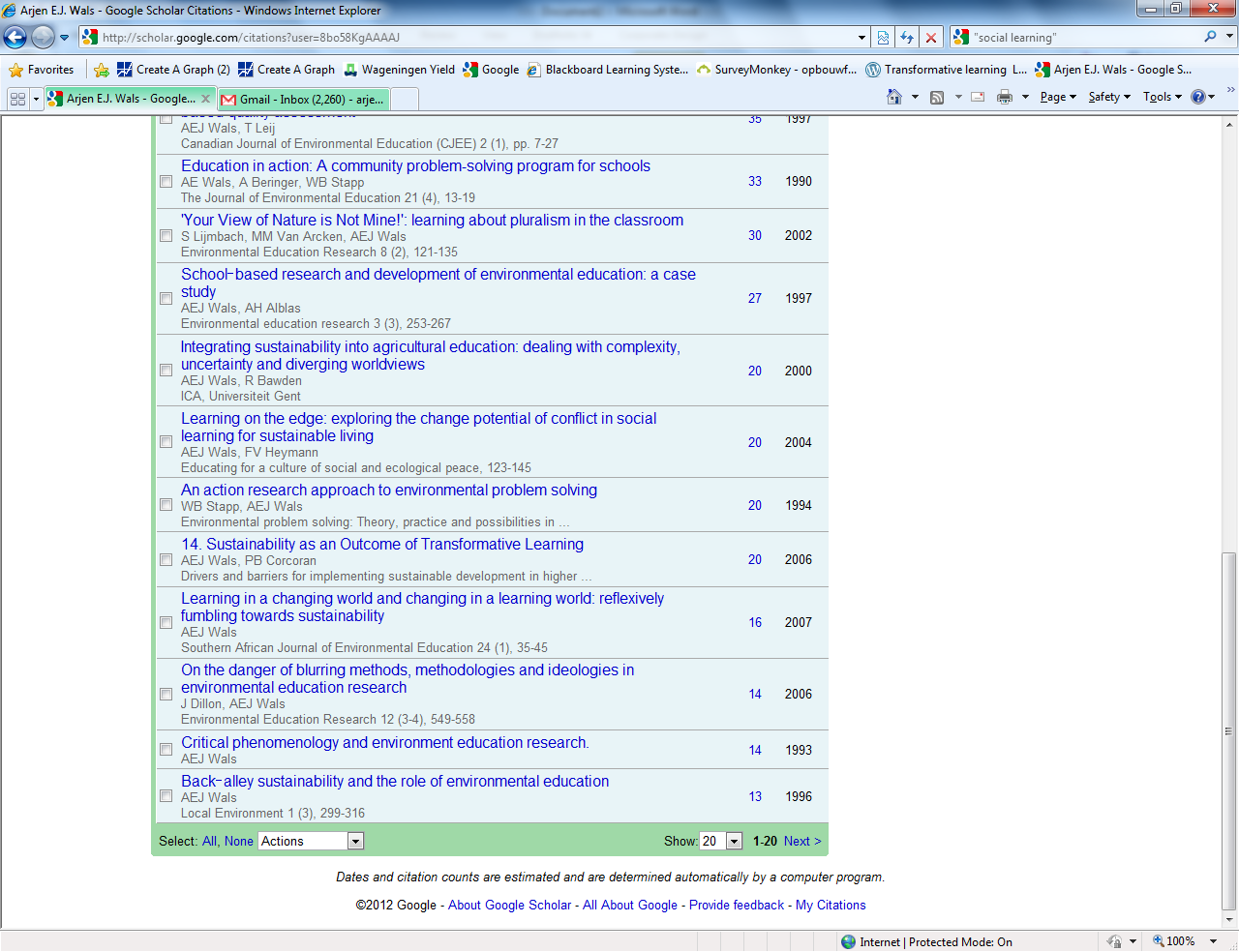
Below you will see a screenshot of my personal bibliometrics (click on the image to make bigger).

As you can see my overall h-factor is 16. Impressive? Hardly. But how can I raise it? Let me move to the crucial information google citations provides (if you want to check your own bibliometric data you need to make a profile on google citations!). You will note below that “Learning in a changing world and changing in a learning world: reflexively fumbling towards sustainability” is the crucial paper at this moment (click on the image to make bigger).

If I want to increase my h-factor to 17 then I need to get two of my papers cited 17 times or more. I could try to promote the paper that currently occupies place 16 (“reflexively fumbling”). I would then also need to find another paper that is still somewhat attractive to be cited – perhaps the 2006 paper with Justin Dillon on “The danger of blurring methods….” .

So how can I do that? There are many ways of course – I can suggest the paper to authors of papers I review for journals… or I can ask my colleagues to cite those papers… or I can make free-downloads available of those papers via my blog… but there might be a better way – one that could be the beginning of the end of this metrics-based system: hBay

Introducing: PleaseCiteMe.com

Why not develop PleaseCiteMe.com – a web-based system where people can trade citations. Scholars can post citations of their own work that they need to have cited in order to increase their h-factor. Of course there is a price to pay: the scholar will have to cite the work of the scholar on the other end who agreed to cite the work. If this is not possible then there can be a monetary value attached to a citation. Possibly citations in a Web of Science journal might cost more than citations in a Scopus journal or of a book chapter that is recognized by Google citations. Of course we need to have a few clever web-designers, economists and Mark Zuckerman-types to create all this but then by 2014 we could probably take this to Wallstreet as by then will be a huge demand in the world of science for this service.

Publish or perish…. or, perhaps, publish and perish…

So what are we to do? In the end it is not about science for impact factors or h-factors but science for impact in society. Some of us are part of a system run increasinly by bibliometric information. Playing the game may be inevitable until the game will end, when people begin to realize that people don’t read but only cite… or when people only write without having the time to read… or when strategic thinking replaces intelligent thinking, curiosity and passion for contributing something meaningful to people and planet.

Fortunately there are still academic environments driven by societal relevance, planetary responsibility and curiosity. And, indeed, there are calls for bridging science and society and other forms of reviewing quality in research (see for instance Funtowitch and Ravetz idea of the ‘ extended peer review’). More on this in another post!

Innovation saturation and growth fatigue – sustainable contraction as an alternative to sustainable development

Re-blogged – apologies as an earlier re-blog did not include the actual contents of the blog.

People across the globe are being told that they need to continuously grow and develop. There are no jobs for life, no guarantees. In order to survive you need to ‘upgrade’ your skills and be a ‘life-long learner’. To stand-still, to pause for a moment, is to fall behind. Before you know it you have become a ‘laggard’, somebody who missed the ‘wave’ or missed the boat altogether. Our mission in life has become to grow ourselves – whether you work or are unemployed – in order to help grow the company or organisation we work for, should you have work. And even if you find time for yourself in all this, you need to work on your inner-self to grow as a person – there’s a whole industry around spirituality, finding personal happiness and inner-peace and so on. Even meditation is becoming a commodity and a growth industry. Even in working on yourself you can outcompete others. When someone tells me “I meditate every day,” it sounds a bit like “I am better than you are” which ironically contradicts the entire philosophy underlying meditation.

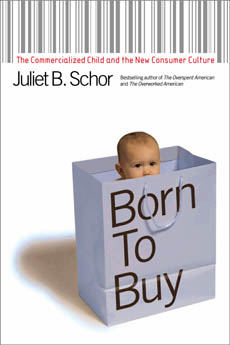
In our spare time our other pre-programmed mission is, not to meditate, unless you pay for it or at least take a professional meditation course, to be diligent consumers. We need to spend our money. And when we don’t have any, we need to spend someone else’s money. We need to play our part in both sides of the 24/7 economy, if we don’t consume, everything will come to a grinding halt, so we are told. In being told this we are addressed as consumers, not as citizens. From birth onwards we are taught to be unhappy with who we are, so that we constantly look for ways to do better, to keep up won’t cut it. Juliet Schor’s “Born to buy” and “The over-spent American” shows some of the ramifications of this kind of programming and wiring of the brain. In “True Wealth” she suggests some alternatives.

Our sustainability crisis above all is a crisis of values, coupled with a lack of imagination and creativity. It is no surprise that there are counter movements rising such as the ‘transition town movement’ and the ‘occupy movement’. It is no surprise that there are junior activists and scholars but also senior leaders around the world who have seen it all who are now, retired and, granted, in comfortable positions, declaring that we are on a wrong path and need to explore the non-material side of being, consider abandoning the idea of continuous growth and start thinking about something like “dynamic equilibrium” and even “selective de-growth” and “sustainable contraction” instead of sustainable development.

Anyway this is becoming a bit of a rant – my apologies – but how do we begin to develop new systems and lifestyles (or re-discover old ones thatin hindsight turn out to be more sustainable)? What alternative values and ways of working and living together might be helpful? Where might we find some examples? I offer you a paper that was published a few weeks ago that only touches on some ideas. But it you have other ideas – please leave a comment!

The journal ‘The Learning Organization’ has just published a special issue on  “The importance of educational learning for organizational sustainability” edited by Peter Smith. The special issue has a paper I co-authored with a very talented graduate student of Wageningen University – Lisa Schwarzin. It blends the wonderful research experience of Lisa in India, where she spent some time investigating a “sustainable community”  in Auroville, with some research we did in a Dutch “sustainable community” in the town of Culemborg, near Utrecht.

Here is an excerpt from the introduction (note: the link below to the paper leads to a site where you’ll need to purchase the paper. You may be able to get it free via your library. If not, send an email to: arjenwals@gmail.com and I’ll mail you a copy for personal use).  Full citation – Arjen E.J. Wals, Lisa Schwarzin, (2012) “Fostering organizational sustainability through dialogical interaction”, Learning Organization, The, Vol. 19 Iss: 1, pp.11 – 27):

In this contribution organizational sustainability has a normative underpinning that considers an organization or a community sustainable when it contributes to a more sustainable world as can be understood with our current knowledge and understanding of what sustainability might entail. In other words, a sustainable organization does not refer to an organization that succeeds itself in keeping on going by maintaining, for instance, profitability, but rather to one that, given what we know today, successfully balances people, prosperity and planet by searching for a dynamic equilibrium between these 3Ps. Ultimately such a balancing act may require a shift altogether from the maximisation of profit to something completely different such as the maximisation of meaning. This is a different vantage point from so-called green economist perspectives that tend to argue that there is little wrong with the principles of (neo)capitalism,  but that businesses and industries need to adopt production methods that are more efficient (World Bank, 2000). This call for increased efficiency and environmental mindfulness tends to be coupled with the belief that technological advancement can put off the exceeding of the Earth’s carrying capacity. Furthermore, green economists also tend to see the ‘tremendous potential for growth’ that the greening of production and consumption offers (green as a growth industry) (Makower and Pike, 2008).

While the green economy appears to be booming these days, there is a modest but growing undercurrent that suggests that ultimately a transition towards sustainability will not be the result so much of ‘doing things better’ by optimizing our current hegemonic systems but rather demands that we ‘do better things’. The latter requires more fundamental changes in the manner in which we  live, work and spend our leisure time, et cetera,  and on the kinds of values that we pursue. In other words, sustainable developments concern system  innovations that require an integrated redesign of products, lifestyles, processes and structures. This paradigmatic “whole system redesign” perspective (Sterling, 2004) is increasingly supported by economists (McKibben, 2007) as well and by emerging strands within economic sciences such as industrial ecology and ecological economics. In this article we are particularly occupied with the question of how to engage people, organizations and communities in these more fundamental transitions, while recognizing that there is still much to gain from doing things better.

Childhood Obesity: Scrap it and Start Over: Deconstructing a Happy Meal (2)

Today Dianna Carrey commented on this earlier blog post on the deconstructing of a Happy Meal.  The comment was based on an article she wrote on diannacarey.com titled:

Childhood Obesity: Scrap it and Start Over

In the article she gives a number of useful pointers on how to scrap it and start all over, including this one:

“Teach the truth about nutrition in school – not the industry propaganda.  Do not use materials provided by McDonalds, or other industry giants,  to teach children nonsense that a hamburger, french fries, and milk satisfy a portion of the recommended servings of meat, grain, vegetable, and dairy.”

You might consider this approach to using McDonalds to give a lesson in nutrition and health.

“Today we’re going to study the food pyramid for healthy living!” the High School Social Science teacher Mark told his class. Mark was excited about launching a healthy food project that would enable kids to analyze their diets. He was well-prepared and had collected a number of teaching resources from government agencies, NGO’s and food-companies concerned with youth obesity and increasing health costs. One of his students called out: ”Food pyramids?” Boring! Why can’t we go to McDonalds?” This idea got the whole class excited, but frustrated Mark. After all, he had thought of something new that was hands-on and seemed very relevant. Later that evening Mark asked himself how he could motivate his students and engage them in an exciting learning process that would teach them something about health issues. He got an idea.

The next day Mark said to his class: “Today we’re going to McDonalds!” The whole class cheered. They couldn’t believe it.  Their teacher was actually going to take the whole class to the McDonalds near the mall across the street. “But…, there’s one condition. We will only buy one happy meal for the whole class”.  This got the students a little less excited, but they went anyway, just to get out of school. The class bought one cheeseburger happy meal and took it back to the classroom. Mark told the class that “unfortunately we are not going to eat the happy meal, we are going to carefully study it instead”.  He wrote down two questions on the blackboard:

What is in it?

Where did it come from?

They first dissected the meal: a plain bread bun, a slice of melted cheese, a grilled beef burger, salt, mustard, ketchup, pickles, French fries, diet cola, and, finally, a nice toy.

Then Mark divided the class in six groups of four students. One group got the bread bun, another group the salted French fries, another group the diet soda, another group got the burger, another group the accessories; ketchup, mustard and pickles and the last group got the plastic bagged happy meal toy.

“You have the remaining social science hours of the week to answer the two questions. Next week I want a short presentation with your findings from each of the groups. You can use the internet, the school library, the telephone in my office, and, if you need to ask questions across the street at the restaurant you can do so with my permission.”

All the groups went to work and the more they found out, the more interested they got. The group investigating the french fries found out that fast food chains need enormous volumes of potatoes and demand a certain type of potato that guarantees a consistent quality. As a result potato farmers around the world have reduced the number of potato varieties greatly. This has led to a loss of crop-biodiversity, making the remaining crops more vulnerable to pests and leading to an increase of pesticide use. A common response to this vulnerability is use genetically modified crops that are resistant to these pests. However the students also found out that McDonalds, pressured by concerned consumers, decided not to use Monsanto’s GM new leaf potato. The group’s investigation led to an interesting discussion about the pro’s and con’s of GM-foods. Most students were not aware that they were already consuming GM-foods. In fact the group studying the diet Cola found out that the sweeteners contained GM corn.  When presenting their finding students used a provocative quote from the internet to start a classroom-wide discussion:

Giant agribusiness, chemical and restaurant companies like Cargill, Monsanto and McDonalds dominate the world’s food chain, building a global dependence on unhealthy and genetically dangerous products. These companies are racing to secure patents on every plant and living organism and their intensive advertising seeks to persuade the world’s consumers to eat more and more sweets, snacks, burgers, and soft drinks.

Meanwhile the group investigating the happy meal toy learnt some things they didn’t expect to learn either. The discovered that the toys served cross-marketing purposes. Meaning that they bring parents and their children to the restaurant but they also promote things like Disney movies.  Most of the toys were made of plastic and not used by the children for a very long time. They went back to the McDonalds and studied how and for how long kids played with the toy and asked parents to estimate for how long the toy would remain in use. They estimated that the effective play time would be less than 10 minutes. Perhaps the most interesting finding they got by using the Internet. They found many sites – mostly activist  sites – that suggested that the happy meal toys were made in China. They came upon an article that stated that “.. a happy meal toy manufacturer, China-based City Toys Limited, employed children as young as 13 to assemble the “Happy Meal” toys.” These young teenagers were reportedly forced to work 16 hour days, seven days a week, and lived in crowded, on-site dormitories for a salary of less than 3 dollars a day. As a result of these revelations made in the Summer of 2000, McDonalds quickly responded by denying to have any knowledge about these conditions. The company distanced itself from City Toys Limited and moved its operations elsewhere. Since McDonalds was, at the time, not required to disclose information about its overseas contractors, it was difficult for the students to trace where they moved the operations and what the working conditions are at the new facilities. When this group presented their results to the class the were discussions about child-labour, children’s rights, ethics of moving jobs to countries with different standards and laws, but also about the consequences of McDonalds using a ‘cut-and-run’ strategy for the children in China working for City Toys, whose income might have been crucial for their families. The teacher also raised the issue of the reliability of the information of provided on the internet. Who put the information there? With what purpose? Is it based on fact?

The other groups too, found interesting information and point of discussion related to a happy meal (varying from beef imports, hormones in meat, clear cutting of rainforest to the sweeteners used in Diet-coke). One group was interested in figuring out ‘how many miles a happy meal has travelled to get to the local McDonalds? They didn’t get a chance to figure it out but they guessed tens of thousand of miles. The whole excersise was transformative in that they view of fast food in general and of a happy meal had changed. Mark’s concern was that, even though the students learnt a lot about food-related sustainability issues (health, environment, equity, economics), gathering information, presenting information, critical thinking, debating, etc., the project may have resulted in a rather bleak picture of something they really enjoyed: eating a nice juicy cheeseburger at McDonalds. He wanted the students to think about viable alternatives. So he asked the students a third question:

Can you design a happy meal that makes everybody happy?

The same groups started thinking about alternative buns, cheese, beef, mustard, pickles, soda, and even an alternative toy. This took another week of investigations but in the end they designed a happy meal that was more organic, healthier, socially-responsible and used up less energy. They cooked the happy meal themselves in the school kitchen for all junior high students and did a taste survey which demonstrated that the meal was a least as tasty as a McDonalds happy meal.  There was one problem: the new happy meal was far more expensive that the McDonald’s version. This raised another issue in the classroom: are we willing and/or able to pay more for meals that are healthier, more equitable, have less environmental impact? Some argued that consumers should demand this kind of food so that big corporations will change their own policies and practices, making alternative foods more affordable as demand increases.

“When McDonalds, Pringles, and the other major potato buyers decided not to sell Monsanto’s GM New Leaf potato, for example, it was soon taken off the market. McDonalds and others doomed Monsanto’s potato because they wanted to satisfy consumer demands. We have that power.” “In the U.S., Whole Foods Market, Wild Oats, and Trader Joe’s announced that GMOs would be removed from their store brands. Gerber baby foods, as well as scores of health food products, have similarly changed their ingredients.”

“When a store or brand removes GM ingredients, it has a ripple effect through the industry. After a supermarket chain commits to eliminate GMO’s, they usually send out a letter to their suppliers who in turn contact their suppliers and so on. A store may have hundreds of food items, each with a list of ingredients. Hundreds or thousands of businesses can be affected, right back to the farm level.

Others pointed out that their parents make decisions about what to buy, since they are the ones going to the grocery store.

The deconstructing of a happy meal became a transformative learning experience for all those involved, including Mark, the teacher. The happy meal brought out issues, tensions, dissonance, north-south relationships, health issues, ethics, the role of corporations, consumerism, economics, crop-biodiversity, etc.  It made an ordinary activity (going to McDonalds), somewhat unordinary and raised many critical questions that demanded some serious reflection. It developed a range of competencies in the students: asking questions, finding reliable information using a variety of sources, analysing data, presenting information, critical thinking, etc., etc.

Mark’s point of it all was not that students would reject going to McDonalds but that they would become aware of range of food-related issues: ethical ones with respect to using GMO-food or not, or with respect to children making toys for children, ecological ones, for instance, with respect to the potential loss of agro-biodiversity, environmental ones, for instance, with respects to the use of batteries in toys, the use of plastics or the energy used in food milese travelled or in producing meat, economic ones with respect of the economies of scale of mass-production and consumption but also with respect to the shortening of food-chains and going local, when factoring ” hidden” environmental costs. Obviously, they can still choose, having considered all aspects and given their own situation, socially and economically and so on, to go to McDonalds but in all likelihood, having done an activity like this will have transformed the way they look at (fast) food. How this transformed view will affect who they are, who they’d like to become and how they will behave now or in the future, is up to them.

Post-script:

Deconstructing a Happy Meal is a composite example based on a number of stories and ideas from critical teachers engaged with transformative learning and problem-posing-based teaching. The Happy Meal represents many forms of fast food and just as easily could have been built around other meals. The activity is meant to be educational and not prescriptive in that it tells people what to think and how to behave. It should be recognized that McDonalds, like many multi-nationals, are aware of their ecological footprints and have a range of sustainability and environmental-oriented policies and guidelines. Whether these efforts are genuine driven by a deep concern about the well-being of people and planet or driven by purely economic interests is in the eyes of the beholder.

The Happy Meal case has been presented at several international meetings on Education for Sustainable Development. For references to this example and type of learning please go to:

Wals, A.E.J. (2010) Mirroring, Gestaltswitching and Transformative Social Learning: stepping stones for developing sustainability competence. International Journal of Sustainability in Higher Education, (11(4), 380-390.

Sriskandarajah, N, Tidball, K, Wals, A.E.J., Blackmore, C. and  Bawden, R. (2010) Resilience in learning systems: case studies in university education. Environmental Education Research, 16(5/6), 559-573.

Farewell to Place? The impact of invasive information and communication technologies on our relationship with the Planet

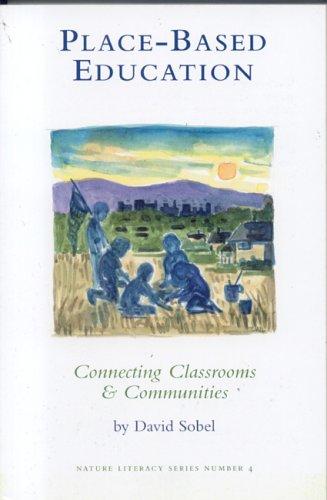
In recent years ‘place-based education’ has been receiving increased attention from educators and policy-makers as a means to help people, young and old, re-connect with the physical, material and socio-ecological world they, oftentimes unknowingly and unconsciously, inhabit. There is a whole body of scholarly work emerging that suggests that (re)discovering and (re)connecting with place can be restorative (therapeutic, healing, etc.), generative (leading to new ways of seeing, sensing, experiencing) and empowering by enabling people to shape and care for a place. Apparently there are a number of psychological, sociological and pedagogical benefits associated with place-based education (see the work of David Sobel and Greg Smith for examples).

What I am interested in, however, is not so much to echo these benefits but to mirror them against a hegemonic trend that affects the entire globe: the exponential growth of highly invasive and, indeed, addictive hyper media and associated information and communication technologies.

Whereas place-based education, somewhere in the margins of education, seeks to reconnect people with the physical space around them, this counter hegemonic trend seems to do the exact opposite, only in much more forceful way. Educators in general and environmental educators in particular need to ask themselves what the implications are of the age of wireless, hyper-media and ICT for teaching and learning, but also for the way people ‘relate’ to each other but also to nature and the planet as a whole. Strangely, even though educators themselves are also inundated by these new ICTs both in their personal and professional lives, this question has hardly been raised so far. I’d like to propose a Special Issue for a journal like Environmental Education Research to bring together some of the early and emerging work that is being done in this area. Some contributions may consider the impact of ICTs and hypermedia on people’s sense of place and the implications for teaching and learning. Others perhaps will sketch possible educational responses that may critically take advantage of elements of the ICT revolution which can help re-store the current disconnect between people and place. Again others may wish to explore yet a different angle to this timely topic in education and learning.

Anyone with ideas for papers that might fit in such a special issue… feel free to respond. Perhaps we can pull something together.

Transitioning towards a better world: fostering organizational sustainability through dialogic interaction

The journal ‘The Learning Organization’ has just published a special issue on  “The importance of educational learning for organizational sustainability” edited by Peter Smith. The special issue has a paper I co-authored with a very talented graduate student of Wageningen University – Lisa Schwarzin. It blends the wonderful research experience of Lisa in India, where she spent some time investigating a “sustainable community”  in Auroville, with some research we did in a Dutch “sustainable community” in the town of Culemborg, near Utrecht.

Here is an excerpt from the introduction (citation – Arjen E.J. Wals, Lisa Schwarzin, (2012) “Fostering organizational sustainability through dialogical interaction”, Learning Organization, The, Vol. 19 Iss: 1, pp.11 – 27):

In this contribution organizational sustainability has a normative underpinning that considers an organization or a community sustainable when it contributes to a more sustainable world as can be understood with our current knowledge and understanding of what sustainability might entail. In other words, a sustainable organization does not refer to an organization that succeeds itself in keeping on going by maintaining, for instance, profitability, but rather to one that, given what we know today, successfully balances people, prosperity and planet by searching for a dynamic equilibrium between these 3Ps. Ultimately such a balancing act may require a shift altogether from the maximisation of profit to something completely different such as the maximisation of meaning. This is a different vantage point from so-called green economist perspectives that tend to argue that there is little wrong with the principles of (neo)capitalism,  but that businesses and industries need to adopt production methods that are more efficient (World Bank, 2000). This call for increased efficiency and environmental mindfulness tends to be coupled with the belief that technological advancement can put off the exceeding of the Earth’s carrying capacity. Furthermore, green economists also tend to see the ‘tremendous potential for growth’ that the greening of production and consumption offers (green as a growth industry) (Makower and Pike, 2008).

While the green economy appears to be booming these days, there is a modest but growing undercurrent that suggests that ultimately a transition towards sustainability will not be the result so much of ‘doing things better’ by optimizing our current hegemonic systems but rather demands that we ‘do better things’. The latter requires more fundamental changes in the manner in which we  live, work and spend our leisure time, et cetera,  and on the kinds of values that we pursue. In other words, sustainable developments concern system  innovations that require an integrated redesign of products, lifestyles, processes and structures. This paradigmatic “whole system redesign” perspective (Sterling, 2004) is increasingly supported by economists (McKibben, 2007) as well and by emerging strands within economic sciences such as industrial ecology and ecological economics. In this article we are particularly occupied with the question of how to engage people, organizations and communities in these more fundamental transitions, while recognizing that there is still much to gain from doing things better.

 Below is the abstract as can be found in the journal:

Purpose – This paper aims to introduce and investigate dialogic interaction as a key element of achieving a transition towards sustainability in people, organizations and society as a whole. Furthermore “sustainability competence” as a potential outcome of such interaction is to be introduced, referring to the capacities and qualities that people, and the organizations and communities of which they are part, need in order to address (un)sustainability.

Design/methodology/approach – The argument of the paper is grounded conceptually in emergent thinking among scholars preoccupied with learning-based change and sustainability in organizations and communities. Empirically, the paper uses two case studies carried out by the authors to ground the argument in real efforts by communities to create a (more) sustainable way of living.

Findings – The main results include: a post-normal understanding of sustainability highlighting uncertainty, complexity, normativity, controversy and indeterminacy; a framework facilitating dialogic interaction; and a number of key competences that appear conducive to both dialogic interaction and a transition to sustainability.

Research limitations/implications – Although the two case studies are quite extensive and rigorous, the conceptual nature of the paper and the word limitation did not allow for a more detailed discussion of the methodology used in the case studies and the contexts in which the two case studies are located.

Originality/value – The paper adopts a post-normal perspective of organizational transitions towards sustainability and focuses on dialogue and dialogic interaction as a key learning-based mechanism for facilitating such a transition. Furthermore the framework for dialogic interaction allows for a more holistic approach toward such a transition and the development of competences needed to accelerate its realization.

When citizens are re-framed as consumers and when developing countries are re-framed as emerging markets

Recently I was asked by some key-players in the Dutch Development Scene to give a keynote presentation “on Education and Sustainability that should trigger creative thinking and shed a light on sustainability”. The seminar “Toolkit for Sustainable Impact” took place on 6 December 2011 in the Dutch city of Utrecht and was organised by PIE and Nuffic for NPT&NICHE projectleaders (you can find more info. as well as a pdf of the slides I used here)

I was asked to do so with my role of Global Report Coordinator for the UN Decade of Education for Sustainable Development as a backdrop. But also as someone having had numerous experiences in Africa and Asia working on projects seeking to make higher education more relevant and more responsive to the needs of communities and the demands of the labour market in a rapdily changing world.

Initially I challenged the sneaky conversion of Sustainable Development into Sustainability and questioned the ‘inflation of meaning’ of both concepts as people and groups from different ideological backgrounds seem to embrace the terms (Shell speaks of sustainable economic growth, for instance, whereas Greenpeace associates sustainability with quite something else). I reminded the audience of George Orwell’s cautionary tale in told in his book “1984” when refering to Big Brother’s language games used to manipulate and control people. He used “newspeak” and “double-think” to remove ambiguity and to unify opposites (compare for instance: clean nuclear energy, sustainable mining, etc.) and the “thought police” to prescribe how people should think and should life their lives (compare: to play their role as consumers and to continuously grow personally as lifelong learners in order to be mobile and flexible in a dynamic labour market).

Does this make sustainability and sustainable development useless? Possibly, when we don’t follow the use of the terms critically and when we fail to give it meaning in real contexts that matter to people and the communities of which they are part. The strength of these concepts, at least from an education perspective, lies in the fact that they require meaning-making and contextualization. What sustainability means in Burundi might be different from what sustainability means in Wageningen, The Netherlands where I am writing this. What we might call sustainable today, might turn out to be not so sustainable tomorrow. What is truly sustainable we simply cannot know as we don’t live long enough to determine that what we consider to be sustainable indeed turned out to be sustainable for ever..

So “sustainability” is a dynamic concept both in space and time that is marinated in uncertainty.. What we do know – with a whole lot more certainty – is that the way we live on this Planet can not be sustained for long (although the Planet will go on, certainly without us human beings being around anymore). And, indeed, we also know, or at least I think most of us will agree, that we have a moral obligation to ourselves, to other species and future generations to continuously be searching for ways to tred more lightly on the Earth and to develop lifestyles and values that are more sustainable than the ones we tend to currently support and promote.

NUFFIC, one of the Dutch development organizations organizing the event today, mostly uses “sustainability” as a term to indicate whether a project they support has impact – or, put differently, keeps on going when the external donor money is gone. This is a legitimate question but one that risks ignoring a more fundamental one which is: does the project contribute to sustainability that goes beyond the continuity of economic globalization to include the ecological, the environmental, the ethical, social-cultural – one that actually begins to question some of the underlying hegemonic principles of economic globalization and its inseperable cousin: consumerism. Perhaps another question that needs to be asked is: “what is it we are sustaining with our actions or with what – willingly or unwillingly – we are choosing not to do?”

In my talk I refered to the wonderfull dissertation of Paul Kibwika from Uganda: “Learning to make Change: Innovation Competence for Re-creating the African University for the 21st century”

Paul and I wrote a paper on this for CTA that I like to share here in this occasion.

Extreme university make-over – descending the Ivory Tower and the re-making  of higher education in the era of (un)sustainability – 2015 & Beyond

Dr. Paul Kibwika, Makere University, Uganda & Prof. Arjen E.J. Wals, Wageningen University & Research Centre, The Netherlands

We live in an essentially ‘systemic world’ characterised by multiple causation, interactions and complex feedback loops, yet the dominant educational structures are based on fragmentation rather than connection, relationship and synergy (Sterling, 2000). Universities, confronted with 21st century challenges must therefore not only rediscover, build on and share indigenous ways of knowing and acting, but generate and or adapt new concepts and practices that will contribute to creating a world that is more sustainable. Academics who still believe that universities are Ivory Towers must be willing to make a paradigm shift so that universities become an integral part of the communities that support them. Hence, a challenge to those involved in shaping higher education in agriculture and life sciences is to revisit institutional practices, examine the disciplines and provide more synergy and become more accountable for economic and human development.

Learning and Competence

Education is a means for people to become self-actualized members of society, seeking meaning, contributing to developing their own potential and creating solutions together. A sustainable world without participation and democracy is improbable, and perhaps even impossible (Wals & Jickling, 2002). It cannot be created without the full and democratic involvement of all members of society. Universities therefore must engage their students not so much in learning for knowing, but rather in learning for doing and, indeed, learning for being (Table 1). Learning for being suggests learning that is not of a transmissive nature (i.e. teaching as reproduction) but rather of a transformative nature (i.e. learning as change).  The latter requires permeability between disciplines, university and the wider community, and between cultures, along with the competence to integrate, connect, confront and reconcile multiple ways of looking at the world.

  Scientia Techne Praxis
Focus Learning for knowing Learning for doing Learning for being
Knowledge produced Propositional Practical Experiential
Stucture Subject disciplines Crafts/Skills Issues/Competences
Teacher’s role Expert Master Facilitator
Teaching strategies Lectures on theory Practical instructionDemonstrations Real-world Projects
Research style Basic (Experimental) Applied (Developmental) Action (Participative)
Research goals Abstract-universal knowledge Workplace Solutions Contextual knowledge / Action for change
Basic philosophy Positivism Utilitarianism Constructivism
Focus of reflection What do I now know? What can I now do? Who am I becoming?

Table 1. Some distinctions between different traditions of knowledge and knowing (Adapted from: Bawden and Macadam, 1991, p. 4)

The struggle to find integrated solutions through participatory, multi-disciplinary, innovation systems seems important, but many ACP universities have not yet been very effective in developing the corresponding competences of their staff or students. In addition to their academic functions, faculty and students must develop a different form of learning, if  the university is to take on more societal and developmental functions, or more specifically, is to influence change in a complex environment. Most critical is the issue of the university’s  competence to provide training, research and outreach services that appropriately address real-life problems.

The university must skilfully identify competence gaps of professionals, farmers, policymakers and other agricultural stakeholders, through collaborative learning for change.  It is such engagement with stakeholders that results in innovations that are likely to liberate farmers and nations from the poverty trap and contribute to socio-economic development that does not compromise the future.  It calls for the development of innovation cross-cutting competences in which lecturers become facilitators of learning for development for influencing change in society. Linking and strengthening of competences therefore occur at various levels: university, development service providers and the grass-roots community. Figure 1 provides the key elements, functions and relationships that, when holistically considered, make up innovation competence.

Figure 1: Constructing innovation competence through higher agriculture education (source: Kibwika, 2006) (please go to original paper – see link at the end!)

Unlike academics, who communicate primarily with peers, practitioners find themselves at the interface of researchers, donors, governments, multi-lateral agencies, activists, NGOs, and poor communities, and thus need to be able to operate in multiple communicative modalities (Woolcock, 2006). This means that universities can no longer train students who can only communicate with peers.  Communication skills integrate professionals in society and allow them effectively to influence change as members of that social system through participating in rather than studying that system. Lecturers and students must become engaged in co-learning to co-create knowledge through greater interaction between the university and the community.

Emerging strands of research

The scientists of the future must be able to break out of routines that reinforce the status quo and explore creative and unorthodox ways of solving complex problems. Through such engagement creativity will be unleashed, as scientists begin to rise to and relish the challenge of solving neglected and complex problems drawn to their attention through community engagement.  This will imply much risk taking as criteria for academic advancement may change from being based solely on peer refereed journals. ‘Research as mining’ may no longer be the prevailing mode of research but will be complemented with ‘research as learning’ and, even more radical perhaps, ‘research as activism’ (Table 2)

  Research as mining Research as learning Research as activism
Modus of understanding Nature of inquire Empirical analyticalReductionistObjectiveUniversal Hermeneutic-interpretiveHolistic-descriptive(inter)SubjectiveTrans-contextual Socially-criticalContextual-transformativeDynamic-intersubjective
Roles of researcher Good testerPassive-detachedNeutral-Expert Good listenerActive-detached or passive engagedExplicitly biasedLearner Good allyActive-committedExplicitly partisanCo-learner
Role of ‘participant’ Passive source of data Active informant Participant – learner
Noble purpose Improved efficiency, models, predictability, ‘truth’ Improved understandingPre-hypothesizingMirroring Transformation, systemic change
‘Real’ purpose Status, career development, publications Status, career development, publications Genuine transformation, systemic change?
Language used Exclusive, scientific – but simple and clear towards ‘ target groups’ Exclusive, scientific Contextual – co-created

Table 2 Conventional and emerging strands of research (adapted from Dillon & Wals, 2006).

Entrepreneurship

When people find solutions that work for them they take charge of their own development and become entrepreneurial thinkers and doers: i.e. people who can cope with and take advantage of uncertainty and complexity. Universities will more and more be required to develop entrepreneurs rather than bureaucrats.  But entrepreneurship is not acquired by proclaiming it, or by teaching theory but by practical engagement.  To develop entrepreneurs, university lecturers must also become entrepreneurs, in the sense that they must also find workable solutions to problems in diverse contexts.  Action research and process consultancy provide mechanisms for enabling lecturers to become educational or research entrepreneurs. In this type of engagement, the focus shifts from getting tasks done to solving a problem or generating new products, which involves a lot of creativity and adaptation.

Didactical implications

Integrating aspects of economic growth, social stability and sustainability cannot be realised without thinking very critically about the re-structuring didactical arrangements.  These new arrangements pre-suppose a problem orientation and experiential and lifelong learning that are likely to trigger the following shifts in educational orientation (Wals, 2000):

  • from consumptive learning to discovery learning in open-source environments
  • from teacher-centred to learner-centred arrangements
  • from individual learning to collaborative learning
  • from theory dominated learning to praxis-oriented learning
  • from sheer knowledge accumulation to problematic issue orientation
  • from content-oriented learning to self-regulative learning
  • from institutional staff-based learning to learning with and from outsiders
  • from low level cognitive learning to higher level cognitive learning

Conclusion

In the future, ACP universities that adopt this new way of thinking and doing business will be given greater recognition as leaders in society where cutting edge new knowledge is generated that can break the cycle of un-sustainable development and consumption patterns tied to un-sustainable economic principles. They will constantly question and reform deeply entrenched unsustainable routines, structures and practices by taking advantage of their privileged position in society, utilising some of the brightest minds the world has to offer, perhaps most importantly, by engaging in a collaborative endeavour in continuously seeking ways to preserve the planet. Finally, the university and the university community as a place where people live and work, where energy is used, food is consumed, waste is created, housing is provided, etc., will have to have to mimic the kind of sustainable practices it seeks to promote in its research and education in the way it runs its own business. The university of the future lives and learns by example. Failing to do so will create a gap between rhetoric and reality and undermine the university’s credibility.

Note: Paper written for 22-02-08 accesible as a pdf via: http://knowledge.cta.int/en/content/view/full/6327

Also of interest this site at Wageningen International/CDI

References

Sterling, S. (2001). Sustainable Education: Re-visioning and Change. Schumacher Briefing No. 6. Green Books Ltd.

Wals, A.E.J. & Jickling, B. (2002). “Sustainability” in Higher Education from doublethink and newspeak to critical thinking and meaningful learning. Higher Education Policy, vol. 15, 121-131.

Bawden, R. and R. Macadam (1991). Action Researching Systems: Extension

Reconstructed. Paper prepared for the workshop ‘Agricultural Knowledge Systems

and the Role of Extension’ held at theUniversityofHohenheim,Stuttgart,Germany.

21-25 May, 1991.

Dillon, J. and Wals, A.E.J. (2006) On the dangers of blurring methods, methodologies and ideologies in environmental education research, Environmental Education Research, 12(3/4), pp. 549 – 558.

Wals, A.E.J. & Bawden, R. (2000). Integrating sustainability into agricultural education: dealing with complexity, uncertainty and diverging worldviews. Gent:ICA, 48 p.

Woolcock, M. (2006) “Higher Education, PolicySchools, and Development Studies: What Should Masters Degree Students be Taught?”, Journal of International Development, Volume 19, Issue 1 , Pages 55 – 73.

Kibwika, P. (2006) Learning to make change: Developing innovation competence for recreating the African university of the 21st century. Published PhD-Thesis. Wageningen: Wageningen Academic Publishers.

Plastic heroes, plant bottles and other sustainability myths – message-in-a-bottle revisited

Nice to be invited last night (November 24th, 2011) by the environmental science student club of Wageningen University to talk about “plastics”. (For a description of the symposium + a link to the slides used go to:http://www.kennisnetwerkmilieu.nl/#16.html

The talk gave me an opportunity to re-connect with my “message-in-a-bottle” inaugural address of two years ago where I started out referring back to the 1960-ties classic “The Graduate” (“One word Ben, just one word: PLASTICS – there’s a great future in plastics you know. Think about it!”). Indeed the world of today is unimaginable without plastics. In the words of the American ChemicalCouncil: “In today’s world, life without plastics is incomprehensible. Every day, plastics contribute to our health, safety and peace of mind (Source: American Chemistry Council 2010. www.americanchemistry.com/s_plastics/doc.asp?CID=1102&DID=4665)

Last night I added something to this by questioning some of the responses by companies,whose profits depend on the use of plastics, to more and more people expressing a deep concern about the rapid growth of plastics, including microscopic nano plastics, in the environment. A giant bottling company now introduces “plant bottles” with “up to 30% organic plant material” (what does that mean any way: up to 30%? 0.5%?), waste management companies now claim to have hyper-modern “clean” or “green” incinerators that generate energy out of garbage (which really is not garbage anymore but fuel, they are telling us… which, they suggest, is quite handy in times where we will be running out of oil and natural gas…).

On the Dutch news a couple of weeks ago it was stated that the clean Dutch incinerators were not running at full speed because the Dutch did not produce enough garbage anymore. Fortunately the waste management companies (which now refer to themselves as “energy companies” were able to sign a deal with the city of Napoli in Italy that would have garbage from the Napoli region travel by ship to The Netherlands where it would help feed the incinerators and provide Dutch citizens with energy… a ” win-win” situation… Why bother with separating waste or, worse even, reducing waste.

No wonder people are confused about sustainability matters: garbage = fuel, waste = good, plastic bottles are now plant bottles… It’s a bit like George Orwell’s 1984 with Big Brother (= Big Business) playing a language game (War = Peace) and confusing citizens with “double speak”. So part of my talk last night was about dealing with sustainability confusion, green washing and finding learning-based pathways towards critical thinking and a genuine transition towards sustainability that breaks with some of these inherently unsustainable systems and practices. Anyway – you may be interested in the original message-in-a-bottle talk and the groundswell international summary of it below.

Message in a bottle: learning our way out of unsustainability

“Message in a Bottle: learning our way out of unsustainability”
“Message in a bottle: learning our way out of unsustainability” is the title of the provocative inaugural lecture given by Professor Arjen E. J. Wals upon taking up the posts of Professor of Social Learning and Sustainable Development, and UNESCO Chair at Wageningen University on May 27, 2010. Professor Wals describes the fundamental shift in education required to save the planet.

The lecture’s focus on sustainability seems particularly relevant in mid-December, as Americans and much of the rest of the world engage in their most rampant consumption, and perhaps begin to reflect on what the next year will bring and what they can do to better themselves, their families and their communities. Professor Wals’ lecture carries a warning and shows us a way forward. It is also worth the read for Groundswell supporters because some of the learning concepts he discusses are implicit in our people-centered approach.

I encourage you to read the whole lecture, but recognize that many people may not have the time to do so during the holiday season, so below I have included a number of excerpts in an effort to give you a sense of the greater lecture.

Is there a way out? Can the tide be turned? When the market fails and there are no invisible hands reaching out, where or who do we turn to? When over 600 billion dollar is spent annually on advertising, and over 100 million trees are cut annually for junk mail pushing products in the USA alone? When more than two million PET bottles are ‘consumed’ every five minutes everyday in the United States alone? When the drive to consume appears infinitely greater than the drive to sustain? When individualism and materialism rapidly become the global norm? When it becomes increasingly difficult to imagine a world without continuous economic growth?”

“As pointed out already, environmental educators and environmental psychologists have long known that raising awareness about the seriousness of the state of the Planet is no assurance for a change in behavior or a change in values. In fact it has been shown that just raising knowledge and awareness without providing energizing visions and concrete practices that show that there are more sustainable alternatives, will lead to feelings of apathy and powerlessness. The nature of the sustainability crisis – characterized among other things by high levels of complexity and uncertainty – suggests that people will need to develop capacities and qualities that will allow them to contribute to alternative behaviors, lifestyles and systems both individually and collectively….

In addition to much needed suitable forms of governance, legislation and regulation, we need to turn to alternative forms of education and learning that can help develop such the capacities and qualities individual, groups and communities need to meet the challenge of sustainability. There is a whole range of forms of learning emerging that all have promise in doing so:  transdisciplinary learning, transformative learning, anticipatory learning, collaborative learning and, indeed, social learning are just a few of those. These forms of learning show a high family resemblance in that they:

  • consider learning as more than merely knowledge-based,
  • maintain that the quality of interaction with others and of the environment in which learning takes place as crucial,
  • focus on existentially relevant or ‘real’ issues essential for engaging learners,
  • view learning as inevitably transdisciplinary and even ‘transperspectival’ in that it cannot be captured by a single discipline or by any single perspective,
  • regard indeterminacy a central feature of the learning process in that it is not and cannot be known exactly what will be learnt ahead of time and that learning goals are likely to shift as learning progresses,
  • consider such learning as cross-boundary in nature in that it cannot be confined to the dominant structures and spaces that have shaped education for centuries.

The above characteristics make clear that the search for sustainability cannot be limited to classrooms, the corporate boardroom, a local environmental education center, a regional government authority, etc. Instead, learning in the context of sustainability requires ‘hybridity’ and synergy between multiple actors in society and the blurring of formal, non-formal and informal education. Opportunities for this type of learning expand with an increased permeability between units, disciplines, generations, cultures, institutions, sectors and so on.

Currently we are witnessing an avalanche of interactive methods and new forms of knowledge co-creation involving a wide range of societal actors with different interests, perspectives and values but with similar challenges. Although these differences are viewed as problematic by some, they are seen as crucial by others.

Educational psychologists for long have argued and shown that learning requires some form of (internal) conflict or dissonance. Exposure to alternative ways of seeing, framing and interpreting, can be a powerful way of creating such dissonance. However, for some this may lead to too much dissonance and a defensive response which leads to tighter hold on his or her prior way of seeing things, while for others it might lead to a re-considering of ones views and the adoption or co-creation of a new one. Dissonance can, when introduced carefully, lead to, to borrow a key concept from Marten Scheffer, a tipping point in ones thinking. Such tipping points appear necessary in order to generate new thinking that can unfreeze minds and break with existing routines and systems….”

Find the complete pdf of the talk at:

www.groundswellinternational.org/sustainable-development/natural-resources-management/message-in-a-bottle-learning-our-way-out-of-unsustainability/


Deconstructing a Happy Meal – making everyday life routine practices a source of transformative learning – indeed: food for thought!

“Today we’re going to study the food pyramid for healthy living!” the High School Social Science teacher Mark told his class. Mark was excited about launching a healthy food project that would enable kids to analyze their diets. He was well-prepared and had collected a number of teaching resources from government agencies, NGO’s and food-companies concerned with youth obesity and increasing health costs. One of his students called out: ”Food pyramids?” Boring! Why can’t we go to McDonalds?” This idea got the whole class excited, but frustrated Mark. After all, he had thought of something new that was hands-on and seemed very relevant. Later that evening Mark asked himself how he could motivate his students and engage them in an exciting learning process that would teach them something about health issues. He got an idea.

The next day Mark said to his class: “Today we’re going to McDonalds!” The whole class cheered. They couldn’t believe it.  Their teacher was actually going to take the whole class to the McDonalds near the mall across the street. “But…, there’s one condition. We will only buy one happy meal for the whole class”.  This got the students a little less excited, but they went anyway, just to get out of school. The class bought one cheeseburger happy meal and took it back to the classroom. Mark told the class that “unfortunately we are not going to eat the happy meal, we are going to carefully study it instead”.  He wrote down two questions on the blackboard:

What is in it?

Where did it come from?

They first dissected the meal: a plain bread bun, a slice of melted cheese, a grilled beef burger, salt, mustard, ketchup, pickles, French fries, diet cola, and, finally, a nice toy.

Then Mark divided the class in six groups of four students. One group got the bread bun, another group the salted French fries, another group the diet soda, another group got the burger, another group the accessories; ketchup, mustard and pickles and the last group got the plastic bagged happy meal toy.

“You have the remaining social science hours of the week to answer the two questions. Next week I want a short presentation with your findings from each of the groups. You can use the internet, the school library, the telephone in my office, and, if you need to ask questions across the street at the restaurant you can do so with my permission.”

All the groups went to work and the more they found out, the more interested they got. The group investigating the french fries found out that fast food chains need enormous volumes of potatoes and demand a certain type of potato that guarantees a consistent quality. As a result potato farmers around the world have reduced the number of potato varieties greatly. This has led to a loss of crop-biodiversity, making the remaining crops more vulnerable to pests and leading to an increase of pesticide use. A common response to this vulnerability is use genetically modified crops that are resistant to these pests. However the students also found out that McDonalds, pressured by concerned consumers, decided not to use Monsanto’s GM new leaf potato. The group’s investigation led to an interesting discussion about the pro’s and con’s of GM-foods. Most students were not aware that they were already consuming GM-foods. In fact the group studying the diet Cola found out that the sweeteners contained GM corn.  When presenting their finding students used a provocative quote from the internet to start a classroom-wide discussion:

Giant agribusiness, chemical and restaurant companies like Cargill, Monsanto and McDonalds dominate the world’s food chain, building a global dependence on unhealthy and genetically dangerous products. These companies are racing to secure patents on every plant and living organism and their intensive advertising seeks to persuade the world’s consumers to eat more and more sweets, snacks, burgers, and soft drinks.

Meanwhile the group investigating the happy meal toy learnt some things they didn’t expect to learn either. The discovered that the toys served cross-marketing purposes. Meaning that they bring parents and their children to the restaurant but they also promote things like Disney movies.  Most of the toys were made of plastic and not used by the children for a very long time. They went back to the McDonalds and studied how and for how long kids played with the toy and asked parents to estimate for how long the toy would remain in use. They estimated that the effective play time would be less than 10 minutes. Perhaps the most interesting finding they got by using the Internet. They found many sites – mostly activist  sites – that suggested that the happy meal toys were made in China. They came upon an article that stated that “.. a happy meal toy manufacturer, China-based City Toys Limited, employed children as young as 13 to assemble the “Happy Meal” toys.” These young teenagers were reportedly forced to work 16 hour days, seven days a week, and lived in crowded, on-site dormitories for a salary of less than 3 dollars a day. As a result of these revelations made in the Summer of 2000, McDonalds quickly responded by denying to have any knowledge about these conditions. The company distanced itself from City Toys Limited and moved its operations elsewhere. Since McDonalds was, at the time, not required to disclose information about its overseas contractors, it was difficult for the students to trace where they moved the operations and what the working conditions are at the new facilities. When this group presented their results to the class the were discussions about child-labour, children’s rights, ethics of moving jobs to countries with different standards and laws, but also about the consequences of McDonalds using a ‘cut-and-run’ strategy for the children in China working for City Toys, whose income might have been crucial for their families. The teacher also raised the issue of the reliability of the information of provided on the internet. Who put the information there? With what purpose? Is it based on fact?

The other groups too, found interesting information and point of discussion related to a happy meal (varying from beef imports, hormones in meat, clear cutting of rainforest to the sweeteners used in Diet-coke). One group was interested in figuring out ‘how many miles a happy meal has travelled to get to the local McDonalds? They didn’t get a chance to figure it out but they guessed tens of thousand of miles. The whole excersise was transformative in that they view of fast food in general and of a happy meal had changed. Mark’s concern was that, even though the students learnt a lot about food-related sustainability issues (health, environment, equity, economics), gathering information, presenting information, critical thinking, debating, etc., the project may have resulted in a rather bleak picture of something they really enjoyed: eating a nice juicy cheeseburger at McDonalds. He wanted the students to think about viable alternatives. So he asked the students a third question:

Can you design a happy meal that makes everybody happy?

The same groups started thinking about alternative buns, cheese, beef, mustard, pickles, soda, and even an alternative toy. This took another week of investigations but in the end they designed a happy meal that was more organic, healthier, socially-responsible and used up less energy. They cooked the happy meal themselves in the school kitchen for all junior high students and did a taste survey which demonstrated that the meal was a least as tasty as a McDonalds happy meal.  There was one problem: the new happy meal was far more expensive that the McDonald’s version. This raised another issue in the classroom: are we willing and/or able to pay more for meals that are healthier, more equitable, have less environmental impact? Some argued that consumers should demand this kind of food so that big corporations will change their own policies and practices, making alternative foods more affordable as demand increases.

“When McDonalds, Pringles, and the other major potato buyers decided not to sell Monsanto’s GM New Leaf potato, for example, it was soon taken off the market. McDonalds and others doomed Monsanto’s potato because they wanted to satisfy consumer demands. We have that power.” “In the U.S., Whole Foods Market, Wild Oats, and Trader Joe’s announced that GMOs would be removed from their store brands. Gerber baby foods, as well as scores of health food products, have similarly changed their ingredients.”

“When a store or brand removes GM ingredients, it has a ripple effect through the industry. After a supermarket chain commits to eliminate GMO’s, they usually send out a letter to their suppliers who in turn contact their suppliers and so on. A store may have hundreds of food items, each with a list of ingredients. Hundreds or thousands of businesses can be affected, right back to the farm level.

Others pointed out that their parents make decisions about what to buy, since they are the ones going to the grocery store.

The deconstructing of a happy meal became a transformative learning experience for all those involved, including Mark, the teacher. The happy meal brought out issues, tensions, dissonance, north-south relationships, health issues, ethics, the role of corporations, consumerism, economics, crop-biodiversity, etc.  It made an ordinary activity (going to McDonalds), somewhat unordinary and raised many critical questions that demanded some serious reflection. It developed a range of competencies in the students: asking questions, finding reliable information using a variety of sources, analysing data, presenting information, critical thinking, etc., etc.

Mark’s point of it all was not that students would reject going to McDonalds but that they would become aware of range of food-related issues: ethical ones with respect to using GMO-food or not, or with respect to children making toys for children, or which also raises questions about animal-well in relation to industrial agriculture, ecological ones, for instance, with respect to the potential loss of agro-biodiversity, environmental ones, for instance, with respects to the use of batteries in toys, the use of plastics or the energy used in food miles travelled or in ‘producing meat’ , and then there are economic ones, as well, for instance, with respect of the economies of scale of mass-production and consumption but also with respect to the shortening of food-chains and going local, when factoring in so-called “hidden” environmental costs.

Obviously, students can still choose, having considered all aspects and given their own situation, socially and economically and so on, to go to McDonalds but in all likelihood, having done an activity like this will have transformed the way they look at (fast) food. How this episode of transformative learning will affect who they are, who they’d like to become and how they will behave in the future cannot be known or measured shortly after the activity or even months of years later. This will depend on future experiences and circumstances, but what we do know is that having a learning experience like this will make learners a bit more conscious of what they eat and how this may impact themselves and the world around them.

Post-script:

Deconstructing a Happy Meal is a composite example based on a number of stories and ideas from critical teachers engaged with transformative learning and problem-posing-based teaching. The Happy Meal represents many forms of fast food and just as easily could have been built around other meals. The activity is meant to be educational and not prescriptive in that it tells people what to think and how to behave. It should be recognized that McDonalds, like many multi-nationals, are aware of their ecological footprints and have a range of sustainability and environmental-oriented policies and guidelines. Whether these efforts are genuine driven by a deep concern about the well-being of people and planet or driven by purely economic interests is in the eyes of the beholder.

The Happy Meal case has been presented at several international meetings on Education for Sustainable Development. For references to this example and type of learning please go to:

Wals, A.E.J. (2010) Mirroring, Gestaltswitching and Transformative Social Learning: stepping stones for developing sustainability competence. International Journal of Sustainability in Higher Education, (11(4), 380-390.

Sriskandarajah, N, Tidball, K, Wals, A.E.J., Blackmore, C. and  Bawden, R. (2010) Resilience in learning systems: case studies in university education. Environmental Education Research, 16(5/6), 559-573.

“We are drowning in information while starving for wisdom” (E.O. Wilson)* – A new book “Learning for sustainability in times of accelerating change”

….to help create the wisdom we – all 7+ billion of us – will need to transition towards a world that is more sustainable than the one currently in prospect.

We live in turbulent times. Changes occur at accelerating speed. Information is everywhere, but wisdom appears in short supply when we try to address key inter-related challenges of our time such as runaway climate change, the loss of biodiversity, the depletion of natural resources, homogenization of culture, and so on. They are all examples of the poignant sustainability impact of our increasingly consumption-oriented lifestyles marinated in a globalizing economy. We are facing problems and challenges for which there are no ready-made solutions that can be confidently prescribed and universally distributed. Some scholars argue we are already living in “post-normal times”: times loaded with uncertainty, contested (scientific) knowledge and high levels of complexity. In such times conventional routines and systems no longer seem to work, not in business, governance, resource management, science, communication, education nor in any other domain or field. A rethinking of these routines and systems and a creative co-creation of alternative ones appears essential in moving towards a more sustainable world.

Focus

Was the Deepwater Horizon oil spill in the Gulf of Mexico a major ecological and economic disaster? Or are the ecosystems rapidly self-healing and is the economy getting back on its feet again? How bad is the tsunami-induced nuclear disaster in Japan? For whom? Will increases in palm oil production and biofuel accelerate the loss of rainforests and biodiversity? Can organic food production feed the world? Can genetically modified crops feed the world (safely)? Is there such a thing as a climate neutral building? Paper or plastic? How sustainable is solar energy when the resources needed to make photovoltaic panels are finite? These are just a few questions for which there are no simple answers or single truths. This book attributes a key role to learning in responding to sustainability challenges in post-normal times. It explores the implications of living in times of accelerating change for learning and how new forms of learning can help people in re-orienting society towards sustainability. How do citizens handle “sustainability confusion” about who is right or who is wrong, who to believe and who not to believe, about how bad or good things are and what to do or what not to do in a particular place or situation? And, more importantly perhaps, how do we deal with contradictions and the rhetoric oftentimes used to advance a particular interest or perspective? A key premise here is that living in times of uncertainty, complexity, contestation, but also in times of technologically mediated hyper-connectivity and information overload, inevitably has consequences for learning in formal, non-formal and informal settings. But what are these consequences? And what kinds of competences and qualities need to be developed in learners to handle them? How can they be developed?

Secondly, this book explores the possibilities and dilemmas of designing, strengthening and facilitating “learning-based change and transitions towards sustainability.” Contributors introduce and discuss (re)emerging forms of learning that not only assist in breaking down unsustainable behaviors, forms of governance, production and consumption, but also can help create more sustainable lifestyles. Examples of such learning are: learning by doing, social learning, transformative learning, cross-boundary learning, service learning, learning from nature (biomimickry), etc.

Finally, the book also explores questions like: What role do uncertainty and complexity-related emotions such as stress, anxiety and fear play in this context? What kind of capacities, qualities and competencies do we need to strengthen in people to be able to live well within the carrying capacity of the earth?

“Learning for sustainability in times of accelerating change” is located at the interface of science and society. It explores niches and edges navigated by reflective practitioners and grounded scholars who share a concern for the well-being of the planet. The editors encourage the formation of so-called “hybrid author teams” – people energetically working together from obvious or not so obvious complementary perspectives. We are interested in chapters that invite a response on the part of the reader. Authors are encouraged to use powerful narratives, stories, metaphors, contradictions and questions that do not tell readers what to think and what to do, but rather provide a mirror that helps them rethink, re-frame and, indeed, transform their own practices in both professional and personal contexts.

Chapters come from a range of (inter)disciplinary fields including: conservation biology, eco-justice, education, ethics, innovation, communication, science-technology-society studies, development studies, chaos and complexity studies, systems thinking, natural resource management and governance, social marketing and business studies. A range of divergent perspectives on living and learning in times of change is provided. These differing perspectives have different disciplinary orientations (such as philosophy, ethics, learning psychology, conservation biology, ecology, cybernetics, risk communication, and environmental science), a sector background (for instance corporate social responsibility, governance and policy-making, transport and mobility, energy production, and bio-based economies) or represent a particular vantage point (for example, technologically-meditated learning and social networking, social and environmental justice, disaster management, citizen science and food-security).

You can find the book here

Publisher

The book was the third in Wageningen Academic Publishers’ Education and Sustainable Development Series. The first successful volumes were: Social learning: Towards a sustainable world (2007) edited by Arjen Wals and Young people, education, and sustainable development: Exploring principles, perspectives, and praxis (2009) edited by Peter Blaze Corcoran and Philip Osano. All chapters will be peer reviewed. The book was published in April 2012 and wwas first presented at the Rio +20 United Nations Conference on Sustainable Development in Brazil in June 2012. The publication of the book was supported by Agentschap.NL. Agentschap.NL is responsible for the implementation of the Dutch Learning for Sustainable Development Policy.

Editors

Arjen Wals, Wageningen University, The Netherlands &  Peter Blaze Corcoran, Florida Gulf Coast University,USA

Editorial assistants

Rebekah L. Tauritz,Wageningen University, The Netherlands;  Joseph Paul Weakland,Florida Gulf Coast University,USA; Brandon P. Hollingshead,Florida Gulf Coast University,USA

* opening quote comes from: Wilson, E.O.  (1998).  Consilience: the unity of knowledge.  New York: Vintage Books