
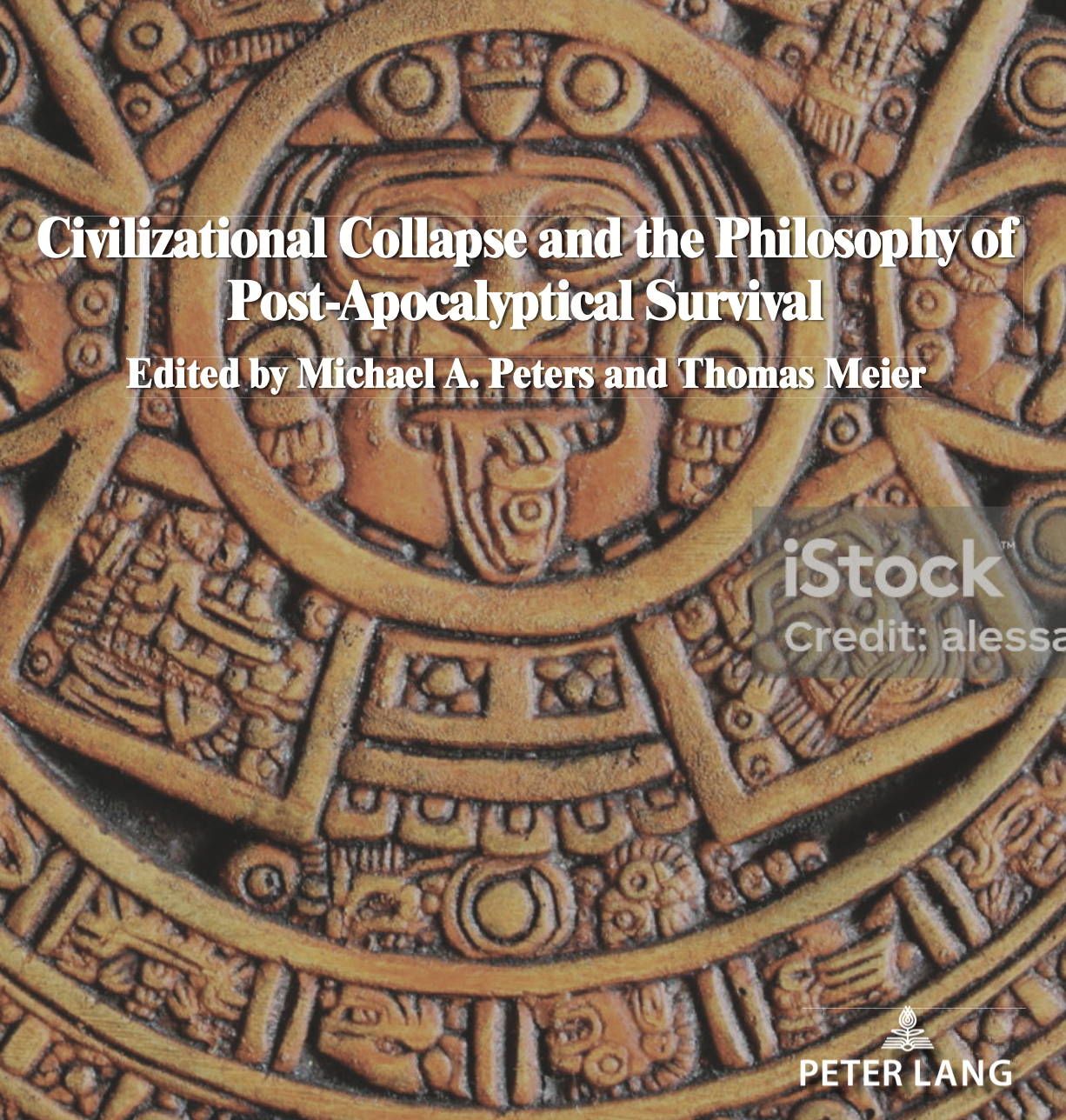
“Collapse” “The end of the world as we know it” “Amargeddon” “Dystopian Futures” “Maintaining hope on a dying planet” – words, concepts, phrases, pointing at the serious state of Earth. This remarkeable book with a range of perspectives on what to do, is a must read for educators, activitsts, researchers and composites thereof. From the back cover:
“The collapse of civilization, the end of the world as we know it, has long been a cultural imaginary, but has rarely been as topical as it is today. Beyond the phantasmagoria of violence, depression and despair, the conviction of being doomed has always been present It can be a challenge to imagine a new, post-apocalyptic world, be it utopian or dystopian. Beyond questions of immediate survival, there is a growing concern about how to educate humanity for a new life after the end of this world. In this volume, the editors, Michael A. Peters and Thomas Meier, renowned scholars of educational and apocalyptic studies, have brought together 31 contributions that offer a diversity of perspectives on such post-apocalyptic education, from abstract philosophical reflections to applied studies, from historical and political analyses of how we got into the current situation of global devastation to decolonial perspectives and essayistic explorations.”
I was invited to contribute a chapter on what I have dubbed ´Earth-centered education´: Earth Centred Education: An Invitation to Relational Transgressive Learning as a Counter-Hegemonic Force in Times of Systemic Global Dysfunction Have a look at the ToC and consider getting a copy of the book from Peter Lang here
I am providing a link to the table of contents of the book and the typeset version of my chapter here.

 Transformative learning