
 Jane Jacobs and Elinor Ostrom were both giants in their impact on how we think about communities, cities, and common resources such as space and nature. But we don’t often put them together to recognize the common threads in their ideas.
Jacobs is rightly famous for her books, including The Death and Life of Great American Cities, and for her belief that people, vibrant spaces and small-scale interactions make great cities—that cities are “living beings” and function like ecosystems.
Ostrom won a Nobel Prize for her work in economic governance, especially as it relates to the Commons. She was an early developer of a social-ecological framework for the governance of natural resources and ecosystems.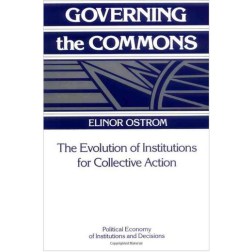
These streams of ideas clearly resonate together in how they bind people, economies, places and nature into a single ecosystem-driven framework of thought and planning, themes that deeply motivate The Nature of Cities. In this roundtable we ask sixteen people to talk about some key ideas that motivate their work, and how these ideas have roots in the ideas of either Jacobs or Ostrom, or both.
The natureofcities.com is a wonderful resource and platform for people interested in re-designing urban spaces to make them more liveable and sustainable. Every two months the site organises a Global Round Table that starts with input from scholars and practitioners from around the world. I was asked to provide an short input piece as well which can be found in the online discussion forum. In the past these roundtables have been getting about 12,000+ readers, from 1000+ cities and 70+ countries and I encourage anyone to have go to visit and contribute at this roundtable by clicking on the link below.
Common threads: connections among the ideas of Jane Jacobs and Elinor Ostrom, and their relevance to urban socio-ecology
For more of their ideas, directly from them, good places to start are:
Jacobs, J. 1961. The Death and Life of Great American Cities. Random House, New York, USA.
Ostrom, E. 1990. Governing the commons: The evolution of institutions for collective action. Cambridge University Press, Cambridge, MA, USA
 Transformative learning