Why sustainability cannot and should not be taught: a call for reflexivity, transformation and deep learning in turbulent times

This academic year I have the honour of participating in the academic community of Gothenburg University as the Adlerbert Research Foundation’s Guest Professor. Gothenburg University, as does the other well-known university in Gothenburg, Chalmers University, aspires to integrate sustainability science and education in all its 7 faculties. The two universities already share a Centre for Environment and
Sustainability (GMV) and Chalmers has a special Sustainability Vice-Chancellor, John Holmberg who is also a UNESCO Chair in Education for Sustainability in Higher Education. During my last visit to Gothenburg in this new role I participated in a workshop on Teacher Education for Sustainable Development? which was introduced with the following text:High expectations of formal education’s contribution to sustainable development are expressed in a series of policy documents from UNESCO, through the proclaimed Decade of Education for Sustainable Development (2005-2014). This is also highlighted in Swedish policy documents for education (National Agency for Education). The Swedish Higher Education Act states that “In the course of their operations, higher education institutions shall promote sustainable development to assure for present and future generations a sound and healthy environment, economic and social welfare, and justice”. What implications does this have for a higher education program such as Teacher Education?

Julie Davis of the Queensland University of Technology, Brisbane, Australia and I were asked to provide input for the workshop by providing a ‘provocative’ introduction. Mine was titled: Why sustainability cannot and should not be taught: a call for reflexivity, transformation and deep learning in turbulent times

Needless to say that the title raised some eyebrows. But here’s what I tried to say. We cannot know what sustainability is. We don’t live long enough to be able to say that what we consider to be sustainable today turned out to be sustainable in the end. Also, what might be sustainable in Gothenburg, Sweden might not be sustainable in Kampala, Uganda. To complicate things further even when considering all the (scientific) knowledge available today there is no universal agreement about what, given what we know today, might be the most sustainable way of living.

So how then can we educate for sustainability? – a question already raised 20 years ago by my Canadian colleague and friend Bob Jickling.  In my contribution I problematized this dilemma from an education perspective by arguing that even though we do not and cannot know what sustainability is we have a moral responsibility to always be looking for ways of living that are more sustainable than our current ways.The current state of the Planet demands this. Given this dilemma it would be inappropriate or at least un-educative to use education to prescribe learners how to live their lives or to condition them to behave in a certain way.

Rather than focussing as educators on sustainability as a ‘destiny’ or an ‘end point’ it may be more fruitful and certainly more educational, to focus on the type of learning and the type of capacities that are needed to break away from unsustainable routines which are all around and generally known. Using concrete examples, I proposed strenghtening social and transformative learning in ‘cross-boundary environments’ seeking to develop people’s sustainability competence as an alternative. Some of these ideas can also be found in my inaugural address of a few years ago: Message-in-a-bottle-Learning-our-way-out-of-Unsustainability(pdf connected to the hypelink). I have attached the slides I used here: ESD-TE Workshop Gothenburg U November2012.

Julie Davis talked about: Working the system: Taking a systems approach to embedding education for sustainability in teacher education in Australia

Here’s how here contribution was listed in the workshop outline: Much has been written about the need to ‘re-orient teacher education towards sustainability’. Yet, research indicates that, generally speaking, teacher education institutions are not preparing pre-service teachers to teach education for sustainability. This presentation reports on a staged study that commenced in 2006 in Australia that has sought to understand how change is implemented and becomes ‘mainstreamed’ within teacher education institutions. Stage 1 involved an international literature review and interviews to examine efforts to re-orient teacher education towards sustainability; consequently, a systems-based model for change was developed. In Stage 2 (2008), this model was piloted across 5 teacher education institutions in Queensland, Australia, aimed at engaging teacher education institutions and a range of stakeholders within a teacher education system to work simultaneously to bring about change. Findings indicated that systemic change is enabled if there is both conceptual and personal capacity for change, and that trust, respect and ownership are central to re-orienting teacher education systems. Stage 3 (2009) involved another 5 teacher education institutions that used the model to begin the task of reorienting their teacher education systems. This stage identified 5 enabling actions: collaborative curriculum change; building a sustainability ethos; connecting disparate sources of sustainability education content; better support for integration between programs; and utilising experiential teaching and learning approaches. Stage 4 (2011) is underway, aimed at deepening and extending the change experiences, with an emphasis on building a national network to drive systemic change for education for sustainability.

Re-orienting, re-connecting and re-imagining – learning for sustainability in times of accelerating change goes open-access!

There may be trouble ahead,
……Before they ask us to pay the bill,
And while we still have the chance,
Let’s face the music and dance
.

Irvine Berlin, 1936

“There are three people in a vehicle. In this story, they all seem to have a foot on the accelerator. Not too far in the distance, and clearly coming into view, there is a noticeboard. It reads: ‘Brake hard or change direction! – Abyss ahead!’.  As the vehicle continues speeding forward, the occupants react differently to the noticeboard.  One has seen it coming for some time; in fact, she anticipated it. Her optician told her she had good foresight. ‘For goodness sake’, she says, ‘we must slow down and change direction while we can’. A second one, who has also been aware of the notice for some time, says ‘It’s certainly an interesting notice. Let’s deconstruct its meaning exactly, then we can develop our critical awareness and understanding, and decide what to do.’ The third person, who was much later in recognising the sign than the other two says, I don’t think there’s any danger ahead, and if there is – which I doubt – we’ll deal with it  then’.   Meantime, the vehicle is still getting closer to the notice, and stays on track….”

A metaphor of course, but perhaps illustrative of our collective predicament.  We all – or nearly all – have a bit of our foot on the accelerator, whilst at the same time, increasing numbers are aware that braking, changing direction, and learning ‘our way out’ is critically important. At the same time, a significant proportion of the population and vested interests drive forward regardless, albeit with a growing suspicion that, in the words of the old Irvine Berlin song, ‘there may be trouble ahead’.”(Sterling, 2012 p. 511)

The above excerpt is the opening of Stephen Sterling’s wonderful Afterword to “Learning for Sustainability in Times of Accelerating Change”. The Afterword is one of the contributions that has been made open-access via Wageningen Academic Publisher’s website. Along with Juliet Schor’s Foreword and the Introductory Chapter to the book, some authors have paid the publisher a fee to unlock their chapter to allow everybody with access to the Internet download it for free for their own use. You can find the full pdf of the Introductory Chapter here: Introduction to L4S in Times of Change Wals&Corcoran

On the publisher’s website the book is introduced as follows: We live in turbulent times, our world is changing at accelerating speed. Information is everywhere, but wisdom appears in short supply when trying to address key inter-related challenges of our time such as; runaway climate change, the loss of biodiversity, the depletion of natural resources, the on-going homogenization of culture, and rising inequity. Living in such times has implications for education and learning.  This book explores the possibilities of designing and facilitating learning-based change and transitions towards sustainability. In 31 chapters contributors from across the world discuss (re)emerging forms of learning that not only assist in breaking down unsustainable routines, forms of governance, production and consumption, but also can help create ones that are more sustainable. The book has been divided into three parts: re-orienting science and society, re-connecting people and planet and re-imagining education and learning. This is essential reading for educators, educational designers, change agents, researchers, students, policymakers and entrepreneurs alike, concerned about the well-being of the planet and convinced of our ability to do better. (click on the book’s cover if you wish to go to the publishers web-page about the book)

The book can be ordered at a discount when going to ‘books’ in the menu bar on top of this page.

Green Economy – business as usual? ESD – education as usual? Rio +20 or Rio -20?

It has been about a month now since 40-50 thousand people (from policy-makers to activists, CSOs, NGOs to CEOs) came to Rio to discuss the future of the Planet. What was accomplished? Having been among the privileged ones to be able to go to the meeting I can safely say that Rio minus 20 (The Stockholm Conference on Environment and Development) was more ground-breaking than Rio plus 20. Some will disagree with me as they see the interest of the private sector in environment and sustainability as a major step forward. The issues of 1972 have moved from the margin to the mainstream. The role of education – with Stockholm as a launching pad for Environmental Education and Rio as a launching pad for Education for Sustainable Development – has been ‘re-affirmed’ in the final declaration, much to the delight of UNESCO which hopes that Rio +20 will lead to an extension of ESD beyond the closing of the UN’s Decade for ESD (2014). At the end of this post you can read a briefing from UNESCO’s ESD-section head Alexander Leicht about the results achieved in Rio from his perspective.

I was invited to Rio to present the review of the UN DESD which UNESCO commissioned me to write up in the report 2012 DESD Full-length Report”.  Basically there are three reports: the one I submitted to UNESCO, the full report as edited and authorized by UNESCO and an abridged, glossy version for policy-makers that contains a selection of texts from the full report made by UNESCO’s ESD section. Some of the rough edges and critical notes of the original report were taken out somewhat to my dismay.

One of the key messages from the reports is that ESD or sustainability education can act as a potential catalyst for educational renewal and the introduction of new forms of learning and pedagogies (e.g. social learning, transformative learning, critical pedagogy). There is also a section addressing the changing role of science in society in times of uncertainty, complexity, eroding trust of hegemonic systems, and of rapid change. This theme connects well with the “Learning for Sustainability in Times of Accelerating Change” book featured in my previous post. There is some movement within higher education but also within less institutionalized environments to transition towards new forms of knowledge co-creation and self-determined practices that are considered more sustainable and transformative. At a side-event the so-called Treaty on Higher Education Towards Sustainable development was launched that calls for the transformation of higher education itself in order to become part of the transformation towards a more sustainable world. Clearly, when taking some of these counter movements and alternative approaches to education and learning seriously ESD cannot mean ‘education as usual’.

Finally, although the green economy has been billed as ‘an opportunity’ both in the report and in Rio there is also the cautionary tale about privileging the ‘green economy’ as a driver for societal transformation as opposed to the ‘green society’ and, with that, ESD becoming an extension of economic globalization.

———————————————————————————-

Education/Education for Sustainable Development and Rio+20 (compiled by Alexander Leicht UNESCO’s ESD section)

Summary and preliminary conclusions regarding Education/Education for Sustainable Development at the UN Conference on Sustainable Development (Rio+20) from a UNESCO perspective

  1. While the overall outcome of the Rio+20 conference contains few new joint commitments by governments regarding sustainable development, the outcome for education and in particular Education for Sustainable Development (ESD) is positive. The education passages in the outcome document, The Future We Want, are in line with UNESCO’s priorities and contain a clear call to continue ESD beyond the end of the UN Decade of ESD in 2014, education was frequently mentioned at the conference as an important area of sustainable development, and UNESCO’s ESD side-event was successful and very well attended.

Conference outcomes

  1. Member States reaffirm in the outcome document their commitment to achieving universal access to primary education and reaffirm that “full access to quality education at all levels is an essential condition for achieving sustainable development” and the internationally agreed development goals. Greater international cooperation to improve access to education, the need to strengthen and build education infrastructure, and increasing investment in education, in particular regarding quality education for all in developing countries, are also emphasized.
  2. The outcome document emphasizes the link between quality education and ESD, which is an important emphasis of UNESCO’s ESD work. The “need for better quality and access to education beyond the primary level” means that “the capacity of our education systems to prepare people to pursue sustainable development” must be improved. This includes the development of “sustainability curricula” and of “training programmes that prepare students for careers in fields related to sustainability”. The importance of non-formal education in pursuit of sustainable development is also recognized.
  3. Member States commit to strengthening ESD beyond the end of the UN Decade of ESD in 2014: “We resolve to promote education for sustainable development and to integrate sustainable development more actively into education beyond the United Nations Decade of Education for Sustainable Development.”
  4. A ‘whole institution approach’ to ESD – “teaching sustainable development as an integrated component across all disciplines” together with “sustainability management” on the campus and engagement with the community – is particularly encouraged for education institutions. Research and innovation for sustainable development, including in education, are also highlighted, as well as programmes in the areas of “entrepreneurship and business skills training, professional, technical and vocational training and lifelong learning” with a view to “bridging skills gaps for advancing national sustainable development objectives.” Information, education and training on sustainability to strengthen the capacities of workers are referred to in the context of green economy policies.
  5. From UNESCO’s perspective it is important that the document treats education not merely instrumentally as a means of implementation for sustainable development, but that education (paras. 229-235) is grouped with other thematic areas and cross-sectoral issues of sustainable development.
  6. The document recognizes the usefulness of a limited set of concrete sustainable development goals, which should be integrated into the UN development agenda after 2015 and drive the achievement and mainstreaming of sustainable development. Their development should be guided by the outcome document, that is, goals will presumably be formulated on the basis of the thematic areas mentioned in the document. Regarding process, an open working group of 30 representatives will be established at the 67th session of the General Assembly and submit its proposal for goals to the 68th session. The Secretary-General will give first input into this group and support its work through an interagency technical support team. The document very generally states that the process must be coherent with the deliberations on the post-2015 development agenda. This will obviously have to be closely monitored in the context of the development of EFA follow-up and in order to ensure UNESCO’s priorities, including ESD, are taken into account in any post-2015 development/sustainable development agenda. More generally, UNESCO’s involvement with Rio provided further support to the view that the Organization’s ESD work needs to connect closely and strategically to global agendas in sustainable development, development and education.

Other issues regarding UNESCO/ED’s engagement with Rio

  1. UNESCO’s side-event on ESD, which was co-organized with and supported by the Government of Sweden and the Ministry of Education, Culture, Sports, Science and Technology of Japan, was highly successful and very well attended. It received very good external and internal feedback. Speakers were Shigeharu Kato, Director-General for International Affairs, Ministry of Education, Culture, Sports, Science and Technology of Japan, and Secretary-General of the Japanese National Commission for UNESCO; Annika Markovic, Environment Ambassador, Ministry for the Environment, Sweden; Greg Selinger, Premier of Manitoba, Canada; Jeffrey Sachs, Director of the Earth Institute, Columbia University; Kartikeya Sarabhai, Director, Centre for Environment Education, Ahmedabad, India; Rafael Zulli and Thiago Schlieper, secondary school students from Brazil. The panel was opened by Irina Bokova, Director-General of UNESCO, and chaired by Gretchen Kalonji, Assistant Director-General for the Natural Sciences. Arjen Wals, UNESCO Chair of Social Learning and Sustainable Development at Wageningen University, The Netherlands, presented the latest UNESCO report on the UN Decade of ESD, Shaping the Education of Tomorrow. Speakers pointed to ESD as one of the key priorities when advancing towards sustainable development and highlighted ESD’s potential to transform and innovate education. UNESCO’s leadership in education and ESD was widely recognized.
  2. Together with UN DESA, the Global Compact Secretariat, UNEP and UNU, UNESCO presented a higher education initiative launched before the conference by the Executive Coordinator of Rio+20, Elizabeth Thompson. Higher education institutions have been invited to sign up to a declaration on higher education and sustainable development and make concrete commitments. The initiative achieved good visibility during the conference, many of the voluntary commitments uploaded to the Rio+20 website in advance of the conference came from this initiative. UNESCO agreed with the Global Compact Secretariat to continue collaborating in this important and promising field.
  3. UNESCO’s message on ESD and education was also successfully shared at side-events on multi-stakeholder partnerships, led by UNICEF, on capacity-building regarding climate change, led by UNITAR, on environmental education and ESD, led by the Government of Georgia, and on partnerships for education, led by the International Business Leaders Forum. The UNESCO/IOC side-event on oceans also variously referred to the importance of education.
  4. In the lead-up to the conference, the Swedish Minister for the Environment, the Japanese Minister for Education and the Director-General co-wrote an op-ed article on ESD. It was published during the conference by a Swedish newspaper, Sydsvenska Dagbladet, distributed to the Japanese press club, and published on the UNESCO website.
  5. The importance of education was also confirmed by the online Sustainable Development Dialogues, which were organized by the Government of Brazil in the lead-up to the conference. Stakeholders had the opportunity to discuss topics such as poverty eradication, water and oceans. UNESCO provided several discussion papers as input to the discussions. Out of the 100 recommendations that came out of the dialogues, people from all over the world chose the top ten recommendations by vote. Three of them are on education.
  6. In the context of the engagement of UNESCO with Rio+20 it should also be recalled that the report of the UN Secretary-General’s High-level Panel on Global Sustainability, which was published as Resilient People, Resilient Planet: A Future Worth Choosing before the conference, contains significant passages and recommendations on education, including the development of skills and knowledge needed for sustainable growth and jobs.

Alexander Leicht, Chief, Section of Education for Sustainable Development, UNESCO (a.leicht@unesco.org)

“Learning for sustainability in times of accelerating change” presented to Gro Brundtland at Rio +20

Just in time for Rio +20 we were able to finish a wonderful book project that involved many authors from four continents. The book, learning for sustainability in times of accelerating change, was presented at Rio +20 to former Norwegian Prime Minister and Chair of the infamous Brundtland Commission which made a first attempt to define “Sustainable Development” in the 1987 report “Our Common Future”.

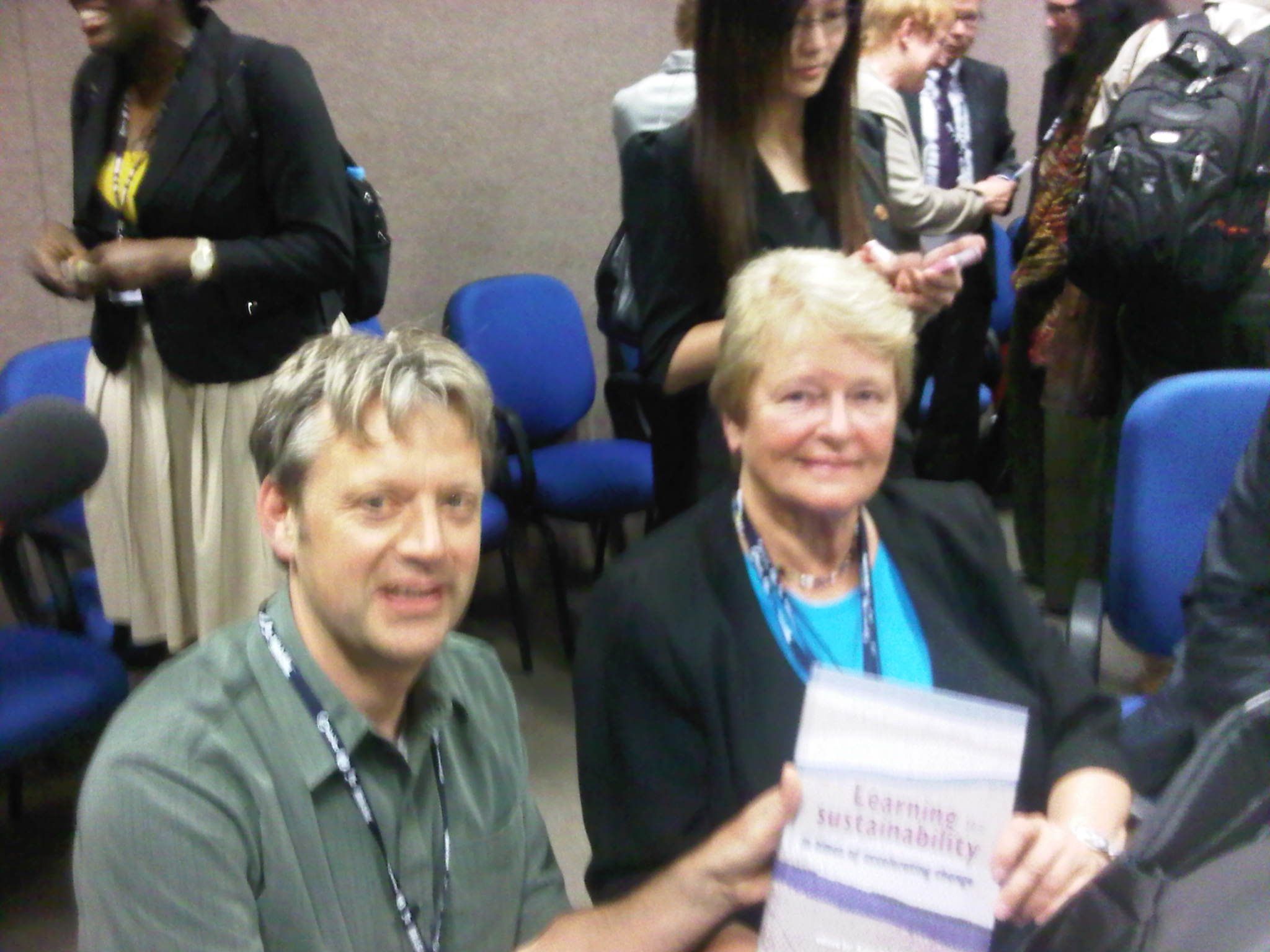
Former Norwegian Prime Minister Gro Harlem Brundtland receives the first copy at Rio +20. Brundtland Chaired the World Commission on Environment and Development (WCED) that wrote “Our Common Future”, a report that introduced the term “sustainable development” well before the first Earth Summit was held in 1992.

On the publisher’s website the book is introduced as follows: We live in turbulent times, our world is changing at accelerating speed. Information is everywhere, but wisdom appears in short supply when trying to address key inter-related challenges of our time such as; runaway climate change, the loss of biodiversity, the depletion of natural resources, the on-going homogenization of culture, and rising inequity. Living in such times has implications for education and learning.  This book explores the possibilities of designing and facilitating learning-based change and transitions towards sustainability. In 31 chapters contributors from across the world discuss (re)emerging forms of learning that not only assist in breaking down unsustainable routines, forms of governance, production and consumption, but also can help create ones that are more sustainable. The book has been divided into three parts: re-orienting science and society, re-connecting people and planet and re-imagining education and learning. This is essential reading for educators, educational designers, change agents, researchers, students, policymakers and entrepreneurs alike, concerned about the well-being of the planet and convinced of our ability to do better. (click on the book’s cover if you wish to go to the publishers web-page about the book)

Here are some nice words from some good people about the book:

We are living in times of incertitude, complexity, and contestation, but also of connectivity, responsibility, and new opportunities. This book analyses the consequences of these times for learning in formal, non-formal, and informal education. It explores the possibilities offered by the concept of sustainability as a central category of a holistic paradigm which harmonizes human beings with Earth. To change people and to change the world are interdependent processes—this book contributes to both. (Moacir Gadotti, Director of Paulo Freire Institute, São Paulo, Brazil).

Moacir Gadotti of the Paulo Freire Institute receives a copy of the book at Rio +20 during the Earth Charter event

I hope you share my excitement about the innovations for sustainability that this book catalogues and analyses. While the ecological news is grim, the human news is not. Even in a time of accelerating change, people are showing their enormous capacities to learn, adapt, restore and protect. (From the Foreword by Juliet Schor, author of True Wealth: how and why millions of Americans are creating a time-rich, ecologically-light, small-scale high-satisfaction economy).

Instead of educational thinking and practice that tacitly assumes that the future is some kind of linear extension of the past, we need anticipative education, recognising the new conditions and discontinuities which face present generations, let alone future ones… This implies a ‘culture of critical commitment’ in educational thinking and practice – engaged enough to make a real difference to social-ecological resilience and sustainability but reflexively critical enough to learn constantly from experience and to keep options open in working for a sustainability transformation. (From the Afterword by Stephen Sterling, Professor of Sustainability Education, Centre for Sustainable Futures, Plymouth University, United Kingdom).

In the coming months this blog will be used to share some main ideas expressed by the authors that are a part of this volume. 

The table of contents can be found here (click on the hypertext)learn4

The book can be ordered at a discount when going to ‘books’ in the menu bar on top of this page.

‘Science as community — Sustainability-oriented trans-disciplinary research’

Recently I contributed to the 5th Living Knowledge Conference which was held in Bonn, Germany last May with a talk on “Science as community: Sustainability- oriented trans-disciplinary research”. The entire talk has now been uploaded on youtube as have been several of the other talks held at this energizing event. The talk can be found here. Since the slides I used are not always (clearly) visible you can find the slides I used here: WalsBonnLivingKnowledge.

The conference covered the following teams: 

A. Setting shared research agendas by CSOs and Research Institutes 

B. The role of Higher Education in creating knowledge with communities
C. Communities and students learning together
D. Evaluation and quality improvement: New lessons learned on measuring   the value of community engagement and  collaborative research
E. Developing  partnership working for research – civil society engagement
F. Policies to support collaborative research relationships

My talk related mostly to theme B which is described on the conference website as follows: Research and education are going to play a central role during the transformation process towards a knowledge society, as the realisation of the necessity for restructuring the world economy has been triggered mainly by scientific knowledge. Society should therefore decide on actions that are not a direct response to recently experienced events, but motivated by foresight and precaution. For this purpose, the debate between science, politics and society should be far more structured, more obligatory, and livelier, to ensure a constructive discourse about the best ways to achieve sustainability.

Key questions:

  • How can problem-based approaches and transdisciplinarity be encouraged?
  • How can a relation of mutual trust between researchers and CSOs be developed?
  • How can career opportunities for young researchers engaging with communities be improved?
  • How can universities and research institutions give researchers and students more opportunities to reflect about the societal consequences of their work?

http://www.youtube.com/watch?v=a3cda8qyiuI&feature=relmfu

The Big Tent Rio +20 Communique on Sustainability, Knowledge and Higher Education

Recently I contributed to the 5th Living Knowledge Conference which was held in Bonn, Germany with a talk on “Science as community: Sustainability- oriented trans-disciplinary research” and by providing input to a drafting process that resulted in a communique on higher education’s role in moving towards a more sustainable world. This communique is to be presented and discussed at the Sustainability Summit in Rio which will be held in June (also known as Rio +20).

The “Big Tent” Group – also known as the Higher Education Treaty Circle – is a collaboration of regional and global networks of civil society and higher education networks with a total membership of over 5,000 universities and civil society research organizations. The group was created to make a joint contribution to the RIO + 20 United Nations Sustainability Summit and the parallel Global Civil Society conference on Sustainability taking place in June in Rio de Janeiro.

Via an on-line contribution platform I was able to include a few lines myself including one that states that “Universities have a responsibility to look after the well-being of the planet, not as stand-alone beacons of knowledge, but as places where wisdom of communities, eco-systems and the academy work together in partnerships for a world that is more sustainable and just”.

The focus of the communique is on how civil society and universities can co-create radically new knowledge together.

Canada’s Budd Hall from the University of Victoria says, “This is the first statement agreed upon by so many higher education networks calling for a deep examination of the need to re-examine whose knowledge counts and how we can co-construct new disciplines for a new world”

I am pasting in the current communique for you to read, comment on and, if you like, to share with others who might be intrrested and/or might need to know.

RioCommuniqueOnSustHEI-Final-May 20

Communiqué on Sustainability, Knowledge and Democracy* (Released on May 12 in Bonn, Germany at the 5th International Conference of the Living Knowledge Network)

This statement is the product of a global dialogue and discussion process hosted by the Living Knowledge Network.

It is an initiative of the ‘Big Tent’ Group of international networks which includes: Asia Pacific University Community Engagement Network, Centro Boliviano de Estudios Multidisciplinarios, Commonwealth Universities Extension and Engagement Network, Community Campus Partnerships for Health, Global Alliance on Community Engaged Research, Global University Network for Innovation, Living Knowledge Network, PASCAL International Observatory, Participatory Research in Asia, and the Talloires Network with additional contributions participants at the 5th International Conference of the Living Knowledge Network.

We begin by expressing our deep concerns about:

The continued destruction of our common home, our planet Earth, Our over dependence on technological solutions that may result in misleading claims about positive impact on the environment, Ways that the dominant global economic system with its unitary focus on economic growth results in increased inequality, loss of jobs, alienation from both land and each other, The persistent exclusion of the dreams, potential and contributions of the socio–‐economic bottom billion people of our world, and Stressful and unhealthy lifestyles leading to physical and mental health problems;

We are witnesses to massive expressions of aspiration and deep change as seen in the Arab Spring and the Occupy movements.

We are aware and supportive of work being done to engage with civil society and its organisations in the co–‐construction of new knowledge in many spaces such as the Science in Society Programme of the European Commission, UNESCO and the Global University Network for Innovation.

We are also aware that while certain developments in science and technology have been complicit in the creation of planetary problems, evidence shows that communities and research institutions working together play a significant role in the attainment of sustainable development.

We respectfully contribute our ideas to spaces for engagement and action on issues of planetary survival, including, but not limited to the United Nations Rio + 20 events Higher Education Treaty Circle process and the Horizon 2020 programme in Europe

We call for action to:

1. Challenge existing paradigms, structures and practices, by: a) Recognizing that knowledge and expertise exists outside of the institutions of higher education. Communities and the earth itself are intellectual spaces where knowledge is created. Decolonizing our minds and our institutions is one significant step to acting on this awareness, b) Acknowledging that ‘community’ or ‘civic’ engagement, has to mean more than just people. Community includes the environment and all the rest of nature, c) Promoting the concept of an ‘Ecoversity’ whereby higher education institutions themselves are transformed into integrated holistic communities and where research, teaching and action functions are no longer separate, d) Breaking down the silos of knowledge creation and moving to co–‐creation of knowledge between the university and community–‐new approaches for a new world, e) Being open to ideas such as appointing community scholars, and creating smaller universities, and f) Increasing policy and funding for collaborative research between civil society and higher education institutions.

2. Increase the accountability of higher education by: a) Shifting accountability from authorities and funders to citizens, involving community at all levels of Higher Education governance, b) Linking our academic work with environmental social movements and to related movements against poverty, towards a solidarity economy, c) Ensuring that people have an understanding of the interdependencies between environmental, social and economic forces and the skills and abilities to meet sustainability challenges, and d) Moving beyond eco–‐branding by holding institutions accountable for the trademarks, brands and media around sustainability that they display.

3. Understand the connections of our local practices within a global framework by: a) Acknowledging that in this inter–‐connected world, ecological disturbances in one eco–‐zone can spread rapidly throughout the world, b) Promoting new mechanisms of global governance and democratic accountability with multi–‐stakeholder perspectives, and c) Supporting the development of higher education theories and practices that nurture a global public good.

In closing

We live in turbulent times; our world is changing at accelerating speed. Information is everywhere, but wisdom appears in short supply when trying to address key inter–‐related challenges of our time such as; runaway climate change, the loss of biodiversity, the depletion of natural resources, the on–‐ going homogenization of culture, and rising inequity. Universities have a responsibility to look after the well–‐being of the planet, not as stand–‐alone beacons of knowledge, but as places where wisdom of communities, eco–‐ systems and the academy work together in partnerships for a world that is more sustainable and just.

The Black Market for Facebook “Likes,” and What It Means for Citations and Alt-Metrics

The Black Market for Facebook “Likes,” and What It Means for Citations and Alt-Metrics

This is a follow-up on my earlier posted ‘publish or perish’ post. It is inspired by Phil Davis who posted an interesting article in the ‘Scholarly Kitchen’ today which only amplifies some of the concerns expressed in my initial post. Here are the opening lines of his article which can be found in its complete form at: http://scholarlykitchen.sspnet.org/2012/05/18/the-black-market-for-facebook-likes/

“There is an online market for so many intangible goods these days that it should come as no surprise that there is a market for Facebook “Likes” — the little thumbs-up rating that accompanies so many products and services we see on a daily basis.

For $75, a marketing company will sell you 1,000 Facebook “Likes,” according to NPR’s Planet Money. Only the marketing company does not supply the “likes” but works as a broker between real individuals who are willing to sell their online preferences to your product for very small sums of money — ten cents a “like” — and those who wish to artificially inflate their prestige.

Ten cents may not seem like a lot of money, but there is a huge workforce of individuals willing to be employed to undertake low-skilled, repetitive online work for pennies a task, as evidenced by mature markets like Amazon’s Mechanical Turk. Global outsourcing has never been easier.”

And later on Phil writes: “The artificial trust market is not new and is found in environments where online trust is important, such as purchasing an antique love seat from a complete stranger on eBay, finding a reputable bed and breakfast in rural Ireland, selecting a new e-book from Amazon, or choosing an app from the Apple Store. When in doubt, our tendency is to turn to the wisdom of the crowds because we believe that these ratings are accurate evaluations generated by honest individuals and based on real experiences.

Trust — or at least consensus — works the same way in scientific publication through the accumulation of citations, only the barriers to participate in this market are much, much higher. To cast your votes, you need to publish a paper that is indexed by Thomson Reuters’ Web of Science (or alternatively, Elsevier’s Scopus). Like Facebook, Thomson Reuters does not take kindly with citation manipulation and will delist a journal when it exhibits forms of citation manipulation such as systemic self-citation or, more recently, through the formation of citation cartels.”

He then refers to my earlier post where I suggest a website like PleaseCiteMe.Com where ‘academics’ can ‘purchase’ citations to increase their h-factor… see my original post below.

“What’s your h-factor?” is a question that is increasingly asked at gatherings of scientists or during interviews for academic positions. Scientific careers depend on h-factors these days. What am I talking about?

The h-index is an index that attempts to measure both the productivity and impact of the published work of a scientist or scholar. The index is based on the set of the scientist’s most cited papers and the number of citations that they have received in other publications. The index can also be applied to the productivity and impact of a group of scientists, such as a department or university or country.

A scientist has index h if h of his/her Np papers have at least h citations each, and the other (Np − h) papers have no more than h citations each.

In other words, a scholar with an index of h has published h papers each of which has been cited in other papers at least h times. Thus, the h-index reflects both the number of publications and the number of citations per publication. (source: wikipedia)

An important determinant of the hight of one’s h-factor depends on what counts as a ‘ cite-able publication’. In the Web of Science h-factor only scientific articles published in journals which have ISI-recognition (determined by Thomson-Reuters) are considered citeable (so not articles in other journals, chapters in books, etc.). In the Scopus h-factor a larger pool of journals is included, while in google citations and in ‘publish or perish’ (www.harzing.com/pop.htm) the h-factor is likely to be higher as it also considers articles in a wide range of journals, book chapters and reports as cite-able). In my university, Wageningen University, it’s not your x-factor that matters but your h-factor. Our librarians have become information specialists that have expertise in bibliometrics and scientometrics. Such expertise is pivotal in helping our academics, science groups and, indeed, our university (76th on the Times Higher Education Index…) climb the rankings. Biblio-what?

Bibliometrics and scientometrics are two closely related approaches to measuring scientific publications and science in general, respectively.  In practice, much of the work that falls under this header involves various types of citation analysis, which looks at how scholars cite one another in publications  (source: Eric Meijers via www. microsites.oii.ox.ac.uk/tidsr/kb/48/what-bibliometrics-and-scientometrics

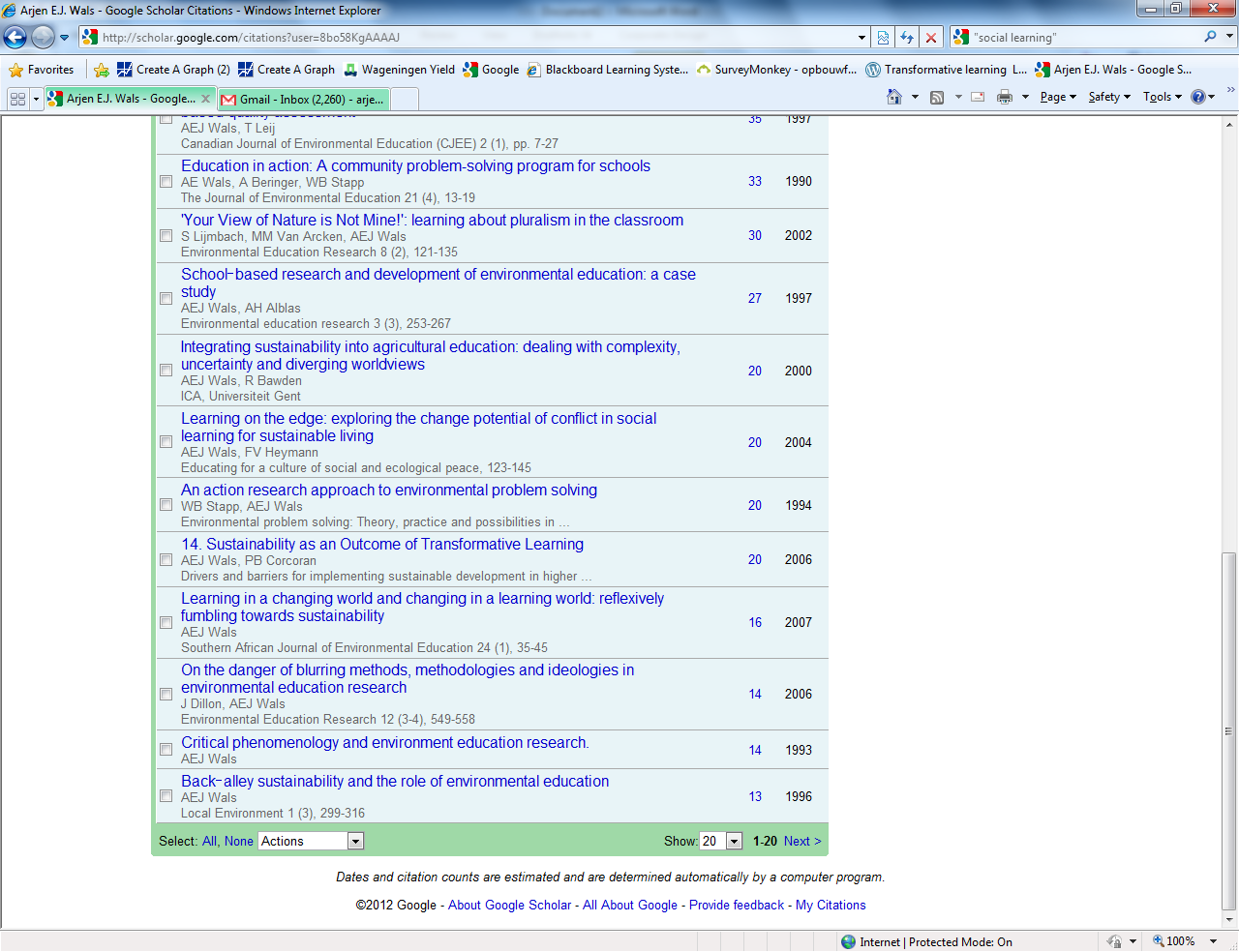
Below you will see a screenshot of my personal bibliometrics (click on the image to make bigger).

As you can see my overall h-factor is 16. Impressive? Hardly. But how can I raise it? Let me move to the crucial information google citations provides (if you want to check your own bibliometric data you need to make a profile on google citations!). You will note below that “Learning in a changing world and changing in a learning world: reflexively fumbling towards sustainability” is the crucial paper at this moment (click on the image to make bigger).

If I want to increase my h-factor to 17 then I need to get two of my papers cited 17 times or more. I could try to promote the paper that currently occupies place 16 (“reflexively fumbling”). I would then also need to find another paper that is still somewhat attractive to be cited – perhaps the 2006 paper with Justin Dillon on “The danger of blurring methods….” .

So how can I do that? There are many ways of course – I can suggest the paper to authors of papers I review for journals… or I can ask my colleagues to cite those papers… or I can make free-downloads available of those papers via my blog… but there might be a better way – one that could be the beginning of the end of this metrics-based system: hBay

Introducing: PleaseCiteMe.com

Why not develop PleaseCiteMe.com – a web-based system where people can trade citations. Scholars can post citations of their own work that they need to have cited in order to increase their h-factor. Of course there is a price to pay: the scholar will have to cite the work of the scholar on the other end who agreed to cite the work. If this is not possible then there can be a monetary value attached to a citation. Possibly citations in a Web of Science journal might cost more than citations in a Scopus journal or of a book chapter that is recognized by Google citations. Of course we need to have a few clever web-designers, economists and Mark Zuckerman-types to create all this but then by 2014 we could probably take this to Wallstreet as by then will be a huge demand in the world of science for this service.

Publish or perish…. or, perhaps, publish and perish…

So what are we to do? In the end it is not about science for impact factors or h-factors but science for impact in society. Some of us are part of a system run increasinly by bibliometric information. Playing the game may be inevitable until the game will end, when people begin to realize that people don’t read but only cite… or when people only write without having the time to read… or when strategic thinking replaces intelligent thinking, curiosity and passion for contributing something meaningful to people and planet.

Fortunately there are still academic environments driven by societal relevance, planetary responsibility and curiosity. And, indeed, there are calls for bridging science and society and other forms of reviewing quality in research (see for instance Funtowitch and Ravetz idea of the ‘ extended peer review’). More on this in another post!

Publish or perish: Improving your H-factor made easy through PleaseCiteMe.com

Publish or perish: Improving your H-factor made easy through PleaseCiteMe.com

“What’s your h-factor?” is a question that is increasingly asked at gatherings of scientists or during interviews for academic positions. Scientific careers depend on h-factors these days. What am I talking about?

The h-index is an index that attempts to measure both the productivity and impact of the published work of a scientist or scholar. The index is based on the set of the scientist’s most cited papers and the number of citations that they have received in other publications. The index can also be applied to the productivity and impact of a group of scientists, such as a department or university or country.

A scientist has index h if h of his/her Np papers have at least h citations each, and the other (Np − h) papers have no more than h citations each.

In other words, a scholar with an index of h has published h papers each of which has been cited in other papers at least h times. Thus, the h-index reflects both the number of publications and the number of citations per publication. (source: wikipedia)

An important determinant of the hight of one’s h-factor depends on what counts as a ‘ cite-able publication’. In the Web of Science h-factor only scientific articles published in journals which have ISI-recognition (determined by Thomson-Reuters) are considered citeable (so not articles in other journals, chapters in books, etc.). In the Scopus h-factor a larger pool of journals is included, while in google citations and in ‘publish or perish’ (www.harzing.com/pop.htm) the h-factor is likely to be higher as it also considers articles in a wide range of journals, book chapters and reports as cite-able). In my university, Wageningen University, it’s not your x-factor that matters but your h-factor. Our librarians have become information specialists that have expertise in bibliometrics and scientometrics. Such expertise is pivotal in helping our academics, science groups and, indeed, our university (76th on the Times Higher Education Index…) climb the rankings. Biblio-what?

Bibliometrics and scientometrics are two closely related approaches to measuring scientific publications and science in general, respectively.  In practice, much of the work that falls under this header involves various types of citation analysis, which looks at how scholars cite one another in publications  (source: Eric Meijers via www. microsites.oii.ox.ac.uk/tidsr/kb/48/what-bibliometrics-and-scientometrics

Below you will see a screenshot of my personal bibliometrics (click on the image to make bigger).

As you can see my overall h-factor is 16. Impressive? Hardly. But how can I raise it? Let me move to the crucial information google citations provides (if you want to check your own bibliometric data you need to make a profile on google citations!). You will note below that “Learning in a changing world and changing in a learning world: reflexively fumbling towards sustainability” is the crucial paper at this moment (click on the image to make bigger).

If I want to increase my h-factor to 17 then I need to get two of my papers cited 17 times or more. I could try to promote the paper that currently occupies place 16 (“reflexively fumbling”). I would then also need to find another paper that is still somewhat attractive to be cited – perhaps the 2006 paper with Justin Dillon on “The danger of blurring methods….” .

So how can I do that? There are many ways of course – I can suggest the paper to authors of papers I review for journals… or I can ask my colleagues to cite those papers… or I can make free-downloads available of those papers via my blog… but there might be a better way – one that could be the beginning of the end of this metrics-based system

Introducing: PleaseCiteMe.com

Why not develop PleaseCiteMe.com – a web-based system where people can trade citations. Scholars can post citations of their own work that they need to have cited in order to increase their h-factor. Of course there is a price to pay: the scholar will have to cite the work of the scholar on the other end who agreed to cite the work. If this is not possible then there can be a monetary value attached to a citation. Possibly citations in a Web of Science journal might cost more than citations in a Scopus journal or of a book chapter that is recognized by Google citations. Of course we need to have a few clever web-designers, economists and Mark Zuckerman-types to create all this but then by 2014 we could probably take this to Wallstreet as by then will be a huge demand in the world of science for this service.

Publish or perish…. or, perhaps, publish and perish…

So what are we to do? In the end it is not about science for impact factors or h-factors but science for impact in society. Some of us are part of a system run increasinly by bibliometric information. Playing the game may be inevitable until the game will end, when people begin to realize that people don’t read but only cite… or when people only write without having the time to read… or when strategic thinking replaces intelligent thinking, curiosity and passion for contributing something meaningful to people and planet.

Fortunately there are still academic environments driven by societal relevance, planetary responsibility and curiosity. And, indeed, there are calls for bridging science and society and other forms of reviewing quality in research (see for instance Funtowitch and Ravetz idea of the ‘ extended peer review’). More on this in another post!

Innovation saturation and growth fatigue – sustainable contraction as an alternative to sustainable development

Re-blogged – apologies as an earlier re-blog did not include the actual contents of the blog.

People across the globe are being told that they need to continuously grow and develop. There are no jobs for life, no guarantees. In order to survive you need to ‘upgrade’ your skills and be a ‘life-long learner’. To stand-still, to pause for a moment, is to fall behind. Before you know it you have become a ‘laggard’, somebody who missed the ‘wave’ or missed the boat altogether. Our mission in life has become to grow ourselves – whether you work or are unemployed – in order to help grow the company or organisation we work for, should you have work. And even if you find time for yourself in all this, you need to work on your inner-self to grow as a person – there’s a whole industry around spirituality, finding personal happiness and inner-peace and so on. Even meditation is becoming a commodity and a growth industry. Even in working on yourself you can outcompete others. When someone tells me “I meditate every day,” it sounds a bit like “I am better than you are” which ironically contradicts the entire philosophy underlying meditation.

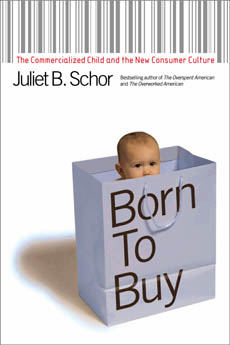
In our spare time our other pre-programmed mission is, not to meditate, unless you pay for it or at least take a professional meditation course, to be diligent consumers. We need to spend our money. And when we don’t have any, we need to spend someone else’s money. We need to play our part in both sides of the 24/7 economy, if we don’t consume, everything will come to a grinding halt, so we are told. In being told this we are addressed as consumers, not as citizens. From birth onwards we are taught to be unhappy with who we are, so that we constantly look for ways to do better, to keep up won’t cut it. Juliet Schor’s “Born to buy” and “The over-spent American” shows some of the ramifications of this kind of programming and wiring of the brain. In “True Wealth” she suggests some alternatives.

Our sustainability crisis above all is a crisis of values, coupled with a lack of imagination and creativity. It is no surprise that there are counter movements rising such as the ‘transition town movement’ and the ‘occupy movement’. It is no surprise that there are junior activists and scholars but also senior leaders around the world who have seen it all who are now, retired and, granted, in comfortable positions, declaring that we are on a wrong path and need to explore the non-material side of being, consider abandoning the idea of continuous growth and start thinking about something like “dynamic equilibrium” and even “selective de-growth” and “sustainable contraction” instead of sustainable development.

Anyway this is becoming a bit of a rant – my apologies – but how do we begin to develop new systems and lifestyles (or re-discover old ones thatin hindsight turn out to be more sustainable)? What alternative values and ways of working and living together might be helpful? Where might we find some examples? I offer you a paper that was published a few weeks ago that only touches on some ideas. But it you have other ideas – please leave a comment!

The journal ‘The Learning Organization’ has just published a special issue on  “The importance of educational learning for organizational sustainability” edited by Peter Smith. The special issue has a paper I co-authored with a very talented graduate student of Wageningen University – Lisa Schwarzin. It blends the wonderful research experience of Lisa in India, where she spent some time investigating a “sustainable community”  in Auroville, with some research we did in a Dutch “sustainable community” in the town of Culemborg, near Utrecht.

Here is an excerpt from the introduction (note: the link below to the paper leads to a site where you’ll need to purchase the paper. You may be able to get it free via your library. If not, send an email to: arjenwals@gmail.com and I’ll mail you a copy for personal use).  Full citation – Arjen E.J. Wals, Lisa Schwarzin, (2012) “Fostering organizational sustainability through dialogical interaction”, Learning Organization, The, Vol. 19 Iss: 1, pp.11 – 27):

In this contribution organizational sustainability has a normative underpinning that considers an organization or a community sustainable when it contributes to a more sustainable world as can be understood with our current knowledge and understanding of what sustainability might entail. In other words, a sustainable organization does not refer to an organization that succeeds itself in keeping on going by maintaining, for instance, profitability, but rather to one that, given what we know today, successfully balances people, prosperity and planet by searching for a dynamic equilibrium between these 3Ps. Ultimately such a balancing act may require a shift altogether from the maximisation of profit to something completely different such as the maximisation of meaning. This is a different vantage point from so-called green economist perspectives that tend to argue that there is little wrong with the principles of (neo)capitalism,  but that businesses and industries need to adopt production methods that are more efficient (World Bank, 2000). This call for increased efficiency and environmental mindfulness tends to be coupled with the belief that technological advancement can put off the exceeding of the Earth’s carrying capacity. Furthermore, green economists also tend to see the ‘tremendous potential for growth’ that the greening of production and consumption offers (green as a growth industry) (Makower and Pike, 2008).

While the green economy appears to be booming these days, there is a modest but growing undercurrent that suggests that ultimately a transition towards sustainability will not be the result so much of ‘doing things better’ by optimizing our current hegemonic systems but rather demands that we ‘do better things’. The latter requires more fundamental changes in the manner in which we  live, work and spend our leisure time, et cetera,  and on the kinds of values that we pursue. In other words, sustainable developments concern system  innovations that require an integrated redesign of products, lifestyles, processes and structures. This paradigmatic “whole system redesign” perspective (Sterling, 2004) is increasingly supported by economists (McKibben, 2007) as well and by emerging strands within economic sciences such as industrial ecology and ecological economics. In this article we are particularly occupied with the question of how to engage people, organizations and communities in these more fundamental transitions, while recognizing that there is still much to gain from doing things better.