Arjen Wals is a Professor of Social Learning and Sustainable Development. He also is a UNESCO Chair in the same field. Wals has worked at Wageningen University since 1992 in various departments. He is a guest professor at IDPP at Gothenburg University since 2014. His research focuses on learning processes that contribute to a more sustainable world. A central question in his work is how to create conditions that support new forms of learning that take full advantage of the diversity, creativity and resourcefulness that is all around us, but so far remains largely untapped in our search for a world that is more sustainable than the one currently in prospect. Wals has been involved in a number of projects in Africa that seek to make curricula more responsive to current societal and labour market needs and challenges posed by (un)sustainability. Popular books include: 'Higher Education and the Challenge of Sustainability (Kluwer Academic, 2004) and Social Learning towards a Sustainable World (Wageningen Academic, 2007).
Added a link to my recorded keynote address. I am kindly introduced by Stephen Sterling who would have been an excellent keynote himself of course. There is an interesting Q&A after the talk.
Pope Francis’ publicly expressed concerns about the decline of the Earth’s ecosystem and increasing inequity and a recent ruling by a Dutch court that the government is negligent in addressing climate change, are again two signs that public sentiment is shifting from denial and ‘laisez faire’ at best to serious concern and, hopefully, active engagement. During WEEC2015 well over 750 participants from over 75 countries gathered in Gothenburg, Sweden to discuss and strengthen education, learning and action for socio-ecological sustainability across the globe.
I was privileged to give a keynote during the opening session. In my talk – which can be found on YouTube here: KeyNote Arjen Wals at WEEC2015 – I referred to this increased public unrest about climate change, micro-plastics in oceans and bodies, etc. but also to the hijacking of identity and colonisation of the mind for business interests (don’t accept those cookies, or check that ‘I agree’ box…
Pope Francis’ publicly expressed concerns about the decline of the Earth’s ecosystem and increasing inequity and a recent ruling by a Dutch court that the government is negligent in addressing climate change, are again two signs that public sentiment is shifting from denial and ‘laisez faire’ at best to serious concern and, hopefully, active engagement. During WEEC2015 well over 750 participants from over 75 countries gathered in Gothenburg, Sweden to discuss and strengthen education, learning and action for socio-ecological sustainability across the globe.
I was privileged to give a keynote during the opening session. In my talk – which can be found on YouTube here: KeyNote Arjen Wals at WEEC2015 – I referred to this increased public unrest about climate change, micro-plastics in oceans and bodies, etc. but also to the hijacking of identity and colonisation of the mind for business interests (don’t accept those cookies, or check that ‘I agree’ box too quickly), the increased yearning for meaning over consumption, and the need for educating and learning for a transition towards a healthier, more equitable, ecologically viable, morally defensible and peaceful world. We can no longer limit ourselves to the optimisation or even ‘greening’ of very resilient systems that are in and by themselves unsustainable. Adaptation to change is not enough, perhaps even a distraction, instead or, in addition to, disruption will be needed as well, not to mention to need for a discussion of ethics and the norms that underly our everyday actions. Here’s a linkt to the slides!WEEC2015 Slides Opening Talk
11 key themes were explored during the conference and beyond, and all represent potential tipping points in a transition towards sustainability. I have listed them below but please go the conference website (http://weec2015.org/).
Taking Children seriously in addressing global challenges
We only have one planet, it’s simple, it’s the only we one we have, and we have got to look after it. But when we explore ’People and Planet and how they can develop together’, what people are we talking about? In this strand we focus on the young both as victims, heirs and catalyst and agents of change: not only the children growing up in affluence but also those growing up in poverty. How can we create spaces for them to become fully self-actualized members of society who can ably and meaningfully contribute to a transition towards a more sustainable world in which People and Planet develop together?
Reclaiming sense of place in the digital age
Place-based approaches emphasizing the importance of place and place-based identity in determining our relations with the planet are on the rise across the globe. The focus on place and identity is timely as the complexity and uncertainty brought on by globalization and the rapid pace of technological and social change resulting in enormous cultural shifts which include a search for meaning and affiliation in locally defined identities. Although there are some who are worried about the ‘disconnect’ between people and place that results from a pre-occupation with and dependency on information and communication technologies, there are also those who see the use of ICTs as a way to reconnect people and places. There are numerous examples of citizens monitoring changes in the environment (e.g. changing bird migration patterns, changing quality of water, soil and air, changes in biodiversity) using GIS, cell phones, and specially designed monitoring apps. This strand explores the opportunities for reconnecting people and planet locally in a rapidly changing world.
Environmental education and poverty reduction
As the millennium development goals are being replaced by sustainable development goals and there appears to be a shift from ‘education for all’ to ‘quality education for all‘, an important question is: what is the role of EE in reducing poverty? Already in 1975 (Belgrade Charter on EE) and 1977 (Tbilisi Declaration) EE was assigned a role in overcoming inequality and questioning unsustainable economic models to help alleviate poverty. But what has EE done concretely since? And why has reducing inequity and poverty been under-emphasized in the DESD? As poor people around the world are disproportionately affected by the impact of climate change, mining, resource depletion, loss of food and nutrition security, and so on, environmental and sustainability educators need to look for ways to engage multiple stakeholders (schools, communities, governments, private sector and civil society organizations) in strategies to reduce poverty and improve livelihoods. In this strand we look for researched practices from around the world that seek to do so.
Learning in vital coalitions for green cities
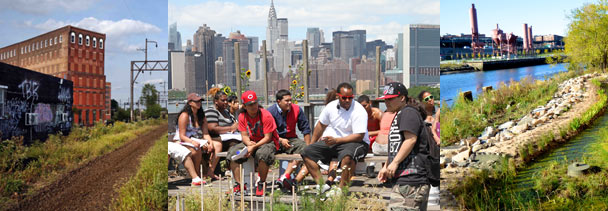
Transition towns, eco-villages, urban agriculture, green schools with edible school gardens, are becoming more and more mainstream and widespread. These initiatives all require forms of joint learning with sometimes unlikely partners. Organizing such learning, also referred to as multi-stakeholder social learning, requires a new role for environmental and sustainability educators and policy-makers. A new task might be: brokering and supporting vital coalitions that are both energizing and generative in engaging citizens, including children and youth, meaningfully in greening urban areas in order to contribute to local food security, health and ecological stewardship. This thematic strand explores these emerging and expanding initiatives from a learning perspective: What kind of learning is taking place? Who is learning? How can such learning be supported? What is the impact of these coalitions on the learners themselves, the organisations they represent and the community they seek to improve?
(Re) emerging concepts for environmental stewardship and sustainability
Since the birth of environmental education in the sixties of the last century emphasis has been placed on systems thinking and a more holistic approach to problem solving or situation improvement. Over the years many learning activities and curricula have been developed by environmental educators but still the challenge of enabling people to see connections, relationships and interdependencies, is as big as back then but the urgency to so is greater than ever. In meeting this challenge there are calls for re-discovering and utilizing indigenous ways of knowing but at the same time there are new concepts such as bio-mimicry, cradle to cradle and life cycle analysis that show promise in strengthening integral thinking and design. In this strands the educational potential of old, new and blended ways of ‘thinking the earth whole’ is explored.
Mind the gap! Moving from awareness to action
Early EE was informed by insights from behaviourist social psychology suggesting that an increase in environmental awareness would lead to more responsible environmental behaviour. This assumed linearity between increasing knowledge-growing-awareness and changing-behaviour has shown to be weak. Attitude-behaviour models have since then been revised to include a number of additional factors and feedback loops. Just providing information, raising awareness and changing attitudes apparently is not enough to change people’s behaviour. But still policy-makers and donors want ‘evidence’ that education leads to a change in behaviour and improved environmental quality. In this thematic strand we re-visit the ‘gap’ by exploring new behavioural models and new forms of ‘evidence’ taking a critical look at projects and approaches that successfully influence and/or change behaviour.
Assessing environmental and sustainability education in times of accountability
In this thematic strand the focus is on assessment of learners in school settings (K-12 and vocational education). In many countries there is a call for climbing the rankings and excelling in math, science and languages (cfr. the Pisa rankings). This often leads to a focus on the testing of ‘universal’ knowledge. At the same time schools – in their own context – need to pay attention to sustainability, health, citizenship, arts and humanities while preparing learners for a rapidly changing world and workplace. These claims seem to be competing with one another. How can environmental and sustainability education navigate this force field? Are there alternative ways of assessing learners that provide more space for meaningful learning around real/authentic issues?
Beyond the green economy: educating and learning for green jobs in a green society
Driven perhaps by mostly economic interests and technological innovations, companies and governments are beginning to re-orient themselves to what is commonly referred to as the ‘green economy’ and its related ‘green skills’ and ‘green jobs’. The demand for a workforce that is capable to work in such an economy is on the rise and (vocational) schools are responding by re-orienting their curricula. From an environmental and sustainability perspective it is important to critically follow this trend in order to make sure that the P for People and the P for Planet receive at least as much attention as the P for Profit or Prosperity. In this thematic strand we invite participants to discuss the role of environmental and sustainability education at the interface between school and community and the world of work.
New perspectives on research in environmental and sustainability education
The increased attention to ‘engagement’ in environmental learning has resulted in a greater focus on the agency of citizens, young and old, and their active participation in all phases of learning and inquiry. Positioning citizens in such roles is consistent with calls for treating all people as responsible agents capable of participating in changing and improving their circumstances. Doing so is considered crucial as the complexity and seemingly overwhelming nature of sustainability issues can easily lead to negativity and action paralysis. This is why some environmental education researchers emphasize not only the intellectual engagement of people in socio-ecological issues, but also their emotional engagement. For environmental education research to contribute to citizen engagement in socio-ecological-environmental issues, forms of civically engaged scholarship with appropriate research methodologies and methods are needed urgently. In this thematic strand participants are encouraged to share, reflect on and discuss emergent perspectives on research in environmental and sustainability education.
Educational policy development for environment & sustainability
Communities, schools and universities are affected by a number of educational policies that are not always consistent with one another and offer varying opportunities for addressing environment and sustainability in a meaningful way. This strand investigates existing and new policies and innovations that offer the most promise for enabling educational change for a more sustainable future, including in relation to educational institutions’ approaches to curriculum, research, facilities operations, governance, and broader engagement with community and place.
Education and learning for climate change adaptation and resilience
Communities, both urban and rural, are experiencing the impacts of climate change in sometimes subtle (e.g. the shifting of seasons, change of bird migration patterns) and not so subtle (e.g. flooding, droughts) ways. How can education and learning help communities adapt to these impacts and become more resilient in their response? How do communities strengthen their capacities for social resilience, reduced vulnerability and an integral risk management? Or should the focus be on ’adaptation’ and ’resilience’ reflecting the inevitability of climate change while de-emphasising climate change mitigation or prevention?
With nowadays many people, young and older, all over the world spending 80-90 % of their waking hours behing a screen (smart phone, tablet, laptop,TV or PC – to mix it up a bit) it is time to refer back to a study on the impact of educational nature immersion programme’s on child development completed by Wageningen University back in 2012. The study received some national press at the time via an interview for the Dutch news paper ‘Het Parool’ which was also picked-up by another major paper ‘het Algemeen Dagblad’ in its first issue of 2013 (I have included a copy of the latter interview at the end of this post, in Dutch I’m afraid).
A question that we did not ask at the time is whether the ICTs can be designed and used in such a way that they can perhaps help people reconnect with people and planet/place, given…
American media-theorist Douglas Rushkoff sheds an interesting light on the digital age and its consequences for our relationship with the ‘now’ and with ‘others’. Companies are competing with each other for what he calls our ‘eye-ball’ attention. We are constantly seduced to use ICTs and it is turning us into restless creatures with short attention spans who are constantly providing clues to corporations as to what we like, prefer, desire, etc. “Big data” and constant streams of cookies are informing businesses (and, indeed, governments) about what we are thinking and these businesses and governments are anticipating this by offering us what we want, essentially guiding us into pre-fabricated futures. Do you find it hard to BE in one place without your mind wondering off to somewhere else? In a fascinating near-monologue with powerful examples and a touch of irony and humour Rushkoff urges us to reclaim the now, the flow…
Story notes: Marianne Krasny and Keith Tidball of Cornell’s Civic Ecology Lab convened a workshop in Annapolis Maryland, at the offices of The National Socio-Environmental Synthesis Center, or SESYNC facilitated by David Maddox. The workshop was a gathering of 25 scholars and practitioners, come to talk about civic ecology.
But what is civic ecology? I asked each of the participants to give their short definition. This episode reveals their answers, and there is lots of nuance around some common themes. The work was supported in part by the U.S. Environmental Protection Agency and SESNYC. Special thanks to Jennifer Klein for directing the recordings.
You can also see a video version on youtube:
In order of appearance, the participants were:
Keith Tidball Department of Natural Resources, Cornell University http://dnr.cals.cornell.edu/people/keith-tidball Keith Tidball wants you to get a land ethic fit for the 21st century. He studies how people and nature interact to make communities more resilient.
Zahra Golshani Nature Cleaners, Iran https://www.facebook.com/Nature.Cleaners.IR Nature Cleaners strives to build community and a sense of environmentalism through voluntary trash collection in Iran.
Traci Sooter Drury University, Springfield, Missouri http://www.drury.edu/architecture/Traci-D-Sooter/ Traci Sooter uses her expertise as a green architecture to complete community-focused design projects with a focus on sustainability.
Rebecca Salminen Witt The Greening of Detroit http://www.greeningofdetroit.com The Greening of Detroit is invested in providing a greener future for Detroit by “inspiring sustainable growth of a healthy urban community”
Erika Svendsen U.S. Forest Service, Northern Research Station, New York http://www.nrs.fs.fed.us The Northern Research Station of the USFS works to understand forests in a human-disturbed landscape that includes NYC.
Jill Wrigley Collins Avenue Streamside Community
Baltimore, Maryland http://collinsavenuestreamside.org The Collins Avenue Streamside Community is a collective of households attempting social & ecological reconciliation in their neighborhood.
Veronica Kyle Faith in Place http://www.faithinplace.org Working with over 1,000 congregations of all faiths on issues of environmental stewardship. Based in Chicago.
Anniruddha Abhyankar The Ugly Indian, Bangalore http://www.theuglyindian.com The Ugly Indian is a community movement generating voluntary cleanup drives across India in hopes of changing civic standards.
Marianne Krasny Department of Natural Resources, Cornell University http://dnr.cals.cornell.edu/people/marianne-krasny Marianne Krasny wants to know how civic ecology practices affect individuals, communities, and the environment.
Dustin Alger Higher Ground Sun Valley http://www.highergroundsv.org Higher Ground Sun Valley gives individuals with disabilities, especially veterans, the chance to experience the outdoors through recreation and therapy.
Anandi Premlall Sustainable Queens, The Queensway http://www.about.me/aapremlall Sustainable Queens cultivates sustainable living, wellness, creativity, & empowerment through community gardens in underserved communities.
Laurel Kearns Drew Theological School, Madison, New Jersey http://users.drew.edu/lkearns/ Laurel Kearns trains religious leaders to understand the changing relationships between people and the environment.
Robert Hughes Eastern Pennsylvania Coalition for Abandoned Mine Reclamation http://epcamr.org/home/ EPCAMR is a coalition of individuals & organizations that supports abandoned mine reclamation for community use.
Rosalba Lopez Ramirez Kelly Street Garden, New York http://www.kellystgreen.com A community garden in the South Bronx. Their mission? To grow food, grow community, grow wellness, and grow leaders.
Carrie Samis Maryland Coastal Bays Program http://www.mdcoastalbays.org/ MCBP’s goal is to protect and conserve the watershed of Maryland’s five coastal bays through research, education, outreach, and restoration.
Lance Gunderson Department of Environmental Sciences, Emory University http://envs.emory.edu/home/people/faculty/gunderson_lance.html Lance Gunderson is an ecologist interested in how scientific understanding influences resource policy and management.
Kellen Marshall Ecology and Evolutionary Biology Department, University of Illinois at Chicago https://sites.google.com/site/kellenmarshallgillespie/ Kellen Marshall is a graduate student with interdisciplinary interests related to stresses on urban ecosystems.
Arjen Wals Waginengen University, University of Gothenburg
Caroline Lewis The CLEO Institute http://www.cleoinstitute.org/ The CLEO Institute is a non-profit dedicated to improving environmental education of the public as a means to support climate resilience.
Dennis Chestnut Groundwork Anacostia River, Washington, D.C. http://groundworkdc.org GARDC’s uses environmental restoration goals as a vehicle for community development in communities around the Anacostia River.
Louise Chawla Environmental Design Program, University of Colorado, Boulder http://www.colorado.edu/envd/people/faculty/louise-chawla Louise Chawla is interested in integrating nature into our every day, particularly through the engagement of children and youth.
Rebecca Jordan Departments of Human Ecology and Ecology, Evolution, and Natural Resources
Rutgers University, New Brunswick, New Jersey http://www.rebeccajordan.org A one-time evolutionary biologist of Lake Malawi’s cichlid fish, Rebecca Jordan’s current focus is on science education and citizen science.
Philip Silva Treekit; Department of Natural Resources, Cornell University http://treekit.org Philip Silva studies how citizen science helps monitor urban forests. TreeKit makes tools for measuring, mapping, & managing street trees.
Karim-Aly Kassam Environmental and Indigenous Studies, Cornell University http://www2.dnr.cornell.edu/kassam/ Dr. Kassam’s research interests are broad, but generally include ways of knowing as they relate to ecology.
Environmental Education Research has just published a special issue on environmental education in the age of neo-liberalism. It is a fascinating collection of papers! Here’s what SI editors Joe Henderson, David Hursh and David Greenwood write in their opening paper: This introduction to a special issue of Environmental Education Research explores how environmental education is shaped by the political, cultural, and economic logic of neoliberalism. Neoliberalism, we suggest, has become the dominant social imaginary, making particular ways of thinking and acting possible while simultaneously discouraging the possibility and pursuit of others. Consequently, neoliberal ideals promoting economic growth and using markets to solve environmental and economic problems constrain how we conceptualize and implement environmental education. However, while neoliberalism is a dominant social imaginary, there is not one form of neoliberalism, but patterns of neoliberalization that differ by place and time. In addition, while neoliberal policies and discourses are often portrayed…
Environmental Education Research has just published a special issue on environmental education in the age of neo-liberalism. It is a fascinating collection of papers! Here’s what SI editors Joe Henderson, David Hursh and David Greenwood write in their opening paper: This introduction to a special issue of Environmental Education Research explores how environmental education is shaped by the political, cultural, and economic logic of neoliberalism. Neoliberalism, we suggest, has become the dominant social imaginary, making particular ways of thinking and acting possible while simultaneously discouraging the possibility and pursuit of others. Consequently, neoliberal ideals promoting economic growth and using markets to solve environmental and economic problems constrain how we conceptualize and implement environmental education. However, while neoliberalism is a dominant social imaginary, there is not one form of neoliberalism, but patterns of neoliberalization that differ by place and time. In addition, while neoliberal policies and discourses are often portrayed as inevitable, the collection shows how these exist as an outcome of ongoing political projects in which particular neoliberalized social and economic structures are put in place. Together, the editorial and contributions to the special issue problematize and contest neoliberalism and neoliberalization, while also promoting alternative social imaginaries that privilege the environment and community over neoliberal conceptions of economic growth and hyper-individualism. I had the good fortune to work together on a paper, reviewing the UN DESD from this perspective, with John Huckle. Here’s the abstract to our paper:
The paper is one of three papers (out of 13) that Taylor & Frances has made open-access! The paper’s citation is: Huckle, J., Wals, A.E.J. (2015) The UN Decade of Education for Sustainable Development: business as usual in the end. Environmental Education Research, 21(3), p. 491-505. DOI:10.1080/13504622.2015.1011084 It can be downloaded here HuckleWalsESDNeoliberalismEER2015
My good colleague at Cornell University, Professor Marianne Krasny who has been at the forefront of civic ecology and civic ecology education, along with Keith Tidball, has created a very interesting MOOC on EdX. In the course you will explore why and how people come together to care for nature and cultivate community in places marked by disaster, war, poverty and environmental degradation. As usual participating in a MOOC is free. The course starts on April 10th.
About this Course
The actions of ordinary people are often absent in studies of urban renewal and urban ecology. Around the world, people who are fed up with environmental degradation and the breakdown of their communities come together to transform blighted vacant lots, trashed-out stream corridors, polluted estuaries, and other “broken places.” Civic ecology practices—such as community gardening, wetlands restoration, river cleanups, and tree planting—are a means for people to express resilience and…
My good colleague at Cornell University, Professor Marianne Krasny who has been at the forefront of civic ecology and civic ecology education, along with Keith Tidball, has created a very interesting MOOC on EdX. In the course you will explore why and how people come together to care for nature and cultivate community in places marked by disaster, war, poverty and environmental degradation. As usual participating in a MOOC is free. The course starts on April 10th.
About this Course
The actions of ordinary people are often absent in studies of urban renewal and urban ecology. Around the world, people who are fed up with environmental degradation and the breakdown of their communities come together to transform blighted vacant lots, trashed-out stream corridors, polluted estuaries, and other “broken places.” Civic ecology practices—such as community gardening, wetlands restoration, river cleanups, and tree planting—are a means for people to express resilience and rebuild communities marked by disaster and disinvestment.
Civic ecology draws on psychology, sociology, political science, education, ecology, and social-ecological systems resilience to understand how and why people care for nature and their communities.
Throughout this course, you will:
Explore the people, places, and practices that restore nature and revitalize neighborhoods, making a difference in ways big and small.
Discuss and evaluate contemporary thinking in resilience, social-ecological systems, and the relationship between nature and human/community well-being.
Grasp an understanding of how civil ecology enables those with limited resources to defy and cope with daily struggles, including after disaster and war.
Acquire the knowledge and skill set to enact change in your own community.
Participate in a civic ecology service learning project to turn classroom learning into real-life application.
This course is ideal for anyone who is intrigued by both social and environmental concerns, or simply has a desire to dive into an emerging 21st century, cross-disciplinary subject area. You will complete this course with a keener awareness of social-ecological issues and concerns, as well as a greater knowledge of the practical steps required to rebuild and maintain community and nature in a world marked by inequality, conflict, and climate change.
More information? go to the course website by clicking here!
In May of 2014 ‘Science’ published a paper on the importance of creating synergies between science education and environmental education with the support of Citizen Science. The article, which I co-authored with Justin Dillon, Bob Stevenson and Michael Brody, is based on the trends emerging from the International Handbook of Environmental Education Research (Stevenson et al, 2013)*. The article has now been made available as open-access and can be obtained at: http://www.sciencemag.org/content/344/6184/583.full.pdf or by clicking: ScienceWalsetall2014.
There are a number of lessons to be drawn from the article but essentially we emphasize the importance of: Connecting biophilia and videophilia: that is, study ways in which ever-present technologies and cyberspaces can be used to help people (re)gain a deeper and more empathetic contact with each other and with the world (presently these technologies and spaces tend to lead to the exact opposite). Creating…
Perhaps 2015 will be the year that education, learning and action for socio-ecological sustainability will accelerate. Public unrest about climate change, micro-plastics in oceans and bodies, awareness of the hijacking of identity and colonalisation of the mind for business interests (don’t accept those cookies, or check that ‘I agree’ box too quickly), the increased yearning for meaning over consumption, can be considered early beginnings of a transition towards a healthier, more equitable, ecologically viable, morally defensible and peaceful world.
2015 will be the year where the UN Global Action Program for Education for Sustainable Development will be approved as one mechanism seeking to realize the Sustainable Development Goals (SDGs). Closer to home, in my own backyard, 2015 will be the year where the Dutch government will need to respond to a demand by the parliament that all Dutch education seriously addresses sustainability. This demand was initiated by 36 Dutch youth organisations last fall and somewhat surprisingly received a majority.
2015 will be the year where the city of Gothenburg in Sweden will host the 8th World Environmental Education Congress (WEEC2015) in June. The conference identifies 11 key themes to be explored during the conference and beyond, and all represent potential tipping points in a transition towards sustainability. I have listed them below but please go the conference website (http://weec2015.org/) for more information or have a look at a short ‘pitch’ for the conference that was taped last year to promote the conference.
Taking Children seriously in addressing global challenges
We only have one planet, it’s simple, it’s the only we one we have, and we have got to look after it. But when we explore ’People and Planet and how they can develop together’, what people are we talking about? In this strand we focus on the young both as victims, heirs and catalyst and agents of change: not only the children growing up in affluence but also those growing up in poverty. How can we create spaces for them to become fully self-actualized members of society who can ably and meaningfully contribute to a transition towards a more sustainable world in which People and Planet develop together?
Reclaiming sense of place in the digital age
Place-based approaches emphasizing the importance of place and place-based identity in determining our relations with the planet are on the rise across the globe. The focus on place and identity is timely as the complexity and uncertainty brought on by globalization and the rapid pace of technological and social change resulting in enormous cultural shifts which include a search for meaning and affiliation in locally defined identities. Although there are some who are worried about the ‘disconnect’ between people and place that results from a pre-occupation with and dependency on information and communication technologies, there are also those who see the use of ICTs as a way to reconnect people and places. There are numerous examples of citizens monitoring changes in the environment (e.g. changing bird migration patterns, changing quality of water, soil and air, changes in biodiversity) using GIS, cell phones, and specially designed monitoring apps. This strand explores the opportunities for reconnecting people and planet locally in a rapidly changing world.
Environmental education and poverty reduction
As the millennium development goals are being replaced by sustainable development goals and there appears to be a shift from ‘education for all’ to ‘quality education for all‘, an important question is: what is the role of EE in reducing poverty? Already in 1975 (Belgrade Charter on EE) and 1977 (Tbilisi Declaration) EE was assigned a role in overcoming inequality and questioning unsustainable economic models to help alleviate poverty. But what has EE done concretely since? And why has reducing inequity and poverty been under-emphasized in the DESD? As poor people around the world are disproportionately affected by the impact of climate change, mining, resource depletion, loss of food and nutrition security, and so on, environmental and sustainability educators need to look for ways to engage multiple stakeholders (schools, communities, governments, private sector and civil society organizations) in strategies to reduce poverty and improve livelihoods. In this strand we look for researched practices from around the world that seek to do so.
Learning in vital coalitions for green cities
Transition towns, eco-villages, urban agriculture, green schools with edible school gardens, are becoming more and more mainstream and widespread. These initiatives all require forms of joint learning with sometimes unlikely partners. Organizing such learning, also referred to as multi-stakeholder social learning, requires a new role for environmental and sustainability educators and policy-makers. A new task might be: brokering and supporting vital coalitions that are both energizing and generative in engaging citizens, including children and youth, meaningfully in greening urban areas in order to contribute to local food security, health and ecological stewardship. This thematic strand explores these emerging and expanding initiatives from a learning perspective: What kind of learning is taking place? Who is learning? How can such learning be supported? What is the impact of these coalitions on the learners themselves, the organisations they represent and the community they seek to improve?
(Re) emerging concepts for environmental stewardship and sustainability
Since the birth of environmental education in the sixties of the last century emphasis has been placed on systems thinking and a more holistic approach to problem solving or situation improvement. Over the years many learning activities and curricula have been developed by environmental educators but still the challenge of enabling people to see connections, relationships and interdependencies, is as big as back then but the urgency to so is greater than ever. In meeting this challenge there are calls for re-discovering and utilizing indigenous ways of knowing but at the same time there are new concepts such as bio-mimicry, cradle to cradle and life cycle analysis that show promise in strengthening integral thinking and design. In this strands the educational potential of old, new and blended ways of ‘thinking the earth whole’ is explored.
Mind the gap! Moving from awareness to action
Early EE was informed by insights from behaviourist social psychology suggesting that an increase in environmental awareness would lead to more responsible environmental behaviour. This assumed linearity between increasing knowledge-growing-awareness and changing-behaviour has shown to be weak. Attitude-behaviour models have since then been revised to include a number of additional factors and feedback loops. Just providing information, raising awareness and changing attitudes apparently is not enough to change people’s behaviour. But still policy-makers and donors want ‘evidence’ that education leads to a change in behaviour and improved environmental quality. In this thematic strand we re-visit the ‘gap’ by exploring new behavioural models and new forms of ‘evidence’ taking a critical look at projects and approaches that successfully influence and/or change behaviour.
Assessing environmental and sustainability education in times of accountability
In this thematic strand the focus is on assessment of learners in school settings (K-12 and vocational education). In many countries there is a call for climbing the rankings and excelling in math, science and languages (cfr. the Pisa rankings). This often leads to a focus on the testing of ‘universal’ knowledge. At the same time schools – in their own context – need to pay attention to sustainability, health, citizenship, arts and humanities while preparing learners for a rapidly changing world and workplace. These claims seem to be competing with one another. How can environmental and sustainability education navigate this force field? Are there alternative ways of assessing learners that provide more space for meaningful learning around real/authentic issues?
Beyond the green economy: educating and learning for green jobs in a green society
Driven perhaps by mostly economic interests and technological innovations, companies and governments are beginning to re-orient themselves to what is commonly referred to as the ‘green economy’ and its related ‘green skills’ and ‘green jobs’. The demand for a workforce that is capable to work in such an economy is on the rise and (vocational) schools are responding by re-orienting their curricula. From an environmental and sustainability perspective it is important to critically follow this trend in order to make sure that the P for People and the P for Planet receive at least as much attention as the P for Profit or Prosperity. In this thematic strand we invite participants to discuss the role of environmental and sustainability education at the interface between school and community and the world of work.
New perspectives on research in environmental and sustainability education
The increased attention to ‘engagement’ in environmental learning has resulted in a greater focus on the agency of citizens, young and old, and their active participation in all phases of learning and inquiry. Positioning citizens in such roles is consistent with calls for treating all people as responsible agents capable of participating in changing and improving their circumstances. Doing so is considered crucial as the complexity and seemingly overwhelming nature of sustainability issues can easily lead to negativity and action paralysis. This is why some environmental education researchers emphasize not only the intellectual engagement of people in socio-ecological issues, but also their emotional engagement. For environmental education research to contribute to citizen engagement in socio-ecological-environmental issues, forms of civically engaged scholarship with appropriate research methodologies and methods are needed urgently. In this thematic strand participants are encouraged to share, reflect on and discuss emergent perspectives on research in environmental and sustainability education.
Educational policy development for environment & sustainability
Communities, schools and universities are affected by a number of educational policies that are not always consistent with one another and offer varying opportunities for addressing environment and sustainability in a meaningful way. This strand investigates existing and new policies and innovations that offer the most promise for enabling educational change for a more sustainable future, including in relation to educational institutions’ approaches to curriculum, research, facilities operations, governance, and broader engagement with community and place.
Education and learning for climate change adaptation and resilience
Communities, both urban and rural, are experiencing the impacts of climate change in sometimes subtle (e.g. the shifting of seasons, change of bird migration patterns) and not so subtle (e.g. flooding, droughts) ways. How can education and learning help communities adapt to these impacts and become more resilient in their response? How do communities strengthen their capacities for social resilience, reduced vulnerability and an integral risk management? Or should the focus be on ’adaptation’ and ’resilience’ reflecting the inevitability of climate change while de-emphasising climate change mitigation or prevention?
IF ANY OF THESE THEMES SPEAK TO YOU AND YOU FEEL YOU CAN MAKE A CONTRIBUTION GO TO http://weec2015.org/ AND SUBMIT YOUR ABSTRACT BY JANUARY 14TH!
During the UN World Conference on Education for Sustainable Development held in Nagoya, Japan in November, the Fourth Edited Volume of the Dutch government supported Series on education and learning in the context of sustainability was launched: “Intergenerational Learning and Transformative Leadership for Sustainable Futures” edited by Peter Blaze Corcoran and Brandon Hollingshead. Here’s how the flyer of Wageningen Academic Publishers describes the book:
The work of creating the future is being done now – and much of it is unsustainable in terms of natural and cultural resources. How will the next generation of leadership for environmental sustainability be raised up? Can we imagine sustainable futures, and can we enable transformative leadership to help us realize them? How can we best ensure that the several generations share their particular knowledge? What are the ethical frameworks, methodologies, curricula, and tools necessary for advancing and strengthening education for intergenerational sustainability learning and leadership?
In this book, 82 authors from 26 countries across 6 continents seek answers in 32 essays to the many questions related to the intergenerational collaboration that holds promise for creating sustainable futures. The authors themselves represent a diversity of geography, gender, and generation – and include the institutions comprising the emerging International Intergenerational Network of Centers. They speak to key principles, perspectives, and praxes at the intersection of intergenerational learning and transformative leadership in thecontext of education for sustainability. The foreword was written by UNESCO’s Director General Irena Bokova.
Together with my colleague Valentina Tassone I wrote a chapter on the EYE for Sustainability Tool developed at Wageningen University to help engage students more meaningfully in the exploration of everyday sustainability issues. For more information go to Wageningen Academic Publisher’s website!
Other books in the Series can be found under ‘books’ in the menu bar on top of the page!
‘Social learning towards sustainability: problematic, perspectives and promise’ is the title of a special issue of NJAS which I co-edited with my (former) colleagues Romina Rodela and PJ Beers. The abstract of the introductory paper with the same title reads as follows:
A common thread throughout this special issue is that sustainability is not a destiny one can eventually reach, but rather a continuous learning path towards transformation that should be profound (e.g. affecting moral standards and value systems), transversal (e.g. requiring the involvement of individuals, groups and collectives) and counter-hegemonic (e.g. requiring the exposure and questioning of stubborn routines). From such a vantage point debates about sustainability likely require transdisciplinary to transcend a singular disciplinary view-point and to allow for the consideration of different perspectives and types of knowledge. The aim of this special issue is to assess the added-value of a social learning perspective on research and action from at least three different ‘disciplinary’ perspectives: systems innovation, natural resource management, and environmental education. Each of these offers a particular perspective on learning, on change processes and evolving understandings of sustainable practices.
The proofs of this introductory paper with the following citation: Wals, A.E.J. and R. Rodela (2014). Social learning towards sustainability: Problematic, perspectives and promise. NJAS. 69, June, pp. 1-3 can be found here: WalsRodelaIntroNJAS.
The table of contents of the Special Issue can be seen below:
As one of the organizers of the next World Environmental Education Congress (WEEC), to be held in June of 2015 in Gothenburg, Sweden, I was asked to introduce some of the key topics to be addressed during the congress at the European Environmental Education Days (Bergamo, Italy, September 24-25, 2014). Since it was a bit consuming in terms of time and energy… we agreed that I would record my talk here in Gothenburg where I am currently part of my time. In the talk I use the release of the iPhone 6 as an entry point to talk about the complexity of socio-ecological challenges that are compounded by a dominating neo-liberal view of economics. I end the talk by briefly touching upon some of the main themes of the congress. The conference website at http://www.weec2015.org has just opened its abstract submissions feature and people can submit their abstracts until mid-December. Environmental and sustainability education will need to go hand in hand if we are to make a transition towards a healthier, more equitable, just and mindful society that does not further compromise the carry-capacity of planet Earth.
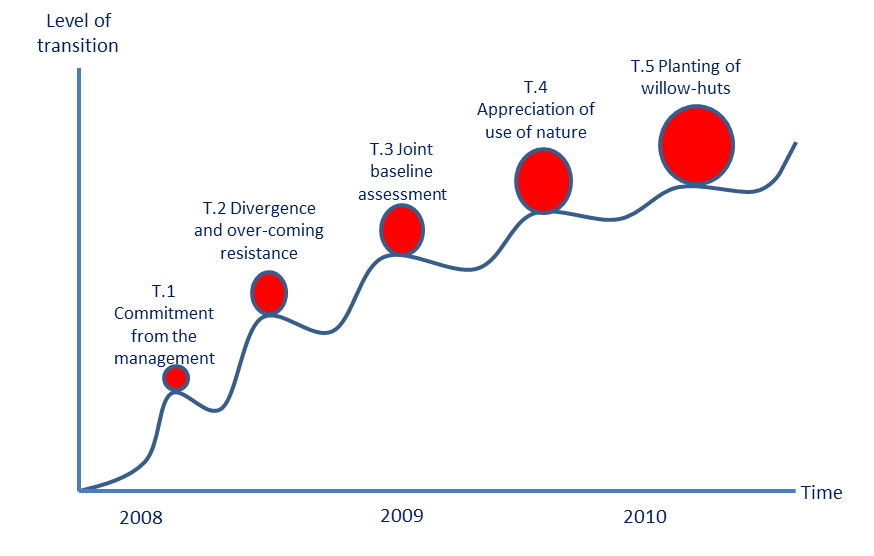
In this new paper a key policy ‘tool’ used in the Dutch Environmental Education and Learning for Sustainability Policy framework is introduced as a means to develop a sense of place and associated ecological mindfulness. The key elements of this tool, called the vital coalition, are described while an example of its use in practice, is analysed using a form of reflexive monitoring and evaluation. The example focuses on a multi-stakeholder learning process around the transformation of a somewhat sterile pre-school playground into an intergenerational green place suitable for play, discovery and engagement. Our analysis of the policy-framework and the case leads us to pointing out the importance of critical interventions at so-called tipping points (see the figure below) within the transformation process and a discussion of the potential of hybrid learning in vital coalitions in strengthening ecological mindfulness. This paper does not focus on establishing an evidence base for the causality between this type of learning and a change in behavior or mindfulness among participants as a result contributing to a vital coalition but rather focusses on the conditions, processes and interventions that allow for such learning to take place in the first place.
The full paper for personal use – under the condition that is not shared – can be obtained by emailing arjen.wals@wur.nl or through your library system







 Transformative learning