Unknown's avatar

About arjenwals

Arjen Wals is a Professor of Social Learning and Sustainable Development. He also is a UNESCO Chair in the same field. Wals has worked at Wageningen University since 1992 in various departments. He is a guest professor at IDPP at Gothenburg University since 2014. His research focuses on learning processes that contribute to a more sustainable world. A central question in his work is how to create conditions that support new forms of learning that take full advantage of the diversity, creativity and resourcefulness that is all around us, but so far remains largely untapped in our search for a world that is more sustainable than the one currently in prospect. Wals has been involved in a number of projects in Africa that seek to make curricula more responsive to current societal and labour market needs and challenges posed by (un)sustainability. Popular books include: 'Higher Education and the Challenge of Sustainability (Kluwer Academic, 2004) and Social Learning towards a Sustainable World (Wageningen Academic, 2007).

Taking a walk in the forest, bad for the economy – the colonalisation of time and attention in the digital age

American media-theorist Douglas Rushkoff sheds an interesting light on the digital age and its consequences for our relationship with the ‘now’ and with ‘others’. Companies are competing with each other for what he calls our ‘eye-ball’ attention. We are constantly seduced to use ICTs and it is turning us into restless creatures with short attention spans who are constantly providing clues to corporations as to what we like, prefer, desire, etc. “Big data” and constant streams of cookies are informing businesses (and, indeed, governments) about what we are thinking and these businesses and governments are anticipating this by offering us what we want, essentially guiding us into pre-fabricated futures. Do you find it hard to BE in one place without your mind wondering off to somewhere else?
In a fascinating near-monologue with powerful examples and a touch of irony and humour Rushkoff urges us to reclaim the now, the flow of time, the possibility of meaning and as sense of place and belonging. In his book Present Shock, When Everything Happens Now Rushkoff argues that we are all suffering from the five syndroms that belong to the ‘always-on-society’. We need to be reacheable 24/7 but are constantly alienated from the now and each other (and let me add the physical places of which we are part including nature, aw). A call for ‘digital detox’.

Note this is from Tegenlicht (April 13, 2014) from the Dutch TV station VPRO – click the link and wait for the programme to start – Rushkoff speaks to us in English (with Dutch subtitles. Very worthwhile if you have…. time… (NOTE The first minute or so is in Dutch when the interviewer introduces Ruskoff to the Dutch viewers, but then Rushkoff takes over – listen, shiver and learn).

Re-claiming time

p.s. this post links to an earlier post on “Growth fatigue and innovation saturation” from 2013.

“Saving the Planet hurts the local economy” – Climate Change makes its way into the world’s classrooms

Ok – it has taken up the whole 10 years of the UN Decade of Education for Sustainable Development but the day before Earth Day, April 22nd, a global newspaper, The International New York Times, published a half page article on the role of and the need for education for sustainable development with a specific focus on teaching climate change in schools. Hundreds, if not thousands of articles have been published about climate change and sustainable development but rarely do they make a reference to the role of education, teaching and learning. As the world is confronted with major ecological crises leading to or amplifying major social crises (and vice versa as well) it is about time that the media begin to engage the question of ‘how should education respond?’ ‘what should people be learning and how?’ The article – which you can find HERE: ESDinIntlNYTimes210414 – includes an interview with Alexander Leicht, Head of UNESCO’s Education for Sustainable Development section a number of other informants from various parts of the world. While there is a growing awareness that there is a need of involving people meaningfully in what seem to be the greatest challenges of our time the article also notes resistance to doing so. In Wyoming, for instance, law-makers blocked the teaching of climate change saying that doing so could hurt the local economy. This painfully makes clear the difficult situation we find ourselves in.

Sustainability in higher education in the context of the UN Decade of Education for Sustainable Development

Some of the content of this paper was presented during the opening session of the 42nd NERA conference which has as its overarching theme ‘Education for Sustainable Development’. Over 650 educational researchers, mostly from the Nordic countries, are in attendance.

arjenwals's avatarTransformative learning

Sustainability in higher education in the context of the UN DESD: a review of learning and institutionalization processes” is a paper that was published in a recent issue of the Journal of Cleaner Production Volume 62, Pages 1-138, January 2014) as a part of a theme issue on:

“Higher Education for Sustainable Development: Emerging Areas”. This special issue is edited by Maik Adomßent, Daniel Fischer, Jasmin Godemann, Christian Herzig, Insa Otte, Marco Rieckmann and Jana Timm of Leuphana University in Germany.

The paper I contributed is grounded empirically in a review of UN’s Decade of Education for Sustainable Development (UN DESD) I was commissioned to carry out by UNESCO. The review’s section on the learning processes taking place in the higher education arena forms the basis of this article. Particular attention is paid to the role of UNESCO ESD Chairs in advancing sustainability-oriented learning and competences in higher education.

The…

View original post 132 more words

How to educate in a Changing World? Curriculum Innovation in Tertiary Agricultural Education (TAE)

Cover
Download the book here!

We live in turbulent times, our world is changing at accelerating speed. Information is everywhere, but wisdom appears in short supply when trying to address key interrelated challenges of our time such as; runaway climate change, the loss of biodiversity, the depletion of natural resources, the on-going homogenization of culture, and rising inequity. Living in such times has implications for education and learning.
(Wals, A.E.J. and Corcoran, P.B. (Eds.) (2012). Learning for Sustainability in Times of Accelerating Change, Wageningen: Wageningen Academic Publishers.)

The speed of change, physically, socially and culturally, is accelerating. Continued globalization and digitalization are not only affecting how we think, what we know, who to believe, how we act, they also affect the role of education in society. Higher education, for instance, and the science it produces, is no longer the sole authority of truth, if ever it was. Rather, science oftentimes represents just another point of view or an opinion in the public debate of controversial and ambiguous issues such as; the causes and impacts of climate change, the role of GMOs in food security, the use of biofuels, etc. Scientists can be found on different ends of the ongoing debates, although more might be found at one end than on the other. It is not easy to decide who is right, who is wrong, or who is more right than others, or what the best way to move forward might be.

What do we educate for in such a world when things change so fast and knowledge becomes obsolete before you know it? How do we prepare today’s graduate for the world of tomorrow? And more specifically, what are the implications for tertiary agricultural education (TAE) around the world? Again I would like to offer some thinking and reflection on existing practices that we did in the past that is still relevant today but now easily accessible thanks to open access and the digital age: Wals, A.E.J. (Ed.) (2005). Curriculum Innovations in Higher Agricultural Education. The Hague: Elsevier /Reed Business Information. In this book you will find contributions by Richard Bawden, Fabio Carporali, Paul Pace, Bill Slee and Sri Sriskandarajah. The opening section focusses on principles and stepping stones for curriculum development in a changing world, whereas the second part focusses on newly developed MSc programmes in a number of European Life Science Universities in the area of Integrated Rural Development.

You can download the book by clicking on the link below the book’s cover image above!

The educational appeal of vagueness: the case of biodiversity

Environmental Education & Biodiversity

Loss of biodiversity is back on the agenda having faded somewhat during the last 15 years or so with the rise of new urgent issues such as runaway climate change, loss of food security, the rise of micro-toxins in waters and soils, etc. With the renewed attention for biodiversity it might be useful to go back to the nineties when the topic was high on the international policy agenda and some effort was spent on making biodiversity meaningful for ordinary citizens. Two publications that I was involved in back then seem very relevant today.

The first one appeared in the Canadian Journal of Environmental Education (I believe the only open-access EE journal): Dreyfus, A., Wals, A.E.J. and D. van Weelie (1999). The socio-scientific dispute character of environmental education. Canadian Journal of Environmental Education, 4, 155-176. Download here: Canadian Journal of EE[

The second one is a book commissioned by the Dutch government titled “Environmental Education and Biodiversity” which I recently updated slightly to make it suitable for open-access publication. Full reference: Wals, A.E.J., (Ed.) (1999). Environmental Education and Biodiversity. National Reference Centre for Nature Management, Wageningen, 107 p.Download here: Book Environmental Education & Biodiversity

The book is more elaborate than the article and contains concrete stepping stones for making biodiversity meaningful. Here’s a brief abstract of the book which also applies – in part – to the article.

Despite all the confusion about biodiversity, one thing is clear: there is no one single perspective or definition of biodiversity that accurately describes it in all situations or contexts. Biodiversity can have different meanings depending on the user and the context in which it is used. Even within the scientific arena a great number of biodiversity meanings and interpretations can be distinguished. It is not uncommon to find that scientific, political and symbolic meanings are used interchangeably by the same person. Both the knowledge base and the value base of biodiversity are variable and to a degree unstable and questionable.

Although these characteristics of biodiversity can render the concept useless or reduce it to a rhetorical instrument, they can also add to its strength when handled with care. Certainly from an environmental education perspective, but also from a policy-making perspective, these characteristics offer some worthwhile advantages: 1) Biodiversity brings together different groups in society that are searching for a common language to discuss nature conservation issues in relation to sustainability issues. 2) This dialogue allows the socio-scientific dispute character of “science-in-the-making” to surface. Participation in such a dispute is an excellent opportunity to learn about a highly relevant, controversial, emotionally charged and debatable topic at the crossroads of science, technology and society. 3) Making such a concept meaningful to the lives of citizens requires a procedure that could be utilised when developing educational programmes that focus on similar topics (i.e. education for sustainability).

This book provides a justification and rationale for developing biodiversity as a leading concept for environmental education for human development. Furthermore it proposes a stepping stone procedure that recognises the socio-scientific dispute character of biodiversity and provides a tool for turning biodiversity into a meaningful and existentially relevant issue. The procedure includes the following steps: analysing meanings of biodiversity, determining one or more perspectives based on the general learning goals of environmental education, setting specific learning objectives, selecting (sub)themes for learning, contextualising biodiversity and establishing the value of biodiversity. The procedure is intended to help curriculum developers, teachers, educational support staff and environmental educators give specific meaning to biodiversity and to help learners critically analyse the way biodiversity is used in science, technology and society. The procedure is an intermediate product that offers direction in developing and implementing specific learning activities and materials for various groups of learners.

Abstract of the article in French
Résumé
L’éducation relative à l’environnement dans un monde postmoderne devra être sensible à la nature mal définie des principaux concepts naissants, tels que la biodiversité et la durabilité. Malgré toute la confusion qui entoure ces concepts, une chose est claire : il y a plus d’une façon de considérer ces concepts ou de les définir. En d’autres termes, il n’existe pas une seule perspective ou définition de la biodiversité ou de la durabilité qui les décrive avec exactitude dans toutes les situations ou tous les contextes. Bien que cette définition approximative rende de tels concepts inutiles ou les réduise à un instrument rhétorique d’un point de vue moderne, elle les rend intéressants dans une perspective postmoderne. En reconnaissant la nécessité de respecter le pluralisme (respect des différentes façons de voir, d’évaluer, de comprendre, etc.), la présence constante d’éléments d’ambivalence et d’incertitude dans la prise de décision environnementale et la nécessité d’apprendre dans ce riche contexte, les éducateurs en environnement dans un monde postmoderne trouveront une valeur dans la nature mal définie de ces concepts naissants. En se servant de la biodiversité comme exemple, les auteurs illustrent l’attrait pédagogique de la définition approximative. La biodiversité réunit différents groupes de la société à la recherche d’un langage commun pour discuter de la conservation de la nature en relation avec les enjeux postmodernes de la durabilité. Le seul fait que ces groupes avec des antécédents divergents se concentrent sur un concept commun, bien que la signification du concept varie pour chacun des groupes, ouvre la porte au débat socioscientifique. Ce débat fournit une excellente occasion d’apprentissage sur un thème hautement pertinent, litigieux, émotif et discutable au carrefour des sciences, de la technologie et de la société. Une attention spéciale est accordée au rôle des connaissances scientifiques dans des débats de ce type.

Sustainability in higher education in the context of the UN Decade of Education for Sustainable Development

Sustainability in higher education in the context of the UN DESD: a review of learning and institutionalization processes” is a paper that was published in a recent issue of the Journal of Cleaner Production Volume 62, Pages 1-138, January 2014) as a part of a theme issue on:

“Higher Education for Sustainable Development: Emerging Areas”. This special issue is edited by Maik Adomßent, Daniel Fischer, Jasmin Godemann, Christian Herzig, Insa Otte, Marco Rieckmann and Jana Timm of Leuphana University in Germany.

The paper I contributed is grounded empirically in a review of UN’s Decade of Education for Sustainable Development (UN DESD) I was commissioned to carry out by UNESCO. The review’s section on the learning processes taking place in the higher education arena forms the basis of this article. Particular attention is paid to the role of UNESCO ESD Chairs in advancing sustainability-oriented learning and competences in higher education.

The main conclusion that can be drawn is that Higher Education Institutions are beginning to make more systemic changes towards sustainability by re-orienting their education, research, operations and community outreach activities all simultaneously or, which is more often the case, a subset thereof. They are doing so amidst educational reforms towards efficiency, accountability, privatization, management and control that are not always conducive for such a re-orientation. Some universities see in sustainability a new way of organizing and profiling themselves. The UNESCO ESD Chairs mainly play a role in conceptualizing learning, competence and systems change.

The full reference is: Wals, A.E.J. (2013). Sustainability in higher education in the context of the UN DESD : a review of learning and institutionalization processes, Journal of Cleaner Production (www.sciencedirect.com/science/article/pii/S0959652613003880). A preview can be found here! SustainabilityinHigherEducationWalsJournalCleanerProduction13

Creating Transdisciplinary Dialogue & Phronesis in Pursuit of Sustainability

TradingZonesCover
This book is the result of a rather interesting writing process initiated by the editors about two years ago when they decided that the focus of the book, transdisciplinary dialogue, should also be its process… In order to realize this they invited about 30 scholars from quite different disciplinary backgrounds who did not know each other (most of them anyway) very well or at all, but all had an interest in trans- and interdisciplinarity and a shared concern about the well-being of people and planet. During a joint ‘thinkshop’ held at Cornell’s Field Station in upstate New York, the participants jointly conceptualized the book and created writing ‘duo’s’. I myself formed a duo with Science Historian Scott Peters and bonded with him around the concepts of phronesis, post-normal science and transformative learning (find a link to our chapter at the end of this post). Author-teams were also asked to include a piece of art in their work that somehow captures the spirit of their joint writing venture. On the publisher’s website the wonderful book that resulted is described as follows:

Environmental educators often adhere to a relatively narrow theoretical paradigm focusing on changing attitudes and knowledge, which are assumed to foster pro-environmental behaviors, which, in turn, leads to better environmental quality. This book takes a different approach to trying to understand how environmental education might influence people, their communities, and the environment. The authors view changing environmental behaviors as a «wicked» problem, that is, a problem that does not readily lend itself to solutions using existing disciplinary approaches. The book as a whole opens up new avenues for pursuing environmental education research and practice and thus expands the conversation around environmental education, behaviors, and quality. Through developing transdisciplinary research questions and conceptual paradigms, this book also suggests new practices beyond those currently used in environmental education, natural resources management, and other environmental fields.

Contents: Marianne E. Krasny: Introduction. Tales of a Transdisciplinary Scholar – Joseph E. Heimlich/Mary Miss: Art and Environmental Education Research: Reflections on Participation – Jeppe Læssøe/Marianne E. Krasny: Participation in Environmental Education: Crossing Boundaries under the Big Tent – Martha C. Monroe/Shorna Broussard Allred: Building Capacity for Community-Based Natural Resource Management with Environmental Education – Scott Peters/Arjen E. J. Wals: Learning and Knowing in Pursuit of Sustainability: Concepts and Tools for Transdisciplinary Environmental Research – Barbara A. Crawford/Rebecca Jordan: Inquiry, Models, and Complex Reasoning to Transform Learning in Environmental Education – Joseph E. Heimlich/Mary Miss: Art and Environmental Education Research: Reflections on Appreciation – John Fraser/Carol B. Brandt: The Emotional Life of the Environmental Educator – Leesa Fawcett/Janis L. Dickinson: Psychological Resilience, Uncertainty, and Biological Conservation: Junctures Between Emotional Knowledges, NatureExperiences, and Environmental Education – Joseph E. Heimlich/Mary Miss: Art and Environmental Education Research: Reflections on Place – Timon McPhearson/Keith G. Tidball: Disturbances in Urban Social-Ecological Systems: Niche Opportunities for Environmental Education – Richard C. Stedman/Nicole M. Ardoin: Mobility, Power, and Scale in Place-Based Environmental Education – Marianne E. Krasny/Megan K. Halpern/Bruce V. Lewenstein/Justin Dillon: Conclusion. Do «Arranged Marriages» Generate Novel Insights?

You find a sneak preview of the chapter I co-authored with Scott Peters – titled: Learning and Knowing in Pursuit of Sustainability: Concepts and Tools for Trans-Disciplinary Environmental Research here: FinalPeters&Wals2013<

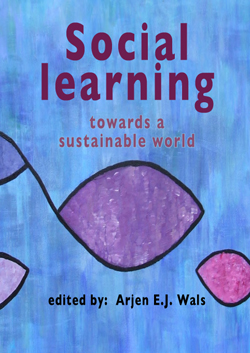
Social learning towards a sustainable world – open access at last!

cover image of 'Social learning'

‘Social learning: Towards a sustainable world’ edited by Arjen E.J. Wals

Wageningen Academic Publishers has released the e-version of “Social Learning towards a sustainable world” as an open-access book that can be downloaded for free by anyone with a computer and access to the web. This is a result of the book being a ‘top seller’ for WAP three years in a row.

Should the latest book in the same series “Learning for Sustainability in Times of Accelerating Change” become as successful this book too will become open-access in all likelihood in due time.

To get to the free version go to: http://www.wageningenacademic.com/sociallearning

Feel free to share the pdf with others of course.

Meeting Malawi’s Minister of Environment & Climate Change Management

Earlier this month I had a fascinating week working with colleague Prof. Heila Lotz-Sisitka of Rhodes University (SA) and three SANPAD PhD-students in Malawi (Tich from Zimbabwe, Aristide from Mozambique and Dick from Malawi) on research issues related to the PhD work on Social Learning and Natural Resource Management (See my earlier Blog Post on (Re)Views of Social Learning). In the city of Zomba Prof. Sosten Chioto of Chancellor College took us to a brand new community radio station that has been set up to reach rural area’s in Southern Malawi on issues of climate change and food security. The radio station (104.1 FM ChanCo Community Radio) mixes music and information and is quickly becoming one of the more popular stations in the region. A big part of its success seems to be the fact that listeners, even in some of the remotest of area’s, respond to questions using their cell phones, either by calling in or by sending in text messages.

While at the station for a recording session we had the opportunity to speak with the Honorable Halima Daud, Malawi’s Minister of Environment and Climate Change Management who later that week would open the annual congress of the Environmental Education Association of Southern Africa in Lilongwe where I was asked to give a keynote on “Environmental Education and the Green Economy – opportunities and pitfalls”

Meeting Halima Daud

Ms. Daud made it clear that the addition of ‘Climate Change Management’ to her job title was crucial to emphasize the severe challenges climate change poses on food security issues in the country. Particularly the shifting of the rain patterns is affecting seeding and harvesting cycles and is extending the dry season while the current systems are not set up for harvesting the intensified rains that do fall periodically in the wet season. This is negatively affecting productivity which, near the lake area’s is increasing the pressure on fisheries (where stocks are under pressure and declining rapidly). The latter is an issue that Dick’s thesis “Organizing Multi-stakeholder social learning to foster sustainable fishing” is seeking to address.

Both the conversation with Ms. Daud and the presentations and discussions at the EEASA conference confirmed that we live in times of accelerating changes that require creative, routine braking responses, from the world of business, governance, science but, indeed, also from education.

As an introduction to this I am including the Introductory chapter to “Learning for Sustainability in Times of Accelerating Change” (Wals & Corcoran, 2012) here: Introductory ChapterIntroduction – Wals & Corcoran, 2012

If you are interested in Food Security in relation to Sustainable Development you may want to have a look at the newly formed Centre for Sustainable development & Food Security at Wageningen University at:http://www.wageningenur.nl/en/Expertise-Services/Research-Institutes/centre-for-development-innovation/CSDFS.htm

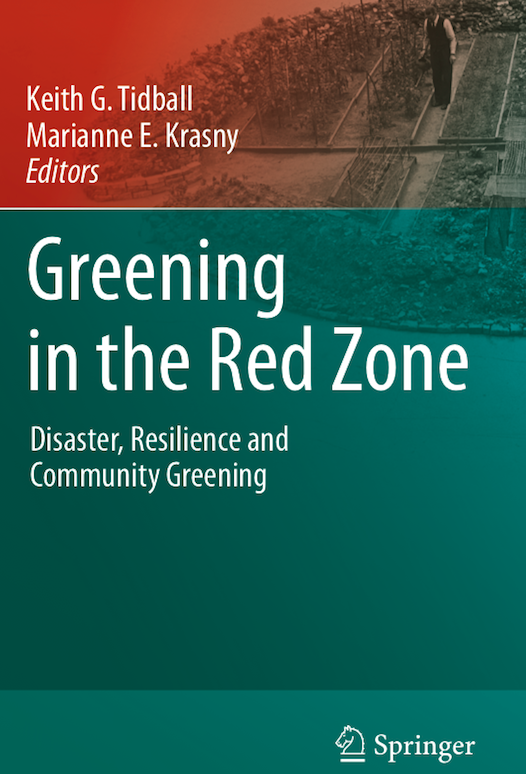
Greening in the Red Zone… Disaster, Resilience and Community Greening – now available!

Cover Greening in the Red Zone

Cover Greening the Red Zone

Ok – it has taken some time to appear but finally this much anticipated volume is available. My former colleague Marlon van der Waal and I have a chapter in it titled: “Sustainability-Oriented Social Learning in Multi-cultural Urban Areas: The Case of the Rotterdam Environmental Centre” which explores the utilization of social cohesion and diversity in creating more sustainable multi-cultural communities. Community greening is seen as a catalyst for sustainability-oriented social learning. Greening here is not the same as literally adding green to a community (trees, parks, gardens) – although that certainly can be a part of it – but rather as a metaphor for improving quality of life and a stepping stone towards sustainability. Social learning is introduced as a process that builds social cohesion and relationships in order to be able to utilize the different perspectives, values and interests people bring to a sustainability challenge. Although there are many perspectives and definitions of social learning it is defined here as: a collaborative, emergent learning process that hinges on the simultaneous cultivation of difference and social cohesion in order to create joint ownership, and to unleash creativity and energy needed to break with existing patterns, routines or systems. The author proofs – for a sneak preview – can be found here: GreeningintheRedZoneWalsWaal

The full reference of our chapter is: Wals, A.E.J. & van der Waal, M.E. (2014) Sustainability-Oriented Social Learning in Multi-cultural Urban Areas: The Case of the Rotterdam Environmental Centre. In: Tidball, K. & Krasny, M. (Eds.) Greening in the Red Zone. Frankfurt a.m.: Springer, p379-396.

Greening in the Red Zone as a whole makes a first foray into the intriguing and potentially important field of “greening” by painting a comprehensive picture of how greening might be useful after major disasters. The book brings together renowned experts and practitioners from around the world. On the publisher’s website we can read:

“Creation and access to green spaces promotes individual human health, especially in therapeutic contexts among those suffering traumatic events. But what of the role of access to green space and the act of creating and caring for such places in promoting social health and well-being? Greening in the Red Zone asserts that creation and access to green spaces confers resilience and recovery in systems disrupted by violent conflict or disaster. This edited volume provides evidence for this assertion through cases and examples. The contributors to this volume use a variety of research and policy frameworks to explore how creation and access to green spaces in extreme situations might contribute to resistance, recovery, and resilience of social-ecological systems.”

Some advance praise:

This book takes important steps in advancing understanding of what makes communi­ties bounce back from disaster or violent conflict. The authors’ findings that creating and caring for green space contributes positively to recovery and resilience add to the toolkit of those working in disaster and conflict zones. W. C. Banks, Director, Institute for National Security and Counterterrorism, Syracuse University

Greening in the Red Zone is a highly relevant book. At a time when society is more separated than ever from the natural world, it offers additional reasons why our ongoing experience of nature is essential for the human body, mind and spirit. This book is both instructive and inspiring. S. R. Kellert, Tweedy Ordway Professor Emeritus, Senior Research Scholar, Yale University

This is a fascinating book that greatly elevates our understanding of how the perspective of humans as an integrated part of nature may contribute to the resilience discourse. I warmly recommend this book to anyone interested in how we may prepare ourselves for an increasingly uncertain future. T. Elmqvist, Department of Systems Ecology and Stockholm Resilience Centre, Stockholm University

Greening in the Red Zone is an important contribution to science and security policy and practice. This edited volume provides unique and novel approaches from a participatory, transparent, ecosystem-based perspective that puts those affected by disasters and conflict into positions of empowerment rather than weakness and dependency. This book is an interesting and timely contribution. C. Ferguson, President, Federation of American Scientists

Keywords »Community-based natural resource management – Greening – Post-conflict – Post-disaster – Resilience

If your interested in ordering this book you can go directly to the book’s website:

Publish or perish: Improving your H-factor made easy through PleaseCiteMe.com

The above post has been re-blogged now that the San Francisco Declaration has been created which has been endorsed by Science.

The San Francisco Declaration is looking to challenge some of the strategic games being played in the world of academia to increase productivity, get tenure and climb the rankings. These games could easily lead to both a decline of scientific quality and an erosion of trust in science all together. Below there’s an exerpt from the editorial that can be found in Science (see also: http://www.aaas.org/news/releases/2013/0516_impact-factors.shtml#fb). The San Francisco Declaration can be found here:The San Francisco Declaration.

————————————————————————————————————————————————–Science Endorses New Limits on Journal Impact Factors

———————- —————–A measure developed to assess the quality of scientific journals has distorted how research is evaluated, and should be not be used to judge an individual’s work, Science Editor-in-Chief Bruce Alberts writes in the 17 May issue of the journal.

The editorial coincides with the release of the San Francisco Declaration of Research Assessment (DORA), which grew out of a gathering of scientists at the December 2012 meeting of the American Society for Cell Biology (ASCB). More than 150 scientists and 75 scientific organizations including Science’s publisher AAAS have endorsed DORA, which recommends specific changes to the way scientific journal rankings are used in hiring scientists, funding research and publishing papers.

———————————————————————One of the most popular ranking measures, called Journal Impact Factor or JIF, ranks research journals based on the average number of times its papers are cited by other papers. (The higher the JIF score, the more often its research papers are cited by others.) JIF was devised to rank journals, but is now often used to evaluate an individual’s research, by looking at whether she or he has published in high-score journals.

This misuse of the JIF score encourages far too much “me-too science,” Alberts writes. “Any evaluation system in which the mere number of a researcher’s publications increases his or her score creates a strong disincentive to pursue risky and potentially groundbreaking work, because it takes years to create a new approach in a new experimental context, during which no publications should be expected.”

Alberts notes that an unhealthy obsession with journal ranking scores may also make journals reluctant to publish papers in fields that are less cited, such as the social sciences, compared to papers from highly-cited fields such as biomedicine.

————————————–The DORA guidelines offer 18 specific recommendations for discontinuing the use of JIF in scientists’ hiring, tenure, and promotion, along with ways to assess research on its own merits apart from its place of publication.

arjenwals's avatarTransformative learning

Publish or perish: Improving your H-factor made easy through PleaseCiteMe.com

“What’s your h-factor?” is a question that is increasingly asked at gatherings of scientists or during interviews for academic positions. Scientific careers depend on h-factors these days. What am I talking about?

The h-index is an index that attempts to measure both the productivity and impact of the published work of a scientist or scholar. The index is based on the set of the scientist’s most cited papers and the number of citations that they have received in other publications. The index can also be applied to the productivity and impact of a group of scientists, such as a department or university or country.

A scientist has index h if h of his/her Nppapers have at least h citations each, and the other (Np − h) papers have no more than h citations…

View original post 792 more words

Back-alley sustainability and the role of environmental education

Source: www.celsias.com  - careers in urban agriculture

Source: http://www.celsias.com – careers in urban agriculture

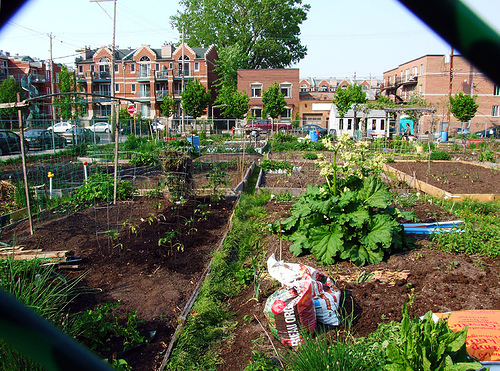
Here’s another ‘old’ paper that resonates more today than it did when it appeared in the very first Volume of a very valuable journal “Local Environment” in 1996. What is interesting to note is that the neighborhoods in Detroit where the action research reported on took place have been transformed quite a bit: abandoned houses – often crack houses back then – have been torn down and the vacant lots have, in some instances, been ‘reclaimed’ by nature or converted into productive land for fruit and vegetables (see “Detroit Agriculture”). Perhaps, in a very modest way, educational initiatives like the one described in this paper have contributed to this transformation, although a question today is to what extend the Detroit schools take part in this transformation and whether schools are able to ‘localize’ their curriculum and educational processes to allow for this. Below you find the abstract of the paper which can be obtained in full by clicking on the reference at the end.

Abstract:

Environmental education can be a catalyst for sustainable development in local communities as long as it is recognised that communities have different challenges and needs. From a perspective of social change and sustainable development, environmental education can be broadly defined as the process that enables students and teachers to participate in the planning, implementation, and evaluation of educational activities aimed at resolving an environmental issue that they themselves have identified. What an ‘environmental issue’ is, then, depends on the perceptions and earlier experiences of the learner as well as the context in which education takes place. An illustration of such a participatory approach to environmental education is provided by the case of Pistons Middle School in Detroit, Michigan where teachers, students and outside facilitators combined action research and community problem solving.

Source: Wals, A.E.J. (1996). BackAlleySustainabilityWals 1996
Back-alley sustainability and the role of environmental education. Local Environment, 1 (3), 299-316.

Locative Meaning-making: An Arts-based Approach to Learning for Sustainable Development

“Locative Meaning-making: An Arts-based Approach to Learning for Sustainable Development” is the third journal paper I co-authored with former Master students and colleague at Wageningen University Natalia Eernstman who is currently a PhD student at Falmouth University/ London School of Arts in the UK. The first two – related papers focused on the introduction of IFOAM organic labelling schemes and the (negative) impact therof on indigenous farming practices in the North-East of India: Eernstman, N. and Wals, A.E.J. (2009) Interfacing knowledge systems: introducing certified organic agriculture in a tribal society. NJAS – Wageningen Journal of Life Sciences, 56(4), 375-390 and Eernstman, N. and Wals, A.E.J. (2009) Jhum Meets IFOAM: Introducing Organic Agriculture in a Tribal Society. International Journal of Agriculture and Sustainability, 7(2), 95-106.

This new paper – based on Natalia’s PhD-work – is quite different in that it explores the utilisation of dialogic practices, site-specific theatre and a project conducted in a British village to generate processes of “context-based meaning finding”. It concludes that Education for Sustainable Development essentially starts with and revolves around re-embedding sustainable development in life and the act of living, engaging people in place through processes in which communities yield their own, context and time specific interpretations of sustainable development. The paper was published in ‘open-access’ journals Sustainability and can therefore be downloaded and shared for free! One interesting feature f the paper is that the some of the conversations with the participants in the study as they took place during walks in through the land(scape) can be accessed and hear. The editors insisted the links to the date were put in the notes in the end instead of as hyper-links in the text – which is regretable in my opinion. But here they are the links to the two excerpts provided (which make more sense when engaging with the full text first): “in the woods” (with Natalia narrating first about how she engaged the participants and used “walking” as a way to dig for meaning) and “on the bridge”

The full paper reference is: Eernstman, N. and Wals, A.E.J. “Locative Meaning-making: An Arts-based Approach to Learning for Sustainable Development”, Sustainability 2013, 5, 1645-1660; doi:10.3390/su5041645 It can be downloaded HERE. sustainability-05-01645

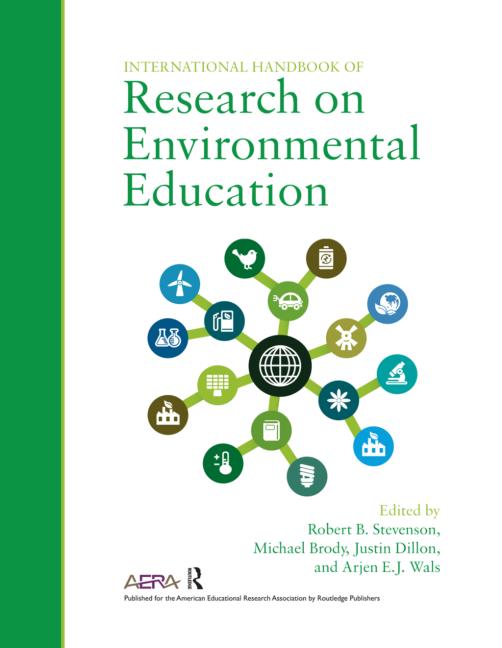
Milestone in an evolving field: International Handbook of Research on Environmental Education

IHEERBookCover

2013 marks the year in which the world’s largest and most diverse educational research organization – the AERA – jointly with Routledge, published the International Handbook of Research on Environmental Education (Stevenson, Brody, Dillon & Wals, 2013). The field of Environmental Education has roughly existed for just under 50 years and has over time developed its own research, research networks and research journals. The AERA commssioned the editors in 2009 to compile this Handbook as a part of AERA’s Handbook Series on Education Research.

The International Handbook of Research on Environmental Education describes the important concepts, findings and theories developed by the research community and examines the historical progression, current debates and controversies, missing elements from EE research agenda, and the future.
The environment and contested notions of sustainability are increasingly topics of public interest, political debate, and legislation across the world. Environmental education journals now publish research from a wide variety of methodological traditions that show linkages between the environment, health, development, and education. The growth in scholarship makes this an opportune time to review and synthesize the knowledge base of the environmental education (EE) field. The purpose of this 51-chapter handbook is to illuminate the most important concepts, findings and theories that have been developed by EE research and critically examine the historical progression of the field, its current debates and controversies, what is still missing from the EE research agenda, and where that agenda might be headed.

You can find the orginal proofs of chapter 1 here: Stevenson, B., Brody, M., Dillon, J and Wals, A.E.J. (2012). International Handbook of Research on Environmental Education_Ch01_1pp In: Stevenson, B., Brody, M., Dillon, J. and Wals, A.E.J. (Eds.) (2012) International Handbook of Environmental Education Research. London: Routledge, 1-12

The Handbook can be order through Routledge or any on-line bookseller. Here’s a link to the Routledge Handbook page which also contains the Table of Contents. Should you be working for a university you may want to recommend the Handbook for you library.

Wageningen Centre for Sustainable Development & Food Security on-line

Foodsecurity

Recently Wageningen University and Research Centre (WUR) launched the website for its new Centre for Sustainable Development & Food Security. This Centre seeks to link education, research and community-engagement in innovative ways to help achieve sufficient, healthy and enjoyable food for all now and in the future without compromising the carrying capacity of the Earth’s ecosystems. Food is considered an inter- and transdisciplinary theme that includes aspects of production, consumption, quality, safety, nutrition, waste, ethics, land-use, watermanagement, energy and culture, to name a few key essential vantage points that cannot just be studied or addressed in isolation. Below you find the basic information about the Centre from the new website:

Our mission

The Centre for Sustainable Development and Food Security (CSD&FS) seeks to accelerate sustainable global food security by facilitating and linking ground-breaking forms of research, education and societal engagement.

What do we do?

We initiate, connect and support innovative research, education and societal engagement in food-related challenges. We connect and strengthen networks and initiatives that work in the same vein as the centre but are presently operating in relative isolation, lacking synergy and mutual learning. We develop, support and share exemplary sustainable food security practices. We create an international platform for trans- interdisciplinary research on sustainable food security.

How do we do this?

By creating a space both virtual and real where people working on sustainable food security can be inspired, challenged and connected. By providing a window to sustainable food security for a range of stakeholders from outside and within Wageningen University & Research centre (Wageningen UR). By becoming a key innovation node in the international food security landscape by participating in and organizing networks and Centre’s of Excellence.

Our perspective

The Centre for Sustainable Development and Food Security:

  • considers food security broadly to include issues related to food production, availability, access, safety, nutrition, consumption, waste, equity, health and enjoyment;
  • promotes trans- and interdisciplinary perspectives to include social, ecological, economic, environmental and ethical aspects of food;
  • believes that a sustainable development perspective requires that different spatial (local to global) and temporal (past-present-future) scales need to be considered when seeking to address food security challenges;
  • finds that cutting edge approaches involving boundary crossing between sectors, disciplines, values and interests, requiring dialogue, interaction, reflection and the transformation of prevailing unsustainable practices are urgently needed.

The Centre for Sustainable Development & Food Security (CSD&FS) is hosted by  the WUR Centre for Development Innovation (CDI), with a mandate from the Netherlands’ Ministry of Economic Affairs and Wageningen UR’s Executive Board to accelerate sustainable global food security.