(Re-)designing higher education curricula in times of systemic dysfunction: a responsible research and innovation perspective

A new paper coming out of the EnRRich network LivingKnowledge & EnRRich seems ti get a lot of attention considering the number of paper downloads within the first 10 days the paper has appeared online. This is probably because many universities are struggling to find a good way to make education more relevant, responsive, responsible and reflexive in light of global sustainability challenges.

TassoneetAl

Here is the abstract and a link to Redesigning HE (open access, freely downloadable):

There is an urgent need to address the grand sustainability challenges of our time, and to explore new and more responsible ways of operating, researching, and innovating that enable society to respond to these challenges. The emergent Responsible Research and Innovation (RRI) policy agenda can act as a catalyst towards the development of new and more responsible research and innovation efforts. Inevitably, higher education needs to be closely attuned to this need and agenda, by preparing students to engage in RRI efforts. This paper makes a first step towards guiding the embedding of RRI within higher education. It does so by bringing together academic knowledge with phronesis or practical knowledge about what should be done in an ethical, political, and practical sense. It draws on a literature review and on the reflective practices of partners in the European Commission funded project EnRRICH (Enhancing Responsible Research and Innovation through Curricula in Higher Education), as well as on interviews and case studies gathered as part of the project. The paper suggests elements, especially design principles and a competence framework, for (re)designing curricula and pedagogies to equip higher education students to be and to become responsible actors, researchers, and innovators in a complex world, and to address grand sustainability challenges. In addition, this paper proposes that contemporary higher education teaching and learning policies and strategies, especially those promoting neoliberal agendas and marketized practices, need to adopt a more responsible and responsive ethos to foster the renewal of higher education in times of systemic dysfunction.

Keywords

Higher education Responsible research and innovation Grand sustainability challenges Curricula Competence 


Critical case-studies of non-formal and community learning for sustainable development

Together with UNESCO’s Alexander Leicht and Yoko Mochizuki I co-edited a special issue in the journal International Review of Education on Non-formal and Community Learning for Sustainable Development. Here you find a link to our introductory article.

CriticalCaseStdies

I am pasting the final two paragraphs of the editorial introduction below:

“If there is any overall conclusion or pattern which might be drawn from all the contributions to this special issue, it is that boundary crossing is becoming a critical element of learning for, within and from sustainable development. This connects well with Vare and Scott’s (2007) notion of ESD 2, but also with the future directions for environmental and sustainability education highlighted in a recent edited volume on this topic by Peter Corcoran et al. (2017). By moving between perspectives, navigating force fields, handling diversity and stepping in and out of one’s comfort zone, new possibilities emerge for rethinking how we work, live, connect and organise our lives. This also implies working on topics and themes in more integrated ways, covering the nexus of, say, water, energy, food, health, equity and climate, rather than trying to zoom in on “just” one of those aspects. Similarly, the SDGs can only be meaningfully addressed when viewed in their relationship with each other. Boundary crossing between forms of learning will be necessary as well, blending formal, non-formal and informal forms of learning on the one hand, and, for instance, experiential, social, place-based and ICT-supported learning on the other. The result might be a learning ecology or an ecology of learning, a concept used by George Siemens (2005) which requires the integration of principles explored by chaos, network, complexity and self-organisation theories.”

“As the target year for the achievement of the 2030 Agenda with its 17 SDGs is approaching, new forms of governance, education, learning and capacity-building will need to be supported which will enable blended forms of learning in vital partnerships between societal actors seeking to live more lightly and equitably on Earth, using their own context (historically, culturally, economically, socially and ecologically) as a starting point. This also means investing in capacity building for boundary-crossing, brokering relationships and building trust and social cohesion, as these processes and properties seem critical for social learning and transformation within communities. The cases featured in this special issue are only a few of many that exist around the world, but most are not researched, documented and shared very well, and herein lies another challenge: making learning towards sustainability in communities more visible and explicit, and finding better mechanisms for sharing them, not just through special issues in a peer-reviewed journal, but also in ways which can more directly inform, or rather, engage, policy and practice.”

Environmental Education in Asia – Special Issue in the Japanese Journal of EE

header_en

This special issue edited by Shinichi Furihata and Sachi Ninomiya-Lim from Tokyo University of Agriculture and Technology and Tokai University respectively,  is the result of a 2-year collaborative project involving environmental education (EE) societies/ associations from Japan, Korea, Taiwan, North America, and Australia. In the editorial introduction the following is stated:

“The aim of the project was to create a platform to share ideas, practices, and theories of EE in the Asian region, with English as the common language. The discussion was organized around five core themes: 1) Development, current situation, and challenges of EE in formal education; 2) Development, current situation, and challenges of EE in non-formal education; 3) Research trends in EE; 4) Insights for EE in Asia from outside of Asia; 5) Review, comparison, and synthesis of findings to go beyond a presentation of EE in various countries and instead highlight the recurring transversal issues. We hope this special issue will contribute to furthering dialogue among EE scholars and practitioners in Asia, and to building bridges between EE in Asia and other regions.

The Japanese Journal of Environmental Education (JJEE), published by the JSOEE/JSFEE since 1991, has provided EE researchers and practitioners with an important space to share their ideas, thoughts, methods, and evaluative analyses, and to participate in theoretical discussions, etc., similar to many EE journals published in other countries and regions. However, since most of JJEE articles are written in Japanese (with summaries in English), its readership is essentially limited to Japanese language users, most of whom reside in Japan. Thus, although the JJEE has become a critical platform for communication among Japanese EE researchers and practitioners, there is a need to expand these discussions to a wider, global network, so that Japanese EE professionals may participate in international and transnational debates on issues of wider relevance in EE. Similarly, EE research in different journals published in Asian countries, including Korea and Taiwan, is mostly written in the local language and is therefore largely inaccessible to people who do not read these languages. The aim of this special issue, therefore, was to create a space where such discussions may be shared and connected. In addition, we decided to invite several prominent international researchers to provide their insights, ideas, and suggestions on developing EE in Asia, increasing Asian participation in the global EE arena, and promoting collaboration on EE with different countries and regions around the world.”

I was asked to write a reflective response paper together with Peter Blaze Corcoran and Joseph Weakland in which we look ahead to the future of EE in the region and beyond. Our paper titles “Preparing for the Ecocene: Envisioning futures for environmental and sustainability education” is based on the introduction to the recent book we edited for Wageningen Academic Publishers (see elsewhere in this blog). All papers are available as open-access and can be found here: Link to the entire Special Issue  You can find our closing paper in which we introduce the notion of the imaginary Ecocene here: Preparing for the Ecocene: Envisioning futures for environmental and sustainability education

Radical ruralities in practice: Negotiating buen vivir in a Colombian network of sustainability – new article!

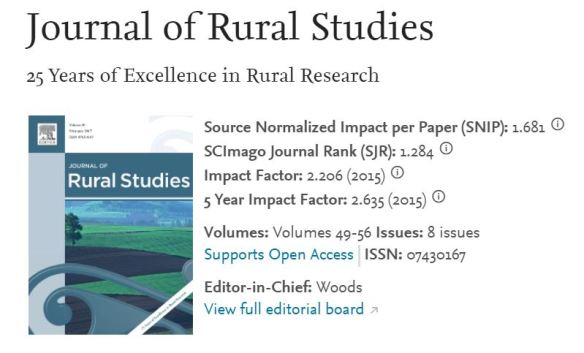
The Journal of Rural Studies just released a new paper on the conceptualisation and realization of buen vivit in a Colombian sustainability network. Martha Chaves as a part of her PhD-work (see earlier blog posts on this) led a team of authors that also included Thomas Macintyre, Gerard Verschoor and myself.

JRScover

This paper explores the emerging concept of buen vivir –  interpreted as integrative and collective wellbeing  – as it is being envisioned and practiced by a network of sustainability initiatives in Colombia. As an example of a transition narrative currently taking place in Latin America and beyond, buen vivir represents a turn towards a more biocentric, relational and collective means of understanding and being in the world. Yet despite the many discourses into buen vivir (many of which tout it as an alternative to neoliberal models of development), there is a general lack of research into its varied forms of application, especially in terms of lived experiences. Drawing on the new ruralities literature, this paper explores the extent to which buen vivir visions and practices represent radical new ruralities e so-called alternatives to development. Data were collected from individuals and ecological communities in predominantly rural areas who are members of the Council of Sustainable Settlements of the Americas (CASA), a
network which promotes many of the principles of buen vivir. Through participatory methods, results demonstrate that CASA visions are based on constructing territorial relations through intercultural knowledge exchange and experimentation into alternative lifestyles. Despite the substantial challenges and contradictions of putting these visions into practice, we argue that lived experiences promote processes of self-reflection on what buen vivir really is or could be. We hold that the inclusive nature of buen vivir offers opportunities for diverse peoples to cohere around shared meanings of the ‘good life,’
while providing the freedom to live variations depending on social and ecological context.

Here’s the DOI: //dx.doi.org/10.1016/j.jrurstud.2017.02.007

For a sneak preview you can also have a look here: Chavesetal2017RadicalRuralities

Towards Transgressive Learning through Ontological Politics: Answering the “Call of the Mountain” in a Colombian Network of Sustainability

Just before the end of the year a fascinating paper appeared in the journal Sustainability authored by a multi-author team led by Martha Chaves who just completed het PhD in Wageningen last month.

Chaves, M., Macintyre, T, Verschoor, G & Wals, AEJ (2017)Towards Transgressive Learning through Ontological Politics: Answering the “Call of the Mountain” in a Colombian Network of Sustainability. Sustainability 2017, 9, 21; doi:10.3390/su9010021  Link to the paper.

Abstract: In line with the increasing calls for more transformative and transgressive learning in the context of sustainability studies, this article explores how encounters between different ontologies can lead to socio-ecological sustainability. With the dominant one-world universe increasingly being questioned by those who advocate the existence of many worlds—a so-called pluriverse—there lays the possibility of not only imagining other human–nature realities, but also engaging with them in practice. Moving towards an understanding of what happens when a multiplicity of worlds encounter one another, however, entails a sensitivity to the negotiations between often competing ontologies—or ontological politics. Based on an ethnographic methodology and narrative methods, data were collected from two consecutive intercultural gatherings called El Llamado de la Montaña (The Call of the Mountain), which take place for five days every year in different parts of Colombia. By actively participating in these gatherings of multiplicity, which address complex socio-ecological challenges such as food sovereignty and defence of territory, results show how encounters between different ontologies can result in transformative and potentially transgressive learning in terms of disrupting stubborn routines, norms and hegemonic powers which tend to accelerate un-sustainability. Although we argue that a fundamental part of the wicked sustainability puzzle lies in supporting more relational ontologies, we note that such learning environments also lead to conflicts through inflexibility and (ab)use of power which must be addressed if sustained socio-ecological learning is to take place. Keywords: ontological politics; transformative learning; transgressive learning; sustainability; Colombia; narrative methods.

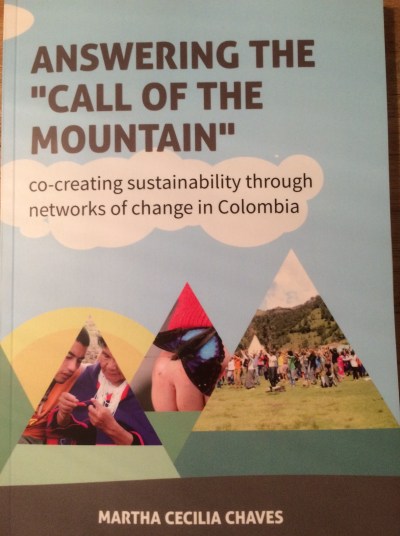
Here’s the cover of Martha Chaves’ PhD-thesis which can be downloaded from the Wageningen University Library system.

marthacover

NJAS Special Issue: Social learning towards sustainability: problematic, perspectives and promise

‘Social learning towards sustainability: problematic, perspectives and promise’ is the title of a special issue of NJAS which I co-edited with my (former) colleagues Romina Rodela and PJ Beers. The abstract of the introductory paper with the same title reads as follows:

A common thread throughout this special issue is that sustainability is not a destiny one can eventually reach, but rather a continuous learning path towards transformation that should be profound (e.g. affecting moral standards and value systems), transversal (e.g. requiring the involvement of individuals, groups and collectives) and counter-hegemonic (e.g. requiring the exposure and questioning of stubborn routines). From such a vantage point debates about sustainability likely require transdisciplinary to transcend a singular disciplinary view-point and to allow for the consideration of different perspectives and types of knowledge. The aim of this special issue is to assess the added-value of a social learning perspective on research and action from at least three different ‘disciplinary’ perspectives: systems innovation, natural resource management, and environmental education. Each of these offers a particular perspective on learning, on change processes and evolving understandings of sustainable practices.

The proofs of this introductory paper with the following citation: Wals, A.E.J. and R. Rodela (2014). Social learning towards sustainability: Problematic, perspectives and promise. NJAS. 69, June, pp. 1-3 can be found here: WalsRodelaIntroNJAS.

NJAS cover Special Issue

The table of contents of the Special Issue can be seen below:

Table of Contents NJAS Special Issue

Table of Contents NJAS Special Issue

Education and citizen science; the missing pieces in the sustainability puzzle, Science Magazine article now available

Front page of Science Article

Front page of Science Article[/caption]

In May of 2014  ‘Science’ published a paper on the importance of creating synergies between science education and environmental education with the support of Citizen Science. The article, which I co-authored with Justin Dillon, Bob Stevenson and Michael Brody, is based on the trends emerging from the International Handbook of Environmental Education Research (Stevenson et al, 2013)*. The article is available through most university library systems in the world and can be obtained for personal use by clicking: ScienceWalsetall2014.

There are a number of lessons to be drawn from the article but essentially we emphasize the importance of: Connecting biophilia and videophilia: that is, study ways in which ever-present technologies and cyberspaces can be used to help people (re)gain a deeper and more empathetic contact with each other and with the world (presently these technologies and spaces tend to lead to the exact opposite). Creating spaces for hybrid learning: that is, hybridized environments and new spaces are needed for learning about the sustainability challenges of our time (e.g. climate change, malnutrition, loss of food security and biodiversity) that embraces the authenticity of multiple voices and cultural and theoretical perspectives, new forms of representation, and more change-oriented and community-based approaches. Strengthening community-engaged scholarship with a planetary conscience: that is, with the increasing complexity of societies, the interdisciplinary nature of people-society-environment relationships, the problems faced at local and global scale, and the uncertainty of their solutions or resolutions, there is a need for new spaces for collaborative and transformative approaches to research. Supporting emerging forms of ICT-supported Citizen Science: that is, the active involvement of citizens, young and old, in the monitoring of local socio-ecological issues by collecting real data and sharing those data with others doing the same elsewhere through social media and on-line platforms, as a catalyst for realizing the first three points. Furthermore we suggest that future research address: • the importance of acknowledging different ways of knowing into educational program(me)s; • the importance of place-based education; • the need for EE to focus on community-based activities that lead to • the individual and group empowerment; • the need to factor in issues of identity in EE; • the need for a convergence of science education and environmental education; • the need for EE to address issues of life-long learning • the need for practitioners and researchers to address policy issues; • the need for inter- and transdisciplinarity in EE practice and research. On a critical note, not so much stressed in the Science article but noted in the Handbook, we plea for stressing the importance of education serving people and planet rather than just serving the economy. The current push for innovation, competence, and a lifelong of learning for work and competitiveness, is resulting in the marginalization in education of people and by squeezing out place-based learning, arts, humanities and the development of values other than those driving consumerism and materialism. Wals, A.E.J., Brody, M., Dillon, J. and Stevenson, R.B. (2014) Convergence Between Science and Environmental Education, Science, 344, p. 583-584.  * Stephenson, B., Brody, M., Dillon, J. and Wals, A.E.J. (Eds.) (2013) International Handbook of Environmental Education Research. London: Routledge. Below you will find today’s press release by Wageningen University & Research Centre.

Here’s the press release of Wageningen University, no. 045, 9 May 2014 “Addressing climate change, requires a change of mind”

Sustainability needs link between theory and practice in education How can you ensure that people do not only spend time thinking about important global issues like climate change or world food supplies, but also roll up their sleeves and do something about them? Four researchers, including Professor Arjen Wals from Wageningen University, think that the education sector holds the key. Teaching processes around the world could be given more influence and meaning by making pure science subjects, such as biology and physics, complementary to lessons in nature, environment and sustainability. Their article on this new approach to teaching, which is based on citizen science, is published in the 9 May edition of Science. Throughout the world, ‘pure’ science subjects such as physics, chemistry, biology, maths, geography and general natural sciences, which traditionally aim to build up knowledge and understanding, are seen separately from subjects such as nature and the environment, which together with the latest branch ‘sustainability education’ take a more practical approach. Although this certainly makes scholars aware of the current condition of our planet, their lack of practical perspective evokes a sense of powerlessness. For example, what can you do to prevent or respond adequately to forthcoming climate shifts? Affinity with politics, society and the economy are essential in this respect. Conversely, education in nature, the environment and sustainability (aka ‘environmental education’) does not equip scholars with the scientific insight they need to back up their proposed remedies. Convergence When taught separately, natural sciences and environmental education give a disjointed answer to society’s demand for a truly sustainable society. “It’s time these two schools converged,” says Arjen Wals, Professor of Social Learning and Sustainable Development at Wageningen University. “If we cannot create a firm link between these two educational areas, scientific education is in jeopardy of becoming purely a vehicle for enhancing the innovative and competitive potential of a country’s economy”, he says. “At the same time, without a firm link with the sciences, environmental education will never be able to find a responsible and realistic way of dealing with the contradictions and uncertainties that are raised in the scientific debate surrounding questions of sustainability.” The authors of the article in Science give a number of examples of environmental education, which cover the area where science meets society. Among them is the American concept of Edible School Gardens, whereby schoolchildren grow their own food in an educational garden while simultaneously learning about the things they grow in science lessons. The Dutch version is known as Groene schoolpleinen (‘green school grounds’). Another good example is YardMap, based on IT and citizen science. Citizens, both young and old, analyse biodiversity in their own neighbourhood by means of digital photos, special apps and Google Maps. The aim is to identify the areas with the greatest potential for boosting biodiversity. Action plans designed to ensure that the YardMaps are kept fully up-to-date are drawn up and implemented on the basis of studies and in consultation with scientists and local partners (including the municipal authority, garden centres and an NGO). The various YardMaps are linked via social media. The Dutch Natuurkalender works in much the same way. Creating closer ties between citizen science, scientific education and environmental education will help citizens and scientists to take a meaningful and practical approach to the pursuit of sustainability. Wals: “It’s not just about linking up the content; it involves developing new competencies such as dealing with complexity, uncertainty and confusion, and devising and implementing meaningful local solutions”. This method of learning may also help to restore the damage to public confidence in science. The government will have to put more effort into stimulating and supporting the ‘hybrid teaching environments’ that blur the boundaries between science and society, school and neighbourhood, local and global, and shift the emphasis to the wellbeing of mankind and the planet. Transition Calls for transition and another way of thinking are becoming more urgent, says Professor Wals: “At the end of the day, the climate problem is as much in between our ears, as it is between the North and South Poles”. He backs this up with a remarkable conclusion: to his mind, the role of education and citizen involvement has been seriously underemphasised in the climate debate. In fact he wonders if we will ever be able to bring about a transition without committed, critical and competent citizens, who aspire to values that are not purely based on the material side of their existence but also on care for fellow human beings and, indeed, other species, here and elsewhere, now and in the future. Join in the discussion on #CitizenScience Publication Wals, A.E.J., Brody, M., Dillon, J. and Stevenson, R.B. (2014) Convergence Between Science and Environmental Education, Science, 344, p. 583-584. NOTE FOR EDITORS More information is available from Prof. Arjen Wals, Professor of Social Learning and Sustainable Development and Director of the Centre for Sustainable Development & Food Security, Wageningen University, tel. +31 (0)317 484184, arjen.wals@wur.nl or via Jac Niessen, science information officer at Wageningen UR, tel.+31 (0)317 485003, jac.niessen@wur.nl.

Taking a walk in the forest, bad for the economy – the colonalisation of time and attention in the digital age

American media-theorist Douglas Rushkoff sheds an interesting light on the digital age and its consequences for our relationship with the ‘now’ and with ‘others’. Companies are competing with each other for what he calls our ‘eye-ball’ attention. We are constantly seduced to use ICTs and it is turning us into restless creatures with short attention spans who are constantly providing clues to corporations as to what we like, prefer, desire, etc. “Big data” and constant streams of cookies are informing businesses (and, indeed, governments) about what we are thinking and these businesses and governments are anticipating this by offering us what we want, essentially guiding us into pre-fabricated futures. Do you find it hard to BE in one place without your mind wondering off to somewhere else?
In a fascinating near-monologue with powerful examples and a touch of irony and humour Rushkoff urges us to reclaim the now, the flow of time, the possibility of meaning and as sense of place and belonging. In his book Present Shock, When Everything Happens Now Rushkoff argues that we are all suffering from the five syndroms that belong to the ‘always-on-society’. We need to be reacheable 24/7 but are constantly alienated from the now and each other (and let me add the physical places of which we are part including nature, aw). A call for ‘digital detox’.

Note this is from Tegenlicht (April 13, 2014) from the Dutch TV station VPRO – click the link and wait for the programme to start – Rushkoff speaks to us in English (with Dutch subtitles. Very worthwhile if you have…. time… (NOTE The first minute or so is in Dutch when the interviewer introduces Ruskoff to the Dutch viewers, but then Rushkoff takes over – listen, shiver and learn).

Re-claiming time

p.s. this post links to an earlier post on “Growth fatigue and innovation saturation” from 2013.

The educational appeal of vagueness: the case of biodiversity

Environmental Education & Biodiversity

Loss of biodiversity is back on the agenda having faded somewhat during the last 15 years or so with the rise of new urgent issues such as runaway climate change, loss of food security, the rise of micro-toxins in waters and soils, etc. With the renewed attention for biodiversity it might be useful to go back to the nineties when the topic was high on the international policy agenda and some effort was spent on making biodiversity meaningful for ordinary citizens. Two publications that I was involved in back then seem very relevant today.

The first one appeared in the Canadian Journal of Environmental Education (I believe the only open-access EE journal): Dreyfus, A., Wals, A.E.J. and D. van Weelie (1999). The socio-scientific dispute character of environmental education. Canadian Journal of Environmental Education, 4, 155-176. Download here: Canadian Journal of EE[

The second one is a book commissioned by the Dutch government titled “Environmental Education and Biodiversity” which I recently updated slightly to make it suitable for open-access publication. Full reference: Wals, A.E.J., (Ed.) (1999). Environmental Education and Biodiversity. National Reference Centre for Nature Management, Wageningen, 107 p.Download here: Book Environmental Education & Biodiversity

The book is more elaborate than the article and contains concrete stepping stones for making biodiversity meaningful. Here’s a brief abstract of the book which also applies – in part – to the article.

Despite all the confusion about biodiversity, one thing is clear: there is no one single perspective or definition of biodiversity that accurately describes it in all situations or contexts. Biodiversity can have different meanings depending on the user and the context in which it is used. Even within the scientific arena a great number of biodiversity meanings and interpretations can be distinguished. It is not uncommon to find that scientific, political and symbolic meanings are used interchangeably by the same person. Both the knowledge base and the value base of biodiversity are variable and to a degree unstable and questionable.

Although these characteristics of biodiversity can render the concept useless or reduce it to a rhetorical instrument, they can also add to its strength when handled with care. Certainly from an environmental education perspective, but also from a policy-making perspective, these characteristics offer some worthwhile advantages: 1) Biodiversity brings together different groups in society that are searching for a common language to discuss nature conservation issues in relation to sustainability issues. 2) This dialogue allows the socio-scientific dispute character of “science-in-the-making” to surface. Participation in such a dispute is an excellent opportunity to learn about a highly relevant, controversial, emotionally charged and debatable topic at the crossroads of science, technology and society. 3) Making such a concept meaningful to the lives of citizens requires a procedure that could be utilised when developing educational programmes that focus on similar topics (i.e. education for sustainability).

This book provides a justification and rationale for developing biodiversity as a leading concept for environmental education for human development. Furthermore it proposes a stepping stone procedure that recognises the socio-scientific dispute character of biodiversity and provides a tool for turning biodiversity into a meaningful and existentially relevant issue. The procedure includes the following steps: analysing meanings of biodiversity, determining one or more perspectives based on the general learning goals of environmental education, setting specific learning objectives, selecting (sub)themes for learning, contextualising biodiversity and establishing the value of biodiversity. The procedure is intended to help curriculum developers, teachers, educational support staff and environmental educators give specific meaning to biodiversity and to help learners critically analyse the way biodiversity is used in science, technology and society. The procedure is an intermediate product that offers direction in developing and implementing specific learning activities and materials for various groups of learners.

Abstract of the article in French
Résumé
L’éducation relative à l’environnement dans un monde postmoderne devra être sensible à la nature mal définie des principaux concepts naissants, tels que la biodiversité et la durabilité. Malgré toute la confusion qui entoure ces concepts, une chose est claire : il y a plus d’une façon de considérer ces concepts ou de les définir. En d’autres termes, il n’existe pas une seule perspective ou définition de la biodiversité ou de la durabilité qui les décrive avec exactitude dans toutes les situations ou tous les contextes. Bien que cette définition approximative rende de tels concepts inutiles ou les réduise à un instrument rhétorique d’un point de vue moderne, elle les rend intéressants dans une perspective postmoderne. En reconnaissant la nécessité de respecter le pluralisme (respect des différentes façons de voir, d’évaluer, de comprendre, etc.), la présence constante d’éléments d’ambivalence et d’incertitude dans la prise de décision environnementale et la nécessité d’apprendre dans ce riche contexte, les éducateurs en environnement dans un monde postmoderne trouveront une valeur dans la nature mal définie de ces concepts naissants. En se servant de la biodiversité comme exemple, les auteurs illustrent l’attrait pédagogique de la définition approximative. La biodiversité réunit différents groupes de la société à la recherche d’un langage commun pour discuter de la conservation de la nature en relation avec les enjeux postmodernes de la durabilité. Le seul fait que ces groupes avec des antécédents divergents se concentrent sur un concept commun, bien que la signification du concept varie pour chacun des groupes, ouvre la porte au débat socioscientifique. Ce débat fournit une excellente occasion d’apprentissage sur un thème hautement pertinent, litigieux, émotif et discutable au carrefour des sciences, de la technologie et de la société. Une attention spéciale est accordée au rôle des connaissances scientifiques dans des débats de ce type.

Sustainability in higher education in the context of the UN Decade of Education for Sustainable Development

Sustainability in higher education in the context of the UN DESD: a review of learning and institutionalization processes” is a paper that was published in a recent issue of the Journal of Cleaner Production Volume 62, Pages 1-138, January 2014) as a part of a theme issue on:

“Higher Education for Sustainable Development: Emerging Areas”. This special issue is edited by Maik Adomßent, Daniel Fischer, Jasmin Godemann, Christian Herzig, Insa Otte, Marco Rieckmann and Jana Timm of Leuphana University in Germany.

The paper I contributed is grounded empirically in a review of UN’s Decade of Education for Sustainable Development (UN DESD) I was commissioned to carry out by UNESCO. The review’s section on the learning processes taking place in the higher education arena forms the basis of this article. Particular attention is paid to the role of UNESCO ESD Chairs in advancing sustainability-oriented learning and competences in higher education.

The main conclusion that can be drawn is that Higher Education Institutions are beginning to make more systemic changes towards sustainability by re-orienting their education, research, operations and community outreach activities all simultaneously or, which is more often the case, a subset thereof. They are doing so amidst educational reforms towards efficiency, accountability, privatization, management and control that are not always conducive for such a re-orientation. Some universities see in sustainability a new way of organizing and profiling themselves. The UNESCO ESD Chairs mainly play a role in conceptualizing learning, competence and systems change.

The full reference is: Wals, A.E.J. (2013). Sustainability in higher education in the context of the UN DESD : a review of learning and institutionalization processes, Journal of Cleaner Production (www.sciencedirect.com/science/article/pii/S0959652613003880). A preview can be found here! SustainabilityinHigherEducationWalsJournalCleanerProduction13

Creating Transdisciplinary Dialogue & Phronesis in Pursuit of Sustainability

TradingZonesCover
This book is the result of a rather interesting writing process initiated by the editors about two years ago when they decided that the focus of the book, transdisciplinary dialogue, should also be its process… In order to realize this they invited about 30 scholars from quite different disciplinary backgrounds who did not know each other (most of them anyway) very well or at all, but all had an interest in trans- and interdisciplinarity and a shared concern about the well-being of people and planet. During a joint ‘thinkshop’ held at Cornell’s Field Station in upstate New York, the participants jointly conceptualized the book and created writing ‘duo’s’. I myself formed a duo with Science Historian Scott Peters and bonded with him around the concepts of phronesis, post-normal science and transformative learning (find a link to our chapter at the end of this post). Author-teams were also asked to include a piece of art in their work that somehow captures the spirit of their joint writing venture. On the publisher’s website the wonderful book that resulted is described as follows:

Environmental educators often adhere to a relatively narrow theoretical paradigm focusing on changing attitudes and knowledge, which are assumed to foster pro-environmental behaviors, which, in turn, leads to better environmental quality. This book takes a different approach to trying to understand how environmental education might influence people, their communities, and the environment. The authors view changing environmental behaviors as a «wicked» problem, that is, a problem that does not readily lend itself to solutions using existing disciplinary approaches. The book as a whole opens up new avenues for pursuing environmental education research and practice and thus expands the conversation around environmental education, behaviors, and quality. Through developing transdisciplinary research questions and conceptual paradigms, this book also suggests new practices beyond those currently used in environmental education, natural resources management, and other environmental fields.

Contents: Marianne E. Krasny: Introduction. Tales of a Transdisciplinary Scholar – Joseph E. Heimlich/Mary Miss: Art and Environmental Education Research: Reflections on Participation – Jeppe Læssøe/Marianne E. Krasny: Participation in Environmental Education: Crossing Boundaries under the Big Tent – Martha C. Monroe/Shorna Broussard Allred: Building Capacity for Community-Based Natural Resource Management with Environmental Education – Scott Peters/Arjen E. J. Wals: Learning and Knowing in Pursuit of Sustainability: Concepts and Tools for Transdisciplinary Environmental Research – Barbara A. Crawford/Rebecca Jordan: Inquiry, Models, and Complex Reasoning to Transform Learning in Environmental Education – Joseph E. Heimlich/Mary Miss: Art and Environmental Education Research: Reflections on Appreciation – John Fraser/Carol B. Brandt: The Emotional Life of the Environmental Educator – Leesa Fawcett/Janis L. Dickinson: Psychological Resilience, Uncertainty, and Biological Conservation: Junctures Between Emotional Knowledges, NatureExperiences, and Environmental Education – Joseph E. Heimlich/Mary Miss: Art and Environmental Education Research: Reflections on Place – Timon McPhearson/Keith G. Tidball: Disturbances in Urban Social-Ecological Systems: Niche Opportunities for Environmental Education – Richard C. Stedman/Nicole M. Ardoin: Mobility, Power, and Scale in Place-Based Environmental Education – Marianne E. Krasny/Megan K. Halpern/Bruce V. Lewenstein/Justin Dillon: Conclusion. Do «Arranged Marriages» Generate Novel Insights?

You find a sneak preview of the chapter I co-authored with Scott Peters – titled: Learning and Knowing in Pursuit of Sustainability: Concepts and Tools for Trans-Disciplinary Environmental Research here: FinalPeters&Wals2013<

Meeting Malawi’s Minister of Environment & Climate Change Management

Earlier this month I had a fascinating week working with colleague Prof. Heila Lotz-Sisitka of Rhodes University (SA) and three SANPAD PhD-students in Malawi (Tich from Zimbabwe, Aristide from Mozambique and Dick from Malawi) on research issues related to the PhD work on Social Learning and Natural Resource Management (See my earlier Blog Post on (Re)Views of Social Learning). In the city of Zomba Prof. Sosten Chioto of Chancellor College took us to a brand new community radio station that has been set up to reach rural area’s in Southern Malawi on issues of climate change and food security. The radio station (104.1 FM ChanCo Community Radio) mixes music and information and is quickly becoming one of the more popular stations in the region. A big part of its success seems to be the fact that listeners, even in some of the remotest of area’s, respond to questions using their cell phones, either by calling in or by sending in text messages.

While at the station for a recording session we had the opportunity to speak with the Honorable Halima Daud, Malawi’s Minister of Environment and Climate Change Management who later that week would open the annual congress of the Environmental Education Association of Southern Africa in Lilongwe where I was asked to give a keynote on “Environmental Education and the Green Economy – opportunities and pitfalls”

Meeting Halima Daud

Ms. Daud made it clear that the addition of ‘Climate Change Management’ to her job title was crucial to emphasize the severe challenges climate change poses on food security issues in the country. Particularly the shifting of the rain patterns is affecting seeding and harvesting cycles and is extending the dry season while the current systems are not set up for harvesting the intensified rains that do fall periodically in the wet season. This is negatively affecting productivity which, near the lake area’s is increasing the pressure on fisheries (where stocks are under pressure and declining rapidly). The latter is an issue that Dick’s thesis “Organizing Multi-stakeholder social learning to foster sustainable fishing” is seeking to address.

Both the conversation with Ms. Daud and the presentations and discussions at the EEASA conference confirmed that we live in times of accelerating changes that require creative, routine braking responses, from the world of business, governance, science but, indeed, also from education.

As an introduction to this I am including the Introductory chapter to “Learning for Sustainability in Times of Accelerating Change” (Wals & Corcoran, 2012) here: Introductory ChapterIntroduction – Wals & Corcoran, 2012

If you are interested in Food Security in relation to Sustainable Development you may want to have a look at the newly formed Centre for Sustainable development & Food Security at Wageningen University at:http://www.wageningenur.nl/en/Expertise-Services/Research-Institutes/centre-for-development-innovation/CSDFS.htm

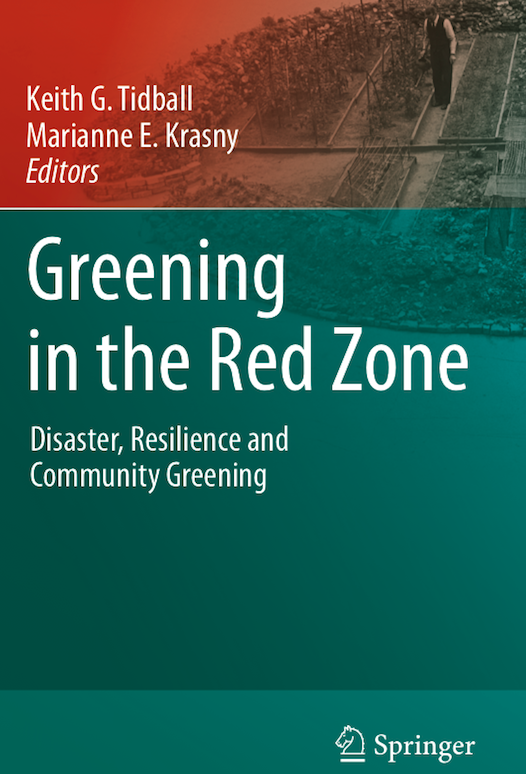
Greening in the Red Zone… Disaster, Resilience and Community Greening – now available!

Cover Greening in the Red Zone

Cover Greening the Red Zone

Ok – it has taken some time to appear but finally this much anticipated volume is available. My former colleague Marlon van der Waal and I have a chapter in it titled: “Sustainability-Oriented Social Learning in Multi-cultural Urban Areas: The Case of the Rotterdam Environmental Centre” which explores the utilization of social cohesion and diversity in creating more sustainable multi-cultural communities. Community greening is seen as a catalyst for sustainability-oriented social learning. Greening here is not the same as literally adding green to a community (trees, parks, gardens) – although that certainly can be a part of it – but rather as a metaphor for improving quality of life and a stepping stone towards sustainability. Social learning is introduced as a process that builds social cohesion and relationships in order to be able to utilize the different perspectives, values and interests people bring to a sustainability challenge. Although there are many perspectives and definitions of social learning it is defined here as: a collaborative, emergent learning process that hinges on the simultaneous cultivation of difference and social cohesion in order to create joint ownership, and to unleash creativity and energy needed to break with existing patterns, routines or systems. The author proofs – for a sneak preview – can be found here: GreeningintheRedZoneWalsWaal

The full reference of our chapter is: Wals, A.E.J. & van der Waal, M.E. (2014) Sustainability-Oriented Social Learning in Multi-cultural Urban Areas: The Case of the Rotterdam Environmental Centre. In: Tidball, K. & Krasny, M. (Eds.) Greening in the Red Zone. Frankfurt a.m.: Springer, p379-396.

Greening in the Red Zone as a whole makes a first foray into the intriguing and potentially important field of “greening” by painting a comprehensive picture of how greening might be useful after major disasters. The book brings together renowned experts and practitioners from around the world. On the publisher’s website we can read:

“Creation and access to green spaces promotes individual human health, especially in therapeutic contexts among those suffering traumatic events. But what of the role of access to green space and the act of creating and caring for such places in promoting social health and well-being? Greening in the Red Zone asserts that creation and access to green spaces confers resilience and recovery in systems disrupted by violent conflict or disaster. This edited volume provides evidence for this assertion through cases and examples. The contributors to this volume use a variety of research and policy frameworks to explore how creation and access to green spaces in extreme situations might contribute to resistance, recovery, and resilience of social-ecological systems.”

Some advance praise:

This book takes important steps in advancing understanding of what makes communi­ties bounce back from disaster or violent conflict. The authors’ findings that creating and caring for green space contributes positively to recovery and resilience add to the toolkit of those working in disaster and conflict zones. W. C. Banks, Director, Institute for National Security and Counterterrorism, Syracuse University

Greening in the Red Zone is a highly relevant book. At a time when society is more separated than ever from the natural world, it offers additional reasons why our ongoing experience of nature is essential for the human body, mind and spirit. This book is both instructive and inspiring. S. R. Kellert, Tweedy Ordway Professor Emeritus, Senior Research Scholar, Yale University

This is a fascinating book that greatly elevates our understanding of how the perspective of humans as an integrated part of nature may contribute to the resilience discourse. I warmly recommend this book to anyone interested in how we may prepare ourselves for an increasingly uncertain future. T. Elmqvist, Department of Systems Ecology and Stockholm Resilience Centre, Stockholm University

Greening in the Red Zone is an important contribution to science and security policy and practice. This edited volume provides unique and novel approaches from a participatory, transparent, ecosystem-based perspective that puts those affected by disasters and conflict into positions of empowerment rather than weakness and dependency. This book is an interesting and timely contribution. C. Ferguson, President, Federation of American Scientists

Keywords »Community-based natural resource management – Greening – Post-conflict – Post-disaster – Resilience

If your interested in ordering this book you can go directly to the book’s website:

Locative Meaning-making: An Arts-based Approach to Learning for Sustainable Development

“Locative Meaning-making: An Arts-based Approach to Learning for Sustainable Development” is the third journal paper I co-authored with former Master students and colleague at Wageningen University Natalia Eernstman who is currently a PhD student at Falmouth University/ London School of Arts in the UK. The first two – related papers focused on the introduction of IFOAM organic labelling schemes and the (negative) impact therof on indigenous farming practices in the North-East of India: Eernstman, N. and Wals, A.E.J. (2009) Interfacing knowledge systems: introducing certified organic agriculture in a tribal society. NJAS – Wageningen Journal of Life Sciences, 56(4), 375-390 and Eernstman, N. and Wals, A.E.J. (2009) Jhum Meets IFOAM: Introducing Organic Agriculture in a Tribal Society. International Journal of Agriculture and Sustainability, 7(2), 95-106.

This new paper – based on Natalia’s PhD-work – is quite different in that it explores the utilisation of dialogic practices, site-specific theatre and a project conducted in a British village to generate processes of “context-based meaning finding”. It concludes that Education for Sustainable Development essentially starts with and revolves around re-embedding sustainable development in life and the act of living, engaging people in place through processes in which communities yield their own, context and time specific interpretations of sustainable development. The paper was published in ‘open-access’ journals Sustainability and can therefore be downloaded and shared for free! One interesting feature f the paper is that the some of the conversations with the participants in the study as they took place during walks in through the land(scape) can be accessed and hear. The editors insisted the links to the date were put in the notes in the end instead of as hyper-links in the text – which is regretable in my opinion. But here they are the links to the two excerpts provided (which make more sense when engaging with the full text first): “in the woods” (with Natalia narrating first about how she engaged the participants and used “walking” as a way to dig for meaning) and “on the bridge”

The full paper reference is: Eernstman, N. and Wals, A.E.J. “Locative Meaning-making: An Arts-based Approach to Learning for Sustainable Development”, Sustainability 2013, 5, 1645-1660; doi:10.3390/su5041645 It can be downloaded HERE. sustainability-05-01645

How to educate in a changing world? Towards competence-based tertiary agricultural education

Please find below the introduction to an article that appeared earlier this week on the CTA website that I co-authored with two of my colleagues. The full paper contains some useful links and can be found here in English and here in French.  Some of the resources referred to are available via the Share Box of this blog.

How to educate in a changing world? Towards competence-based tertiary agricultural education

Authors: Arjen Wals, Martin Mulder and Natalia Eernstmann,  Education & Competence Studies, Wageningen University, Wageningen, Netherlands

Introduction:

Continued globalization and digitalization are not only affecting how we think, what we know, who to believe and how we act, they also affect the role of education in society’. In this regard, they attempt to answer ‘what do we educate for in such a world when things change so fast and knowledge becomes obsolete before you know it?’ For example, Wageningen University started changing their identity by positioning themselves as life science universities, which aspire to contribute to a better world and improved quality of life. Is that the way to go for agricultural universities?

Jimma-University-College-of-Agriculture-and-Veterinary-Medicine-JUCAVM_contentfront

Photo:  Jimma University Agricultural College (JUCAVM); source: https://plus.google.com/107229457994018982305/photos?hl=en

In this feature article we provide a brief review of some trends in Tertiary Agricultural Education (TAE) within Europe and examines the world-wide shift from traditional transmissive to emerging transformative development of more dynamic competencies in a real-world setting. A number of new competencies are required including: interdisciplinary problem-solving, addressing multiple stakeholder interests, participatory approaches in innovation, interactive methods in conflict resolution, responsive actions regarding community needs, critical media literacy, and social responsibility in entrepreneurship, to name a few, along with those that still connect to specific content areas (e.g. animal science, plant science, environmental science and agro-technology).

This overarching innovation taking place in tertiary agricultural education in Europe is referred to as Competence-based Education and Training (CBET). A synthesis of the requirements for new graduates as defined by the public and the related competencies that are considered relevant is presented. A case study of the ten-step re-design of the MSc curriculum in horticulture at the Jimma University Agricultural College (JUCAVM) in Ethiopia is showcased.

Go here for the full article!