Social learning towards a sustainable world – open access at last!

cover image of 'Social learning'

‘Social learning: Towards a sustainable world’ edited by Arjen E.J. Wals

Wageningen Academic Publishers has released the e-version of “Social Learning towards a sustainable world” as an open-access book that can be downloaded for free by anyone with a computer and access to the web. This is a result of the book being a ‘top seller’ for WAP three years in a row.

Should the latest book in the same series “Learning for Sustainability in Times of Accelerating Change” become as successful this book too will become open-access in all likelihood in due time.

To get to the free version go to: http://www.wageningenacademic.com/sociallearning

Feel free to share the pdf with others of course.

Meeting Malawi’s Minister of Environment & Climate Change Management

Earlier this month I had a fascinating week working with colleague Prof. Heila Lotz-Sisitka of Rhodes University (SA) and three SANPAD PhD-students in Malawi (Tich from Zimbabwe, Aristide from Mozambique and Dick from Malawi) on research issues related to the PhD work on Social Learning and Natural Resource Management (See my earlier Blog Post on (Re)Views of Social Learning). In the city of Zomba Prof. Sosten Chioto of Chancellor College took us to a brand new community radio station that has been set up to reach rural area’s in Southern Malawi on issues of climate change and food security. The radio station (104.1 FM ChanCo Community Radio) mixes music and information and is quickly becoming one of the more popular stations in the region. A big part of its success seems to be the fact that listeners, even in some of the remotest of area’s, respond to questions using their cell phones, either by calling in or by sending in text messages.

While at the station for a recording session we had the opportunity to speak with the Honorable Halima Daud, Malawi’s Minister of Environment and Climate Change Management who later that week would open the annual congress of the Environmental Education Association of Southern Africa in Lilongwe where I was asked to give a keynote on “Environmental Education and the Green Economy – opportunities and pitfalls”

Meeting Halima Daud

Ms. Daud made it clear that the addition of ‘Climate Change Management’ to her job title was crucial to emphasize the severe challenges climate change poses on food security issues in the country. Particularly the shifting of the rain patterns is affecting seeding and harvesting cycles and is extending the dry season while the current systems are not set up for harvesting the intensified rains that do fall periodically in the wet season. This is negatively affecting productivity which, near the lake area’s is increasing the pressure on fisheries (where stocks are under pressure and declining rapidly). The latter is an issue that Dick’s thesis “Organizing Multi-stakeholder social learning to foster sustainable fishing” is seeking to address.

Both the conversation with Ms. Daud and the presentations and discussions at the EEASA conference confirmed that we live in times of accelerating changes that require creative, routine braking responses, from the world of business, governance, science but, indeed, also from education.

As an introduction to this I am including the Introductory chapter to “Learning for Sustainability in Times of Accelerating Change” (Wals & Corcoran, 2012) here: Introductory ChapterIntroduction – Wals & Corcoran, 2012

If you are interested in Food Security in relation to Sustainable Development you may want to have a look at the newly formed Centre for Sustainable development & Food Security at Wageningen University at:http://www.wageningenur.nl/en/Expertise-Services/Research-Institutes/centre-for-development-innovation/CSDFS.htm

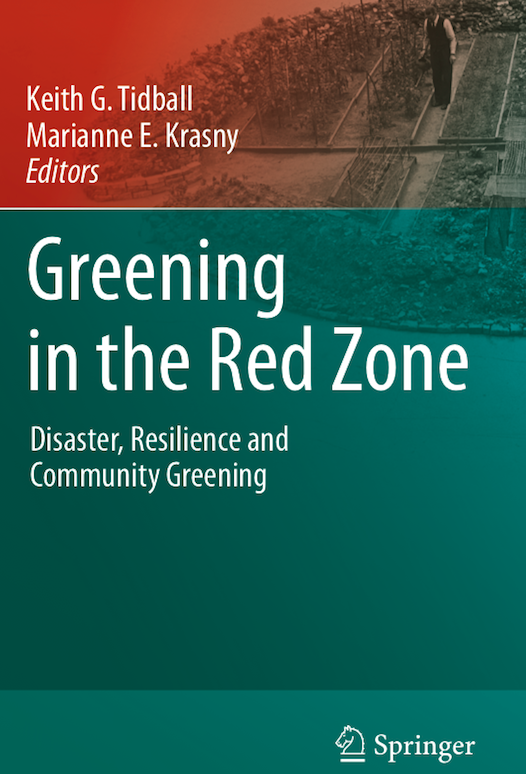
Greening in the Red Zone… Disaster, Resilience and Community Greening – now available!

Cover Greening in the Red Zone

Cover Greening the Red Zone

Ok – it has taken some time to appear but finally this much anticipated volume is available. My former colleague Marlon van der Waal and I have a chapter in it titled: “Sustainability-Oriented Social Learning in Multi-cultural Urban Areas: The Case of the Rotterdam Environmental Centre” which explores the utilization of social cohesion and diversity in creating more sustainable multi-cultural communities. Community greening is seen as a catalyst for sustainability-oriented social learning. Greening here is not the same as literally adding green to a community (trees, parks, gardens) – although that certainly can be a part of it – but rather as a metaphor for improving quality of life and a stepping stone towards sustainability. Social learning is introduced as a process that builds social cohesion and relationships in order to be able to utilize the different perspectives, values and interests people bring to a sustainability challenge. Although there are many perspectives and definitions of social learning it is defined here as: a collaborative, emergent learning process that hinges on the simultaneous cultivation of difference and social cohesion in order to create joint ownership, and to unleash creativity and energy needed to break with existing patterns, routines or systems. The author proofs – for a sneak preview – can be found here: GreeningintheRedZoneWalsWaal

The full reference of our chapter is: Wals, A.E.J. & van der Waal, M.E. (2014) Sustainability-Oriented Social Learning in Multi-cultural Urban Areas: The Case of the Rotterdam Environmental Centre. In: Tidball, K. & Krasny, M. (Eds.) Greening in the Red Zone. Frankfurt a.m.: Springer, p379-396.

Greening in the Red Zone as a whole makes a first foray into the intriguing and potentially important field of “greening” by painting a comprehensive picture of how greening might be useful after major disasters. The book brings together renowned experts and practitioners from around the world. On the publisher’s website we can read:

“Creation and access to green spaces promotes individual human health, especially in therapeutic contexts among those suffering traumatic events. But what of the role of access to green space and the act of creating and caring for such places in promoting social health and well-being? Greening in the Red Zone asserts that creation and access to green spaces confers resilience and recovery in systems disrupted by violent conflict or disaster. This edited volume provides evidence for this assertion through cases and examples. The contributors to this volume use a variety of research and policy frameworks to explore how creation and access to green spaces in extreme situations might contribute to resistance, recovery, and resilience of social-ecological systems.”

Some advance praise:

This book takes important steps in advancing understanding of what makes communi­ties bounce back from disaster or violent conflict. The authors’ findings that creating and caring for green space contributes positively to recovery and resilience add to the toolkit of those working in disaster and conflict zones. W. C. Banks, Director, Institute for National Security and Counterterrorism, Syracuse University

Greening in the Red Zone is a highly relevant book. At a time when society is more separated than ever from the natural world, it offers additional reasons why our ongoing experience of nature is essential for the human body, mind and spirit. This book is both instructive and inspiring. S. R. Kellert, Tweedy Ordway Professor Emeritus, Senior Research Scholar, Yale University

This is a fascinating book that greatly elevates our understanding of how the perspective of humans as an integrated part of nature may contribute to the resilience discourse. I warmly recommend this book to anyone interested in how we may prepare ourselves for an increasingly uncertain future. T. Elmqvist, Department of Systems Ecology and Stockholm Resilience Centre, Stockholm University

Greening in the Red Zone is an important contribution to science and security policy and practice. This edited volume provides unique and novel approaches from a participatory, transparent, ecosystem-based perspective that puts those affected by disasters and conflict into positions of empowerment rather than weakness and dependency. This book is an interesting and timely contribution. C. Ferguson, President, Federation of American Scientists

Keywords »Community-based natural resource management – Greening – Post-conflict – Post-disaster – Resilience

If your interested in ordering this book you can go directly to the book’s website:

Back-alley sustainability and the role of environmental education

Source: www.celsias.com  - careers in urban agriculture

Source: http://www.celsias.com – careers in urban agriculture

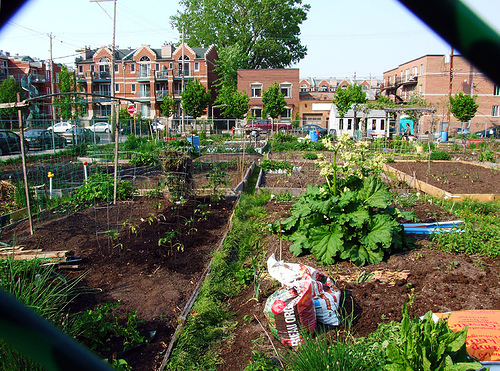
Here’s another ‘old’ paper that resonates more today than it did when it appeared in the very first Volume of a very valuable journal “Local Environment” in 1996. What is interesting to note is that the neighborhoods in Detroit where the action research reported on took place have been transformed quite a bit: abandoned houses – often crack houses back then – have been torn down and the vacant lots have, in some instances, been ‘reclaimed’ by nature or converted into productive land for fruit and vegetables (see “Detroit Agriculture”). Perhaps, in a very modest way, educational initiatives like the one described in this paper have contributed to this transformation, although a question today is to what extend the Detroit schools take part in this transformation and whether schools are able to ‘localize’ their curriculum and educational processes to allow for this. Below you find the abstract of the paper which can be obtained in full by clicking on the reference at the end.

Abstract:

Environmental education can be a catalyst for sustainable development in local communities as long as it is recognised that communities have different challenges and needs. From a perspective of social change and sustainable development, environmental education can be broadly defined as the process that enables students and teachers to participate in the planning, implementation, and evaluation of educational activities aimed at resolving an environmental issue that they themselves have identified. What an ‘environmental issue’ is, then, depends on the perceptions and earlier experiences of the learner as well as the context in which education takes place. An illustration of such a participatory approach to environmental education is provided by the case of Pistons Middle School in Detroit, Michigan where teachers, students and outside facilitators combined action research and community problem solving.

Source: Wals, A.E.J. (1996). BackAlleySustainabilityWals 1996
Back-alley sustainability and the role of environmental education. Local Environment, 1 (3), 299-316.

Locative Meaning-making: An Arts-based Approach to Learning for Sustainable Development

“Locative Meaning-making: An Arts-based Approach to Learning for Sustainable Development” is the third journal paper I co-authored with former Master students and colleague at Wageningen University Natalia Eernstman who is currently a PhD student at Falmouth University/ London School of Arts in the UK. The first two – related papers focused on the introduction of IFOAM organic labelling schemes and the (negative) impact therof on indigenous farming practices in the North-East of India: Eernstman, N. and Wals, A.E.J. (2009) Interfacing knowledge systems: introducing certified organic agriculture in a tribal society. NJAS – Wageningen Journal of Life Sciences, 56(4), 375-390 and Eernstman, N. and Wals, A.E.J. (2009) Jhum Meets IFOAM: Introducing Organic Agriculture in a Tribal Society. International Journal of Agriculture and Sustainability, 7(2), 95-106.

This new paper – based on Natalia’s PhD-work – is quite different in that it explores the utilisation of dialogic practices, site-specific theatre and a project conducted in a British village to generate processes of “context-based meaning finding”. It concludes that Education for Sustainable Development essentially starts with and revolves around re-embedding sustainable development in life and the act of living, engaging people in place through processes in which communities yield their own, context and time specific interpretations of sustainable development. The paper was published in ‘open-access’ journals Sustainability and can therefore be downloaded and shared for free! One interesting feature f the paper is that the some of the conversations with the participants in the study as they took place during walks in through the land(scape) can be accessed and hear. The editors insisted the links to the date were put in the notes in the end instead of as hyper-links in the text – which is regretable in my opinion. But here they are the links to the two excerpts provided (which make more sense when engaging with the full text first): “in the woods” (with Natalia narrating first about how she engaged the participants and used “walking” as a way to dig for meaning) and “on the bridge”

The full paper reference is: Eernstman, N. and Wals, A.E.J. “Locative Meaning-making: An Arts-based Approach to Learning for Sustainable Development”, Sustainability 2013, 5, 1645-1660; doi:10.3390/su5041645 It can be downloaded HERE. sustainability-05-01645

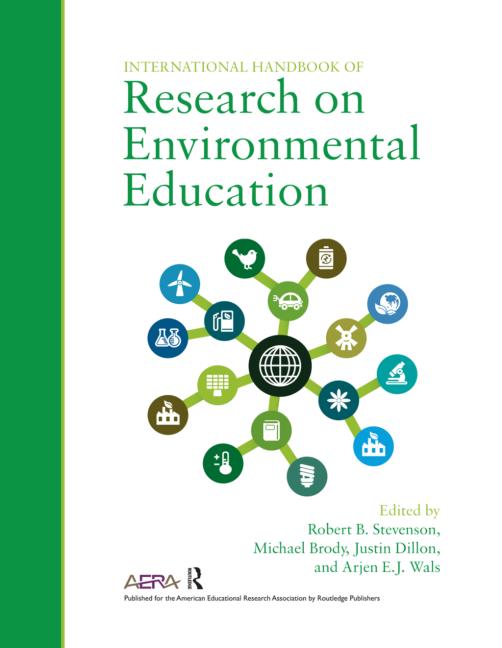
Milestone in an evolving field: International Handbook of Research on Environmental Education

IHEERBookCover

2013 marks the year in which the world’s largest and most diverse educational research organization – the AERA – jointly with Routledge, published the International Handbook of Research on Environmental Education (Stevenson, Brody, Dillon & Wals, 2013). The field of Environmental Education has roughly existed for just under 50 years and has over time developed its own research, research networks and research journals. The AERA commssioned the editors in 2009 to compile this Handbook as a part of AERA’s Handbook Series on Education Research.

The International Handbook of Research on Environmental Education describes the important concepts, findings and theories developed by the research community and examines the historical progression, current debates and controversies, missing elements from EE research agenda, and the future.
The environment and contested notions of sustainability are increasingly topics of public interest, political debate, and legislation across the world. Environmental education journals now publish research from a wide variety of methodological traditions that show linkages between the environment, health, development, and education. The growth in scholarship makes this an opportune time to review and synthesize the knowledge base of the environmental education (EE) field. The purpose of this 51-chapter handbook is to illuminate the most important concepts, findings and theories that have been developed by EE research and critically examine the historical progression of the field, its current debates and controversies, what is still missing from the EE research agenda, and where that agenda might be headed.

You can find the orginal proofs of chapter 1 here: Stevenson, B., Brody, M., Dillon, J and Wals, A.E.J. (2012). International Handbook of Research on Environmental Education_Ch01_1pp In: Stevenson, B., Brody, M., Dillon, J. and Wals, A.E.J. (Eds.) (2012) International Handbook of Environmental Education Research. London: Routledge, 1-12

The Handbook can be order through Routledge or any on-line bookseller. Here’s a link to the Routledge Handbook page which also contains the Table of Contents. Should you be working for a university you may want to recommend the Handbook for you library.

Just out: (Re)views of Social Learning Literature – A Monograph for Social Learning Researchers in Natural Resource Management & Environmental Education

Recently a monograph containing (Re)views of Social Learning Literature in the context of Natural Resource Management & Environmental Education was published by the Southern African Development Cooperation (SADC) in conjuntion with WESSA, Rhodes University, Wageningen University and the Environmental Learning Centre. On the cover page it states: “This monograph provides four different reviews on social learning literature. Rather than seeking to be comprehensive, the reviews provide views on the social learning literature, from different perspectives. The papers scope aspects of the social learning literature, providing access to a wide body of literature(s) on social learning. This monograph should be useful for researchers interested in social learning in the fields of environmental education and natural resources management.”

The monograph was edited by Professor Heila Lotz-Sisitka of Rhodes University and the result of collaboration between Wageningen University and Rhodes with support of SANPAD (the South Africa – Netherlands Partnership for Development funded by the Dutch government) and the UNESCO Chair on Social Learning and Sustainable Development. The full report can be downloaded here: Reviews on Social Learning Literature

The excerpt below comes from the foreword I was asked to write.

How can learning not be social? Isn’t all learning social? These are often the kinds of questions I get when I share my fascination with social learning. Arguably all meaningful learning is inter-relational (with others, including other species, with place and, indeed with oneself) and requires some level of reflexivity by mirroring the significance of one’s encounters with the inner sediments (frames, values, perspectives and worldviews) of prior experiences. The result tends to be a process of further solidification (freezing) or a loosening (unfreezing) or a modification (re-framing) or even the parallel occurrence of all three. So yes, the ‘social’  as inter-relational is crucial in most, perhaps all learning, that we engage in, but even though this is emphasised in social learning, this is not what sets it apart from related learning concepts such as collaborative learning, participatory learning, group learning, and so on.

It appears that in the context of working on inevitably ill-defined and ill-structured issues and situations (e.g. natural resource management issues or sustainability issues) there is an increased awareness that there is no one single perspective that can resolve or even improve such issues. Much social learning literature therefore refers to the importance of bringing together multiple perspectives, values and interests, including marginal and marginalised ones in order to be able to creatively and energetically break with stubborn routines that led to unsustainability in the first place. Despite the range of views on social learning that currently exist, the utilisation of pluralism and/or diversity in multi-stakeholder settings is often referred to as a key component of social learning. Now it would be naïve to think that just by putting people with different backgrounds, perspectives, values and so on together, this creative and energising process would automatically start. This is where another form of ‘social’ comes in: social cohesion, sometimes referred to as social capital. In order to be able to create a constructive dynamic that allows diversity to play its generative role in finding routine-breaking solutions to sustainability challenges, there needs to be sufficient social cohesion between the participating actors, even between those who don’t seem to care much about each other.  In much of the social learning literature stress is placed on things like: investing in relationships, deformalising communication, co-creation of future scenarios and joint fact-finding. The idea is that when people who don’t think alike, or even disagree, engage in a common task in a pleasant and safe environment, they will find their common humanity (which is considered a first step in developing the empathy for the other) needed to open up and engage with the other’s perspective. Creating such an environment is an art in itself and requires careful facilitation – another key topic area in social learning literature.

In the open-access publication acoustics-digital acoustics-digital(which appeared at the launch of the Wageningen University UNESCO Chair on Social Learning and Sustainable Development (Wals et al., 2009) we used the metaphor of an improvising jazz ensemble to capture the essence of social learning.

“Chaos frequently emerges in an (improvising) jazz ensemble, but structure rules. Everyone makes up part of the whole and that whole is, if it sounds good, more than the sum of the parts. Every musician has his/her own experiences and competencies, but also intuition and empathy. The ensemble doesn’t know how
things will sound ahead of time, but its members instinctively know when things sound good. They have faith in one another and in a good outcome. Leadership is sometimes essential and therefore provided by one of the musicians or a director, or it sometimes shifts and rotates. The music is sometimes written down, though this is often not the case, and everyone simply improvises. If it sounds good, then the audience will respond appreciatively, that is to say, those who enjoy jazz music (and not everyone does…). People from the audience sometimes join in, changing the composition of the ensemble. The acoustics of the hall in which the music is played is important as well: not all halls sound alike and some have more character. A concert may also be recorded to serve as inspiration elsewhere, though this does not happen often…” (Wals et al., 2009, p.3).

Indeed social learning processes remind one of an improvising jazz ensemble. They too are intangible in a certain sense, and are therefore not easily controlled. Success often depends on the people concerned and on the manner in which they became involved. There are ideas regarding which direction the participants want to go and there are even recurring patterns, but the ultimate result comes about little by little. Sometimes, but certainly not all the time, the conditions are quite optimal and the process brings out the unique qualities and perspectives of everyone and results in surprisingly novel solutions and actions. Indeed, in social learning too the whole is more than the sum of its parts.This monograph, consistent with some key ideas underpinning social learning, brings together and confronts different views on social learning, in order to arrive at a better understanding of the potential and the limitations of social learning in the context of natural resource management, environmental management and sustainability.  The monograph represents one of the fruits of a collaborative effort between Wageningen University in the Netherlands and Rhodes University in South Africa. It represents a wonderful entry point into social learning for (young) academics not only in The Netherlands and South Africa, but all around the world, as some of the literature reviewed and the issues raised clearly transcend these two countries.

The full report can be downloaded here: Reviews on Social Learning Literature

Reference

Wals, A.E.J., van der Hoeven, N. & Blanken, H. (2009). The Acoustics of Social Learning: Designing learning processes that contribute to a more sustainable world. Wageningen/Utrecht: Wageningen Academic Publishers/SenterNovem.

Re-orienting, re-connecting and re-imagining – learning for sustainability in times of accelerating change goes open-access!

There may be trouble ahead,
……Before they ask us to pay the bill,
And while we still have the chance,
Let’s face the music and dance
.

Irvine Berlin, 1936

“There are three people in a vehicle. In this story, they all seem to have a foot on the accelerator. Not too far in the distance, and clearly coming into view, there is a noticeboard. It reads: ‘Brake hard or change direction! – Abyss ahead!’.  As the vehicle continues speeding forward, the occupants react differently to the noticeboard.  One has seen it coming for some time; in fact, she anticipated it. Her optician told her she had good foresight. ‘For goodness sake’, she says, ‘we must slow down and change direction while we can’. A second one, who has also been aware of the notice for some time, says ‘It’s certainly an interesting notice. Let’s deconstruct its meaning exactly, then we can develop our critical awareness and understanding, and decide what to do.’ The third person, who was much later in recognising the sign than the other two says, I don’t think there’s any danger ahead, and if there is – which I doubt – we’ll deal with it  then’.   Meantime, the vehicle is still getting closer to the notice, and stays on track….”

A metaphor of course, but perhaps illustrative of our collective predicament.  We all – or nearly all – have a bit of our foot on the accelerator, whilst at the same time, increasing numbers are aware that braking, changing direction, and learning ‘our way out’ is critically important. At the same time, a significant proportion of the population and vested interests drive forward regardless, albeit with a growing suspicion that, in the words of the old Irvine Berlin song, ‘there may be trouble ahead’.”(Sterling, 2012 p. 511)

The above excerpt is the opening of Stephen Sterling’s wonderful Afterword to “Learning for Sustainability in Times of Accelerating Change”. The Afterword is one of the contributions that has been made open-access via Wageningen Academic Publisher’s website. Along with Juliet Schor’s Foreword and the Introductory Chapter to the book, some authors have paid the publisher a fee to unlock their chapter to allow everybody with access to the Internet download it for free for their own use. You can find the full pdf of the Introductory Chapter here: Introduction to L4S in Times of Change Wals&Corcoran

On the publisher’s website the book is introduced as follows: We live in turbulent times, our world is changing at accelerating speed. Information is everywhere, but wisdom appears in short supply when trying to address key inter-related challenges of our time such as; runaway climate change, the loss of biodiversity, the depletion of natural resources, the on-going homogenization of culture, and rising inequity. Living in such times has implications for education and learning.  This book explores the possibilities of designing and facilitating learning-based change and transitions towards sustainability. In 31 chapters contributors from across the world discuss (re)emerging forms of learning that not only assist in breaking down unsustainable routines, forms of governance, production and consumption, but also can help create ones that are more sustainable. The book has been divided into three parts: re-orienting science and society, re-connecting people and planet and re-imagining education and learning. This is essential reading for educators, educational designers, change agents, researchers, students, policymakers and entrepreneurs alike, concerned about the well-being of the planet and convinced of our ability to do better. (click on the book’s cover if you wish to go to the publishers web-page about the book)

The book can be ordered at a discount when going to ‘books’ in the menu bar on top of this page.

Just out: The Oxford Handbook of Environmental and Conservation Psychology

About two years ago Susan Clayton invited me to contribute to a major handbook on environmental and conservation psychology (33 chapters, 780 pages!). She felt it was important to also have a chapter on the role of education and learning in connecting people with ‘nature’, ‘place’ and ‘environment’ but also in engaging them with ‘sustainability’ issues. It gave me the opportunity to write a, hopefully somewhat accessible and compehensive, introduction to the field of environmental education and the related emerging field of education and learning for sustainability. At the end of this post there is a link to the proofs of this chapter.

Environmental psychology studies the ways in which people perceive and respond to the physical environment, whereas conservation psychology  tends to refer to psychological research on the need and ways to protect the natural environment. What is conservation psychology, and what is its relationship to environmental psychology? This new Handbook answers those questions. From the Oxford University Press website:

“The Oxford Handbook of Environmental and Conservation Psychology includes basic research on environmental perceptions, attitudes, and values; research on specific environments, such as therapeutic settings, schools, and prisons; environmental impacts on human well-being; and ways to promote a more sustainable relationship between people and the natural environment. By presenting an extensive review of current research, the handbook serves as a thorough guide to the state of knowledge about a wide range of topics at the intersection of psychology and the physical environment. Beyond this, it provides a better understanding of the relationship between environmental and conservation psychology, and some sense of the directions in which these interdependent areas of study are heading. Research on the human-environment relationship is increasingly relevant to understanding and addressing the environmental challenges society is facing. This handbook should serve as a resource for professionals both within and outside of psychology who are trying to comprehend the human implications of environments, and to design programs, policies, and environments that are cognizant of human psychology.”

Here’s some background inforrmation about the chapter I contributed (for a full Table of Contents please go to the publisher’s website).

Wals, A.E.J. (2012) Learning our way out of un-sustainability: the role of environmental education. In: Clayton, S. (Ed.) Handbook on Environmental and Conservation Psychology. Oxford: Oxford University Press, 628-644. (by clicking on the title you can get to the proofs of the chapter).

Abstract

In this chapter the role of education in creating a planet that is more sustainable than the one currently in prospect will be discussed from two vantage points: an instrumental one and an emancipatory one. The instrumental perspective emphasizes the potential of education in changing human environmental behavior in predetermined and more or less agreed upon directions. The emancipatory perspective, on the other hand, emphasizes the potential of education in strengthening people’s capacities and confidence to enable them to help determine how to live together in ways that do not further undermine the carrying capacity of the earth. Whereas the former, more behaviourist vantage point tends to have more support among environmentalists with a strong concern about the rapid loss of biodiversity, climate change, depletion of natural resources, and so on, the latter, more human development–oriented vantage point, tends to have more support among educators with a strong concern for self-determination, agency, and democracy. The chapter ends with the introduction of “post-normal” environmental education.

Key Words

environmental education, sustainable development, nature conservation education, emancipatory learning, instrumental learning, agency, participation, post-normal science

Fifty Shades of Green – why the Green Economy cannot be business as usual and ESD cannot be education as usual…

The novel ‘Fifty shades of grey’ by British author E.L. James Critical has sold over 30 million copies since it appeared in 2011. The book went ‘viral,’ as they say, at least in part because of its sexual content. Reviews of Fifty Shades of Grey have been mixed to negative, with most reviews noting poor literary qualities of the work. Princeton professor April Alliston wrote, “Though no literary masterpiece, Fifty Shades is more than parasitic fan fiction based on the recent Twilight vampire series”. [1] Jenny Colgan of The Guardian wrote “It is jolly, eminently readable and as sweet and safe as BDSM (bondage, discipline, sadism and masochism) erotica can be without contravening the trade descriptions act” and also praised the book for being “more enjoyable” than other “literary erotic books”.[2] However, The Telegraph criticised the book as “treacly cliché” but also wrote that the sexual politics in Fifty Shades of Grey will have female readers “discussing it for years to come.” [3]

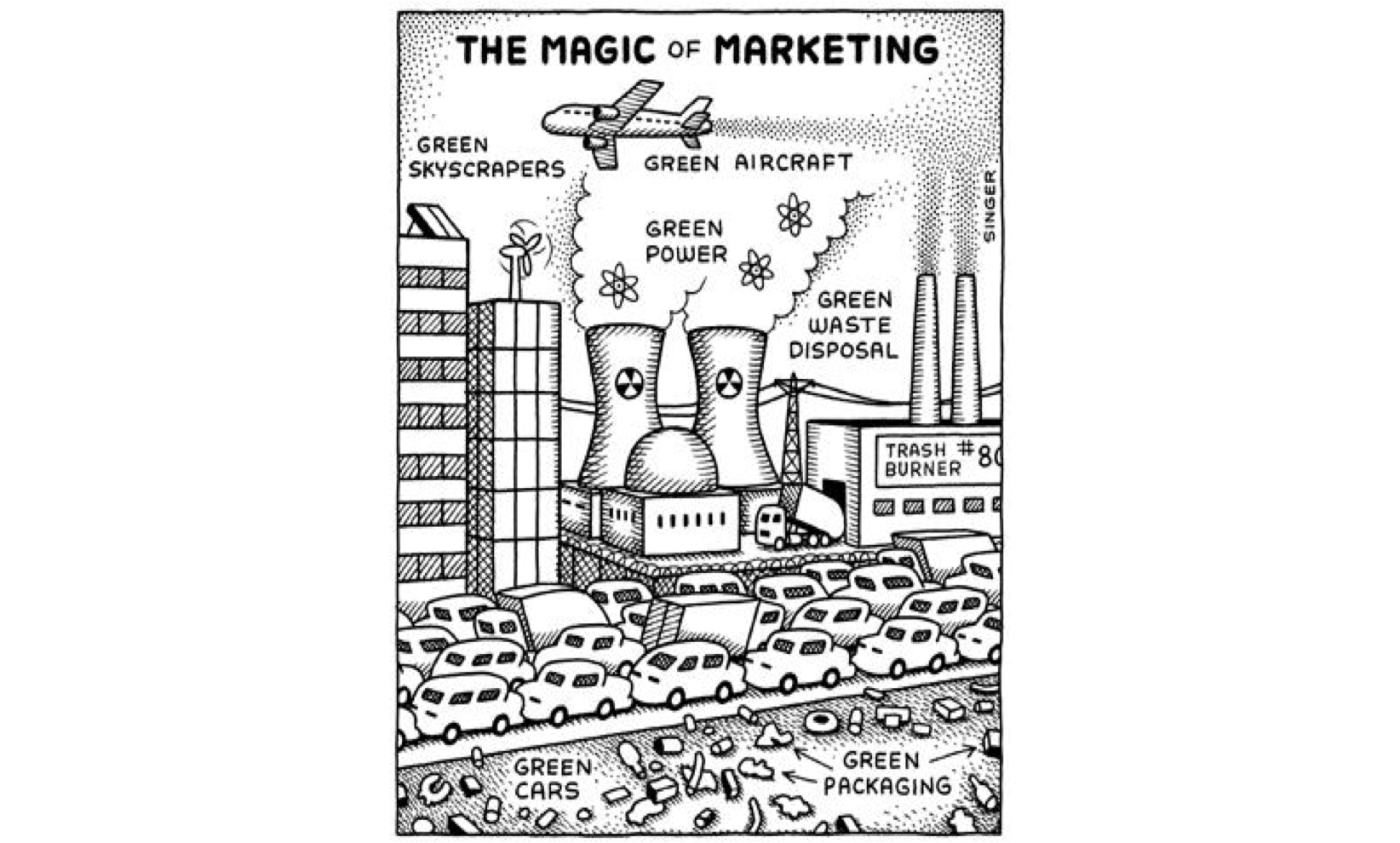
Admittedly I have not read the book but the title, and the fact it went viral, might inspire: “Fifty shades of green”. This book – which also was part of a conversation at the last Frankfurt Book Fair between a representative of Wageningen Academic Publishers (publisher of Learning for Sustainability in Times of Accelerating change – see below – and a representative of KNNV-publishers, a Dutch nature publisher) – would critically analyse the green-inflation, green populism and green rhetoric that is going on. It also, perhaps more importantly, would help people differentiate between what might be called deep green (suggesting a genuine transition to a more sustainable world built on principles, values, lifestyles and systems that are more sustainable than the ones currently demanded by the current dominant economic thinking) and shallow green (more of the same but with a nice green gloss that will make every-body feel good but doesn’t fundamentally change anything in the end and, in fact, amplifies unsustainability in disguise).

“Fifty shades of grey” apparently succeeds in what seems to be somewhat of a taboo, accessible to a huge audience and leads, in some ways, to a different conversation. Perhaps “Fifty shades of green” could accomplish that as well.

This morning, in a Skype meeting with Swedish Education for Sustainable Development teachers, I suggested such a book and people immediately seemed to start thinking about what such a book could be about. Please submit any ideas you may have about this in the comment box at the end of this post!

Below a wonderful cartoon by Singer that illustrates what might be called shallow green.

Green energy, green incinerators, green cars, green growth, green airplanes, green nuclear, green economy, plant bottles… , green growth, green mind-sets?

For those of you who are a bit concerned or skeptical about the green economy (a wolf in sheeps clothes?) and wonder whether education, learning and capacity building should be re-oriented towards such an economy – as if education only serves the economy… – I am inserting a link to a talk that was pre-recorded recently which was shown at The Swiss Sustainable Development Forum. Here’s the link which works with all main browsers I’m told. If it works well you can see both the talk and the slides used.

For those of you who would like to read about this I can refer to “Learning for Sustainability in Times of Accelerating Change” – of which some chapters are now open-source including the introductory chapter co-authored with Peter Blaze Corcoran. You can click on the picture below – offering another peak into the green economy –  to get to the book.

Green Economy for All? (Source: google images)

Action Research & Community Problem Solving and The Acoustics of Social Learning

Recently I re-visited The University of Michigan in Ann Arbor where I once was a PhD-student with the late Bill Stapp, considered the founding father of Environmental Education, as my mentor. During those years (1987-1992) we worked in inner-city Detroit schools to help make education more relevant and meaningful to students growing up under harsh conditions. Many of the neighborhoods surrounding the two schools that we worked with have changed in some ways (the crack houses have been demolished mostly, some abandoned lots have been converted into what is referred to as “Detroit Agriculture” and the kids we worked with have grown-up when gotten the chance or, more likely, have moved or passed away (the life expectancy of many of the youngsters in these ‘hoods’ was not all that high in the 1980-ties). Of course some things haven’t changed, for instance, there is still poverty and most education is probably still not all that relevant and meaningful (something that holds true for kids growing up in more affluent communities as well).

Driving past 8 mile road reminded me of the time we spent with teachers and students in re-designing the curriculum to allow for the kids to link their education to the issues that mattered most to them and for the teachers to link those issues to the curriculum they were expected to teach. In the end we came up with “action research and community problem solving” (ARCPS) – a cyclical learning process consisting of problem identification and analysis, generating ideas for action and change, selecting and design concrete action plans, actual implementation and evaluation of those plans – with action and reflection throughout the process.

As we talk about sustainability, transition towns, community greening, social learning, transformation and so on a lot these days, I realize that some of the work done back then is very relevant today – there’s one difference though: much of what was considered radical and out of the main stream back then is getting much more traction today which is why I am offering a key paper from that time here: Action Research & Community Problem Solving (full reference: Wals, A.E.J. (1994). Action Research and Community Problem Solving: environmental education in an inner-city. Educational Action Research, 2 (2), 163-183) and along with what in some ways is a modern version of ARCPS: The Acoustics of Social Learning. The latter publication is more recent (an available as open access) and center’s more on community-based and multi-stakeholder social learning in the context of sustainability but has similar premises and a similar cyclical reflexive learning process. This publication can be found here: Wals, A.E.J., van der Hoeven, N. & Blanken, H. (2009). The Acoustics of Social Learning: Designing learning processes that contribute to a more sustainable world. Wageningen/Utrecht: Wageningen Academic Publishers/SenterNovem.

Green Economy – business as usual? ESD – education as usual? Rio +20 or Rio -20?

It has been about a month now since 40-50 thousand people (from policy-makers to activists, CSOs, NGOs to CEOs) came to Rio to discuss the future of the Planet. What was accomplished? Having been among the privileged ones to be able to go to the meeting I can safely say that Rio minus 20 (The Stockholm Conference on Environment and Development) was more ground-breaking than Rio plus 20. Some will disagree with me as they see the interest of the private sector in environment and sustainability as a major step forward. The issues of 1972 have moved from the margin to the mainstream. The role of education – with Stockholm as a launching pad for Environmental Education and Rio as a launching pad for Education for Sustainable Development – has been ‘re-affirmed’ in the final declaration, much to the delight of UNESCO which hopes that Rio +20 will lead to an extension of ESD beyond the closing of the UN’s Decade for ESD (2014). At the end of this post you can read a briefing from UNESCO’s ESD-section head Alexander Leicht about the results achieved in Rio from his perspective.

I was invited to Rio to present the review of the UN DESD which UNESCO commissioned me to write up in the report 2012 DESD Full-length Report”.  Basically there are three reports: the one I submitted to UNESCO, the full report as edited and authorized by UNESCO and an abridged, glossy version for policy-makers that contains a selection of texts from the full report made by UNESCO’s ESD section. Some of the rough edges and critical notes of the original report were taken out somewhat to my dismay.

One of the key messages from the reports is that ESD or sustainability education can act as a potential catalyst for educational renewal and the introduction of new forms of learning and pedagogies (e.g. social learning, transformative learning, critical pedagogy). There is also a section addressing the changing role of science in society in times of uncertainty, complexity, eroding trust of hegemonic systems, and of rapid change. This theme connects well with the “Learning for Sustainability in Times of Accelerating Change” book featured in my previous post. There is some movement within higher education but also within less institutionalized environments to transition towards new forms of knowledge co-creation and self-determined practices that are considered more sustainable and transformative. At a side-event the so-called Treaty on Higher Education Towards Sustainable development was launched that calls for the transformation of higher education itself in order to become part of the transformation towards a more sustainable world. Clearly, when taking some of these counter movements and alternative approaches to education and learning seriously ESD cannot mean ‘education as usual’.

Finally, although the green economy has been billed as ‘an opportunity’ both in the report and in Rio there is also the cautionary tale about privileging the ‘green economy’ as a driver for societal transformation as opposed to the ‘green society’ and, with that, ESD becoming an extension of economic globalization.

———————————————————————————-

Education/Education for Sustainable Development and Rio+20 (compiled by Alexander Leicht UNESCO’s ESD section)

Summary and preliminary conclusions regarding Education/Education for Sustainable Development at the UN Conference on Sustainable Development (Rio+20) from a UNESCO perspective

  1. While the overall outcome of the Rio+20 conference contains few new joint commitments by governments regarding sustainable development, the outcome for education and in particular Education for Sustainable Development (ESD) is positive. The education passages in the outcome document, The Future We Want, are in line with UNESCO’s priorities and contain a clear call to continue ESD beyond the end of the UN Decade of ESD in 2014, education was frequently mentioned at the conference as an important area of sustainable development, and UNESCO’s ESD side-event was successful and very well attended.

Conference outcomes

  1. Member States reaffirm in the outcome document their commitment to achieving universal access to primary education and reaffirm that “full access to quality education at all levels is an essential condition for achieving sustainable development” and the internationally agreed development goals. Greater international cooperation to improve access to education, the need to strengthen and build education infrastructure, and increasing investment in education, in particular regarding quality education for all in developing countries, are also emphasized.
  2. The outcome document emphasizes the link between quality education and ESD, which is an important emphasis of UNESCO’s ESD work. The “need for better quality and access to education beyond the primary level” means that “the capacity of our education systems to prepare people to pursue sustainable development” must be improved. This includes the development of “sustainability curricula” and of “training programmes that prepare students for careers in fields related to sustainability”. The importance of non-formal education in pursuit of sustainable development is also recognized.
  3. Member States commit to strengthening ESD beyond the end of the UN Decade of ESD in 2014: “We resolve to promote education for sustainable development and to integrate sustainable development more actively into education beyond the United Nations Decade of Education for Sustainable Development.”
  4. A ‘whole institution approach’ to ESD – “teaching sustainable development as an integrated component across all disciplines” together with “sustainability management” on the campus and engagement with the community – is particularly encouraged for education institutions. Research and innovation for sustainable development, including in education, are also highlighted, as well as programmes in the areas of “entrepreneurship and business skills training, professional, technical and vocational training and lifelong learning” with a view to “bridging skills gaps for advancing national sustainable development objectives.” Information, education and training on sustainability to strengthen the capacities of workers are referred to in the context of green economy policies.
  5. From UNESCO’s perspective it is important that the document treats education not merely instrumentally as a means of implementation for sustainable development, but that education (paras. 229-235) is grouped with other thematic areas and cross-sectoral issues of sustainable development.
  6. The document recognizes the usefulness of a limited set of concrete sustainable development goals, which should be integrated into the UN development agenda after 2015 and drive the achievement and mainstreaming of sustainable development. Their development should be guided by the outcome document, that is, goals will presumably be formulated on the basis of the thematic areas mentioned in the document. Regarding process, an open working group of 30 representatives will be established at the 67th session of the General Assembly and submit its proposal for goals to the 68th session. The Secretary-General will give first input into this group and support its work through an interagency technical support team. The document very generally states that the process must be coherent with the deliberations on the post-2015 development agenda. This will obviously have to be closely monitored in the context of the development of EFA follow-up and in order to ensure UNESCO’s priorities, including ESD, are taken into account in any post-2015 development/sustainable development agenda. More generally, UNESCO’s involvement with Rio provided further support to the view that the Organization’s ESD work needs to connect closely and strategically to global agendas in sustainable development, development and education.

Other issues regarding UNESCO/ED’s engagement with Rio

  1. UNESCO’s side-event on ESD, which was co-organized with and supported by the Government of Sweden and the Ministry of Education, Culture, Sports, Science and Technology of Japan, was highly successful and very well attended. It received very good external and internal feedback. Speakers were Shigeharu Kato, Director-General for International Affairs, Ministry of Education, Culture, Sports, Science and Technology of Japan, and Secretary-General of the Japanese National Commission for UNESCO; Annika Markovic, Environment Ambassador, Ministry for the Environment, Sweden; Greg Selinger, Premier of Manitoba, Canada; Jeffrey Sachs, Director of the Earth Institute, Columbia University; Kartikeya Sarabhai, Director, Centre for Environment Education, Ahmedabad, India; Rafael Zulli and Thiago Schlieper, secondary school students from Brazil. The panel was opened by Irina Bokova, Director-General of UNESCO, and chaired by Gretchen Kalonji, Assistant Director-General for the Natural Sciences. Arjen Wals, UNESCO Chair of Social Learning and Sustainable Development at Wageningen University, The Netherlands, presented the latest UNESCO report on the UN Decade of ESD, Shaping the Education of Tomorrow. Speakers pointed to ESD as one of the key priorities when advancing towards sustainable development and highlighted ESD’s potential to transform and innovate education. UNESCO’s leadership in education and ESD was widely recognized.
  2. Together with UN DESA, the Global Compact Secretariat, UNEP and UNU, UNESCO presented a higher education initiative launched before the conference by the Executive Coordinator of Rio+20, Elizabeth Thompson. Higher education institutions have been invited to sign up to a declaration on higher education and sustainable development and make concrete commitments. The initiative achieved good visibility during the conference, many of the voluntary commitments uploaded to the Rio+20 website in advance of the conference came from this initiative. UNESCO agreed with the Global Compact Secretariat to continue collaborating in this important and promising field.
  3. UNESCO’s message on ESD and education was also successfully shared at side-events on multi-stakeholder partnerships, led by UNICEF, on capacity-building regarding climate change, led by UNITAR, on environmental education and ESD, led by the Government of Georgia, and on partnerships for education, led by the International Business Leaders Forum. The UNESCO/IOC side-event on oceans also variously referred to the importance of education.
  4. In the lead-up to the conference, the Swedish Minister for the Environment, the Japanese Minister for Education and the Director-General co-wrote an op-ed article on ESD. It was published during the conference by a Swedish newspaper, Sydsvenska Dagbladet, distributed to the Japanese press club, and published on the UNESCO website.
  5. The importance of education was also confirmed by the online Sustainable Development Dialogues, which were organized by the Government of Brazil in the lead-up to the conference. Stakeholders had the opportunity to discuss topics such as poverty eradication, water and oceans. UNESCO provided several discussion papers as input to the discussions. Out of the 100 recommendations that came out of the dialogues, people from all over the world chose the top ten recommendations by vote. Three of them are on education.
  6. In the context of the engagement of UNESCO with Rio+20 it should also be recalled that the report of the UN Secretary-General’s High-level Panel on Global Sustainability, which was published as Resilient People, Resilient Planet: A Future Worth Choosing before the conference, contains significant passages and recommendations on education, including the development of skills and knowledge needed for sustainable growth and jobs.

Alexander Leicht, Chief, Section of Education for Sustainable Development, UNESCO (a.leicht@unesco.org)

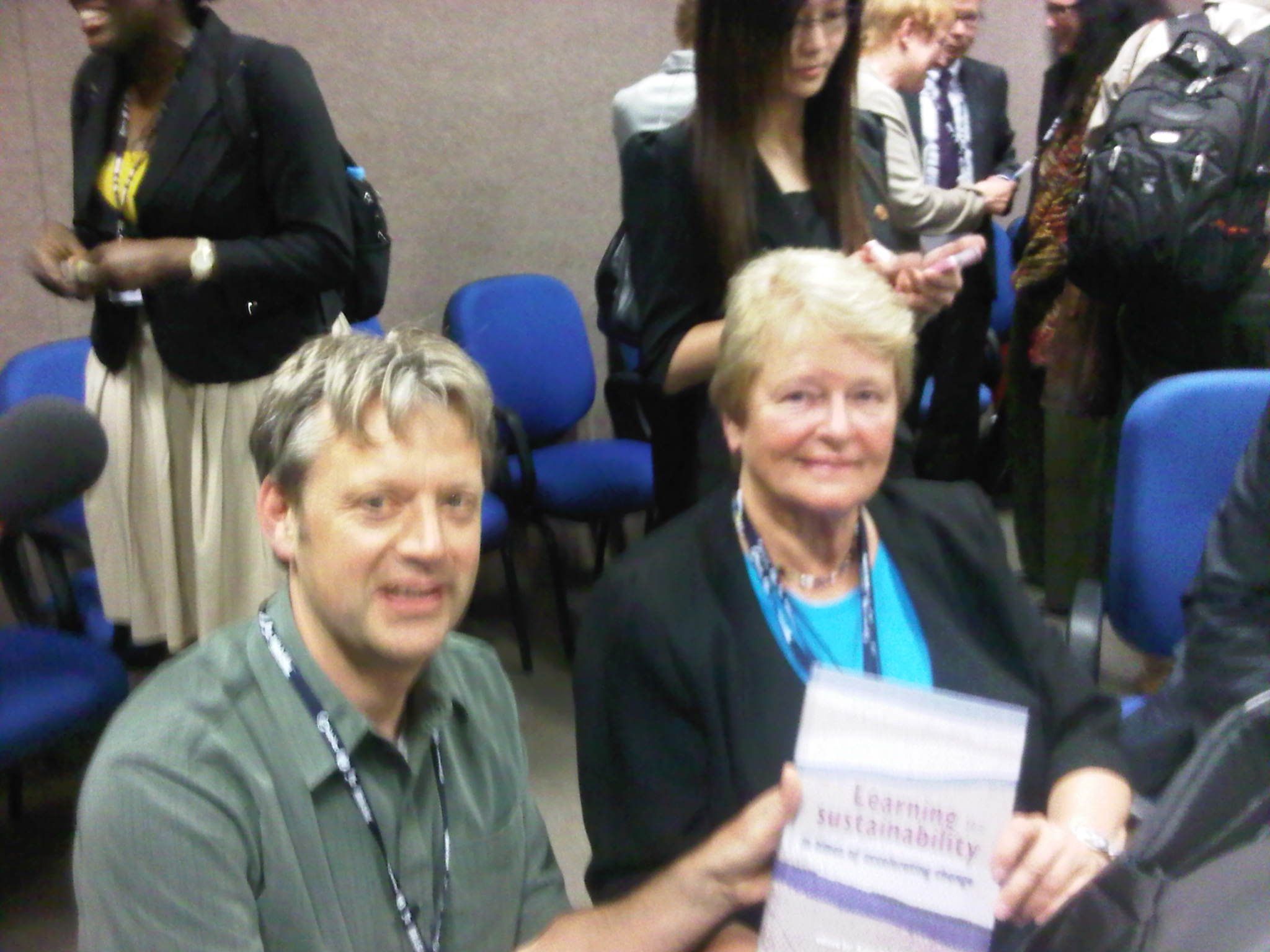
“Learning for sustainability in times of accelerating change” presented to Gro Brundtland at Rio +20

Just in time for Rio +20 we were able to finish a wonderful book project that involved many authors from four continents. The book, learning for sustainability in times of accelerating change, was presented at Rio +20 to former Norwegian Prime Minister and Chair of the infamous Brundtland Commission which made a first attempt to define “Sustainable Development” in the 1987 report “Our Common Future”.

Former Norwegian Prime Minister Gro Harlem Brundtland receives the first copy at Rio +20. Brundtland Chaired the World Commission on Environment and Development (WCED) that wrote “Our Common Future”, a report that introduced the term “sustainable development” well before the first Earth Summit was held in 1992.

On the publisher’s website the book is introduced as follows: We live in turbulent times, our world is changing at accelerating speed. Information is everywhere, but wisdom appears in short supply when trying to address key inter-related challenges of our time such as; runaway climate change, the loss of biodiversity, the depletion of natural resources, the on-going homogenization of culture, and rising inequity. Living in such times has implications for education and learning.  This book explores the possibilities of designing and facilitating learning-based change and transitions towards sustainability. In 31 chapters contributors from across the world discuss (re)emerging forms of learning that not only assist in breaking down unsustainable routines, forms of governance, production and consumption, but also can help create ones that are more sustainable. The book has been divided into three parts: re-orienting science and society, re-connecting people and planet and re-imagining education and learning. This is essential reading for educators, educational designers, change agents, researchers, students, policymakers and entrepreneurs alike, concerned about the well-being of the planet and convinced of our ability to do better. (click on the book’s cover if you wish to go to the publishers web-page about the book)

Here are some nice words from some good people about the book:

We are living in times of incertitude, complexity, and contestation, but also of connectivity, responsibility, and new opportunities. This book analyses the consequences of these times for learning in formal, non-formal, and informal education. It explores the possibilities offered by the concept of sustainability as a central category of a holistic paradigm which harmonizes human beings with Earth. To change people and to change the world are interdependent processes—this book contributes to both. (Moacir Gadotti, Director of Paulo Freire Institute, São Paulo, Brazil).

Moacir Gadotti of the Paulo Freire Institute receives a copy of the book at Rio +20 during the Earth Charter event

I hope you share my excitement about the innovations for sustainability that this book catalogues and analyses. While the ecological news is grim, the human news is not. Even in a time of accelerating change, people are showing their enormous capacities to learn, adapt, restore and protect. (From the Foreword by Juliet Schor, author of True Wealth: how and why millions of Americans are creating a time-rich, ecologically-light, small-scale high-satisfaction economy).

Instead of educational thinking and practice that tacitly assumes that the future is some kind of linear extension of the past, we need anticipative education, recognising the new conditions and discontinuities which face present generations, let alone future ones… This implies a ‘culture of critical commitment’ in educational thinking and practice – engaged enough to make a real difference to social-ecological resilience and sustainability but reflexively critical enough to learn constantly from experience and to keep options open in working for a sustainability transformation. (From the Afterword by Stephen Sterling, Professor of Sustainability Education, Centre for Sustainable Futures, Plymouth University, United Kingdom).

In the coming months this blog will be used to share some main ideas expressed by the authors that are a part of this volume. 

The table of contents can be found here (click on the hypertext)learn4

The book can be ordered at a discount when going to ‘books’ in the menu bar on top of this page.

Learning in a Changing World and Changing in a Learning World: Reflexively Fumbling towards Sustainability

Some people have asked me for a copy of a ‘think piece’ I wrote a few years ago as input for a World Congress on Environmental Education held in South Africa a few years ago. The paper – Learning in a Changing World and Changing in a Learning World: Reflexively Fumbling towards Sustainability – was published in the Southern Africa Journal of Environmental Education which is an important resources in the field of EE and one of the oldest journals in this field. Unfortunately the journal’s electronic distribution is somewhat limited still. Therefore I am making it available here as a pdf.

One key message – which is important just a few weeks for the Rio +20 meeting – is that Environmental Education and Education for Sustainable Development have a high familiy resemblance when taking the 1975 Belgrade charter on EE and the 1977 UNESCO-UNEP conference on EE held in Tiblisi as foundational to the field of EE.

The other key message is that the nature of sustainability challenges seems to be such that a routine problem-solving approach falls short. Transitions towards a more sustainable world require more than attempts to reduce the world around us into manageable and solvable problems but instead require a more systemic and reflexive way of thinking and acting with the realisation that our world is one of continuous change and ever-present uncertainty. This alternative kind of thinking suggests that we cannot think about sustainability in terms of problems that are out there to be solved or in terms of ‘inconvenient truths’ that need to be addressed, but we need to think in terms of challenges to be taken on in the full realisation that as soon as we appear to have met the challenge, things will have changed and the horizon will have shifted once again.

The paper therefore calls for reflexivity (Reflexively fumbling towards sustainability) and offers social learning as a form of learning that is particularly suitable for promoting reflexivity in diverse groups of learners.

The pdf is linked to the full citation of the paper below:

ReflexivelyFumblingSAJEE2007

The full citation for the paper is:

Wals, A.E.J. (2007). Learning in a Changing World and Changing in a Learning World: Reflexively Fumbling towards Sustainability. Southern African Journal of Environmental Education. 24 (1), 35-45.

‘Science as community — Sustainability-oriented trans-disciplinary research’

Recently I contributed to the 5th Living Knowledge Conference which was held in Bonn, Germany last May with a talk on “Science as community: Sustainability- oriented trans-disciplinary research”. The entire talk has now been uploaded on youtube as have been several of the other talks held at this energizing event. The talk can be found here. Since the slides I used are not always (clearly) visible you can find the slides I used here: WalsBonnLivingKnowledge.

The conference covered the following teams: 

A. Setting shared research agendas by CSOs and Research Institutes 

B. The role of Higher Education in creating knowledge with communities
C. Communities and students learning together
D. Evaluation and quality improvement: New lessons learned on measuring   the value of community engagement and  collaborative research
E. Developing  partnership working for research – civil society engagement
F. Policies to support collaborative research relationships

My talk related mostly to theme B which is described on the conference website as follows: Research and education are going to play a central role during the transformation process towards a knowledge society, as the realisation of the necessity for restructuring the world economy has been triggered mainly by scientific knowledge. Society should therefore decide on actions that are not a direct response to recently experienced events, but motivated by foresight and precaution. For this purpose, the debate between science, politics and society should be far more structured, more obligatory, and livelier, to ensure a constructive discourse about the best ways to achieve sustainability.

Key questions:

  • How can problem-based approaches and transdisciplinarity be encouraged?
  • How can a relation of mutual trust between researchers and CSOs be developed?
  • How can career opportunities for young researchers engaging with communities be improved?
  • How can universities and research institutions give researchers and students more opportunities to reflect about the societal consequences of their work?

http://www.youtube.com/watch?v=a3cda8qyiuI&feature=relmfu