New Open Access Paper: River Co-Learning Arenas: principles and practices for transdisciplinary knowledge co-creation and multi-scalar (inter)action

This collaborative multi-authored paper develops the methodological concept of river co-learning arenas (RCAs) and explores their potential to strengthen innovative grassroots river initiatives, enliven river commons, regenerate river ecologies, and foster greater socio-ecological justice. The integrity of river systems has been threatened in profound ways over the last century. Pollution, damming, canalisation, and water grabbing are some examples of pressures threatening the entwined lifeworlds of human and non-human communities that depend on riverine systems. Finding ways to reverse the trends of environmental degradation demands complex spatial–temporal, political, and institutional articulations across different levels of governance (from local to global) and among a plurality of actors who operate from diverse spheres of knowledge and systems of practice, and who have distinct capacities to affect decision-making. In this context, grassroots river initiatives worldwide use new multi-actor and multi-level dialogue arenas to develop proposals for river regeneration and promote social-ecological justice in opposition to dominant technocratic-hydraulic development strategies. This paper conceptualises these spaces of dialogue and action as RCAs and critically reflects on ways of organising and supporting RCAs while facilitating their cross-fertilisation in transdisciplinary practice. By integrating studies, debates, and theories from diverse disciplines, we generate multi-faceted insights and present cornerstones for the engagement with and/or enaction of RCAs. This encompasses five main themes central to RCAs: (1) River knowledge encounters and truth regimes, (2) transgressive co-learning, (3) confrontation and collaboration dynamics, (4) ongoing reflexivity, (5) transcultural knowledge assemblages and translocal bridging of rooted knowledge.

Citation:

De Souza, D. T., Hommes, L., Wals, A., Hoogesteger, J., Boelens, R., Duarte-Abadía, B., … Joy, K. J. (2024). River co-learning arenas: principles and practices for transdisciplinary knowledge co-creation and multi-scalar (inter)action. Local Environment, 1–23. https://doi.org/10.1080/13549839.2024.2428215

The full paper can be downloaded here!
Analysing farmers’ learning for socio-ecological stewardship in Eastern Uganda: A transformative learning ecology perspective

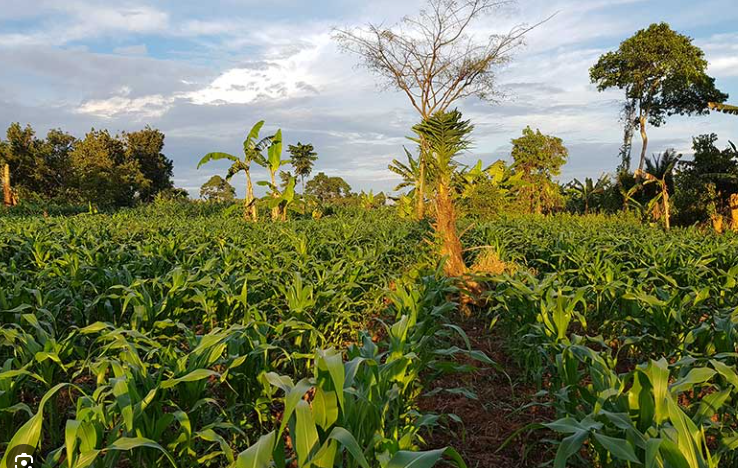
This paper stems from the research of PhD Candidate Doreen Misanya. It analyses how smallholder farmers are learning for socio-ecological stewardship in a specific case study context in Eastern Uganda. The case under analysis is a watershed management project that uses an integrated farm planning (PIP) approach to strengthen farmers’ stewardship capacities within the Manafwa watershed through interactive and dialogic ways of engaging and teaching farmers. Utilizing a transformative learning ecology (TLE) perspective, this study investigated features of the PIP approach that support transformative learning for socio-ecological stewardship in a rural context. Data was collected by interviewing eighteen farmers from different villages and PIP generations and all three PIP trainers of the project, and by observing training sessions as well as sensitisation workshops. As a main result, the study yielded new insights that can help enhance PIP-like learning configurations consisting of interconnected learning tenets, dimensions and processes. This enhanced learning configurating comprises an organic learning system that facilitates farmers to change their mindsets and redefine their values, perspectives, routines, and practices towards those that encourage socio-ecological stewardship. The TLE fostered by the PIP approach represents a useful heuristic that can guide and inspire both scholars and educators engaged in processes of cultivating socio-ecological stewardship in similar contexts.

The paper can be found here https://www.tandfonline.com/doi/full/10.1080/27685241.2023.2191795

Full citation:

Misanya, D., Tassone, V. C., Kessler, A., Kibwika, P., & Wals, A. E. J. (2023). Analysing farmers’ learning for socio-ecological stewardship in Eastern Uganda: A transformative learning ecology perspective. NJAS: Impact in Agricultural and Life Sciences95(1). https://doi.org/10.1080/27685241.2023.2191795

The research took place within the Manafwa Watershed Restoration (MWARES) Project in Bududa District, Eastern Uganda. A Baseline Report of the project appeared in 2020. It outlines the starting position of the PIP farmers in the region. This report can be found here.

Exploring environmental stewardship among youth from a high-biodiverse region in Colombia – new study!

Source: Salva La Selva

Led by Daniel Couceiro, I was priviledged to join a group of reflective practitioners and colleague Valentina Tassone on the meaning of stewardship in a troubled highly biodiverse region Here you have the main premise of the paper but please go to the full paper for a more in-depth encounter with the work.

Nature degradation is rooted in the disruption of the human-land connection. Its restoration requires the regeneration of environmental stewardship as a way to live within environmental limits, especially for younger generations. In this study we used the implementation of a year-round, non-formal environmental education program during COVID-19 times to explore environmental stewardship in adolescents between 14- and 18-years old from the Sierra Nevada de Santa Marta, Colombia. Using a qualitative methodology, we mapped expressions of environmental stewardship among local youth. We found several barriers that can be challenged and levers that can be nurtured through inclusive, place-based and collaborative environmental education strategies to foster youth’s environmental stewardship in Colombian’s high-biodiverse regions.

Full citation and link to open access paper:

Daniel Couceiro, Ivona Radoslavova Hristova, Valentina Tassone, Arjen Wals & Camila Gómez (2023) Exploring environmental stewardship and youth engagement in biodiversity among youth from a high-biodiverse region in Colombia, The Journal of Environmental Education, DOI: 10.1080/00958964.2023.2238649

A regenerative decolonization perspective on Education for Sustainable Development (ESD) from Latin America – new research

Central Figure in the article:  Regenerative education through decolonial praxis.

Led by former Wageningen University PhD Dr. Thomas Macintyre and current Wageningen University Post-Doc, Dr Daniele Tubino de Souza, I was priviledged to collaborate on this new paper that appeared in the latest issue of Compare: A Journal of Comparative and International Education. This paper provides a Latin American perspective on ESD, with a focus on transformative and participatory learning in community contexts. With a long history of critical pedagogies, Latin America provides a fertile ground for exploring alternative forms of education as a means to address deep-rooted challenges in western traditional strands of education. We start by providing an overview of pertinent educational currents present in Latin America, then ground these perspectives in two case studies carried out by the authors – one from Colombia, the other from Brazil – which explore grassroots initiatives in community settings that utilise different forms of education and learning. We then propose an integrative model to foster alternative educational approaches that might lead to decolonial and regenerative praxis, finishing with a discussion on how Latin American-rooted regenerative decolonisation perspective and praxis can inform global ESD discourses.

You can find the full paper here: https://www.tandfonline.com/doi/full/10.1080/03057925.2023.2171262

Full citation: Macintyre, T. Tubino de Souza, D. & Wals, A.E.J. (2023) A regenerative decolonization perspective on ESD from Latin America, Compare: A Journal of Comparative and International Education, DOI: 10.1080/03057925.2023.2171262

Summer School River Lives and Living Rivers: Towards a transdisciplinary conceptualization

I feel very privileged to be part of one of the two major International River Research projects led by Wageningen UR colleague Prof. Rutgerd Boelens: Riverhood and RiverCommons. Riverhood and River Commons are both 5-year research projects that focus on enlivening rivers, river co-governance initiatives, and new water justice movements.

Riverhood is funded by the European Research Council (ERC) (Grant Agreement No 101002921) and aims to build groundbreaking transdisciplinary concepts and methodological tools to analyze and support new water justice movements’ institutions, strategies and practices for equitable and sustainable water governance. It does so through comparing initiatives in Latin America (Ecuador and Colombia) and Europe (Netherlands and Spain). The focus will be on movements promoting novel concepts and practices such as Rights of Nature, new water cultures or nature-inclusive hydraulics, to name just a few.

RiverCommons is funded by Wageningen University’s Interdisciplinary Research and Education Fund (INREF) and unites chair groups from the social and natural sciences, as well as partners worldwide. Its objective is to develop transdisciplinary concepts and methods for research, education, and multi-stakeholder interactions to understand and support river co-governance initiatives and sustainable socio-ecological river systems in Asia, Africa, Latin America and Europe.

While each of the projects has its specific objectives, activities, regions, and partners, there is immense potential for synergies and cross-pollination. Riverhood and River Commons will therefore be integrated in multiple ways, to together build a diverse and wide network of river scholars, activists, and institutions that commonly aim to understand and strengthen river co-governance around the world.

Both projects are united by a common framework that illuminates the different facets and complexities of river systems. The framework encompasses four dimensions: River-as-Ecosociety, River-as-Territory, River-as-Subject, and River-as-Movement. You can find more information about it in Concepts.

Another important component of both projects is the development of Environmental Justice Labs (Riverhood) and River Co-governance Labs (River Commons) to be organized in the case study sites to co-create knowledge and mobilize and exchange ideas for change.

One exciting immediate prospect and possibility for PhD’s from around the world is our Summer School “River Lives and Living Rivers: Towards a transdisciplinary conceptualization”

Here is the short introduction to the course:

World’s rivers are fundamental to social and natural well-being but profoundly affected by mega-damming and pollution. In response to top-down and technocratic approaches, in many places riverine communities practice forms of ‘river co-governance’, integrating ecological, cultural, political, economic and technological dimensions. In addition, new water justice movements (NWJMs) have emerged worldwide to creatively transform local ideas for ‘enlivening rivers’ into global action and vice versa. The Summer School aims to provide PhD students who conduct research on these ‘river commons’ and NWJMs with transdisciplinary concepts and approaches for studying their emerging ideas, concepts, proposals and strategies. The training thereby focuses on conceptualizing river systems in all senses, and capacity-building for (understanding and supporting) river knowledge co-creation and democratisation from the bottom up.

Learning in, with, and through the Territory: Territory-Based Learning as a Catalyst for Urban Sustainability in Porto Alegre, Brazil

TaquaraCollage

Some readers of my blog of might call me a hypocrite – and I cannot really blame you – but despite strong reservations I continue to co-author work that is submitted to Sustainability – the journal, and mainly its publisher’s (MDPI’s) business model, I have critiqued in the past for mass and fast-publishing (find my critique here as well as the response of Paul Vazquez, CEO of MDPI) which can be found here). Sometimes the people I work with do need a quick-turn around time for their manuscripts and still wish to have work published in a recognized journal that has high impact and is open access (when paying the fee… which for the paper I am sharing here was discounted at 50% to acknowledge that lack of means of some of the contributing institutions, here in Brazil). As I stated in my critique, some work is of high quality and has been properly reviewed by two or more people which is the case in the paper I am sharing here which was just published.

Led by former PhD-student Daniele Tubino Sousa, this paper focuses on learning in the context of territorial problems such as the socio-ecological degradation of urban rivers represent a great challenge to achieving sustainability in cities. This issue demands collaborative efforts and the crossing of boundaries determined by actors that act from diverse spheres of knowledge and systems of practice. Based on an integrative territory notion and the boundary approach, the goal of this paper is to comprehend the boundary crossings that take place in multi-actor initiatives towards the resolution of this problem and what type of territorial transformation is produced as an outcome. Our analysis is built on participatory research on the Taquara Stream case, a degraded watercourse in a socio-ecologically vulnerable area, in southern Brazil. Our data analysis applied a visual chronological narrative and an interdisciplinary theoretical framework of analysis that combined concepts related to the territory (geography) and the boundary approach (education). We verified that local territorial issues functioned as boundary objects, fostering and facilitating dialogical interaction among involved actors, knowledge co-production, and collaborative practical actions that led to changes in the territory in terms of practices, comprehensions, and physical concrete transformations. We framed this study as one of territory-based learning meant to advance the understanding of territorial intervention processes towards urban sustainability.

The advantage of Open Access, indeed is that anyone (with a computer and access to the Internet, that is)  can download it here: https://www.mdpi.com/2071-1050/12/7/3000/htm

Keywords: urban sustainabilityvulnerable communitiesterritoryboundary crossingboundary objectsbrokerssocial learningknowledge co-production