
New paper: Assessing Children’s Stewardship Competence Development from a Transformative Learning Intervention

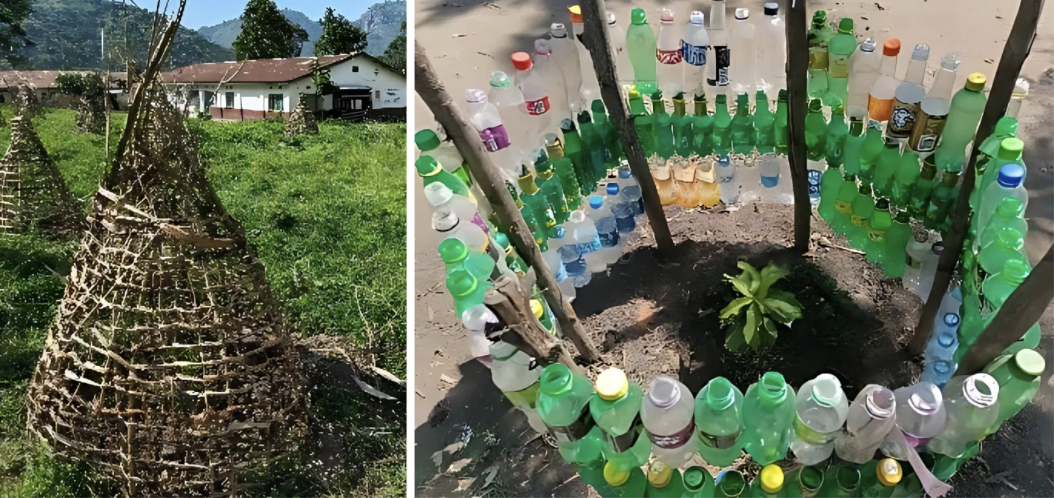
Picture comes from the school greening programmes in Kasese, Uganda, supported by the Intl. Tree Foundation (note: this program was not studies in the research referred to in this post)

This weekend (11/12 July, 2026) the third study led by Dr. Doreen Misanya was published in the Journal for Education for Sustainable Development (JESD).

The study finds that environmental stewardship necessitates collective action from all stakeholders, yet children are often alienated. This third publication from Doreen´s dissertation conducted through Wageningen University, investigated the contribution of an environmental education programme, based on the participatory integrated planning approach, to developing stewardship competence attributes of pupils in rural Ugandan schools. Pupils (34) participated through surveys, semi-structured interviews, observations and focus group discussions.

Findings indicated that pupils developed competence attributes in interrelated dimensions of environmental knowledge, connection with nature and ecological behaviour. The development of attributes was influenced by the learning environment, learning content, facilitation approach, learning activities, participatory integrated planning visioning and action-planning tools, learning activities, learning materials and facilitator capacity. Competence attributes are necessary for children’s participation in stewardship. These attributes should be developed simultaneously by exposing children to context-specific/relevant learning content, nature-based/outdoor activities and methods that stimulate reflection, participation and collaboration. Education policies should integrate environmental with formal curricula to enhance pupils’ environmental awareness and participation in stewardship.

THe full citation is: Misanya, D., Tassone, V. C., Kessler, A., & Wals, A. E. J. (2026). Children as Environmental Stewards: Assessing Children’s Stewardship Competence Development from a Transformative Learning Intervention. Journal of Education for Sustainable Development, 0(0).

The link to the article is here
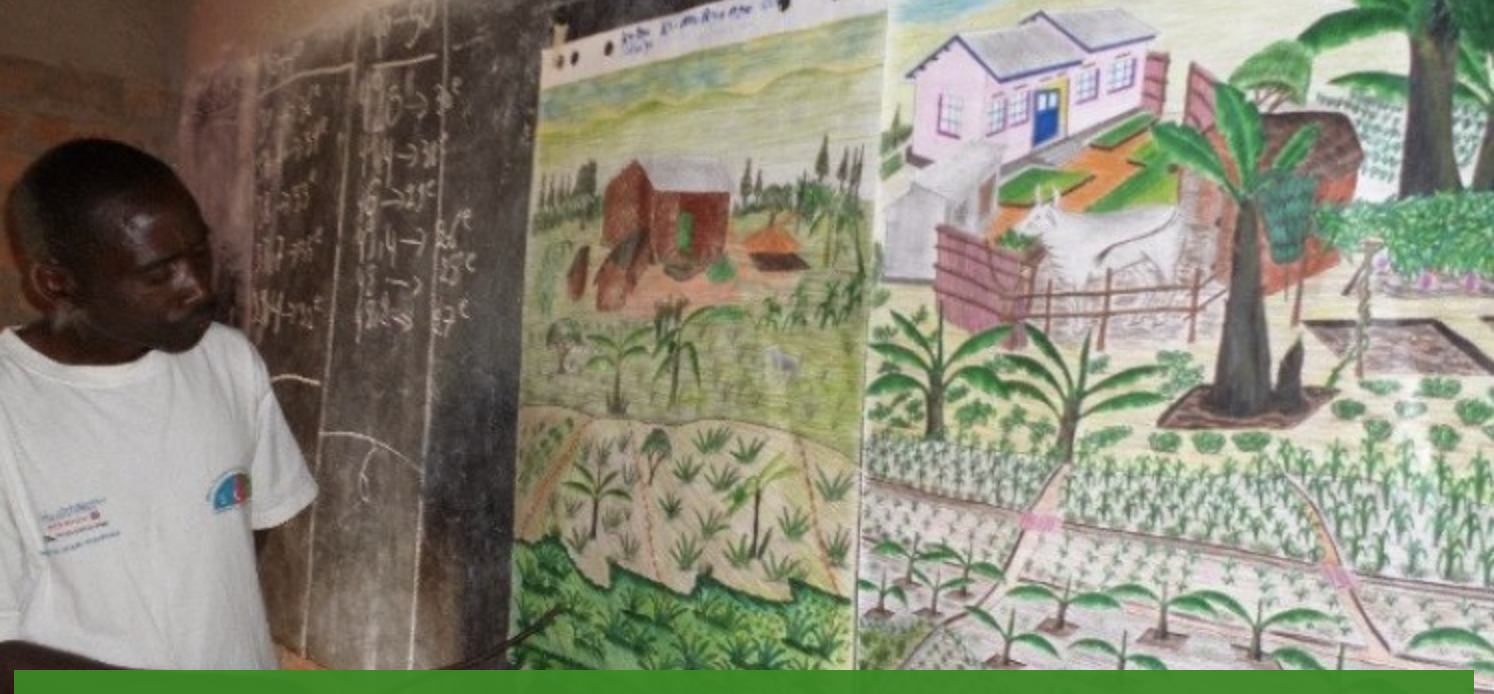
Competences for socio-ecological stewardship: a qualitative assessment of the transformative potential of farmers’ learning processes in Eastern Uganda

Theoretically, this study expands Roczen’s environmental competence model by including social, ethical, and conservation and restoration action competences. This study is one of the first to identify socio-ecological stewardship competences and the learning processes that can foster these competences.

Full citation:

Misanya, D., Tassone, V. C., Kessler, A., Wals, A. E. J., & Kibwika, P. (2024). Competences for socio-ecological stewardship: a qualitative assessment of the transformative potential of farmers’ learning processes in Eastern Uganda. The Journal of Agricultural Education and Extension, 1–21. https://doi.org/10.1080/1389224X.2024.2403597

Exploring environmental stewardship among youth from a high-biodiverse region in Colombia – new study!

Source: Salva La Selva

Led by Daniel Couceiro, I was priviledged to join a group of reflective practitioners and colleague Valentina Tassone on the meaning of stewardship in a troubled highly biodiverse region Here you have the main premise of the paper but please go to the full paper for a more in-depth encounter with the work.

Nature degradation is rooted in the disruption of the human-land connection. Its restoration requires the regeneration of environmental stewardship as a way to live within environmental limits, especially for younger generations. In this study we used the implementation of a year-round, non-formal environmental education program during COVID-19 times to explore environmental stewardship in adolescents between 14- and 18-years old from the Sierra Nevada de Santa Marta, Colombia. Using a qualitative methodology, we mapped expressions of environmental stewardship among local youth. We found several barriers that can be challenged and levers that can be nurtured through inclusive, place-based and collaborative environmental education strategies to foster youth’s environmental stewardship in Colombian’s high-biodiverse regions.

Full citation and link to open access paper:

Daniel Couceiro, Ivona Radoslavova Hristova, Valentina Tassone, Arjen Wals & Camila Gómez (2023) Exploring environmental stewardship and youth engagement in biodiversity among youth from a high-biodiverse region in Colombia, The Journal of Environmental Education, DOI: 10.1080/00958964.2023.2238649