Learning-based transformations towards sustainability: a relational approach based on Humberto Maturana and Paulo Freire

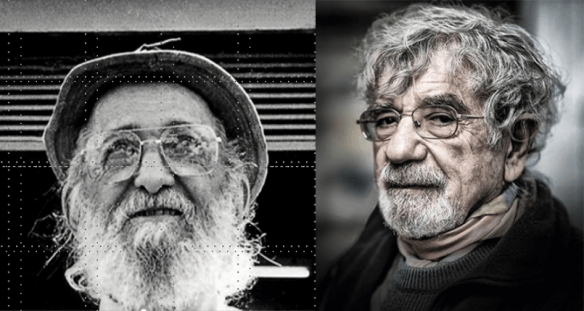
FreireMaturanaPhoto

Recently a new paper I co-authored with lead author Daniele Tubino Souza and second co-author Pedro Jacobi appeared in Environmental Education Research – see: https://doi.org/10.1080/13504622.2019.1641183 or click:  Relational Pedagogy Freire & Maturana  

Here is the abstract. This paper is a part of Daniele’s PhD work at the University of Sao Paulo in Brazil which Pedro and I co-supervise. The paper is a first attempt to link the thinking of Paulo Freire and Humberto Maturana to each other and to emancipatory sustainability-oriented transformations in urban area’s.

Abstract

This article investigates the relevance of the work of the Latin-American thinkers Humberto Maturana and Paulo Freire to learning-based transformations towards sustainability. This analysis was inspired by a case study of a Brazilian urban community seeking to develop pathways towards sustainable living and was informed by a review of their key works. The paper aims to obtain a better conceptualization of learning-based transformations and provide insights into collective learning processes focused on advancing sustainable practices. We present notions of the transformative social learning approach that underpins the case study, using the concepts of Maturana and Freire as a lens. Our results indicate the importance of a relational approach in fostering collective learning processes. Finally, we derive three principles that can guide such processes: (1) facilitating transformative interactions between people and places, (2) enabling dialogic interaction within a climate of mutual acceptance, and (3) creating space for ontological pluralism.

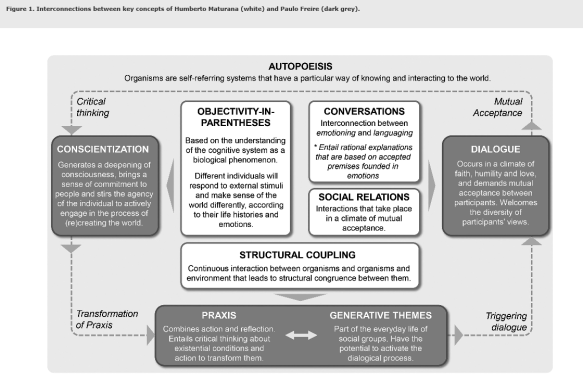
One of the two key figures can be seen below – please go to the the publisher’s website to find the paper and the other figures!
FreireMaturana

Education for Sustainable Development in the ”Capitalocene” – Call for abstracts

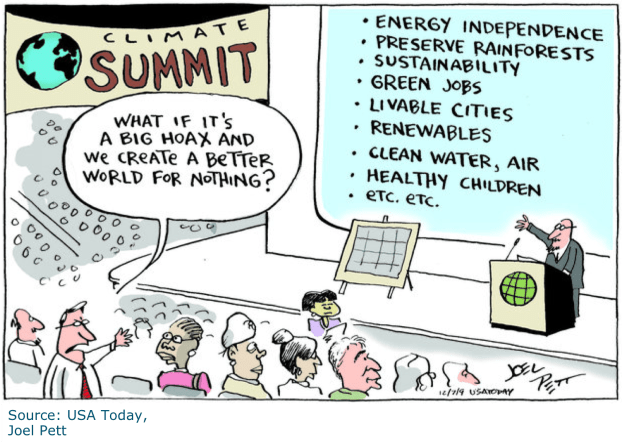
Hoax.png

There is still some time to submit your manuscript idea or abstract for this special issue Educational Philosophy and Theory (EPAT) that I am co-editing with my Swedish colleagues from the University of Gothenburg – Helena Pedersen, Beniamin Knutsson, Dawn Sanders and Sally Windsor. The deadline for – just the abstract – is May first. Go to the Routledge website for the details and see the description below!

Special Issue

ESD in the ”Capitalocene”: Caught up in an impasse between Critique and Transformation

Has Education for Sustainable Development (ESD) reached an impasse? Offering an application of Baudrillard’s thoughts to educational research, Paul Moran and Alex Kendall wrote in 2009 that education researchers are engaged in an act of forgery; a manufacture of presuppositions about what education is. Moran and Kendall argue that our research approaches, produce nothing but illusions of education, not because our approaches and methodologies are somehow flawed, rather that these illusions are what education is. Education, they claim, does not exist beyond its simulation.

Perhaps more provocatively, this implies that all critique of educational practice, from the revolutionary critical theory of Marx and the Frankfurt School via Foucauldian power analyses, as well as more recent ”new materialist” and post-qualitative approaches and beyond –are also part of the simulation of education process. These movements constitute an “improvement agenda” of education, and over and over again, more interventions are produced and critiques are repeated to foster improvements, pursued as if they were possible (Moran & Kendall 2009, p. 329).

We would like to take this Baudrillardian analysis of education as a springboard for thinking around ESD and capitalism. ESD is paradoxically positioned right at the nexus of looming ecological crises (”the Anthropocene” [Crutzen & Stoermer 2000]; the ”Capitalocene” [Malm & Hornborg 2014]) while at the same time the ESD field has been severely criticised for its presumed normativity (Jickling 1994). Quite regardless of the validity of this critique, embedded in the core idea of ESD is, arguably, a grandiose ”improvement agenda” – not only of education, but of the planetary condition as such. There is an asssumption that if we can find the appropriate way of ”doing” ESD, a sustainable world is within reach.

However, if there is nothing that may be called education “that exists independently of the methodologies, comments, curricula designs, testing regimes, forms of discrimination”, as Moran and Kendall (2009, p. 333) put it, what place is there – if any – for ESD under current conditions of predatory capitalism, exploitation of natural “resources”, transgression of planetary boundaries, and the destructive fantasy of infinite growth? Does ESD generate nothing but reproduction, much like capitalism itself (e.g. Hellberg & Knutsson 2018)? Is ESD an affect-organizing “comfort-machine” in the classroom (Pedersen 2019), sustaining the present order of things? Perhaps Bruno Latour (2004) captures the point most aptly: ”Are we not like those mechanical toys that endlessly make the same gesture when everything else has changed around them?” (p. 225) Latour suggests, that the critic “is not the one who lifts the rugs from under the feet of the naïve believers, but the one who offers the participants arenas in which to gather” (p. 246). Such arenas, Giroux observes, need “an understanding of how the political becomes pedagogical, particularly in terms of how private issues are connected to larger social conditions and collective force” (Giroux 2004, p.62).

Stratford (2017) has recently called for education researchers to identify and respond to the challenging philosophical issues evoked by the current ecological crises. Our initiative is a response to Stratfords’s call; however, our starting point differs from how educational philosophy can “improve education in the Anthropocene” (p. 3) and is rather concerned with the “impossibility” of this claim.

We suggest that the idea of ESD as producing illusions of education rather than a sustainable world, does not necessarily lead to an impasse, but can, in Moran and Kendall’s (2009) words, be a very useful place to begin. We are looking for theory-, philosophy-, and empirically-driven papers that address the  ”impossible” position of ESD in ”the Capitalocene” at an urgent juncture in history.

Contributions may address, for instance, the following areas of inquiry;

  • Has ESD reached an impasse, and if so; how can it be understood?
  • Are there ”functions” of ESD beyond the improvement agenda, and beyond the cycle of Critique and Transformation?
  • Is ESD a form of simulation and, if so, what purposes might such simulation serve?
  • How can ESD effectively interfere with capitalism, its forces and threats to life-supporting Earth systems?
  • In what arenas of intervention and action can ESD assemble its participants?
  • How can we reimagine education in extinction and post-extinction narratives?

Submission Guidelines

Please send your abstract of 250-500 words, along with references and a brief bio, to both Helena Pedersen and Beniamin Knutsson, University of Gothenburg.

Final article manuscripts will be approx. 6000 words.

  • Abstract due: May 1, 2019
  • Notification of acceptance: May 20, 2019
  • Manuscript submission deadline: November 1, 2019

Guest Editors:

  • Helena Pedersen, University of Gothenburg
  • Beniamin Knutsson, University of Gothenburg
  • Dawn Sanders, University of Gothenburg
  • Sally Windsor, University of Gothenburg
  • Arjen Wals, University of Wageningen

Link to the publisher’s website is here!

EPAT

COMPOSE – A transdisciplinary Masterclass in the Art of being a Researcher in turbulent times of fake news and climate change

Compose

In May I will be part of, what promises to be, and exciting one-day Masterclass in Gothenburg about the art of being a researcher  in turbulent times of fake news and climate change.

Climate scientists regularly emit dire warnings illustrating dangerous changes to the oceans and atmosphere. At the same time there’s a lack of connection between the facts drawn from climate science and the immediate motivations required to drive active prioritisation of climate action

This gap between fact and action is possibly most staggering at universities. As their academics publish one distressing fact after, universities largely continue with business as usual. This is arguably because climate science primarily originates from epistemologies that prioritise measurability and predictability of climate change rather than interpretative, subjective approaches that deal with people’s perceptions of change and their ability to respond. From a positivist position, scientists are expected to separate themselves from their subject. In the case of climate change, where the researcher is inherently part of the social and climatological system that they are researching, such assumed separation and exemption of action is proving to become fatal.

We invite academics of all stripes and disciplines to reinvent the role of the researcher to be reliable authors of facts, as well as pioneers in acting upon those facts. We will explore what it means to be impacted by and embedded in our research whilst retaining a degree of scientific distance and composure. How can we be a researcher/scientist, as well as a parent, community member and essentially human living in these increasingly complex and confusing times? What are the unique attributes that a researcher brings to this matter and what (new) epistemologies fit this reimagined position?

Hosted by former Carl Bennet Guest Professor in Education for Sustainable Development Arjen Wals and his international colleagues, the day aims to radically shift our perspectives and research practice. The session will draw from the results of the international research project Imaginative Disruptions, funded by The Seed Box.

The Masterclass is free and lunch will be provided, but places are limited and must be booked in advance here. We will take bookings until the 23rd of May.

For more information please contact Åse Bjurström on ase.bjurstrom@gu.se

In collaboration with the University of Gothenburg

Living Spiral Framework – Seeds of Sustainable Transitions

LivingSpiral

Over the past three years I have been fortunate to be a part of an ISSC supported Transformative Knowledge Network (TKN) called the T-Learning Network (see: T-Learning Network Website). The network has yielded several highly cited academic papers but, fortunately, also more practical ideas, concepts and tools. Three young and talented people in the network -Thomas Macintyre, Martha Chaves and Dylan McGary – co-created a lovely guide in both Spanish and English introducing one of the networks most exciting ideas: the Living Spiral Framework. This guide is targeted at researchers and practitioners interested in sharing their research into transformative and transgressive learning in the field of sustainability, climate change, and social and environmental justice.

In the introduction the guide states:

“We can understand transformative learning as transformations in beliefs, values and practices in a way that helps us live a more socially and ecologically responsible way. Delving deeper into the intricacies of transformation, we arrive at the emerging field of ‘transgressive learning,” a critical and action-oriented form of learning which challenges normalised systems which have become oppressive and detrimental to life.

We believe questioning our unsustainable beliefs, worldviews and practices as well as offering alternatives, is needed for such deeper learning to occur and transgress. To achieve this we need voices and narratives from actors within and outside of academia: from social learning facilitators, to indigenous shamen; from the city-based sustainability practitioners to the rural farmer, to have different perspectives on understanding transformation towards sustainability.

This guide provides a step-by-step guide for discovering how and to what extent, personal and collective learning journeys result in transformations towards sustainability, including the challenges and tensions experienced along the way. Moreover, it will allow you to follow the process cautiously to find your own indicators of transformation, unexpected results and opportunities, as well as other experiences along the way.” (Macintyre, Chaves, McGary, 2018 – p. 8).

Below you see the core of the framework which can be found here in its entirety Living Spiral Framework. If you want to more you can go http://www.transgressivelearning.org or email one of the authors: Thomas Macintyre <thomas.macintyre@gmail.com>

SpiralYou can also read our latest academic paper related to this work in the Journal of Action Research in its recent special issue on action research and climate change here: T-labs and climate change narratives: Co-researcher qualities in transgressive action–research

Climate change, education and sustainable development – Podcast on FreshEd

freshed

What’s the connection between education and climate change? I was interviewed about this question by Will Rehm of FreshEd – a popular podcast on the future of education –  at the 2018 Global Education Meeting, a high-level UNESCO forum held in Brussels. The Forum reviewed the progress towards the Sustainable Development Goals. In our conversation, I raised the issue of the ‘hidden curriculum of unsustainability that is born out of schools focusing on preparing learners for the globalizing economy as workers and consumers’. I tried to move beyond providing a critique – which is relatively easy – to also sketch some hopeful practices and possibilities of whole school approaches towards sustainable development. In the interview I call for more freedom and dissonance in education systems to engage with every day and emergent challenges in relation to sustainability in general and climate change more specifically. You can find the interview here!

Citation: Wals, Arjen, interview with Will Brehm, FreshEd, 144, podcast audio, January 14, 2019.

“We no longer wish to participate in the ranking of people” Ghent University wants to become a place where talent feels valued and nurtured

ghent

“A university is above all a place where everything can be questioned.”

My last two blog posts have been raising some critical questions about the viability and legitimacy of the scientific ‘enterprise’ in neo-liberal times. The Publish AND Perish blog post led to a lot of responses from colleagues within academic but also from the publishing ‘industry,’ including from the CEO of MDPI, Paul Vazquez. Coincidentally, a few weeks later, Ghent University in Belgium released a statement in which the university declared to go  – what I would call – ‘off-the-grid’ of commodification, marketization and economic globalization by turning towards, autonomy, (local) relevance, responsibility towards people and, hopefully planet as well, by creating spaces for transdisciplinarity, boundary-crossing and collaborative action (perhaps I am filtering the statement using my own lens – apologies if I do so). Below some excerpts form the statement which can be found here as well: Ghent University’s New Pathway

Here is the message from Ghent’s Vice Chancellor Rik van de Walle

‘We are transforming our university into a place where talent once again feels valued and nurtured’

(17-12-2018)

Our university should once again belong to the academics, rather than the bureaucracy, writes the rector of Ghent University, Rik Van de Walle.

Ghent University is deliberately choosing to step out of the rat race between individuals, departments and universities. We no longer wish to participate in the ranking of people.

It is a common complaint among academic staff that the mountain of paperwork, the cumbersome procedures and the administrative burden have grown to proportions that are barely controllable. Furthermore, the academic staff is increasingly put under pressure to count publications, citations and doctorates, on the basis of which funds are being allocated. The intense competition for funding often prevails over any possible collaboration across the boundaries of research groups, faculties and – why not – universities. With a new evaluation policy, Ghent University wants to address these concerns and at the same time breathe new life into its career guidance policy. Thus, the university can again become a place where talent feels valued and nurtured. We are transforming our university into a place where talent once again feels valued and nurtured.
With the new career and evaluation model for professorial staff, Ghent University is opening new horizons for Flanders. The main idea is that the academy will once again belong to the academics rather than the bureaucracy. No more procedures and processes with always the same templates, metrics and criteria which lump everyone together.
We opt for a radically new model: those who perform well will be promoted, with a minimum of accountability and administrative effort and a maximum of freedom and responsibility. The quality of the individual human capital is given priority: talent must be nurtured and feel valued.
This marks the end of the personalized objectives, the annual job descriptions and the high number of evaluation documents and activity reports. Instead, the new approach is based on collaboration, collegiality and teamwork. All staff members will make commitments about how they can contribute to the objectives of the department, the education programmes, the faculty and the university.
The evaluations will be greatly simplified and from now on only take place every five years instead of every two or four years. This should create an ‘evaluation break’. 


We opt for a radically new model: those who perform well will be promoted, with a minimum of accountability and administrative effort and a maximum of freedom and responsibility. At the same time, we want to pay more attention to well-being at work: the evaluations of the supervisors will explicitly take into account the way in which they manage and coach their staff. The model must provide a response to the complaint of many young professors that quantitative parameters are predominant in the evaluation process. The well-known and overwhelming ‘publication pressure’ is the most prominent exponent of this. Ghent University is deliberately choosing to step out of the rat race between individuals, departments and universities. We no longer wish to participate in the ranking of people.

Through this model, we are expressly taking up our responsibility. In the political debate on the funding of universities and research applications, a constant argument is that we want to move away from purely competitive thinking that leaves too little room for disruptive ideas. The reply of the policy makers is of course that we must first do this within the university itself. This is a clear step in that direction, and it also shows our efforts to put our own house in order.
With this cultural shift, Ghent University is taking the lead in Flanders, and we are proud of it. It is an initiative that is clearly in accordance with our motto: ‘Dare to Think’. Even more so, we dare to do it as well.
A university is above all a place where everything can be questioned.
Where opinions, procedures and habits are challenged. Where there is no place for rigidity.


I am absolutely convinced that in a few years’ time we will see that this new approach has benefited the overall quality of our university and its people.

Rik Van de Walle, rector.

“Sustainability” in higher education: from doublethink and newspeak to critical thinking and meaningful learning

Orwel

In times of systemic global dysfunction, post-truth, alternative facts, cultivated doubt and the erosion of meaning, I found it useful to turn back, once again, to George Orwell’s infamous “1984”.  Well over 10 years ago, in 2004, I co-authored a paper on the danger of ‘doublespeak’ and ‘Newspeak’ in relation to the integration of sustainability in higher education. Back then this was an emerging trend, nowadays, it sometimes signifies a transition in education but more often little more than rethoric and green gloss. For me this is a good reason to re-introduce this paper here with Orwell’s cautionary tale but also with some ideas about how to move forward responsibly. Below an excerpt from the paper which you can find here in its totality:  Jickling and Wals Orwell’s Cautionary Tale

Wals, A.E.J. & Jickling, B. (2002). “Sustainability” in Higher Education from doublethink and newspeak to critical thinking and meaningful learning. Higher Education Policy, vol. 15, 121-131.  SustinHEOrwellsCautionaryTale

“Sustainability talk can, when used by advocates with radically different ideas about what should be sustained, mask central issues under the false pretense of a shared understanding, set of values and common vision of the future.

However, critical thought depends on transcendent elements in ordinary language, the words and ideas that reveal assumptions and worldviews, and the tools to mediate
differences between contesting value systems. And worse still, sustainability talk can
lead us in the direction of Orwell’s (1989) famously satirical notion of “doublethink”
whereby ordinary citizens can increasingly hold in their minds contradictory meanings
for the same term and accept them both (Orwell, 1989, p. 223).

The power of universal discourse in reducing meaning to a minimum is such that, as in “1984”, antagonistic concepts can be conjoined in a single phrase (“war is peace”, “peace is war”) or concept (i.e. “sustainable growth”) (Jickling, 2001). Big Brother’s “Newspeak” was designated not to extend but to diminish the range of thought, and this purpose was
indirectly assisted by cutting down the choice of words to a minimum (Orwell, 1989,
p. 313).

In Newspeak concepts capable of opposing, contradicting or transcending
the status quo were liquidated. As a result of this devaluation of language the people
in “1984” found themselves in a state of linguistic dysfunction which was exactly
what Big Brother wanted (Jickling, 2001).

Seen this way sustainability tends to blur the very distinctions required to evaluate an issue thoughtfully. When comparing the sustaining of ecological processes with the sustaining of consumerism we immediately see inconsistencies and incompatibilities of values, yet many people, conditioned to think that sustainability is inherently good, will promote both at the same time.”

New book – Sustainability Science: Key issues


SustScienceSustainability Science Key Issues Edited by Ariane König (Université du Luxembourg, Luxembourg) and Jerome Ravetz (Oxford University, UK) is a comprehensive textbook for undergraduates and postgraduates from any disciplinary background studying the theory and practice of sustainability science. Each chapter takes a critical and reflective stance on a key issue of sustainability from contributors with diverse disciplinary perspectives such as economics, physics, agronomy and ecology. This is the ideal book for students and researchers engaged in problem and project based learning in sustainability science.

I co-authored Chapter 2 with Michael A Peters titled: Flowers of resistance: Citizen science, ecological democracy and the transgressive education paradigm. Here’s a short intro to our joint effort. “When democracy can be hijacked, power corrupts and capitalism penetrates deeply into society, including into our schools, what prospects still exist for education for a more sustainable world? Democracy is painfully slow and open to manipulation: the question must be asked whether it is up to the task in the new global environment where action is through agreement of interest-based states. And yet in a post-truth world there are important issues that yoke science as empirical truth with democracy that we might christen ecological democracy which provides the warrant and justification for civil action, and demonstrates the new power of citizen science groups that can act autonomously in the interest of their local communities. In this paper we seek comfort, inspiration and support from emerging forms of ecological democracy, civic science and transgressive education.  The latter invites conflict and disruption as mechanisms to break with stubborn, unsustainable routines, that encourage people to leave their comfort zone. The resulting discomfort can be generative when it invites people to explore other options, to build new alliances or to re-think what they always thought to be normal or true. Learning on the edge of one’s comfort zones amidst a plurality of ideas, can help us interrogate and rethink the way we frame – or are made to frame – our experiences, as well as our cultural narratives and associated encultured and embodied ontological pre-dispositions.”

Full reference: Wals, A.E.J. and Peters, M.A. (2017) Flowers of Resistance: Citizen science, ecological democracy and the transgressive education paradigm König, A. & Ravetz, J. (ed.). 2017.  Sustainability Science: Key Issues.  London: Earthscan/Routledge.

Here’s the link to the book: Sustainability Science: Key Issues

Critical case-studies of non-formal and community learning for sustainable development

Together with UNESCO’s Alexander Leicht and Yoko Mochizuki I co-edited a special issue in the journal International Review of Education on Non-formal and Community Learning for Sustainable Development. Here you find a link to our introductory article.

CriticalCaseStdies

I am pasting the final two paragraphs of the editorial introduction below:

“If there is any overall conclusion or pattern which might be drawn from all the contributions to this special issue, it is that boundary crossing is becoming a critical element of learning for, within and from sustainable development. This connects well with Vare and Scott’s (2007) notion of ESD 2, but also with the future directions for environmental and sustainability education highlighted in a recent edited volume on this topic by Peter Corcoran et al. (2017). By moving between perspectives, navigating force fields, handling diversity and stepping in and out of one’s comfort zone, new possibilities emerge for rethinking how we work, live, connect and organise our lives. This also implies working on topics and themes in more integrated ways, covering the nexus of, say, water, energy, food, health, equity and climate, rather than trying to zoom in on “just” one of those aspects. Similarly, the SDGs can only be meaningfully addressed when viewed in their relationship with each other. Boundary crossing between forms of learning will be necessary as well, blending formal, non-formal and informal forms of learning on the one hand, and, for instance, experiential, social, place-based and ICT-supported learning on the other. The result might be a learning ecology or an ecology of learning, a concept used by George Siemens (2005) which requires the integration of principles explored by chaos, network, complexity and self-organisation theories.”

“As the target year for the achievement of the 2030 Agenda with its 17 SDGs is approaching, new forms of governance, education, learning and capacity-building will need to be supported which will enable blended forms of learning in vital partnerships between societal actors seeking to live more lightly and equitably on Earth, using their own context (historically, culturally, economically, socially and ecologically) as a starting point. This also means investing in capacity building for boundary-crossing, brokering relationships and building trust and social cohesion, as these processes and properties seem critical for social learning and transformation within communities. The cases featured in this special issue are only a few of many that exist around the world, but most are not researched, documented and shared very well, and herein lies another challenge: making learning towards sustainability in communities more visible and explicit, and finding better mechanisms for sharing them, not just through special issues in a peer-reviewed journal, but also in ways which can more directly inform, or rather, engage, policy and practice.”

Radical ruralities in practice: Negotiating buen vivir in a Colombian network of sustainability – new article!

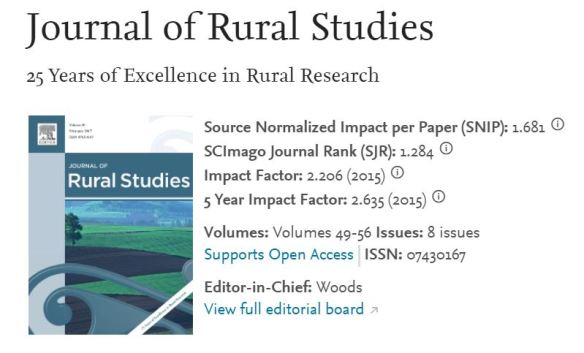
The Journal of Rural Studies just released a new paper on the conceptualisation and realization of buen vivit in a Colombian sustainability network. Martha Chaves as a part of her PhD-work (see earlier blog posts on this) led a team of authors that also included Thomas Macintyre, Gerard Verschoor and myself.

JRScover

This paper explores the emerging concept of buen vivir –  interpreted as integrative and collective wellbeing  – as it is being envisioned and practiced by a network of sustainability initiatives in Colombia. As an example of a transition narrative currently taking place in Latin America and beyond, buen vivir represents a turn towards a more biocentric, relational and collective means of understanding and being in the world. Yet despite the many discourses into buen vivir (many of which tout it as an alternative to neoliberal models of development), there is a general lack of research into its varied forms of application, especially in terms of lived experiences. Drawing on the new ruralities literature, this paper explores the extent to which buen vivir visions and practices represent radical new ruralities e so-called alternatives to development. Data were collected from individuals and ecological communities in predominantly rural areas who are members of the Council of Sustainable Settlements of the Americas (CASA), a
network which promotes many of the principles of buen vivir. Through participatory methods, results demonstrate that CASA visions are based on constructing territorial relations through intercultural knowledge exchange and experimentation into alternative lifestyles. Despite the substantial challenges and contradictions of putting these visions into practice, we argue that lived experiences promote processes of self-reflection on what buen vivir really is or could be. We hold that the inclusive nature of buen vivir offers opportunities for diverse peoples to cohere around shared meanings of the ‘good life,’
while providing the freedom to live variations depending on social and ecological context.

Here’s the DOI: //dx.doi.org/10.1016/j.jrurstud.2017.02.007

For a sneak preview you can also have a look here: Chavesetal2017RadicalRuralities

Towards Transgressive Learning through Ontological Politics: Answering the “Call of the Mountain” in a Colombian Network of Sustainability

Just before the end of the year a fascinating paper appeared in the journal Sustainability authored by a multi-author team led by Martha Chaves who just completed het PhD in Wageningen last month.

Chaves, M., Macintyre, T, Verschoor, G & Wals, AEJ (2017)Towards Transgressive Learning through Ontological Politics: Answering the “Call of the Mountain” in a Colombian Network of Sustainability. Sustainability 2017, 9, 21; doi:10.3390/su9010021  Link to the paper.

Abstract: In line with the increasing calls for more transformative and transgressive learning in the context of sustainability studies, this article explores how encounters between different ontologies can lead to socio-ecological sustainability. With the dominant one-world universe increasingly being questioned by those who advocate the existence of many worlds—a so-called pluriverse—there lays the possibility of not only imagining other human–nature realities, but also engaging with them in practice. Moving towards an understanding of what happens when a multiplicity of worlds encounter one another, however, entails a sensitivity to the negotiations between often competing ontologies—or ontological politics. Based on an ethnographic methodology and narrative methods, data were collected from two consecutive intercultural gatherings called El Llamado de la Montaña (The Call of the Mountain), which take place for five days every year in different parts of Colombia. By actively participating in these gatherings of multiplicity, which address complex socio-ecological challenges such as food sovereignty and defence of territory, results show how encounters between different ontologies can result in transformative and potentially transgressive learning in terms of disrupting stubborn routines, norms and hegemonic powers which tend to accelerate un-sustainability. Although we argue that a fundamental part of the wicked sustainability puzzle lies in supporting more relational ontologies, we note that such learning environments also lead to conflicts through inflexibility and (ab)use of power which must be addressed if sustained socio-ecological learning is to take place. Keywords: ontological politics; transformative learning; transgressive learning; sustainability; Colombia; narrative methods.

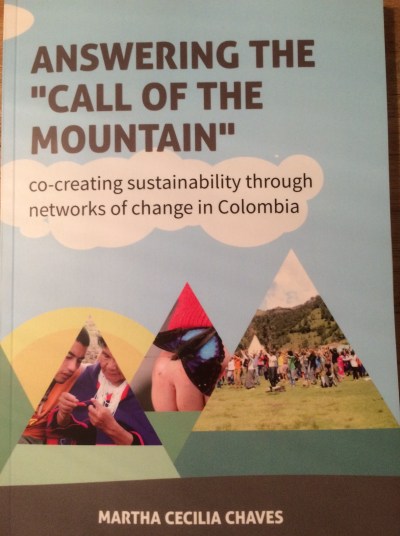
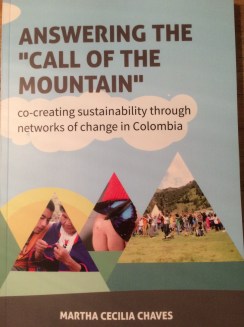
Here’s the cover of Martha Chaves’ PhD-thesis which can be downloaded from the Wageningen University Library system.

marthacover

Unreasonable doubt, viral nonsense and the Post-truth Trump era – avoiding hopelessness and creating sustainability by default


BeyondUnreasonableDoubtInvite

On December 17th, one year ago, the warmest December 17th on record on The Netherlands, I gave my a second inaugural address at Wageningen University titled: Beyond unreasonable doubt –  education and learning for socio-ecological sustainability in the anthropocene  (link to the text) the address took place exactly 6 months after Donald Trump announced his candidacy for President of the USA. At that time nobody really thought he had any chance but that was then. Now that we have entered a new phase of potential depression, hopelessness, psychic numbing, withdrawal, giving up, loss of energy, it seems like the challenge of moving towards a more sustainable world has become greater than ever before which is why I am re-posting the video that Wageningen University made back then about the role of education in creating more critical, mindful, empathic and responsible citizens willing and able to turn the tide and making living lightly and equitably on the Earth the default rather than the exception.

Here is the link to the 2,5 minute video that may be more accessible than the booklet (I hope it spreads as rapidly as some of the non-sense that spreads with lightening speed these days):

Breathing sustainability


Answering the “Call of the Mountain”: Co-creating Sustainability through Networks of Change in Colombia

It is one thing to talk about wanting to live in harmonious relations with people, nature and Planet or Mother Earth, but quite another to put this into practice.

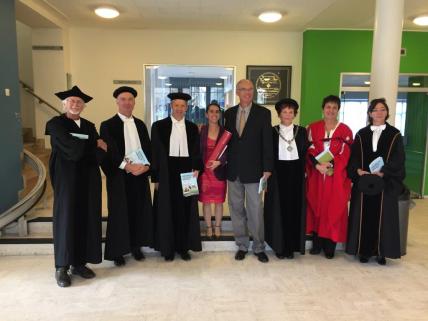
Today, Tuesday November 22nd, the day the FARC and the Colombian government are signing a new peace treaty, one of PhD students, Martha Chaves, successfully defended her dissertation. Martha’s thesis represents a systematic attempt to investigate individuals, communities, networks and gatherings of networks that seek to develop a more relational and caring way of living and of being in the world. In her native Colombia she studied what is it like to attempt to bring the principles of buen vivir such as; reconnecting to ancestral wisdom, questioning values of competition and individuality, and forming new relations to place and territory, into practice. Below you see a happy group of people who all played a role in the ceremony.

marthacover

Her research unveils the tensions between the dominant ontology or (ways of being) of modernity, and other marginalized more relational and cosmological ones such as those of Indigenous Andean communities. Her thesis also re-affirms the importance of plurality in creating the ‘dissonance’ that invites continuous learning that is sometimes at the edges of people’s comfort zones. More so, she shows how intercultural encounters between different ontological positions can lead to more a confronting and overcoming of our unsustainable habits. As such the thesis can help inform socio-ecological niches and movements across the globe that seek to provide a counter narrative to economic globalization, modernity and the neo-liberal agenda.

marthadefense1

After the defence – from left to right: Prof. Danny Wildemeersch, Prof. Rutgerd Boelens, myself, Dr. Martha Chaves, Dr. Gerard Verschoor, Deputy Rector Prof. Francine Govers, Prof. Heila Lotz-Sisitka and Prof. Noelle Aarts.

Furthermore, her results show or at least suggest that encounters between different ontologies can result in transformative and potentially ‘transgressive’ learning in terms of disrupting stubborn routines, norms and hegemonic powers which tend to accelerate unsustainablity. This finding connects well with here future work within the ISSC-funded project on T-learning (www.transgressivelearning.org) that I blogged about in the post below this one.

Afterwards there was a WASS seminar Symposium “Disruptive Networks of Change: Can ‘Transgressive’ learning alter the status quo?” where some critical follow-up questions were asked such as: What types of learning are needed to disrupt ingrained unsustainable behaviour? And how can learning-based change be upscaled? With invited speakers from the fields of environmental education and social learning, and building on the ISSC funded T-learning project which addresses issues of transformative/transgressive learning, we will set out to explore these questions, and possible paths towards more sustainable futures. Martha Chaves first presented here work briefly (presentation-for-defense-22-nov-2016), followed by responding presentations by Prof. Heila Lotz-Sisitka of Rhodes University in South Africa (issc-tkn-seminar-wageningenn) and by Prof. Danny Wildemeersch (paper-presentation-maynooth) of the University of Leuven in Belgium.


Does the GEM 2016 report signify a change from the dominant neo-liberal agenda that sees education as an extension and a driver of the globalizing economy and the its push for infinite growth, innovation and expansion?

Does the GEM 2016 report signify a change from the dominant neo-liberal agenda that sees education as an extension and a driver of the globalizing economy and the its push for infinite growth, innovation and expansion?

In a recent interview for EurActive.com  Environmental Education Professor and a dear colleague and critical friend of mine already for many years, Lucy Sauvé from Quebec, sees in the GEM 2016 report more evidence that there is no substantial change in the ‘language’ of the latest UN Report on education and sustainable development. She cherry picks some statements from the report to illustrate this. I agree, there are some or even many cherries to pick with a neo-liberal flavour. But I can also pick cherries with a different flavour – a flavour that was completely or mostly absent in the UN ESD world.

gem2916

I have both worked with the UNESCO DESD and the Global Education Monitor Team which operates separate from the DESD – even though it is located on the same floor in the UNESCO headquarters as the ESD-team – indeed as a critical friend in the sense that I am sympathetic to any attempt that can re-orient education towards planet and people, but that I am also cautious of co-optation of such efforts by that same neoliberal agenda.

So when I read about People-Planet-Profit (as the GEM team used initially) then I must ask ‘who or what got the P for Profit in there?’ Why not just People and Planet? If you need to have something more explicitly related to economy in there, then let us at least use the P of Prosperity.

When I read that education for all is important for all, because it will lead to economic development which is prerequisite for ecological and environmental sustainability then this logic must be questioned: is education there to serve the economy first and foremost? Is all education by definition good or can it be highly problematic? Etc.

When the ‘world of business’ jumps on the sustainable development, sustainability and ‘green’ bandwagon, then we must look critically at what the underlying motives are and what their efforts really entail. A car company promoting its hydride car using ‘sustainable excitement’ as its slogan, while at the same time manipulating its emission tests, needs to be questioned. Critical thinking is essential and asking disruptive questions is a part of that.

When we read about sustainable development we must also ask ‘must we always develop?’ Or can sustainability represent an alternative TO development? When we read UN DESD documents or the GEM2016 report we must also ask are there any references to ethics? the non-human world? Indigenous ways of knowing and being in the world? Etc.

Of course it is always easier to critique than it is to transform. Being near or within UNESCO circles I feel can have more impact in changing the dominant discourse than staying outside of it by raising the above questions from within in dialogue. Sure the UN is an enormous bureaucracy that doesn’t change overnight, but change does happen.

Working with the GEM Team for about 5 months has given me some insights in how such a comprehensive report is written: framing of the key issues, commissioning papers to mostly external experts, carefully selecting, re-organising and editing texts, distilling key messages as GEM reports are message-oriented, creating a coherent grand document, several rounds of ‘fact-checking’ and copy-editing.

The initial framing and the choice of experts who are to write about the key issues has a huge influence on the tone and direction of the narrative. When I came in, half a year before the report had to be finalized, the framing had been done and could not be changed much really (the thematic section, that I was involved in, is framed around 6 Ps: Planet, Prosperity, People, Places, Participation and Partnerships, whereas the second part of the report, the monitoring part, is framed around SDG 4 (Education) and 17 (Partnerships).

Where I could still have some influence was the tone and direction of the narrative, tweaking it towards a more critical perspective on the role of education and the current economy – with regards to gender, equity, indigenousness and participation the people from the GEM team working on those sections already had a rather critical perspective.

I should point out that initially I was surprised that the framing and selecting of experts was done without any consultation of the UNESCO ESD section. I asked the GEM Team why there was no or little interaction between the two sections. The response was that the Team wanted to write a more evidence-based report not using a potentially too rosy ESD lens but using a sober education lens to get a more accurate picture of the role of education in creating more sustainable futures for all. I also checked with the ESD section if this annoyed them but they were not. In fact they welcomed such an ‘independent’ attempt and hope it would lead to new insights and bring in new and more people into the conversation.

Now back to the initial question of this post: Does the GEM 2016 report signify a change from the dominant neo-liberal agenda that sees education as an extension and a driver of the globalizing economy and the its push for infinite growth, innovation and expansion?

If you are looking for confirmation of replication and affirmation of this agenda you will find it – as Lucy did, however, if you look for a shift in the common discourse, you will also find it. Below I have done some cherry-picking of my own by selecting some key messages that I think represent a counter narrative and a potential shift away from business as usual. Here are my cherries from the GEM2016 report, and believe me, some of them are quite radical and signify a departure form standard UN rhetoric:

  • Current models of economic growth cause environmental destruction
  • For education to be transformative in support of the new sustainable development agenda, ‘education as usual’ will not suffice.
  • Education cannot fight inequality on its own. Labour markets and governments must not excessively penalize lower income individuals. Cross sectoral cooperation can reduce barriers to gender equality.
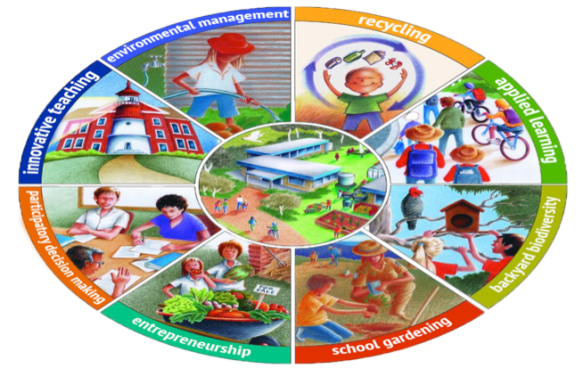
  • A whole-school approach is needed to build green skills and awareness. Campaigns, companies, as well as community and religious leaders must advocate for sustainability practices. Non-formal education and research and development should also help solve global environmental challenges.
  • Expand education on global citizenship, peace, inclusion and resilience to conflict. Emphasize participatory teaching and learning especially in civic education. Invest in qualified teachers for refugees and displaced people, and teach children in their mother language. Incorporate education into the peacebuilding agenda.
  • Distribute public resources equitably in urban areas, involving the community in education planning.
  • Mobilize domestic resources, stop corporate tax evasion and eliminate fossil fuel subsidies to generate government revenue for fundamental needs such as education and health.
  • Include education in all discussions on urban development. Improve and fund urban planning programmes and curricula to include cross-sector engagement and develop locally-relevant solutions.
  • Promote the value of indigenous livelihoods, traditional knowledge and community-managed or -owned land through actions such as land conservation and locally relevant research.
  • Engage community elders in curricular development and school governance, produce appropriate learning materials and prepare teachers to teach in mother languages.
  • Incentivize universities to produce graduates and researchers who address large-scale systemic challenges through creative thinking and problem-solving.
  • Promote cooperation across all sectors to reduce policy-related obstacles to full economic participation by women or minority groups, as well as discrimination and prejudice that also act as barriers.
  • Support multistakeholder governance for the sustainable management of natural resources and of public and semi-public rural, urban and peri-urban spaces.

But there’s more – the GEM2016 has a somewhat different take on Sustainable Development than previous UN reports recognizing that there are different perspectives, including ones that critique the notion of continuous development (the quote below comes form page 4 of the report):

‘The different perspectives of sustainable development include viewing it as a model to improve current systems (endorsed by those focusing on viable economic growth), a call for major reforms (supported by those who advocate for a green economy and technological innovation) and an imperative for a larger transformation in power structures and embedded values of society (supported by transition movements). Some ecologists, such as deep ecologists, believe present-day human development focuses too much on people and ignores the plant, animal and spiritual parts of this world (Leonard and Barry, 2009). They believe humans must learn to be less self-interested and place the needs of other species alongside their own. Transformation advocates say societies should go back to ways of living that are locally sustainable – consuming and wasting less, limiting needs to locally available resources, treating nature with respect, and abandoning polluting technology that has become an integral part of modern society. Culture advocates believe sustainable living can happen only if communities truly embrace it as part of daily culture (Hawkes, 2001) so that it affects decisions about what to eat, how to commute to work and how to spend leisure time.

The South American buen vivir movement rejects development as materialistic and selfish, implying that living sustainably means finding alternatives to development (Gudynas, 2011). The buen vivir belief system comes directly from traditional values of indigenous people, and posits that collective needs are more important than those of the individual. In Ecuador, this concept is called sumak kawsay, the Quechua term for fullness of life in a community. It involves learning to live within boundaries, finding ways to reduce use or to do more with less, and exploring non-material values. Ecuador and the Plurinational State of Bolivia have incorporated buen vivir into their constitutions.

Most definitions of sustainable development challenge the status quo, believing human development lacks meaning without a healthy planet. This view requires people, communities and nations to reconsider basic values of daily living and change the way they think. Understanding one’s own values, the values of one’s community and society, and those of others around the world is a central part of educating for a sustainable future. This means education systems need to continuously evolve and change in order to identify what practices work best within a given context and how they need to change over time. Indeed, for many of its advocates in education, sustainable development is best understood as a journey, rather than a destination.’

So in short – yes it is easy to critique this report as an extension of hegemonic globalizing thinking and  as another attempt to hijack any efforts to change the dominant discourse, but I think that is too easy and not very generative. Rather I would look for the elements that represent a potential shift and a transition towards alternatives and help amplify them by highlighting and sharing them. Some of the texts above would have been unthinkable in mainstream UN-speak only 10 years ago. The glass is half full, not half empty this time.

Arjen Wals, September 14th, 2016

Sustainability Citizenship in Cities: Theory and Practice – now available!

sustainability-citizenship-in-cities-theory-and-practice-by-ralph-horne-1317391071

Australian colleagues Ralphe Horne, John Fien, Beau Beza and Anitra Nelson edited a fascinating book on ‘sustainability citizenship’ to which I was priviledged to contribute a chapter together with Frans Lenglet. Urban sustainability citizenship situates citizens as social change agents with an ethical and self-interested stake in living sustainably with the rest of Earth. Such citizens not only engage in sustainable household practices but respect the importance of awareness raising, discussion and debates on sustainability policies for the common good and maintenance of Earth’s ecosystems.

The publisher’s website describes the book as follows:

Sustainability Citizenship in Cities seeks to explain how sustainability citizenship can manifest in urban built environments as both responsibilities and rights. Contributors elaborate on the concept of urban sustainability citizenship as a participatory work-in-progress with the aim of setting its practice firmly on the agenda. This collection will prompt practitioners and researchers to rethink contemporary mobilisations of urban citizens challenged by various environmental crises, such as climate change, in various socio-economic settings.

This book is a valuable resource for students, academics and professionals working in various disciplines and across a range of interdisciplinary fields, such as: urban environment and planning, citizenship as practice, environmental sociology, contemporary politics and governance, environmental philosophy, media and communications, and human geography.

The chapter Frans Lenglet and I wrote is titled: “Sustainability citizens: collaborative and disruptive social learning” and emphasizes the role of learning and cultivating diversity and generative conflict in co-determining what it means to be sustainable within the everyday realities people find themselves. It is argued that in order to brake with stubborn unstustainabel routines – that are heavily promoted and strenghtened in a market, growth and consumption-oriented society, citizens will also need to develop disruptive capacity and engage in transgressive learning (see my earlier post about transgressive learning and the work within the ICSS project on T-learning led by Prof. Heila Lotz-Sisitka from Rhodes Univerity in South Africa). If you want to have a look at our chapter you can find it here: SustainabilityCitizenshipWalsLenglet2016 (for personal use). The full reference is:

Wals, A.E.J. & F. Lenglet (2016). Sustainability citizens: collaborative and disruptive social learning. In: R. Horne, J. Fien, B.B. Beza & A. Nelson (Eds.) Sustainability Citizenship in Cities: Theory and Practice. London: Earthscan, p. 52-66.

If you want to get a hold of the entire book visit: https://www.routledge.com/Sustainability-Citizenship-in-Cities-Theory-and-practice/Horne-Fien-Beza-Nelson/p/book/9781138933637