
New book on 50 years of Education and Learning for Sustainable Futures

We are pleased to share with you the publication of our new book, Education and Learning for Sustainable Futures: 50 years of learning and environmental change. This book explores fundamental questions about how the role of education has evolved over the decades since the pivotal 1972 Stockholm Conference, which brought environmental learning to the forefront of global awareness.

Co-authors, Daniella Tilbury and Thomas Macintyre and myself, have attempted to find some answers by tracking through the decades (1970-2020) the development of narratives, thinking, and practice of learning and education in support of the environment and sustainability. What is clear is that the profile and presence of learning and education for the environment has been elevated in today’s policy discourses and communities of practice. Yet, our analysis identified some clear differences in the way education and learning for the environment has been approached over time. 

In our new book, we trace these changes over the decades while looking ahead to the challenges and opportunities of the future.  A key wildcard in this journey is Artificial Intelligence (AI), which holds immense potential to bridge digital and green agendas, enabling smarter environmental management and driving innovation toward a sustainable future. However, we also address critical concerns: data privacy breaches, outsourcing human thinking to profit-driven algorithms, exacerbation of inequalities, and the environmental footprint of AI infrastructure.

This book provides a light way into the history, developments and prospects of the field of Environmental and Sustainability Education.

Full reference:

Macintyre, T., Tilbury, D., & Wals, A. (2024). Education and Learning for Sustainable Futures: 50 Years of Learning for Environment and Change (1st ed.). Routledge. https://doi.org/10.4324/9781003467007

Wish to read more? Our book is open access thanks to the funding of the Dutch Government that funded this publication: https://www.routledge.com/Education-and-Learning-for-Sustainable-Futures-50-Years-of-Learning-for-Environment-and-Change/Macintyre-Tilbury-Wals/p/book/9781032727912

Our thanks also go to Stakeholder Forum and to @JanGustav for his leadership role in the Stockholm+50 reflective dialogues, and to UNEP/ the Swedish Government for spurring us on to track the historical development of education and learning for the environment. We are also grateful to @Routledge for taking an interest in publishing the text.
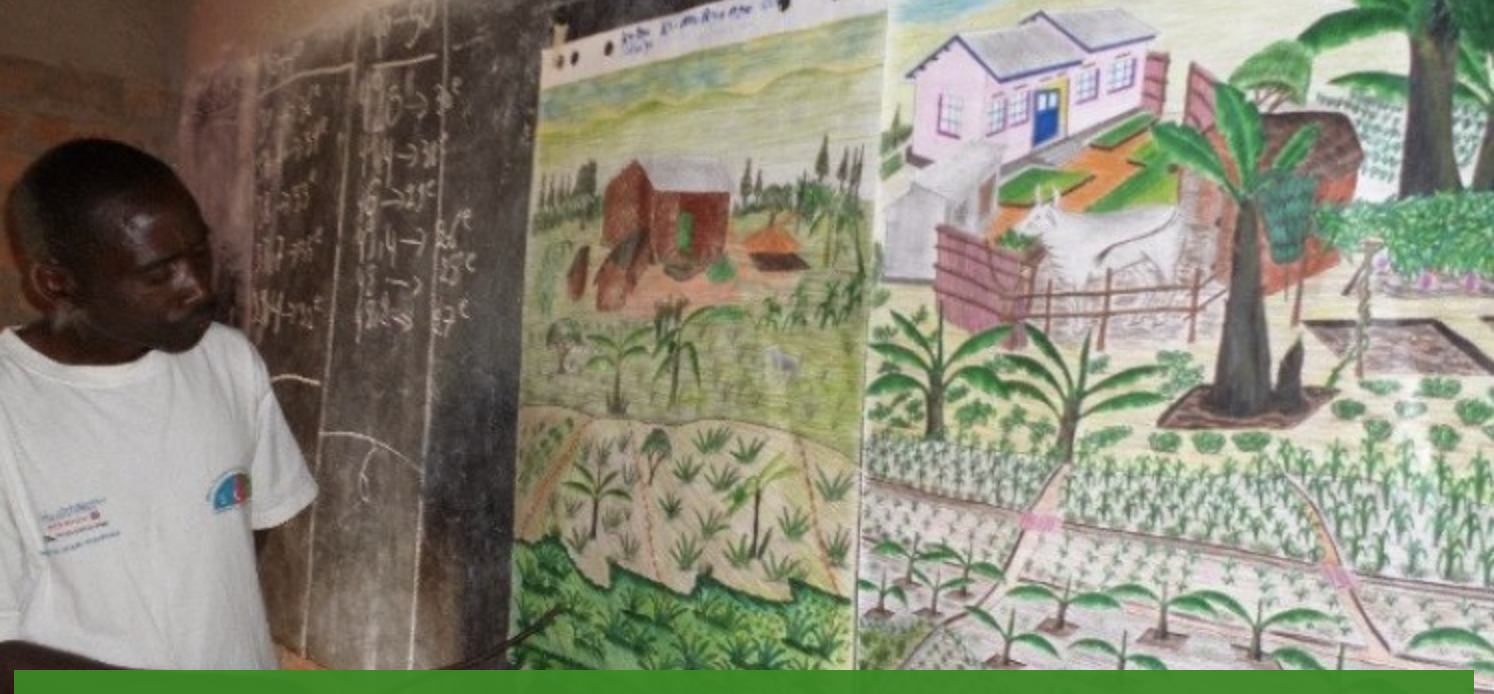
Competences for socio-ecological stewardship: a qualitative assessment of the transformative potential of farmers’ learning processes in Eastern Uganda

Theoretically, this study expands Roczen’s environmental competence model by including social, ethical, and conservation and restoration action competences. This study is one of the first to identify socio-ecological stewardship competences and the learning processes that can foster these competences.

Full citation:

Misanya, D., Tassone, V. C., Kessler, A., Wals, A. E. J., & Kibwika, P. (2024). Competences for socio-ecological stewardship: a qualitative assessment of the transformative potential of farmers’ learning processes in Eastern Uganda. The Journal of Agricultural Education and Extension, 1–21. https://doi.org/10.1080/1389224X.2024.2403597

New paper out: Vocational education for a sustainable future

Saskia Weijzen published her first article as a part of her PhD-journey. The full title is:  Vocational education for a sustainable future: Unveiling the collaborative learning narratives to make space for learning

I am sharing the abstract here to pique, hopefully, your curiosity:

In the light of urgent global sustainability challenges, vocational education is searching for new approaches that are more just and future proof. At least a part of the answer seems to lie in so-called collaborative learning arrangements where students together with societal actors explore sustainability-related challenges. The amount of this kind of arrangements in which vocational education participates increases. Empirical studies on what actually goes on in the collaborative arrangements are rather scarce. This study addresses the theory-practice gap by applying a participatory design. The study unveils that deeply seated educational and socio-cultural routines like the student as learner, alienation from issues, a bias towards cognitive knowing and ‘solving’ problems seem to limit the possibilities for more genuine collaboration to emerge. The study also found that by intervening with creative and reflexive methods, space for transformative learning can unfold that allows engagement with existential questions like ‘what is it what I really got to do here?’. The opening up of these spaces was accompanied by longings to go beyond the rosy narratives of collaborative learning arrangements and to have more attention for the persistent embeddedness of educational routines in the societal issues around us. Vocational education as society. What happens if we progress towards vocational education for sustainable futures with more modesty and introspection?

The full citation and doi (it is open access!) is:

Weijzen, S. M. G., Onck, C., Wals, A. E., Tassone, V. C., & Kuijer-Siebelink, W. (2024). Vocational education for a sustainable future: Unveiling the collaborative learning narratives to make space for learning. Journal of Vocational Education & Training76(2), 331–353. https://doi.org/10.1080/13636820.2023.2270468