Time for ‘T-learning’ – transformative, transgressive learning in times of climate change

transgressive

Still feeling very privileged and a bit lucky to be part of a very rich consortium of partners from 4 different continents – as one of 3 selected proposal out of more than 500 (!) original expressions of interest – to work on this ICSS-funded project on T-learning. The project just launched its website: http://transgressivelearning.org/ with the case studies form the 10 different countries. Here is what we are talking about:

Radical changes in society are needed for responding to climate change, and for transforming to sustainability. It is increasingly clear that people everywhere will need to learn to transform to sustainability in ways that are socially just, peaceful and ecologically sustainable.

It is now already widely known that transformations to sustainability can occur if people learn to make changes at niche level. This can drive wider social changes and regime shift transformations, especially if such forms of learning become more collective.

Transformations to sustainability do not come about easily because of ‘lock-ins’ in the system. Transformative, transgressive types of learning are needed to help ‘unlock’ the lock-ins and to strengthen wider forms of collective social learning.

Yet, we know little about the type of transformative, transgressive learning (t-learning) that enables such change.

Here’s the initial ‘academic’ paper we wrote: transgressiveSocialLearning (only to have a look, not for sharing with others).

Full reference: Lotz-Sisitka H, Wals AEJ, Kronlid D, McGarry D. (2015) ‘Transformative, transgressive social learning: rethinking higher education pedagogy in times of systemic global dysfunction’, Current Opinion in Environmental Sustainability , 16, 73-80, doi:10.1016/j.cosust.2015.07.018

Go visit the website! http://transgressivelearning.org/ or here: Join T-learning form

On-line Masters Course on Education in the Context of Sustainable Development at Gothenburg University

logueng_cen2rwageningenuniversityresearchlogo

New Course: Education for sustainable development – an introduction

With global challenges such as climate change, mass extinction of species, rising inequity and a growing world population, the prospects for a quality life for all, forever seem rather bleak. Central in this new course is the question: What is the role and responsibility of education in not only responding to sustainability problems but also in preventing them and in creating more sustainable futures? But also what might such education look like? The course will take advantage of some of the materials and lessons learnt from the recently finished Global Environmental Education Course Gothenburg University supported – along with Wageningen University & Research and other universities and the US EPA- which was lead by Cornell University in association with the NAAEE’s EECapacity Program.

sutainabilitypie

In this 15 credit Master’s course you will critically and actively explore central concepts and perspectives in the field of education for sustainable development. The course content will be related to the participants’ own backgrounds, specific interests and prior experiences. Master students / students who have completes their Bachelors with different study backgrounds (e.g. environmental sciences, social sciences, economics, arts and humanities) can enrol in this course as long as you have an interest in both sustainable development and education and meet the basic English proficiency requirement of Gothenburg University.

The course is offered  online at half time starting November 1 and finishing March 22, 2017). The main course language is English. There are four blocks: 1) Understanding Sustainable Development, 2) Understanding Education in relation to SD, 3) Understanding learning environments, processes and outcomes conducive to SD and 4) Education in relation to your own SD-challenge (personal project). Each block is divided up in course weeks, each with short introductory videos, background literature, discussion questions and online discussion. Periodically there will be assignments that will be used in providing feedback and assessing the quality of your contributions. The new Global Education Monitor Report on Education for People and Planet: Creating Sustainable Futures for All will be one of the texts used in the course.

For the pilot course we are admitting a maximum of 50 students. You will need to formally register for the course through Gothenburg University via this link to the GU course web-page.

More information about course content contact me at: Arjen.wals@gu.se

More information about course logistics and registration can be found via the link to the course’s webpage (hyperlink).

Note: eligible students from European Union can participate without paying tuition to Gothenburg University. Students from outside the European Union will have to pay a tuition fee. It is assumed that participants have a bachelor degree or equivalent and have a proficient mastery of the English language (evidence of this may need to be provided).

Sustainability Citizenship in Cities: Theory and Practice – now available!

sustainability-citizenship-in-cities-theory-and-practice-by-ralph-horne-1317391071

Australian colleagues Ralphe Horne, John Fien, Beau Beza and Anitra Nelson edited a fascinating book on ‘sustainability citizenship’ to which I was priviledged to contribute a chapter together with Frans Lenglet. Urban sustainability citizenship situates citizens as social change agents with an ethical and self-interested stake in living sustainably with the rest of Earth. Such citizens not only engage in sustainable household practices but respect the importance of awareness raising, discussion and debates on sustainability policies for the common good and maintenance of Earth’s ecosystems.

The publisher’s website describes the book as follows:

Sustainability Citizenship in Cities seeks to explain how sustainability citizenship can manifest in urban built environments as both responsibilities and rights. Contributors elaborate on the concept of urban sustainability citizenship as a participatory work-in-progress with the aim of setting its practice firmly on the agenda. This collection will prompt practitioners and researchers to rethink contemporary mobilisations of urban citizens challenged by various environmental crises, such as climate change, in various socio-economic settings.

This book is a valuable resource for students, academics and professionals working in various disciplines and across a range of interdisciplinary fields, such as: urban environment and planning, citizenship as practice, environmental sociology, contemporary politics and governance, environmental philosophy, media and communications, and human geography.

The chapter Frans Lenglet and I wrote is titled: “Sustainability citizens: collaborative and disruptive social learning” and emphasizes the role of learning and cultivating diversity and generative conflict in co-determining what it means to be sustainable within the everyday realities people find themselves. It is argued that in order to brake with stubborn unstustainabel routines – that are heavily promoted and strenghtened in a market, growth and consumption-oriented society, citizens will also need to develop disruptive capacity and engage in transgressive learning (see my earlier post about transgressive learning and the work within the ICSS project on T-learning led by Prof. Heila Lotz-Sisitka from Rhodes Univerity in South Africa). If you want to have a look at our chapter you can find it here: SustainabilityCitizenshipWalsLenglet2016 (for personal use). The full reference is:

Wals, A.E.J. & F. Lenglet (2016). Sustainability citizens: collaborative and disruptive social learning. In: R. Horne, J. Fien, B.B. Beza & A. Nelson (Eds.) Sustainability Citizenship in Cities: Theory and Practice. London: Earthscan, p. 52-66.

If you want to get a hold of the entire book visit: https://www.routledge.com/Sustainability-Citizenship-in-Cities-Theory-and-practice/Horne-Fien-Beza-Nelson/p/book/9781138933637


The relevance of Jane Jacobs and Elinor Ostrom to urban socio-ecology

jane+in+news+slideshowJane Jacobs and Elinor Ostrom were both giants in their impact on how we think about communities, cities, and common resources such as space and nature. But we don’t often put them together to recognize the common threads in their ideas.
Jacobs is rightly famous for her books, including The Death and Life of Great American Cities, and for her belief that people, vibrant spaces and small-scale interactions make great cities—that cities are “living beings” and function like ecosystems.

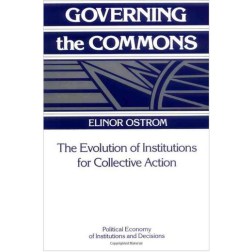
Ostrom won a Nobel Prize for her work in economic governance, especially as it relates to the Commons. She was an early developer of a social-ecological framework for the governance of natural resources and ecosystems.ostrombook

These streams of ideas clearly resonate together in how they bind people, economies, places and nature into a single ecosystem-driven framework of thought and planning, themes that deeply motivate The Nature of Cities. In this roundtable we ask sixteen people to talk about some key ideas that motivate their work, and how these ideas have roots in the ideas of either Jacobs or Ostrom, or both.

The natureofcities.com is a wonderful resource and platform for people interested in re-designing urban spaces to make them more liveable and sustainable. Every two months the site organises a Global Round Table that starts with input from scholars and practitioners from around the world. I was asked to provide an short input piece as well which can be found in the online discussion forum. In the past these roundtables  have been getting about 12,000+ readers, from 1000+ cities and 70+ countries and I encourage anyone to have go to visit and contribute at this roundtable by clicking on the link below.

Common threads: connections among the ideas of Jane Jacobs and Elinor Ostrom, and their relevance to urban socio-ecology

For more of their ideas, directly from them, good places to start are:

Jacobs, J. 1961. The Death and Life of Great American Cities. Random House, New York, USA.

Ostrom, E. 1990. Governing the commons: The evolution of institutions for collective action. Cambridge University Press, Cambridge, MA, USA

Moving from Citizen Science to Civic Science in Tackling Wicked Conservation Issues

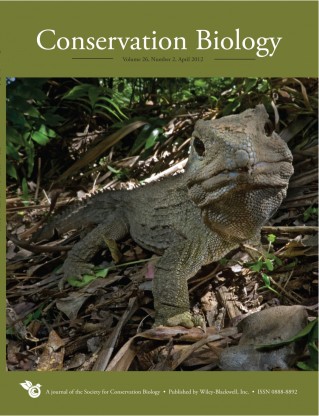
April_Front_Full

(note the cover page above is not the one of the current issue).

Together with good friends and colleagues, Justin Dillon and Bob Stevenson I was given the opportunity to edit a Special Section for one of the key journals in the field of Biology and Nature Conservation – ‘Conservation Biology’ – on Citizen Science.

We were invited to do so shortly after our paper on using sustainability and citizen science as a bridge between science education and environmental education that was published in Science (see: ScienceWalsetall2014) well over a year ago. In the paper we use a heuristic that Bob Jickling and myself developed a while ago to position different strands of citizen science – from more science-driven ones to more policy-driven ones to more transition-driven ones. The later strands we refer to as CIVIC Science, rather than Citizen Science. The Special Section included 11 interesting papers from authors and places from around the world. What is clear is that the Civic Science, transition-driven strands are rare but represent a very important niche that is likely to grow in the years to come. Here’s the link:

http://onlinelibrary.wiley.com/doi/10.1111/cobi.12689/abstract

Some of the papers are open-access for all to down-load – but some you may need to pay for or get through your library. Our introductory paper presently is not listed as open-access but we trust that the publisher Wiley will make this open-access shortly. UPDATE: WILEY HAS DONE SO NOW! YOU CAN DOWNLOAD THE PDF FOR FREE NOW FOR PERSONAL USE.

Feel free to share with interested colleagues – also those working in conservation.