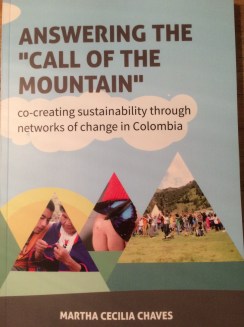
Answering the “Call of the Mountain”: Co-creating Sustainability through Networks of Change in Colombia

It is one thing to talk about wanting to live in harmonious relations with people, nature and Planet or Mother Earth, but quite another to put this into practice.

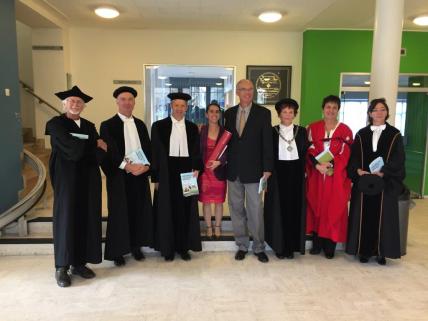
Today, Tuesday November 22nd, the day the FARC and the Colombian government are signing a new peace treaty, one of PhD students, Martha Chaves, successfully defended her dissertation. Martha’s thesis represents a systematic attempt to investigate individuals, communities, networks and gatherings of networks that seek to develop a more relational and caring way of living and of being in the world. In her native Colombia she studied what is it like to attempt to bring the principles of buen vivir such as; reconnecting to ancestral wisdom, questioning values of competition and individuality, and forming new relations to place and territory, into practice. Below you see a happy group of people who all played a role in the ceremony.

marthacover

Her research unveils the tensions between the dominant ontology or (ways of being) of modernity, and other marginalized more relational and cosmological ones such as those of Indigenous Andean communities. Her thesis also re-affirms the importance of plurality in creating the ‘dissonance’ that invites continuous learning that is sometimes at the edges of people’s comfort zones. More so, she shows how intercultural encounters between different ontological positions can lead to more a confronting and overcoming of our unsustainable habits. As such the thesis can help inform socio-ecological niches and movements across the globe that seek to provide a counter narrative to economic globalization, modernity and the neo-liberal agenda.

marthadefense1

After the defence – from left to right: Prof. Danny Wildemeersch, Prof. Rutgerd Boelens, myself, Dr. Martha Chaves, Dr. Gerard Verschoor, Deputy Rector Prof. Francine Govers, Prof. Heila Lotz-Sisitka and Prof. Noelle Aarts.

Furthermore, her results show or at least suggest that encounters between different ontologies can result in transformative and potentially ‘transgressive’ learning in terms of disrupting stubborn routines, norms and hegemonic powers which tend to accelerate unsustainablity. This finding connects well with here future work within the ISSC-funded project on T-learning (www.transgressivelearning.org) that I blogged about in the post below this one.

Afterwards there was a WASS seminar Symposium “Disruptive Networks of Change: Can ‘Transgressive’ learning alter the status quo?” where some critical follow-up questions were asked such as: What types of learning are needed to disrupt ingrained unsustainable behaviour? And how can learning-based change be upscaled? With invited speakers from the fields of environmental education and social learning, and building on the ISSC funded T-learning project which addresses issues of transformative/transgressive learning, we will set out to explore these questions, and possible paths towards more sustainable futures. Martha Chaves first presented here work briefly (presentation-for-defense-22-nov-2016), followed by responding presentations by Prof. Heila Lotz-Sisitka of Rhodes University in South Africa (issc-tkn-seminar-wageningenn) and by Prof. Danny Wildemeersch (paper-presentation-maynooth) of the University of Leuven in Belgium.


Time for ‘T-learning’ – transformative, transgressive learning in times of climate change

transgressive

Still feeling very privileged and a bit lucky to be part of a very rich consortium of partners from 4 different continents – as one of 3 selected proposal out of more than 500 (!) original expressions of interest – to work on this ICSS-funded project on T-learning. The project just launched its website: http://transgressivelearning.org/ with the case studies form the 10 different countries. Here is what we are talking about:

Radical changes in society are needed for responding to climate change, and for transforming to sustainability. It is increasingly clear that people everywhere will need to learn to transform to sustainability in ways that are socially just, peaceful and ecologically sustainable.

It is now already widely known that transformations to sustainability can occur if people learn to make changes at niche level. This can drive wider social changes and regime shift transformations, especially if such forms of learning become more collective.

Transformations to sustainability do not come about easily because of ‘lock-ins’ in the system. Transformative, transgressive types of learning are needed to help ‘unlock’ the lock-ins and to strengthen wider forms of collective social learning.

Yet, we know little about the type of transformative, transgressive learning (t-learning) that enables such change.

Here’s the initial ‘academic’ paper we wrote: transgressiveSocialLearning (only to have a look, not for sharing with others).

Full reference: Lotz-Sisitka H, Wals AEJ, Kronlid D, McGarry D. (2015) ‘Transformative, transgressive social learning: rethinking higher education pedagogy in times of systemic global dysfunction’, Current Opinion in Environmental Sustainability , 16, 73-80, doi:10.1016/j.cosust.2015.07.018

Go visit the website! http://transgressivelearning.org/ or here: Join T-learning form

Sustainability Citizenship in Cities: Theory and Practice – now available!

sustainability-citizenship-in-cities-theory-and-practice-by-ralph-horne-1317391071

Australian colleagues Ralphe Horne, John Fien, Beau Beza and Anitra Nelson edited a fascinating book on ‘sustainability citizenship’ to which I was priviledged to contribute a chapter together with Frans Lenglet. Urban sustainability citizenship situates citizens as social change agents with an ethical and self-interested stake in living sustainably with the rest of Earth. Such citizens not only engage in sustainable household practices but respect the importance of awareness raising, discussion and debates on sustainability policies for the common good and maintenance of Earth’s ecosystems.

The publisher’s website describes the book as follows:

Sustainability Citizenship in Cities seeks to explain how sustainability citizenship can manifest in urban built environments as both responsibilities and rights. Contributors elaborate on the concept of urban sustainability citizenship as a participatory work-in-progress with the aim of setting its practice firmly on the agenda. This collection will prompt practitioners and researchers to rethink contemporary mobilisations of urban citizens challenged by various environmental crises, such as climate change, in various socio-economic settings.

This book is a valuable resource for students, academics and professionals working in various disciplines and across a range of interdisciplinary fields, such as: urban environment and planning, citizenship as practice, environmental sociology, contemporary politics and governance, environmental philosophy, media and communications, and human geography.

The chapter Frans Lenglet and I wrote is titled: “Sustainability citizens: collaborative and disruptive social learning” and emphasizes the role of learning and cultivating diversity and generative conflict in co-determining what it means to be sustainable within the everyday realities people find themselves. It is argued that in order to brake with stubborn unstustainabel routines – that are heavily promoted and strenghtened in a market, growth and consumption-oriented society, citizens will also need to develop disruptive capacity and engage in transgressive learning (see my earlier post about transgressive learning and the work within the ICSS project on T-learning led by Prof. Heila Lotz-Sisitka from Rhodes Univerity in South Africa). If you want to have a look at our chapter you can find it here: SustainabilityCitizenshipWalsLenglet2016 (for personal use). The full reference is:

Wals, A.E.J. & F. Lenglet (2016). Sustainability citizens: collaborative and disruptive social learning. In: R. Horne, J. Fien, B.B. Beza & A. Nelson (Eds.) Sustainability Citizenship in Cities: Theory and Practice. London: Earthscan, p. 52-66.

If you want to get a hold of the entire book visit: https://www.routledge.com/Sustainability-Citizenship-in-Cities-Theory-and-practice/Horne-Fien-Beza-Nelson/p/book/9781138933637


Education for people and planet: Creating sustainable futures for all – GEM-2016 soon to be launched

global-education-monitoring-report-300x225

Starting in 2016 a new series of UNESCO reports, the Global Education Monitoring (GEM) Reports, will monitor the state of education in the new framework of the Sustainable Development Goals (SDGs). The new series replaces the earlier Global Monitoring Report (GMR) series. I was brought on board the GEM 2016 Team last December to provide input on the thematic part of the report – especially to provide feedback on the relationship between education and achieving sustainability.

The report has been titled: ‘Education for people and planet: Creating sustainable futures for all’. It is a very comprehensive and well-researched report that seeks to be geographically balanced in its analysis and examples. There are two parts: a thematic part and a monitoring part. My role was mainly limited to providing feedback to the thematic part which covers 5 ‘Ps’s: Planet, Prosperity, People, Place and Partnerships. The thematic Part 1 of the Report focuses on examining the complex interrelationships and links between education and key development sectors. It determines which education strategies, policies and programmes are most effectively linked to the economic, social, environmental and political priorities of the new sustainable development agenda.  Part 2 establishes a much needed a monitoring framework for education post-2015, and examine key financing and governance challenges for the post-2015 era.

You can read the concept note that underpins the report here. 

The GEM 2016 report will appear in multiple languages.

Sign up to receive the report in your inbox as soon as it’s released.


Moving from Citizen Science to Civic Science in Tackling Wicked Conservation Issues

April_Front_Full

(note the cover page above is not the one of the current issue).

Together with good friends and colleagues, Justin Dillon and Bob Stevenson I was given the opportunity to edit a Special Section for one of the key journals in the field of Biology and Nature Conservation – ‘Conservation Biology’ – on Citizen Science.

We were invited to do so shortly after our paper on using sustainability and citizen science as a bridge between science education and environmental education that was published in Science (see: ScienceWalsetall2014) well over a year ago. In the paper we use a heuristic that Bob Jickling and myself developed a while ago to position different strands of citizen science – from more science-driven ones to more policy-driven ones to more transition-driven ones. The later strands we refer to as CIVIC Science, rather than Citizen Science. The Special Section included 11 interesting papers from authors and places from around the world. What is clear is that the Civic Science, transition-driven strands are rare but represent a very important niche that is likely to grow in the years to come. Here’s the link:

http://onlinelibrary.wiley.com/doi/10.1111/cobi.12689/abstract

Some of the papers are open-access for all to down-load – but some you may need to pay for or get through your library. Our introductory paper presently is not listed as open-access but we trust that the publisher Wiley will make this open-access shortly. UPDATE: WILEY HAS DONE SO NOW! YOU CAN DOWNLOAD THE PDF FOR FREE NOW FOR PERSONAL USE.

Feel free to share with interested colleagues – also those working in conservation.

Transformative Learning for Sustainability: Special Issue

Ariane König and Nancy Budwig have edited a cutting edge Special Issue for the Journal Current Opinions of Environmental Sustainability on Transformative Learning for Sustainability and more specifically on ‘New requisites to universities in the 21st century’.

elseviercover_large

This Special Issue focuses on how universities engage in sustainability issues by staging transformative learning opportunities. The special issue features ten case papers from five continents illustrating the changing relationship of learning, research and practice in such programmes. The issue includes a paper on the Luxembourg Certificate in Sustainability and Social Innovation and an introductory overview by Dr König.to which I will contribute in May with a talk on “Sustainability transitions in society: changing science/citizen relations with citizen science for social learning“. The University of Luxembourg has made the entire special issue open access which means that anyone can download all the papers for free, including the one I co-authored with Heila Lotz-Sisitka, David Kronlid and Dylan McGary on Transgressive Learning which you can also download the paper here: transgressiveSocialLearning Transgressive Social Learning

Highlights from the paper are:

  • Pedagogies are required that are not constrained by current use of limited concepts, or by disciplinary decadence.
  • Concepts such as resilience are problematic if they hold unsustainable systems and patterns in place.
  • Disruptive capacity building and transgressive pedagogies are needed for a more sustainable world.
  • Transformative, transgressive forms of learning requires co-learning in multi-voiced and multi-actor formations.
  • Higher education should provide possibilities for engaged, lived experience of transformative praxis for students.

“Beyond unreasonable doubt – learning for socio-ecological sustainability…”

InauguralInvitationcomplete

As my ‘special professorship’ has been converted into a ‘personal professorship,’ (I know this is confusing to academics from around the world but I don’t want to use up valuable blog-space to explain it) I was invited to give a second inaugural address titled: Beyond unreasonable doubt –  education and learning for socio-ecological sustainability in the anthropocene in the Aula of the Wageningen University on December 17th 

The special day happened to be the warmest December 17th on record… quite fitting for the talk and the cover of the accompanying booklet (with people sitting on an terrace a cold Fall evening in Gothenburg under so-called ‘space heaters’).

A short introduction to the new Chair has been placed on youtube:

Transformative Learning for Socio-ecological Sustainability in less than 3 minutes

Here’s the back flap text of the booklet is now available:

‘For the first time in history one single species has succeeded in living in a way on planet Earth that disrupts major natural systems and forces in such a way that our survival is at stake. A transition is needed to break with resilient unsustainable systems and practices. Such a transition requires active civic engagement in sustainability. New forms of education and learning, including ‘disruptive capacity building’ and ‘transgressive’ pedagogies are urgently needed to foster such engagement.’


If you want to receive the booklet containing the accompanying text to the lecture then send an email to office.ecs@wur.nl with unreasonable doubt in the ‘subject’ and put your name and address in the body of the message and we will post you one.
 If you wish you can still attend, sort of,  the event by going to:
Here you can see the entire ceremony which starts at minute 9 with an introduction by our Vice-Chancellor (Rector Magnificus) Arthur Mol and with me starting the speech (battling the flu but hanging in there – I think/hope) at minute 15. Sometimes the animations I used do not fly-in on WURTV for some reason but fortunately they did in the auditorium). But it’s of good quality and you can advance the timer if you wish to.


Focus of the new Chair in transformative learning for socio-ecological sustainability

In short the new Chair in transformative learning for socio-ecological sustainability explores three important questions: 1) What sustain’abilities’ and responsibilities we need to develop in learners? 2) What learning spaces or ecologies of learning are most suitable in developing those abilities? and 3) How can the cultivation of these abilities, responsibilities and spaces be designed and supported? In other words, the main focus of the chair lies on understanding, designing and supporting learning processes that can help citizens understand complex socio-ecological issues through meaningful engagement and interactions with and within the social, physical and virtual realities of which people are part and the development of the capacities they need to contribute to their resolution.

The addition of ‘socio-ecological’ to sustainability is intentional, as much work done on sustainability nowadays tends to focus on economic sustainability, often without people and planet in mind. In a way sustainability has lost its transformative edge ‘sustainability’ during the last decade as the much of the private sector embraced it as a marketing opportunity. Adrian Parr (2009) even suggests that sustainability has been hijacked and neutered. While economics inevitably is part of the sustainability puzzle, the need to (re)turn to the ecological boundaries in which we have to learn to live together, as well as to the well-being and meaning of life issues for all, has prompted me to make the social-ecological more prominent in the description of this Chair. Therefore, I am particularly interested in understanding and supporting forms of learning that can lead to the engagement of seemingly unrelated actors and organizations in making new knowledge and in taking the actions necessary to address socio-ecological challenges.
Note 1: The booklet containing the inaugural address will be posted to you for free (as long as supplies last) when you email office.ecs@wur.nl with “Unreasonable doubt” in the subject area and your name and postal address in the body of the text).
Note 2: The inaugural address can be followed live via WURTV where it will also be archived: https://wurtv.wur.nl/P2G/cataloguepage.aspx


Transformative, transgressive social learning: rethinking higher education pedagogy in times of systemic global dysfunction

protest-global-warming-climate-change

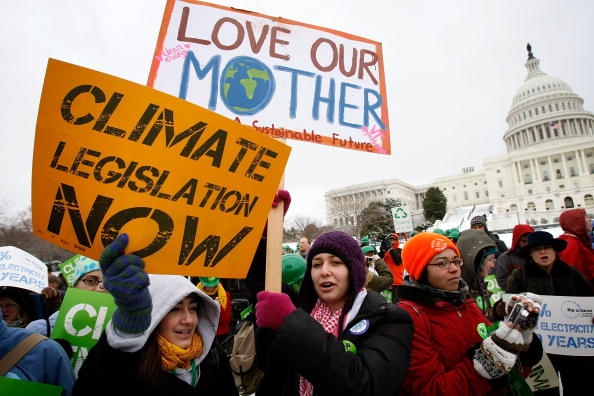
This weekend (September 12-13, 2015) an new publication appeared that I was privileged to co-author with Heila Lotz-Sisitka (Rhodes University), David Kronlid (University of Uppsala) and Gothenburg), Dylan McGarry (Durban University of Technology)  for Current Opinion in Environmental Sustainability (Vol 16:7380). It is one of the first papers that I know of that begins to question the emphasis on adaptation and the development of   ‘adaptive capacity’ and instead introduces the need for transgression and disruptive capacity if we are to transition towards a new world based on alternative (including ancient ones) values and principles than current dominant ones. Here’s the abstract follow by some highlights in bullet form. The paper itself can be found here for personal use (not for distribution). Transgressive Social Learning The work was supported by a grant by the ISSC.

Abstract

The nature of the sustainability challenges currently at hand is such that dominant pedagogies and forms of learning that characterize higher education need to be reconsidered to enable students and staff to deal with accelerating change, increasing complexity, contested knowledge claims and inevitable uncertainty. In this contribution we identified four streams of emerging transformative, transgressive learning research and praxis in the sustainability sciences that appear generative of a higher education pedagogy that appears more responsive to the key challenges of our time: 1) reflexive social learning and capabilities theory, 2) critical phenomenology, 3) socio-cultural and cultural historical activity theory, and 4) new social movement, postcolonial and decolonisation theory. The paper critiques the current tendency in sustainability science and learning to rely on resilience and adaptive capacity building and argues that in order to break with maladaptive resilience of unsustainable systems it is essential to strengthen transgressive learning and disruptive capacity-building.

Highlights

  • The ‘learning modes’ needed for responding to and engaging the wicked problems of sustainability, require pedagogies that are not constrained by current use of limited concepts (e.g. the resilience concept), or by disciplinary decadence.
  • Concepts such as resilience can be problematic when they keeps hegemonic unsustainable systems, patterns and routines from changing.
  • Disruptive capacity building and transgressive pedagogies are needed to create a world that is more sustainable than the one in prospect.
  • Transformative, transgressive forms of learning require engaged forms of pedagogy that involve multi-voiced engagement with multiple actors as well an emphasis on co-learning, cognitive justice, and the formation and development of individual and collective agency.
  • Higher education institutions should provide space for transgressing taken-for-granted norms, existing ethical and epistemological imperialism in society and higher education itself, and in doing so provide possibilities for engaged, lived experience of transformative praxis for students as a necessary part of their education.

Reclaiming Broken Places: Introduction to Civic Ecology – free MOOC starting in April

civic_ecology_608x211
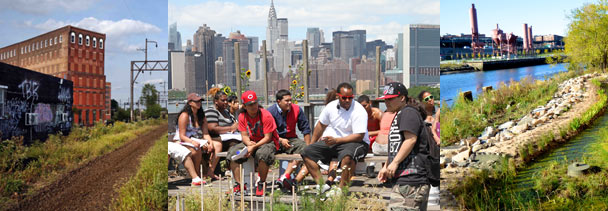
My good colleague at Cornell University, Professor Marianne Krasny who has been at the forefront of civic ecology and civic ecology education, along with Keith Tidball, has created a very interesting MOOC on EdX. In the course you will explore why and how people come together to care for nature and cultivate community in places marked by disaster, war, poverty and environmental degradation. As usual participating in a MOOC is free. The course starts on April 10th.

About this Course

The actions of ordinary people are often absent in studies of urban renewal and urban ecology. Around the world, people who are fed up with environmental degradation and the breakdown of their communities come together to transform blighted vacant lots, trashed-out stream corridors, polluted estuaries, and other “broken places.” Civic ecology practices—such as community gardening, wetlands restoration, river cleanups, and tree planting—are a means for people to express resilience and rebuild communities marked by disaster and disinvestment.

Civic ecology draws on psychology, sociology, political science, education, ecology, and social-ecological systems resilience to understand how and why people care for nature and their communities.

Throughout this course, you will:

  • Explore the people, places, and practices that restore nature and revitalize neighborhoods, making a difference in ways big and small.
  • Discuss and evaluate contemporary thinking in resilience, social-ecological systems, and the relationship between nature and human/community well-being.
  • Grasp an understanding of how civil ecology enables those with limited resources to defy and cope with daily struggles, including after disaster and war.
  • Acquire the knowledge and skill set to enact change in your own community.
  • Participate in a civic ecology service learning project to turn classroom learning into real-life application.

This course is ideal for anyone who is intrigued by both social and environmental concerns, or simply has a desire to dive into an emerging 21st century, cross-disciplinary subject area. You will complete this course with a keener awareness of social-ecological issues and concerns, as well as a greater knowledge of the practical steps required to rebuild and maintain community and nature in a world marked by inequality, conflict, and climate change.

More information? go to the course website by clicking here!

Earth is calling! Anyone answering? Release of iPhone 6 as a way into environmental and sustainability education

As one of the organizers of the next World Environmental Education Congress (WEEC), to be held in June of 2015 in Gothenburg, Sweden, I was asked to introduce some of the key topics to be addressed during the congress at the European Environmental Education Days (Bergamo, Italy, September 24-25, 2014). Since it was a bit consuming in terms of time and energy… we agreed that I would record my talk here in Gothenburg where I am currently part of my time. In the talk I use the release of the iPhone 6 as an entry point to talk about the complexity of socio-ecological challenges that are compounded by a dominating neo-liberal view of economics. I end the talk by briefly touching upon some of the main themes of the congress. The conference website at http://www.weec2015.org has just opened its abstract submissions feature and people can submit their abstracts until mid-December. Environmental and sustainability education will need to go hand in hand if we are to make a transition towards a healthier, more equitable, just and mindful society that does not further compromise the carry-capacity of planet Earth.

The talk was posted today on youtube here</a

WEEClogo

Strengthening ecological mindfulness through hybrid learning in vital coalitions

New article written by Jifke Sol & Arjen Wals published in a journal called Cultural Studies of Science Education

DOI: 10.1007/s11422-014-9586-z  /  Online Date: 6/11/2014

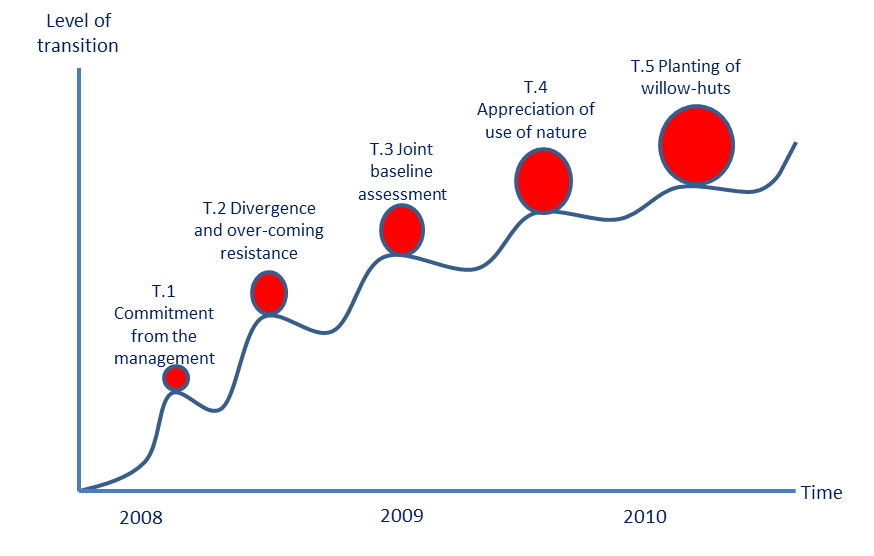
In this new paper a key policy ‘tool’ used in the Dutch Environmental Education and Learning for Sustainability Policy framework is introduced as a means to develop a sense of place and associated ecological mindfulness. The key elements of this tool, called the vital coalition, are described while an example of its use in practice, is analysed using a form of reflexive monitoring and evaluation. The example focuses on a multi-stakeholder learning process around the transformation of a somewhat sterile pre-school playground into an intergenerational green place suitable for play, discovery and engagement. Our analysis of the policy-framework and the case leads us to pointing out the importance of critical interventions at so-called tipping points (see the figure below) within the transformation process and a discussion of the potential of hybrid learning in vital coalitions in strengthening ecological mindfulness. This paper does not focus on establishing an evidence base for the causality between this type of learning and a change in behavior or mindfulness among participants as a result contributing to a vital coalition but rather focusses on the conditions, processes and interventions that allow for such learning to take place in the first place.

Tipping points in transitional learning

Figure: Tipping points in transitional learning

Keywords: Ecological mindfulness – Vital coalitions – Hybrid learning – Place-based education – Reflexivity

The full paper for personal use – under the condition that is not shared – can be obtained by emailing arjen.wals@wur.nl  or through your library system

Creating Transdisciplinary Dialogue & Phronesis in Pursuit of Sustainability

TradingZonesCover
This book is the result of a rather interesting writing process initiated by the editors about two years ago when they decided that the focus of the book, transdisciplinary dialogue, should also be its process… In order to realize this they invited about 30 scholars from quite different disciplinary backgrounds who did not know each other (most of them anyway) very well or at all, but all had an interest in trans- and interdisciplinarity and a shared concern about the well-being of people and planet. During a joint ‘thinkshop’ held at Cornell’s Field Station in upstate New York, the participants jointly conceptualized the book and created writing ‘duo’s’. I myself formed a duo with Science Historian Scott Peters and bonded with him around the concepts of phronesis, post-normal science and transformative learning (find a link to our chapter at the end of this post). Author-teams were also asked to include a piece of art in their work that somehow captures the spirit of their joint writing venture. On the publisher’s website the wonderful book that resulted is described as follows:

Environmental educators often adhere to a relatively narrow theoretical paradigm focusing on changing attitudes and knowledge, which are assumed to foster pro-environmental behaviors, which, in turn, leads to better environmental quality. This book takes a different approach to trying to understand how environmental education might influence people, their communities, and the environment. The authors view changing environmental behaviors as a «wicked» problem, that is, a problem that does not readily lend itself to solutions using existing disciplinary approaches. The book as a whole opens up new avenues for pursuing environmental education research and practice and thus expands the conversation around environmental education, behaviors, and quality. Through developing transdisciplinary research questions and conceptual paradigms, this book also suggests new practices beyond those currently used in environmental education, natural resources management, and other environmental fields.

Contents: Marianne E. Krasny: Introduction. Tales of a Transdisciplinary Scholar – Joseph E. Heimlich/Mary Miss: Art and Environmental Education Research: Reflections on Participation – Jeppe Læssøe/Marianne E. Krasny: Participation in Environmental Education: Crossing Boundaries under the Big Tent – Martha C. Monroe/Shorna Broussard Allred: Building Capacity for Community-Based Natural Resource Management with Environmental Education – Scott Peters/Arjen E. J. Wals: Learning and Knowing in Pursuit of Sustainability: Concepts and Tools for Transdisciplinary Environmental Research – Barbara A. Crawford/Rebecca Jordan: Inquiry, Models, and Complex Reasoning to Transform Learning in Environmental Education – Joseph E. Heimlich/Mary Miss: Art and Environmental Education Research: Reflections on Appreciation – John Fraser/Carol B. Brandt: The Emotional Life of the Environmental Educator – Leesa Fawcett/Janis L. Dickinson: Psychological Resilience, Uncertainty, and Biological Conservation: Junctures Between Emotional Knowledges, NatureExperiences, and Environmental Education – Joseph E. Heimlich/Mary Miss: Art and Environmental Education Research: Reflections on Place – Timon McPhearson/Keith G. Tidball: Disturbances in Urban Social-Ecological Systems: Niche Opportunities for Environmental Education – Richard C. Stedman/Nicole M. Ardoin: Mobility, Power, and Scale in Place-Based Environmental Education – Marianne E. Krasny/Megan K. Halpern/Bruce V. Lewenstein/Justin Dillon: Conclusion. Do «Arranged Marriages» Generate Novel Insights?

You find a sneak preview of the chapter I co-authored with Scott Peters – titled: Learning and Knowing in Pursuit of Sustainability: Concepts and Tools for Trans-Disciplinary Environmental Research here: FinalPeters&Wals2013<

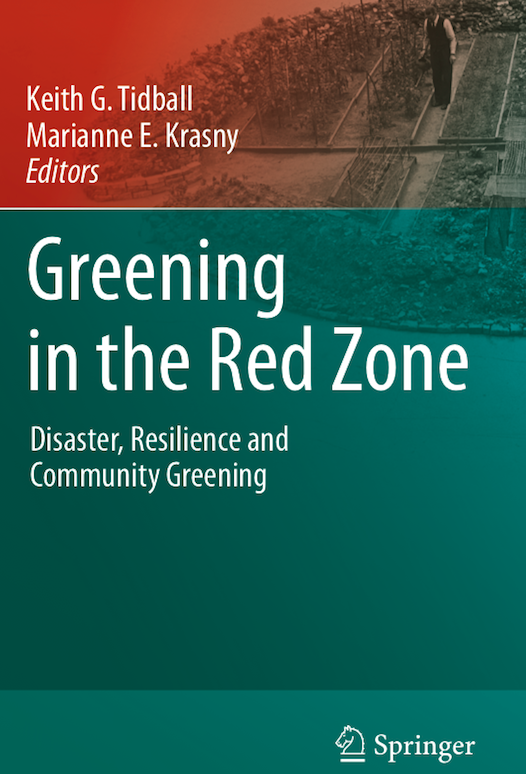
Greening in the Red Zone… Disaster, Resilience and Community Greening – now available!

Cover Greening in the Red Zone

Cover Greening the Red Zone

Ok – it has taken some time to appear but finally this much anticipated volume is available. My former colleague Marlon van der Waal and I have a chapter in it titled: “Sustainability-Oriented Social Learning in Multi-cultural Urban Areas: The Case of the Rotterdam Environmental Centre” which explores the utilization of social cohesion and diversity in creating more sustainable multi-cultural communities. Community greening is seen as a catalyst for sustainability-oriented social learning. Greening here is not the same as literally adding green to a community (trees, parks, gardens) – although that certainly can be a part of it – but rather as a metaphor for improving quality of life and a stepping stone towards sustainability. Social learning is introduced as a process that builds social cohesion and relationships in order to be able to utilize the different perspectives, values and interests people bring to a sustainability challenge. Although there are many perspectives and definitions of social learning it is defined here as: a collaborative, emergent learning process that hinges on the simultaneous cultivation of difference and social cohesion in order to create joint ownership, and to unleash creativity and energy needed to break with existing patterns, routines or systems. The author proofs – for a sneak preview – can be found here: GreeningintheRedZoneWalsWaal

The full reference of our chapter is: Wals, A.E.J. & van der Waal, M.E. (2014) Sustainability-Oriented Social Learning in Multi-cultural Urban Areas: The Case of the Rotterdam Environmental Centre. In: Tidball, K. & Krasny, M. (Eds.) Greening in the Red Zone. Frankfurt a.m.: Springer, p379-396.

Greening in the Red Zone as a whole makes a first foray into the intriguing and potentially important field of “greening” by painting a comprehensive picture of how greening might be useful after major disasters. The book brings together renowned experts and practitioners from around the world. On the publisher’s website we can read:

“Creation and access to green spaces promotes individual human health, especially in therapeutic contexts among those suffering traumatic events. But what of the role of access to green space and the act of creating and caring for such places in promoting social health and well-being? Greening in the Red Zone asserts that creation and access to green spaces confers resilience and recovery in systems disrupted by violent conflict or disaster. This edited volume provides evidence for this assertion through cases and examples. The contributors to this volume use a variety of research and policy frameworks to explore how creation and access to green spaces in extreme situations might contribute to resistance, recovery, and resilience of social-ecological systems.”

Some advance praise:

This book takes important steps in advancing understanding of what makes communi­ties bounce back from disaster or violent conflict. The authors’ findings that creating and caring for green space contributes positively to recovery and resilience add to the toolkit of those working in disaster and conflict zones. W. C. Banks, Director, Institute for National Security and Counterterrorism, Syracuse University

Greening in the Red Zone is a highly relevant book. At a time when society is more separated than ever from the natural world, it offers additional reasons why our ongoing experience of nature is essential for the human body, mind and spirit. This book is both instructive and inspiring. S. R. Kellert, Tweedy Ordway Professor Emeritus, Senior Research Scholar, Yale University

This is a fascinating book that greatly elevates our understanding of how the perspective of humans as an integrated part of nature may contribute to the resilience discourse. I warmly recommend this book to anyone interested in how we may prepare ourselves for an increasingly uncertain future. T. Elmqvist, Department of Systems Ecology and Stockholm Resilience Centre, Stockholm University

Greening in the Red Zone is an important contribution to science and security policy and practice. This edited volume provides unique and novel approaches from a participatory, transparent, ecosystem-based perspective that puts those affected by disasters and conflict into positions of empowerment rather than weakness and dependency. This book is an interesting and timely contribution. C. Ferguson, President, Federation of American Scientists

Keywords »Community-based natural resource management – Greening – Post-conflict – Post-disaster – Resilience

If your interested in ordering this book you can go directly to the book’s website:

How to educate in a changing world? Towards competence-based tertiary agricultural education

Please find below the introduction to an article that appeared earlier this week on the CTA website that I co-authored with two of my colleagues. The full paper contains some useful links and can be found here in English and here in French.  Some of the resources referred to are available via the Share Box of this blog.

How to educate in a changing world? Towards competence-based tertiary agricultural education

Authors: Arjen Wals, Martin Mulder and Natalia Eernstmann,  Education & Competence Studies, Wageningen University, Wageningen, Netherlands

Introduction:

Continued globalization and digitalization are not only affecting how we think, what we know, who to believe and how we act, they also affect the role of education in society’. In this regard, they attempt to answer ‘what do we educate for in such a world when things change so fast and knowledge becomes obsolete before you know it?’ For example, Wageningen University started changing their identity by positioning themselves as life science universities, which aspire to contribute to a better world and improved quality of life. Is that the way to go for agricultural universities?

Jimma-University-College-of-Agriculture-and-Veterinary-Medicine-JUCAVM_contentfront

Photo:  Jimma University Agricultural College (JUCAVM); source: https://plus.google.com/107229457994018982305/photos?hl=en

In this feature article we provide a brief review of some trends in Tertiary Agricultural Education (TAE) within Europe and examines the world-wide shift from traditional transmissive to emerging transformative development of more dynamic competencies in a real-world setting. A number of new competencies are required including: interdisciplinary problem-solving, addressing multiple stakeholder interests, participatory approaches in innovation, interactive methods in conflict resolution, responsive actions regarding community needs, critical media literacy, and social responsibility in entrepreneurship, to name a few, along with those that still connect to specific content areas (e.g. animal science, plant science, environmental science and agro-technology).

This overarching innovation taking place in tertiary agricultural education in Europe is referred to as Competence-based Education and Training (CBET). A synthesis of the requirements for new graduates as defined by the public and the related competencies that are considered relevant is presented. A case study of the ten-step re-design of the MSc curriculum in horticulture at the Jimma University Agricultural College (JUCAVM) in Ethiopia is showcased.

Go here for the full article!

The Big Tent Rio +20 Communique on Sustainability, Knowledge and Higher Education

Recently I contributed to the 5th Living Knowledge Conference which was held in Bonn, Germany with a talk on “Science as community: Sustainability- oriented trans-disciplinary research” and by providing input to a drafting process that resulted in a communique on higher education’s role in moving towards a more sustainable world. This communique is to be presented and discussed at the Sustainability Summit in Rio which will be held in June (also known as Rio +20).

The “Big Tent” Group – also known as the Higher Education Treaty Circle – is a collaboration of regional and global networks of civil society and higher education networks with a total membership of over 5,000 universities and civil society research organizations. The group was created to make a joint contribution to the RIO + 20 United Nations Sustainability Summit and the parallel Global Civil Society conference on Sustainability taking place in June in Rio de Janeiro.

Via an on-line contribution platform I was able to include a few lines myself including one that states that “Universities have a responsibility to look after the well-being of the planet, not as stand-alone beacons of knowledge, but as places where wisdom of communities, eco-systems and the academy work together in partnerships for a world that is more sustainable and just”.

The focus of the communique is on how civil society and universities can co-create radically new knowledge together.

Canada’s Budd Hall from the University of Victoria says, “This is the first statement agreed upon by so many higher education networks calling for a deep examination of the need to re-examine whose knowledge counts and how we can co-construct new disciplines for a new world”

I am pasting in the current communique for you to read, comment on and, if you like, to share with others who might be intrrested and/or might need to know.

RioCommuniqueOnSustHEI-Final-May 20

Communiqué on Sustainability, Knowledge and Democracy* (Released on May 12 in Bonn, Germany at the 5th International Conference of the Living Knowledge Network)

This statement is the product of a global dialogue and discussion process hosted by the Living Knowledge Network.

It is an initiative of the ‘Big Tent’ Group of international networks which includes: Asia Pacific University Community Engagement Network, Centro Boliviano de Estudios Multidisciplinarios, Commonwealth Universities Extension and Engagement Network, Community Campus Partnerships for Health, Global Alliance on Community Engaged Research, Global University Network for Innovation, Living Knowledge Network, PASCAL International Observatory, Participatory Research in Asia, and the Talloires Network with additional contributions participants at the 5th International Conference of the Living Knowledge Network.

We begin by expressing our deep concerns about:

The continued destruction of our common home, our planet Earth, Our over dependence on technological solutions that may result in misleading claims about positive impact on the environment, Ways that the dominant global economic system with its unitary focus on economic growth results in increased inequality, loss of jobs, alienation from both land and each other, The persistent exclusion of the dreams, potential and contributions of the socio–‐economic bottom billion people of our world, and Stressful and unhealthy lifestyles leading to physical and mental health problems;

We are witnesses to massive expressions of aspiration and deep change as seen in the Arab Spring and the Occupy movements.

We are aware and supportive of work being done to engage with civil society and its organisations in the co–‐construction of new knowledge in many spaces such as the Science in Society Programme of the European Commission, UNESCO and the Global University Network for Innovation.

We are also aware that while certain developments in science and technology have been complicit in the creation of planetary problems, evidence shows that communities and research institutions working together play a significant role in the attainment of sustainable development.

We respectfully contribute our ideas to spaces for engagement and action on issues of planetary survival, including, but not limited to the United Nations Rio + 20 events Higher Education Treaty Circle process and the Horizon 2020 programme in Europe

We call for action to:

1. Challenge existing paradigms, structures and practices, by: a) Recognizing that knowledge and expertise exists outside of the institutions of higher education. Communities and the earth itself are intellectual spaces where knowledge is created. Decolonizing our minds and our institutions is one significant step to acting on this awareness, b) Acknowledging that ‘community’ or ‘civic’ engagement, has to mean more than just people. Community includes the environment and all the rest of nature, c) Promoting the concept of an ‘Ecoversity’ whereby higher education institutions themselves are transformed into integrated holistic communities and where research, teaching and action functions are no longer separate, d) Breaking down the silos of knowledge creation and moving to co–‐creation of knowledge between the university and community–‐new approaches for a new world, e) Being open to ideas such as appointing community scholars, and creating smaller universities, and f) Increasing policy and funding for collaborative research between civil society and higher education institutions.

2. Increase the accountability of higher education by: a) Shifting accountability from authorities and funders to citizens, involving community at all levels of Higher Education governance, b) Linking our academic work with environmental social movements and to related movements against poverty, towards a solidarity economy, c) Ensuring that people have an understanding of the interdependencies between environmental, social and economic forces and the skills and abilities to meet sustainability challenges, and d) Moving beyond eco–‐branding by holding institutions accountable for the trademarks, brands and media around sustainability that they display.

3. Understand the connections of our local practices within a global framework by: a) Acknowledging that in this inter–‐connected world, ecological disturbances in one eco–‐zone can spread rapidly throughout the world, b) Promoting new mechanisms of global governance and democratic accountability with multi–‐stakeholder perspectives, and c) Supporting the development of higher education theories and practices that nurture a global public good.

In closing

We live in turbulent times; our world is changing at accelerating speed. Information is everywhere, but wisdom appears in short supply when trying to address key inter–‐related challenges of our time such as; runaway climate change, the loss of biodiversity, the depletion of natural resources, the on–‐ going homogenization of culture, and rising inequity. Universities have a responsibility to look after the well–‐being of the planet, not as stand–‐alone beacons of knowledge, but as places where wisdom of communities, eco–‐ systems and the academy work together in partnerships for a world that is more sustainable and just.