Imagining Sustainability: A Nomadic Inquiry of Applied Drama in Higher Education

At last a chapter appeared in the wonderful Handbook of Ecological Civilization published by Springer that I am proud of both for its content and for the pleasure of working with PhD candidate from Stockholm University, Julia Fries. Julia over the years has developed a wonderful collection of arts-based, drama-inspired research in a somewhat unusual setting: business education. Her research embodies her pedagogy which is fascinating. This chapter explores how drama can contribute to the necessary renewal of higher education to meet the sustainability challenges of our time. Results are presented from a drama-based research project in higher education, and in a youth project. In the chapter, so-called nomadic enquiry is combined with an arts-based approach to participant interviews. Through this innovative method, an image of a rhizome emerged. This rhizome of expanded learning highlights five necessities or critical nodes for expanded sustainability-oriented learning: emer-gence, expansion through role, embodiment, connection to self and others, and crucial conditions. The rhizomatic perspective not only shows the transformative potential of drama in higher education and adult learning but also identifies the levers and barriers teachers, students, and the academy as an institution are likely to encounter when trying to move towards a socio-ecologically more civilized world. The results point to how the integration of knowledge and wisdom that are striven for in the philosophy of ecological civilization can be put into pedagogical practice through the holistic learning of drama.

The Handbook of Ecological Civilization, unfortunately, is not an Open Access Handbook – but your library may have access. But I am happy to share the corrected proffs for your own use here!

Full citation: Fries, J., Wals, A. (2025). Imagining Sustainability: A Nomadic Inquiry of Applied Drama in Higher Education. In: Peters, M.A., Green, B.J., Misiaszek, G.W., Zhu, X. (eds) Handbook of Ecological Civilization. Springer International Handbooks of Education. Springer, Singapore. https://doi.org/10.1007/978-981-97-8101-0_73-1

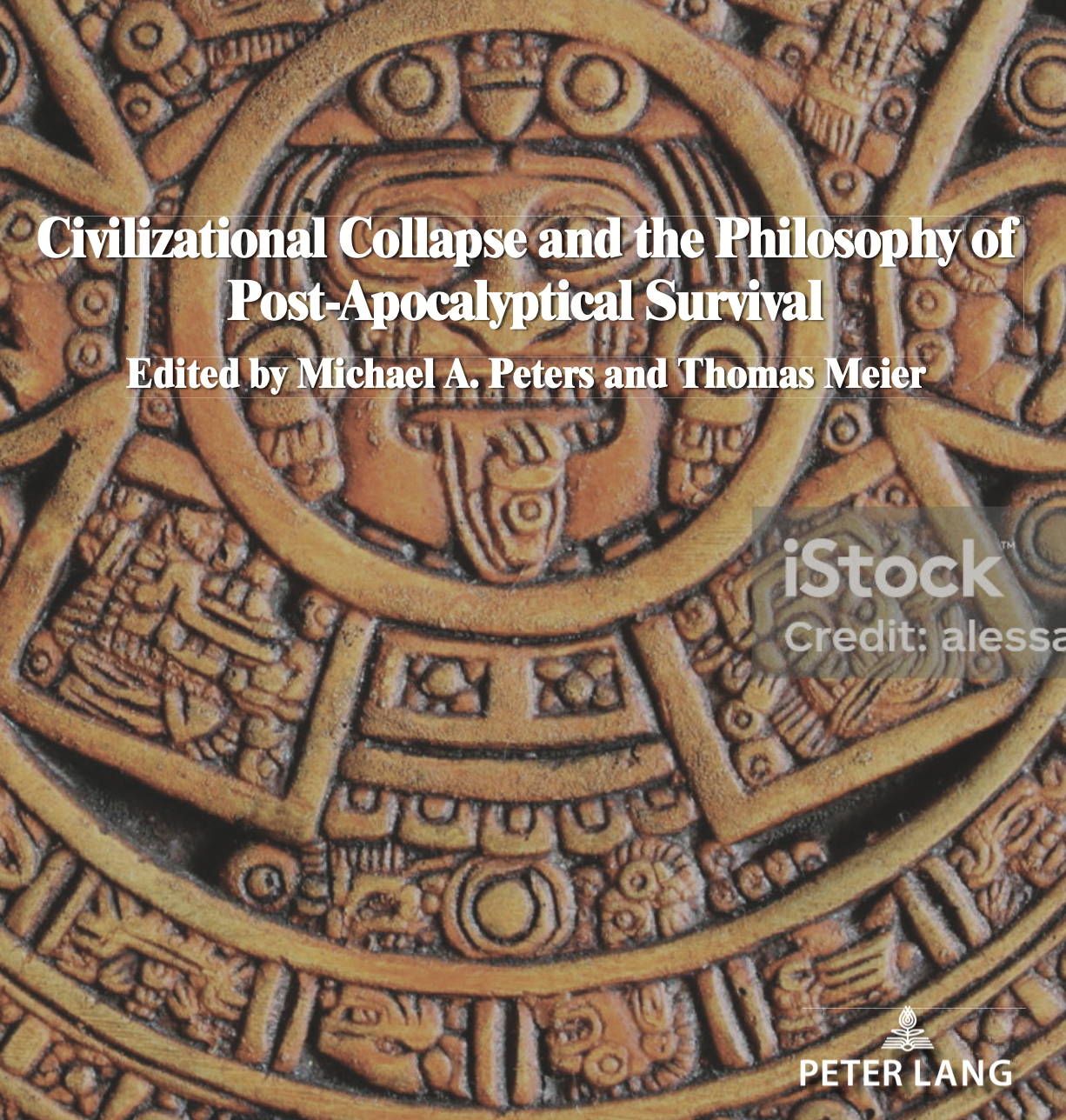
New book: Civilizational Collapse and the Philosophy of Post-apocalyptical Survival

“Collapse” “The end of the world as we know it” “Amargeddon” “Dystopian Futures” “Maintaining hope on a dying planet” – words, concepts, phrases, pointing at the serious state of Earth. This remarkeable book with a range of perspectives on what to do, is a must read for educators, activitsts, researchers and composites thereof. From the back cover:

“The collapse of civilization, the end of the world as we know it, has long been a cultural imaginary, but has rarely been as topical as it is today. Beyond the phantasmagoria of violence, depression and despair, the conviction of being doomed has always been present It can be a challenge to imagine a new, post-apocalyptic world, be it utopian or dystopian. Beyond questions of immediate survival, there is a growing concern about how to educate humanity for a new life after the end of this world. In this volume, the editors, Michael A. Peters and Thomas Meier, renowned scholars of educational and apocalyptic studies, have brought together 31 contributions that offer a diversity of perspectives on such post-apocalyptic education, from abstract philosophical reflections to applied studies, from historical and political analyses of how we got into the current situation of global devastation to decolonial perspectives and essayistic explorations.”

I was invited to contribute a chapter on what I have dubbed ´Earth-centered education´: Earth Centred Education: An Invitation to Relational Transgressive Learning as a Counter-Hegemonic Force in Times of Systemic Global Dysfunction Have a look at the ToC and consider getting a copy of the book from Peter Lang here

I am providing a link to the table of contents of the book and the typeset version of my chapter here.

Wild Pedagogies in Practice: Inspiration for Higher Education – two new papers!

Two papers I co-authored with different colleagues came out in the same Special Issue of the Australian Journa of Environmental Education published by Cambridge University Press. Both papers are published with open access.

The first paper led by PhD-candidate at Wageningen University, Reineke van Tol is on the potential of Wilde Pedagogies for renewing and reorienting higher education towards a posthumanist and relational perspective.

Citation: van Tol RS, Wals A. Wild Pedagogies in Practice: Inspiration for Higher Education. Australian Journal of Environmental Education. Published online 2025:1-23. doi:10.1017/aee.2025.16

The second paper led by Koen Arts is on Embedding Outdoor Relational Education in Academia and the barriers and opportunities we are running into in our home instiution: Wageningen University in The Netherlands.

Citation: Arts K, Roncken P, Buijs A, Wals A. Embedding Outdoor Relational Education in Academia: Perceived Barriers and Opportunities at a Dutch University. Australian Journal of Environmental Education. Published online 2025:1-21. doi:10.1017/aee.2025.24

In the first paper (van Tol and Wals, 2025) Wild Pedagogies (WP) are introduced as a critical, relational alternative to current, often unsustainable learning practices. WP aim to offer a way of learning in, with, through and for nature, embracing a post-humanist, relational perspective. So far, WP have mainly been explored theoretically. Increasingly, educators both within and outside of formal education, are inspired and apply WP in their education. Throughout the world, examples of learning that fit into WPs’ living definition, are emerging. However, concrete inspiration for how to bring WP theory into practice, is still largely lacking. In this paper, we explore three emerging approaches at Wageningen University (The Netherlands), that are inspired by wild pedagogies. Empirically, we combine formative evaluations of course designs with participant observation in a collective case study setting over three years. The empirical research is embedded in an explorative literature review that led us to four explorative areas of WP, namely (1) Wild and caring learning spaces (2) Learning from self-will and wonder (3) Relational learning with the world and (4) Disruptive learning for the world. Eventually we present concrete inspiration on those four areas for implementing WP in formal higher education. You can find the full paper here.

In the second paper (Arts et a., 2025) a common denominator of these more relational approaches is an emphasis on learning outdoors. This paper investigates the budding concept and practice of outdoor relational education at a university, specifically Wageningen University (WU) in the Netherlands. Based on 31 semi-structured interviews with protagonists and other stakeholders involved in or affiliated with outdoor relational education at WU, we identify associations, key elements and perceived benefits. Our research provides insight into what outdoor relational education and associated concepts are perceived to be in this context, how they are engaged and what the key experienced opportunities and barriers are to implement outdoor relational education further at WU. Complementary to theorisations of wild pedagogies and related approaches, our results offer empirical illustrations of wild pedagogies “in action” in an institutional academic setting that is not necessarily conducive to such developments. You can find the full paper here.

New book on 50 years of Education and Learning for Sustainable Futures

We are pleased to share with you the publication of our new book, Education and Learning for Sustainable Futures: 50 years of learning and environmental change. This book explores fundamental questions about how the role of education has evolved over the decades since the pivotal 1972 Stockholm Conference, which brought environmental learning to the forefront of global awareness.

Co-authors, Daniella Tilbury and Thomas Macintyre and myself, have attempted to find some answers by tracking through the decades (1970-2020) the development of narratives, thinking, and practice of learning and education in support of the environment and sustainability. What is clear is that the profile and presence of learning and education for the environment has been elevated in today’s policy discourses and communities of practice. Yet, our analysis identified some clear differences in the way education and learning for the environment has been approached over time. 

In our new book, we trace these changes over the decades while looking ahead to the challenges and opportunities of the future.  A key wildcard in this journey is Artificial Intelligence (AI), which holds immense potential to bridge digital and green agendas, enabling smarter environmental management and driving innovation toward a sustainable future. However, we also address critical concerns: data privacy breaches, outsourcing human thinking to profit-driven algorithms, exacerbation of inequalities, and the environmental footprint of AI infrastructure.

This book provides a light way into the history, developments and prospects of the field of Environmental and Sustainability Education.

Full reference:

Macintyre, T., Tilbury, D., & Wals, A. (2024). Education and Learning for Sustainable Futures: 50 Years of Learning for Environment and Change (1st ed.). Routledge. https://doi.org/10.4324/9781003467007

Wish to read more? Our book is open access thanks to the funding of the Dutch Government that funded this publication: https://www.routledge.com/Education-and-Learning-for-Sustainable-Futures-50-Years-of-Learning-for-Environment-and-Change/Macintyre-Tilbury-Wals/p/book/9781032727912

Our thanks also go to Stakeholder Forum and to @JanGustav for his leadership role in the Stockholm+50 reflective dialogues, and to UNEP/ the Swedish Government for spurring us on to track the historical development of education and learning for the environment. We are also grateful to @Routledge for taking an interest in publishing the text.

Rethinking pedagogy in the face of complex societal challenges: helpful perspectives for teaching the entangled student

This paper appeared online in 2022 and was a part of the wonderful dissertation of Koen Wessels which was later published by Springer Nature as a book within the publisher´s SDG 4 ´Quality Education´ Series. Now has been formally published in open-access form as a part of the latest issue of Pedagogy, Culture and Society. Full citattion: Wessels, K. R., Bakker, C., Wals, A. E. J., & Lengkeek, G. (2024). Rethinking pedagogy in the face of complex societal challenges: helpful perspectives for teaching the entangled student. Pedagogy, Culture & Society32(3), 759–776. View and download here: https://doi.org/10.1080/14681366.2022.2108125

Here is the abstract to give you a bit of a flavor of the paper:

White Paper on Regenerative Higher Education – Rethinking education in times of dysfunction and collapse

Regrettably this white paper is only available in Dutch. Some ot the ideas artuclated in the paper can also be found in The Regenerative Education Podcast Series created by PhD Bas van den Berg see: The Regenerative Education Podcasts – Planting the seeds of change

Ik maak sinds een paar jaar deeluit van een Nederlandse  Community of Practice rondom Regenerative Higher Education bestaande uit PhDs en medewerkers van verschillende universiteiten en hoge scholen. Dit White Paper is het resultaat van de samenwerking in de Community of Practice en is samengesteld door Martine de Wit en gebaseerd op interviews met Bas van den Berg, Daan Buijs, Mieke Lopes Cardozo, Marlies van der Wee en Arjen Wals. Met input van Nina Bohm, Linda de Greef, Michaela Hordijk, Naomie Tieks, Koen Wessels, Rosanne van Wieringen, en Roosmarijn van Woerden. De illustraties en vormgeving zijn verzorgd door Mari Genova.

Het paper vertrekt vanuit de vraag:

Onderwijs dat het beste haalt uit onszelf en onze studenten, op weg naar herstel van de aarde. Hoe komen we daar?

Lees hier ons verhaal en laat ons weten wat resoneert, schuurt of wat het anderzins losmaakt!

Education for Sustainable Development in the ”Capitalocene” – Call for abstracts

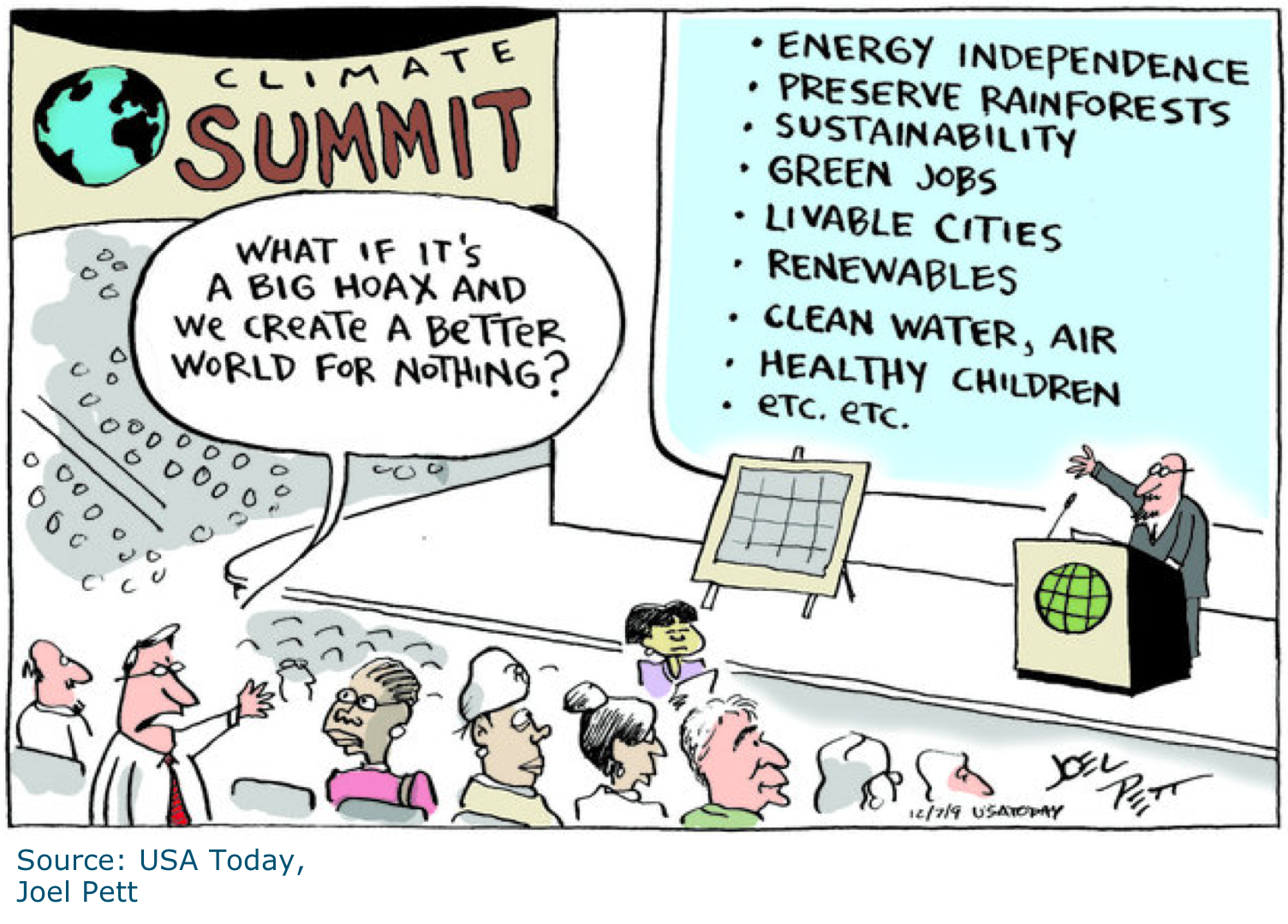
Hoax.png

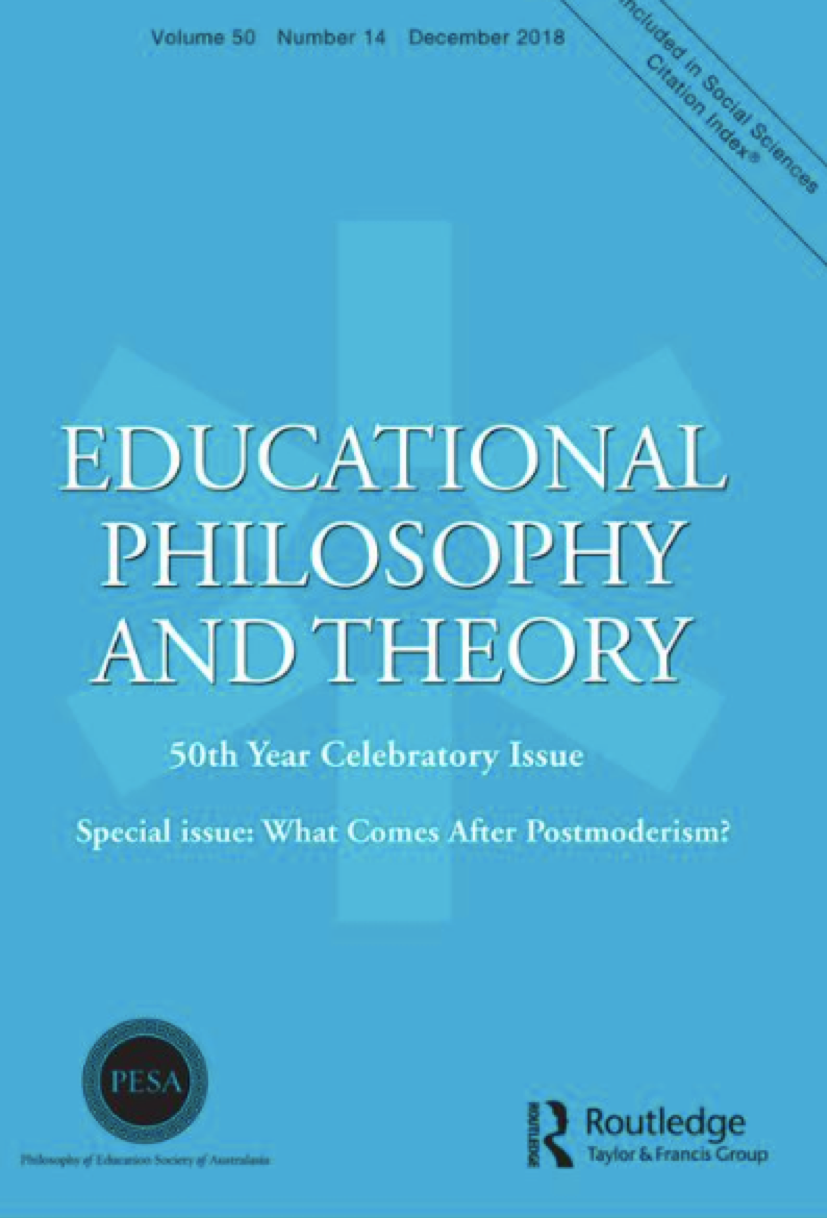
There is still some time to submit your manuscript idea or abstract for this special issue Educational Philosophy and Theory (EPAT) that I am co-editing with my Swedish colleagues from the University of Gothenburg – Helena Pedersen, Beniamin Knutsson, Dawn Sanders and Sally Windsor. The deadline for – just the abstract – is May first. Go to the Routledge website for the details and see the description below!

Special Issue

ESD in the ”Capitalocene”: Caught up in an impasse between Critique and Transformation

Has Education for Sustainable Development (ESD) reached an impasse? Offering an application of Baudrillard’s thoughts to educational research, Paul Moran and Alex Kendall wrote in 2009 that education researchers are engaged in an act of forgery; a manufacture of presuppositions about what education is. Moran and Kendall argue that our research approaches, produce nothing but illusions of education, not because our approaches and methodologies are somehow flawed, rather that these illusions are what education is. Education, they claim, does not exist beyond its simulation.

Perhaps more provocatively, this implies that all critique of educational practice, from the revolutionary critical theory of Marx and the Frankfurt School via Foucauldian power analyses, as well as more recent ”new materialist” and post-qualitative approaches and beyond –are also part of the simulation of education process. These movements constitute an “improvement agenda” of education, and over and over again, more interventions are produced and critiques are repeated to foster improvements, pursued as if they were possible (Moran & Kendall 2009, p. 329).

We would like to take this Baudrillardian analysis of education as a springboard for thinking around ESD and capitalism. ESD is paradoxically positioned right at the nexus of looming ecological crises (”the Anthropocene” [Crutzen & Stoermer 2000]; the ”Capitalocene” [Malm & Hornborg 2014]) while at the same time the ESD field has been severely criticised for its presumed normativity (Jickling 1994). Quite regardless of the validity of this critique, embedded in the core idea of ESD is, arguably, a grandiose ”improvement agenda” – not only of education, but of the planetary condition as such. There is an asssumption that if we can find the appropriate way of ”doing” ESD, a sustainable world is within reach.

However, if there is nothing that may be called education “that exists independently of the methodologies, comments, curricula designs, testing regimes, forms of discrimination”, as Moran and Kendall (2009, p. 333) put it, what place is there – if any – for ESD under current conditions of predatory capitalism, exploitation of natural “resources”, transgression of planetary boundaries, and the destructive fantasy of infinite growth? Does ESD generate nothing but reproduction, much like capitalism itself (e.g. Hellberg & Knutsson 2018)? Is ESD an affect-organizing “comfort-machine” in the classroom (Pedersen 2019), sustaining the present order of things? Perhaps Bruno Latour (2004) captures the point most aptly: ”Are we not like those mechanical toys that endlessly make the same gesture when everything else has changed around them?” (p. 225) Latour suggests, that the critic “is not the one who lifts the rugs from under the feet of the naïve believers, but the one who offers the participants arenas in which to gather” (p. 246). Such arenas, Giroux observes, need “an understanding of how the political becomes pedagogical, particularly in terms of how private issues are connected to larger social conditions and collective force” (Giroux 2004, p.62).

Stratford (2017) has recently called for education researchers to identify and respond to the challenging philosophical issues evoked by the current ecological crises. Our initiative is a response to Stratfords’s call; however, our starting point differs from how educational philosophy can “improve education in the Anthropocene” (p. 3) and is rather concerned with the “impossibility” of this claim.

We suggest that the idea of ESD as producing illusions of education rather than a sustainable world, does not necessarily lead to an impasse, but can, in Moran and Kendall’s (2009) words, be a very useful place to begin. We are looking for theory-, philosophy-, and empirically-driven papers that address the  ”impossible” position of ESD in ”the Capitalocene” at an urgent juncture in history.

Contributions may address, for instance, the following areas of inquiry;

  • Has ESD reached an impasse, and if so; how can it be understood?
  • Are there ”functions” of ESD beyond the improvement agenda, and beyond the cycle of Critique and Transformation?
  • Is ESD a form of simulation and, if so, what purposes might such simulation serve?
  • How can ESD effectively interfere with capitalism, its forces and threats to life-supporting Earth systems?
  • In what arenas of intervention and action can ESD assemble its participants?
  • How can we reimagine education in extinction and post-extinction narratives?

Submission Guidelines

Please send your abstract of 250-500 words, along with references and a brief bio, to both Helena Pedersen and Beniamin Knutsson, University of Gothenburg.

Final article manuscripts will be approx. 6000 words.

  • Abstract due: May 1, 2019
  • Notification of acceptance: May 20, 2019
  • Manuscript submission deadline: November 1, 2019

Guest Editors:

  • Helena Pedersen, University of Gothenburg
  • Beniamin Knutsson, University of Gothenburg
  • Dawn Sanders, University of Gothenburg
  • Sally Windsor, University of Gothenburg
  • Arjen Wals, University of Wageningen

Link to the publisher’s website is here!

EPAT

Sustainability by Default: Co-creating Care and Relationality Through Early Childhood Education

ECEMOOC

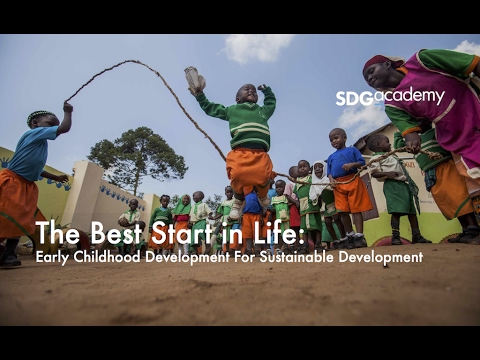
The above illustration comes from the new Harvard MOOC on Early Childhood Development and Sustainability

This new paper will be part of a special issue on early childhood education and sustainable development. I wrote the piece  based on a keynote address presented at the 68th OMEP World Assembly and International Conference held in Seoul in July 2016. In the paper I argue that children are more in tune with sustainability than most adults and that both adults and children can benefit from intergenerational dialogue and expanded learning opportunities in so-called ecologies of learning. First the idea of growing up in the Anthropocene, the new geological epoch that is shaped by one single species, home sapiens, is introduced. What does growing up in the Anthropocene mean for today’s children? A short critique is provided of the neoliberal forces that increasingly influence what happens in education and care settings and that essentially make unsustainability the default in our society. Drawing on Martin Buber’s ideas of relational ways of being in the world; Nell Nodding’s notions of care; and George Siemen’s ideas about learning ecologies, some suggestions are offered for co-creating early childhood education and care with people and the planet in mind.

The paper ends with the following: “What seems critical is that children encounter a multiplicity of different worlds by crossing boundaries, both individually and together, and having bodily experiences that strengthen their relationality with the human, the non-human and the material. It is through these encounters that agency, care and empathy can develop. All three of these qualities are foundational for a world that is more sustainable than the one currently in prospect.

Citation: Wals, A.E.J. (2017) Sustainability by default: Co-creating Care and Relationality Through Early Childhood Education, International Journal of Early Childhood Education doi:10.1007/s13158-017-0193-5

Note that this is an open access publication that can be downloaded for free here: Sustainability by default