Imagining Sustainability: A Nomadic Inquiry of Applied Drama in Higher Education

At last a chapter appeared in the wonderful Handbook of Ecological Civilization published by Springer that I am proud of both for its content and for the pleasure of working with PhD candidate from Stockholm University, Julia Fries. Julia over the years has developed a wonderful collection of arts-based, drama-inspired research in a somewhat unusual setting: business education. Her research embodies her pedagogy which is fascinating. This chapter explores how drama can contribute to the necessary renewal of higher education to meet the sustainability challenges of our time. Results are presented from a drama-based research project in higher education, and in a youth project. In the chapter, so-called nomadic enquiry is combined with an arts-based approach to participant interviews. Through this innovative method, an image of a rhizome emerged. This rhizome of expanded learning highlights five necessities or critical nodes for expanded sustainability-oriented learning: emer-gence, expansion through role, embodiment, connection to self and others, and crucial conditions. The rhizomatic perspective not only shows the transformative potential of drama in higher education and adult learning but also identifies the levers and barriers teachers, students, and the academy as an institution are likely to encounter when trying to move towards a socio-ecologically more civilized world. The results point to how the integration of knowledge and wisdom that are striven for in the philosophy of ecological civilization can be put into pedagogical practice through the holistic learning of drama.

The Handbook of Ecological Civilization, unfortunately, is not an Open Access Handbook – but your library may have access. But I am happy to share the corrected proffs for your own use here!

Full citation: Fries, J., Wals, A. (2025). Imagining Sustainability: A Nomadic Inquiry of Applied Drama in Higher Education. In: Peters, M.A., Green, B.J., Misiaszek, G.W., Zhu, X. (eds) Handbook of Ecological Civilization. Springer International Handbooks of Education. Springer, Singapore. https://doi.org/10.1007/978-981-97-8101-0_73-1
New book: Civilizational Collapse and the Philosophy of Post-apocalyptical Survival

“Collapse” “The end of the world as we know it” “Amargeddon” “Dystopian Futures” “Maintaining hope on a dying planet” – words, concepts, phrases, pointing at the serious state of Earth. This remarkeable book with a range of perspectives on what to do, is a must read for educators, activitsts, researchers and composites thereof. From the back cover:

“The collapse of civilization, the end of the world as we know it, has long been a cultural imaginary, but has rarely been as topical as it is today. Beyond the phantasmagoria of violence, depression and despair, the conviction of being doomed has always been present It can be a challenge to imagine a new, post-apocalyptic world, be it utopian or dystopian. Beyond questions of immediate survival, there is a growing concern about how to educate humanity for a new life after the end of this world. In this volume, the editors, Michael A. Peters and Thomas Meier, renowned scholars of educational and apocalyptic studies, have brought together 31 contributions that offer a diversity of perspectives on such post-apocalyptic education, from abstract philosophical reflections to applied studies, from historical and political analyses of how we got into the current situation of global devastation to decolonial perspectives and essayistic explorations.”

I was invited to contribute a chapter on what I have dubbed ´Earth-centered education´: Earth Centred Education: An Invitation to Relational Transgressive Learning as a Counter-Hegemonic Force in Times of Systemic Global Dysfunction Have a look at the ToC and consider getting a copy of the book from Peter Lang here

I am providing a link to the table of contents of the book and the typeset version of my chapter here.

Rethinking pedagogy in the face of complex societal challenges: helpful perspectives for teaching the entangled student

This paper appeared online in 2022 and was a part of the wonderful dissertation of Koen Wessels which was later published by Springer Nature as a book within the publisher´s SDG 4 ´Quality Education´ Series. Now has been formally published in open-access form as a part of the latest issue of Pedagogy, Culture and Society. Full citattion: Wessels, K. R., Bakker, C., Wals, A. E. J., & Lengkeek, G. (2024). Rethinking pedagogy in the face of complex societal challenges: helpful perspectives for teaching the entangled student. Pedagogy, Culture & Society32(3), 759–776. View and download here: https://doi.org/10.1080/14681366.2022.2108125

Here is the abstract to give you a bit of a flavor of the paper:

White Paper on Regenerative Higher Education – Rethinking education in times of dysfunction and collapse

Regrettably this white paper is only available in Dutch. Some ot the ideas artuclated in the paper can also be found in The Regenerative Education Podcast Series created by PhD Bas van den Berg see: The Regenerative Education Podcasts – Planting the seeds of change

Ik maak sinds een paar jaar deeluit van een Nederlandse  Community of Practice rondom Regenerative Higher Education bestaande uit PhDs en medewerkers van verschillende universiteiten en hoge scholen. Dit White Paper is het resultaat van de samenwerking in de Community of Practice en is samengesteld door Martine de Wit en gebaseerd op interviews met Bas van den Berg, Daan Buijs, Mieke Lopes Cardozo, Marlies van der Wee en Arjen Wals. Met input van Nina Bohm, Linda de Greef, Michaela Hordijk, Naomie Tieks, Koen Wessels, Rosanne van Wieringen, en Roosmarijn van Woerden. De illustraties en vormgeving zijn verzorgd door Mari Genova.

Het paper vertrekt vanuit de vraag:

Onderwijs dat het beste haalt uit onszelf en onze studenten, op weg naar herstel van de aarde. Hoe komen we daar?

Lees hier ons verhaal en laat ons weten wat resoneert, schuurt of wat het anderzins losmaakt!

 Education in Times of Climate Change – comprehensive NORRAG Special Volume

Climate change is not a new issue for education, but new levels of consensus and concern are emerging, suggesting that new policy developments may follow. This NORRAG Special Issue (NSI 07) addresses the question of how education is to equip learners to participate in climate action that would fundamentally disrupt existing problematic systems. This NSI has the potential to inform pedagogical praxis, co-learning, curriculum, climate action, policy formulation, frameworks for evaluating success, resourcing decisions and what we might consider educative acts for engaging with climate change and its multi-dimensional uncertainties, risks and opportunities. 

Edited by South African Professors Eureta Rosenberg and Heila Lotz-Sisitka, this is one of the most comprehensive and ground braking collections of papers available at the moment. The special issue is completely open access. You can find the full table of contents here.

I am very pleased to have found two wonderful Norwegian colleagues – Astrid Sinnes of the Norwegian Life Sciences University and Ole Andreas Kvamme of the University of Oslo who were willing to join in writing a contribution which is titled: School Strikes as Catalysts for Rethinking Educational Institutions, Purposes and Practices

I am also delighted to see two of my former PhD’s, Thomas Macintyre and Martha Chaves, based in Colombia in the special issue as well with a paper on Climate Change Resilience through Collaborative Learning in the Colombian Coffee Region – they co-authored with Tatiana Monroy who, like omas and Martha volunteers for Fundación Mentes en Transición, Colombia, South America

There will be an online launch of the NORRAG Special Issue 07 (NSI 07): Education in Times of Climate Change, will take place on 6 October 2022 at 16:00 – 17:30 CEST. For more information about the llaunch event have look here!

Transgressive learning, resistance pedagogy and disruptive capacitybuilding as levers for sustainability

Earlier this month the 8th Report from the Global University Network fir Innovation (GUNi) was published with a wealth of contributions critiquing current resilient modes and models of education and outlinig alternative one in light of the current systemic global dysfunction we find ourselves in. I was asked to contribute a chapter on transgressive learning. The link to the chapter is here

You can find the entire book at www.guni-call4action.org

The full citation for my chapter is: Wals, AEJ (2022) Transgressive learning, resistance pedagogy and disruptive capacity building as levers for sustainability. In: Higher Education in the World 8 – Special issue New Visions for Higher Education, Barcelona: Global University Network for Innovation (GUNi). Open access: www.guni-call4action.org, p216-222.

Summer School River Lives and Living Rivers: Towards a transdisciplinary conceptualization

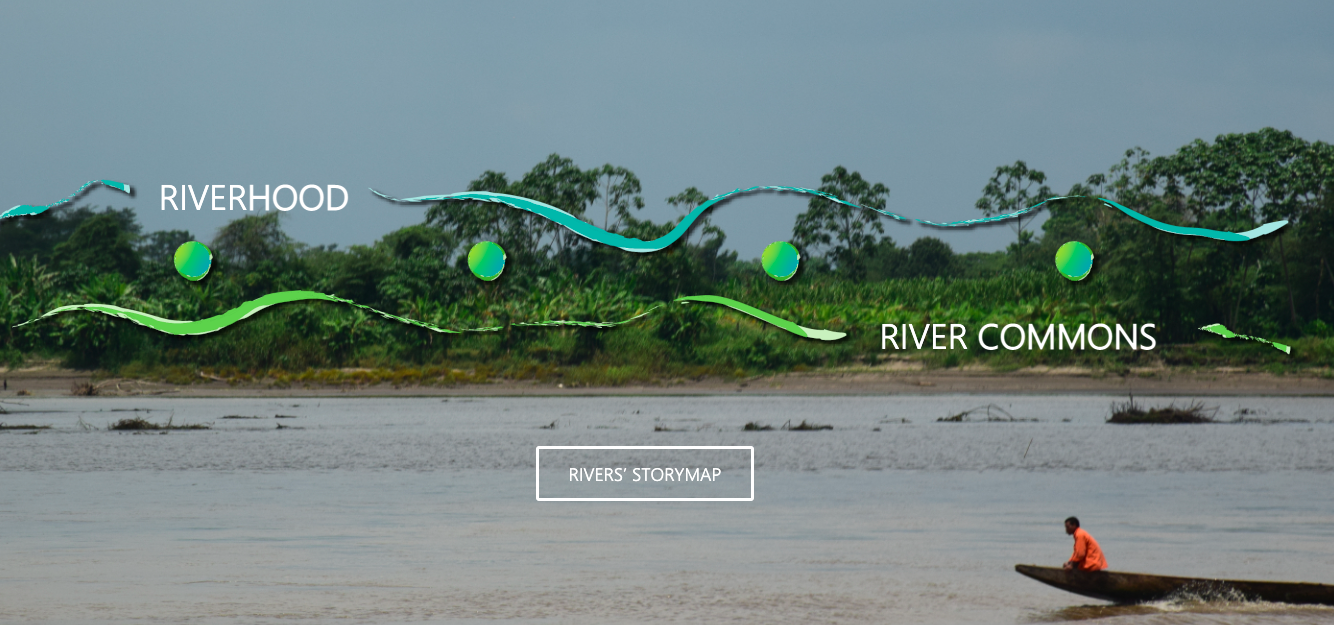
I feel very privileged to be part of one of the two major International River Research projects led by Wageningen UR colleague Prof. Rutgerd Boelens: Riverhood and RiverCommons. Riverhood and River Commons are both 5-year research projects that focus on enlivening rivers, river co-governance initiatives, and new water justice movements.

Riverhood is funded by the European Research Council (ERC) (Grant Agreement No 101002921) and aims to build groundbreaking transdisciplinary concepts and methodological tools to analyze and support new water justice movements’ institutions, strategies and practices for equitable and sustainable water governance. It does so through comparing initiatives in Latin America (Ecuador and Colombia) and Europe (Netherlands and Spain). The focus will be on movements promoting novel concepts and practices such as Rights of Nature, new water cultures or nature-inclusive hydraulics, to name just a few.

RiverCommons is funded by Wageningen University’s Interdisciplinary Research and Education Fund (INREF) and unites chair groups from the social and natural sciences, as well as partners worldwide. Its objective is to develop transdisciplinary concepts and methods for research, education, and multi-stakeholder interactions to understand and support river co-governance initiatives and sustainable socio-ecological river systems in Asia, Africa, Latin America and Europe.

While each of the projects has its specific objectives, activities, regions, and partners, there is immense potential for synergies and cross-pollination. Riverhood and River Commons will therefore be integrated in multiple ways, to together build a diverse and wide network of river scholars, activists, and institutions that commonly aim to understand and strengthen river co-governance around the world.

Both projects are united by a common framework that illuminates the different facets and complexities of river systems. The framework encompasses four dimensions: River-as-Ecosociety, River-as-Territory, River-as-Subject, and River-as-Movement. You can find more information about it in Concepts.

Another important component of both projects is the development of Environmental Justice Labs (Riverhood) and River Co-governance Labs (River Commons) to be organized in the case study sites to co-create knowledge and mobilize and exchange ideas for change.

One exciting immediate prospect and possibility for PhD’s from around the world is our Summer School “River Lives and Living Rivers: Towards a transdisciplinary conceptualization”

Here is the short introduction to the course:

World’s rivers are fundamental to social and natural well-being but profoundly affected by mega-damming and pollution. In response to top-down and technocratic approaches, in many places riverine communities practice forms of ‘river co-governance’, integrating ecological, cultural, political, economic and technological dimensions. In addition, new water justice movements (NWJMs) have emerged worldwide to creatively transform local ideas for ‘enlivening rivers’ into global action and vice versa. The Summer School aims to provide PhD students who conduct research on these ‘river commons’ and NWJMs with transdisciplinary concepts and approaches for studying their emerging ideas, concepts, proposals and strategies. The training thereby focuses on conceptualizing river systems in all senses, and capacity-building for (understanding and supporting) river knowledge co-creation and democratisation from the bottom up.

The Case for Transformative Public Education: Responding to Covid-19 now while addressing long-term underlying inequalities

Last Fall a consortium of which I am proud to be a part, along with the Education & Learning Sciences Group of Wageningen University received funding from the UK-government to a so-called GCRF Network Plus on Transforming Education for Sustainable Futures. The network is co-ordinated out of the University of Bristol and includes partners in India, Rwanda, Somalia/Somaliland, South Africa, the United Kingdom and the Netherlands. TESF undertakes collaborative research to Transform Education for Sustainable Futures. We have just released an introductory video (see above) and just released a timely paper:

TESFBriefing

Here is the link to the briefing paper:

The Case for Transformative Public Education: Responding to Covid-19 now while addressing long-term underlying inequalities

This paper addresses the following topics:

  • What is Transformative Public Education
  • Why Transformative Public Education matters to the COVID-19 response
  • Why Transformative Public Education matters for addressing long-term underlying risks to communities
  • Examples of Transformative Public Education responses to COVID-19
  • Suggestions for governments and state welfare actors seeking to work with Transformative Public Education
  • Suggestions for community leaders working with Transformative Public Education
  • Transformative Public Education in times of physical distancing
  • Key readings and resources

On the TESF website you will also find other resources you may find of interest. Have a look here TESF Home Page

This is TESF’s first response to the C-19 situation, and we would like to see it widely distributed, given the timely nature of this topic.  Please do all you can to share it widely across your networks. https://tesf.network/resource/transformative-public-education/

In search of healthy policy ecologies for education in relation to sustainability: Beyond evidence-based policy and post-truth politics

pfe-cover-social

A new paper just came out in ‘Policy Futures in Education’ that I co-authored with Robert Stratford critiquing evidence-based approaches to policy making in the context of (re)orienting education towards sustainability in times of post-truth and alternative facts. In the aper we pose that there is a rational assumption built into some research projects that policy contexts are influenced by the quality of the evidence. This is, at best, only somewhat true some of the time. Through policy ethnographies, two education researchers working in the context of sustainability discuss their experiences with evidence-based policy. Central to both accounts is how critical messages about such issues as race, wellbeing and sustainability can become diluted and even lost. In the existing ‘politics of unsustainability’, and at a time of ‘post-truth’ politics, these accounts also show the limits of evidence-based policy.

We argue that those working with ‘the evidence’ need to be open about how evidence-based approaches can end up supporting the ‘status quo’. Moreover, while approaches such as knowledge mobilisation emphasise the relational qualities of policy contexts, and the importance of simple compelling narratives for decision-makers, they, like many other practices, do not sufficiently theorise the power structures surrounding knowledge and the policy context. In addition to the careful use of evidence, we argue that there needs to be greater emphasis on building healthy policy ecologies – including far more emphasis on building critical and creative policy alternatives, especially in areas like sustainability and education.

The paper can be found/downloaded here: Healthy Policy Ecologies Paper


Short Intro Video – Transforming Education for Sustainable Futures (TESF)

Wageningen UR is one of the partners in the Transforming Education for Sustainable Futures (TESF) Network. TESF is a GCRF funded Network Plus, co-ordinated out of the University of Bristol, working with partners in India, Rwanda, Somalia/Somaliland, South Africa, the United Kingdom and the Netherlands. The network undertakes collaborative research to Transform Education for Sustainable Futures.

TESF just released a short video outlining the mission and way of working of the network. The coming months the four hub countries will launch their innovation grant scheme which will allow local partners to apply for funding to engage in educational reform towards sustainable development at different levels of education.  Please go to the TESF-website for more information.

TESF_LOGO

TESF_Partners


Imaginative Disruptions: Creating Place- and Arts-based Responses to Climate Urgency

Imaginative disruptions

The Video

Taking place in 3 countries (Sweden, United Kingdom and The Netherlands) three ‘collective residencies’ brought together an intergenerational group of people who played, ate, (re)imagined, learned and created together, to design alternative futures around a selected ‘glocal’ issue, and explore what needs to be disrupted to realise these imagined realities; what is working with us and what is working against us? Two hopeful examples of local residents and one from academia show the power of arts-based approaches and the importance of hope and lightheartedness. The research was initiated and led by former MSc and PhD-students of mine, Natalia Eernstman

You can find more information and a link to the video here: Imaginative Disruptions Video

The Research

Imaginative Disruptions was a two-year creative research project that explored the transgressive potential of art and making to engage groups of citizens and experts in imaginative conceptions of alternative environmental narratives.

Underneath the project is the assumption that the structures and mind-sets of our modern society have made unsustainable living the default and sustainable living the exception. Acknowledging that environmental issues occur in the every-day lives of people rather than on drawing boards of technocrats, implies that designing and transitioning towards a more environmentally sustainable alternative should include citizen, lay or situated knowledges.  There are some signs that such knowledge is recognized and demanded in both science and society (e.g. the push for citizen science and multi-stakeholder social learning). However, the practical realisation of processes that include public dialogue, in which citizens become critics and creators of knowledge, are fairly under-developed.

Here are some of the things we aimed to find out:

What arrangements and conditions are needed to disrupt daily routines and generate new ones?

Does the recognition and inclusion of situated knowledges generate radically different perspectives on how we can live well and environmentally, or do they represent the fine-tuning and, thereby, the maintenance of the status quo?

What happens if you put adults and children in the same learning arrangement and invite them to learn, play and experiment collectively? Chaos or…?

(How) is the knowledge produced through this heterogenous, vernacular, artistic, non-hierarchical and intergenerational process ‘useful’ to the community in question and a wider subject arena around it?  

What is the added value of creative / artistic techniques in the social learning that will take place?

The ‘data’ of the research project emerged from the residencies with people talking, creating and reflecting together. We aimed to collect what the residencies generate in ways that don’t disrupt the activities, and allow us record things that we didn’t know we were going to document in advance.

More background information can be found on our Imaginative Disruptions website here: Imaginative Disruptions Home Page.

Imaginative_2

The Funding

The project was funded by the Swedish SEEDBox small grant scheme for innovative approached to education and research aimed at realizing a more sustainable world.

Should and Can Education Save the Planet? ECER2019 Keynote now online

ECERKN

Last month I attended the European Conference on Educational Research (ECER in Hamburg this year. Around 3000 participants from over 60 countries attended the conference. Since the overall theme was ‘Education in an Era of Risk – the Role of Educational Research for the Future’ I had the honor of being asked as one of the plenary keynote speakers, as was my good colleague and friend Heila Lotz-Sisitka from Rhodes University in South Africa who, like myself, is a member of ECER/EERA’s subnetwork on Environmental and Sustainability Education (Network 30), one of the youngest and rapidly expanding networks.

The title of my talk was: Should and Can Education Save the Planet? In the talk I outlined the current global sustainability challenges form a learning perspective and I introduced the concept of sustainability-oriented ecologies of learning. I also introduced the notion of sustainability Bildung in which Biesta’s three tasks of education are reconfigured with Planet in mind to become eco-subjectification, eco-socialization and eco-qualification.

You can watch the full keynote here (also understandable for the deaf and hearing impaired as the talk was kindly supported with sign language).

Here is the official ECER2019 abstract of the keynote.

Education unwillingly has become a key mechanism for fostering economic development, innovation and growth. In the meantime, humanity is facing a range of sustainability issues that include: rising inequity, loss of democracy, runaway climate change and mass extinction. These issues can be so overwhelming that they can easily lead to apathy and despair which will only make them bigger. We appear to be at a tipping point where the decisions we make about how to live together will be crucial for the future of our planet. There is no better time than now to ask:  What is education for? What if education would serve people and planet rather than just or mainly economic interests?  Is this a role education should play? And, if so, what does such an education look like?

Based on emerging research and practices from around the world, I will sketch forms of education and learning that are: responsive, responsible and transformative in light of global sustainability challenges. Sustainability here is not seen as another subject to be added to an overcrowded curriculum, but rather as a continuous quest for finding ways to live more equitably, meaningfully and healthier on the Earth without compromising planetary boundaries and the futures of the coming generations. Such a quest requires a more relational pedagogy that can help establish deeper connections with people, places and other species. Such a pedagogy not only invites reflection on values and ethics, and the utilization of diversity, but also the critiquing and transgressing of the structures and systems that make living unsustainably easy and living sustainably hard.


Education for Sustainable Development in the ”Capitalocene” – Call for abstracts

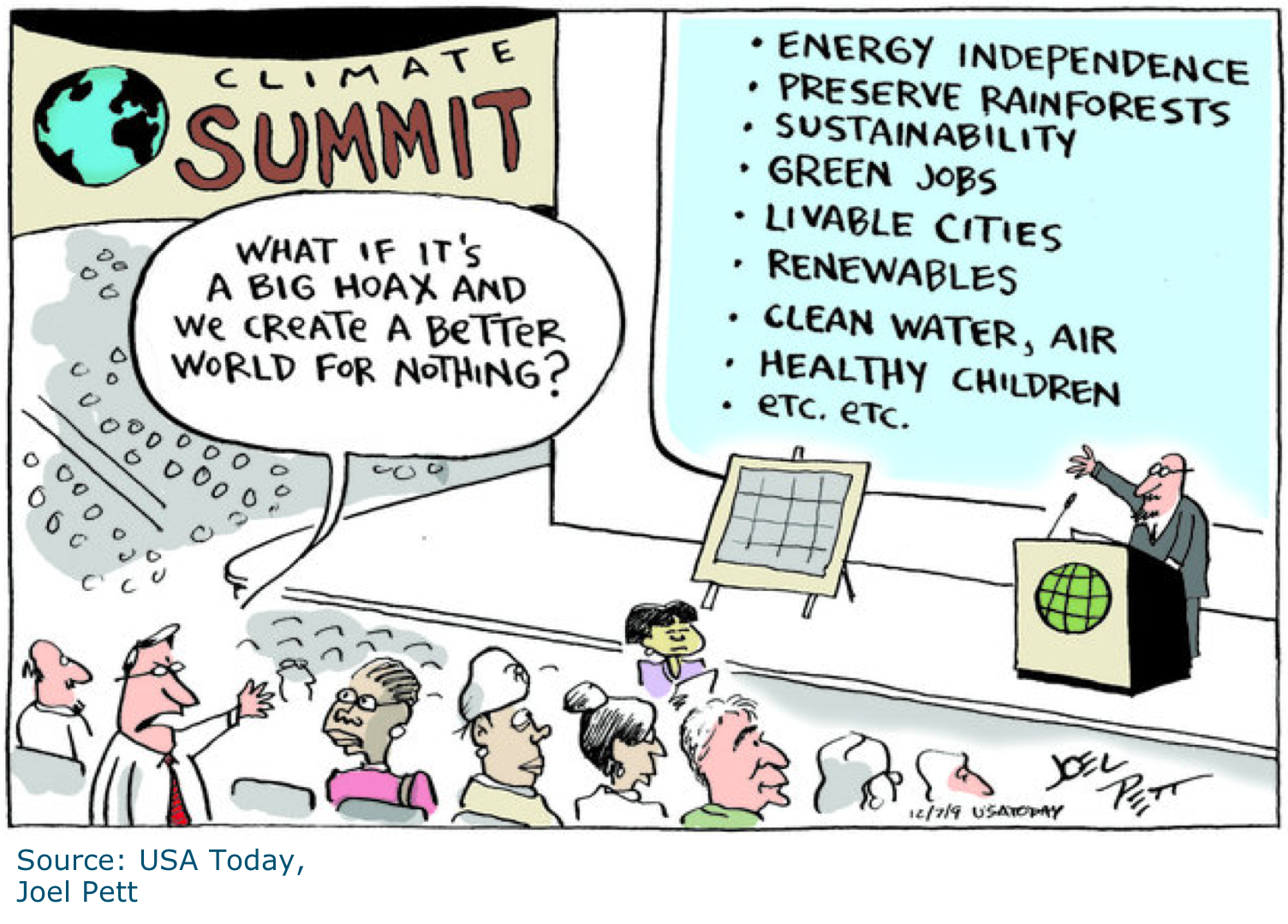
Hoax.png

There is still some time to submit your manuscript idea or abstract for this special issue Educational Philosophy and Theory (EPAT) that I am co-editing with my Swedish colleagues from the University of Gothenburg – Helena Pedersen, Beniamin Knutsson, Dawn Sanders and Sally Windsor. The deadline for – just the abstract – is May first. Go to the Routledge website for the details and see the description below!

Special Issue

ESD in the ”Capitalocene”: Caught up in an impasse between Critique and Transformation

Has Education for Sustainable Development (ESD) reached an impasse? Offering an application of Baudrillard’s thoughts to educational research, Paul Moran and Alex Kendall wrote in 2009 that education researchers are engaged in an act of forgery; a manufacture of presuppositions about what education is. Moran and Kendall argue that our research approaches, produce nothing but illusions of education, not because our approaches and methodologies are somehow flawed, rather that these illusions are what education is. Education, they claim, does not exist beyond its simulation.

Perhaps more provocatively, this implies that all critique of educational practice, from the revolutionary critical theory of Marx and the Frankfurt School via Foucauldian power analyses, as well as more recent ”new materialist” and post-qualitative approaches and beyond –are also part of the simulation of education process. These movements constitute an “improvement agenda” of education, and over and over again, more interventions are produced and critiques are repeated to foster improvements, pursued as if they were possible (Moran & Kendall 2009, p. 329).

We would like to take this Baudrillardian analysis of education as a springboard for thinking around ESD and capitalism. ESD is paradoxically positioned right at the nexus of looming ecological crises (”the Anthropocene” [Crutzen & Stoermer 2000]; the ”Capitalocene” [Malm & Hornborg 2014]) while at the same time the ESD field has been severely criticised for its presumed normativity (Jickling 1994). Quite regardless of the validity of this critique, embedded in the core idea of ESD is, arguably, a grandiose ”improvement agenda” – not only of education, but of the planetary condition as such. There is an asssumption that if we can find the appropriate way of ”doing” ESD, a sustainable world is within reach.

However, if there is nothing that may be called education “that exists independently of the methodologies, comments, curricula designs, testing regimes, forms of discrimination”, as Moran and Kendall (2009, p. 333) put it, what place is there – if any – for ESD under current conditions of predatory capitalism, exploitation of natural “resources”, transgression of planetary boundaries, and the destructive fantasy of infinite growth? Does ESD generate nothing but reproduction, much like capitalism itself (e.g. Hellberg & Knutsson 2018)? Is ESD an affect-organizing “comfort-machine” in the classroom (Pedersen 2019), sustaining the present order of things? Perhaps Bruno Latour (2004) captures the point most aptly: ”Are we not like those mechanical toys that endlessly make the same gesture when everything else has changed around them?” (p. 225) Latour suggests, that the critic “is not the one who lifts the rugs from under the feet of the naïve believers, but the one who offers the participants arenas in which to gather” (p. 246). Such arenas, Giroux observes, need “an understanding of how the political becomes pedagogical, particularly in terms of how private issues are connected to larger social conditions and collective force” (Giroux 2004, p.62).

Stratford (2017) has recently called for education researchers to identify and respond to the challenging philosophical issues evoked by the current ecological crises. Our initiative is a response to Stratfords’s call; however, our starting point differs from how educational philosophy can “improve education in the Anthropocene” (p. 3) and is rather concerned with the “impossibility” of this claim.

We suggest that the idea of ESD as producing illusions of education rather than a sustainable world, does not necessarily lead to an impasse, but can, in Moran and Kendall’s (2009) words, be a very useful place to begin. We are looking for theory-, philosophy-, and empirically-driven papers that address the  ”impossible” position of ESD in ”the Capitalocene” at an urgent juncture in history.

Contributions may address, for instance, the following areas of inquiry;

  • Has ESD reached an impasse, and if so; how can it be understood?
  • Are there ”functions” of ESD beyond the improvement agenda, and beyond the cycle of Critique and Transformation?
  • Is ESD a form of simulation and, if so, what purposes might such simulation serve?
  • How can ESD effectively interfere with capitalism, its forces and threats to life-supporting Earth systems?
  • In what arenas of intervention and action can ESD assemble its participants?
  • How can we reimagine education in extinction and post-extinction narratives?

Submission Guidelines

Please send your abstract of 250-500 words, along with references and a brief bio, to both Helena Pedersen and Beniamin Knutsson, University of Gothenburg.

Final article manuscripts will be approx. 6000 words.

  • Abstract due: May 1, 2019
  • Notification of acceptance: May 20, 2019
  • Manuscript submission deadline: November 1, 2019

Guest Editors:

  • Helena Pedersen, University of Gothenburg
  • Beniamin Knutsson, University of Gothenburg
  • Dawn Sanders, University of Gothenburg
  • Sally Windsor, University of Gothenburg
  • Arjen Wals, University of Wageningen

Link to the publisher’s website is here!

EPAT

“We no longer wish to participate in the ranking of people” Ghent University wants to become a place where talent feels valued and nurtured

ghent

“A university is above all a place where everything can be questioned.”

My last two blog posts have been raising some critical questions about the viability and legitimacy of the scientific ‘enterprise’ in neo-liberal times. The Publish AND Perish blog post led to a lot of responses from colleagues within academic but also from the publishing ‘industry,’ including from the CEO of MDPI, Paul Vazquez. Coincidentally, a few weeks later, Ghent University in Belgium released a statement in which the university declared to go  – what I would call – ‘off-the-grid’ of commodification, marketization and economic globalization by turning towards, autonomy, (local) relevance, responsibility towards people and, hopefully planet as well, by creating spaces for transdisciplinarity, boundary-crossing and collaborative action (perhaps I am filtering the statement using my own lens – apologies if I do so). Below some excerpts form the statement which can be found here as well: Ghent University’s New Pathway

Here is the message from Ghent’s Vice Chancellor Rik van de Walle

‘We are transforming our university into a place where talent once again feels valued and nurtured’

(17-12-2018)

Our university should once again belong to the academics, rather than the bureaucracy, writes the rector of Ghent University, Rik Van de Walle.

Ghent University is deliberately choosing to step out of the rat race between individuals, departments and universities. We no longer wish to participate in the ranking of people.

It is a common complaint among academic staff that the mountain of paperwork, the cumbersome procedures and the administrative burden have grown to proportions that are barely controllable. Furthermore, the academic staff is increasingly put under pressure to count publications, citations and doctorates, on the basis of which funds are being allocated. The intense competition for funding often prevails over any possible collaboration across the boundaries of research groups, faculties and – why not – universities. With a new evaluation policy, Ghent University wants to address these concerns and at the same time breathe new life into its career guidance policy. Thus, the university can again become a place where talent feels valued and nurtured. We are transforming our university into a place where talent once again feels valued and nurtured.
With the new career and evaluation model for professorial staff, Ghent University is opening new horizons for Flanders. The main idea is that the academy will once again belong to the academics rather than the bureaucracy. No more procedures and processes with always the same templates, metrics and criteria which lump everyone together.
We opt for a radically new model: those who perform well will be promoted, with a minimum of accountability and administrative effort and a maximum of freedom and responsibility. The quality of the individual human capital is given priority: talent must be nurtured and feel valued.
This marks the end of the personalized objectives, the annual job descriptions and the high number of evaluation documents and activity reports. Instead, the new approach is based on collaboration, collegiality and teamwork. All staff members will make commitments about how they can contribute to the objectives of the department, the education programmes, the faculty and the university.
The evaluations will be greatly simplified and from now on only take place every five years instead of every two or four years. This should create an ‘evaluation break’. 


We opt for a radically new model: those who perform well will be promoted, with a minimum of accountability and administrative effort and a maximum of freedom and responsibility. At the same time, we want to pay more attention to well-being at work: the evaluations of the supervisors will explicitly take into account the way in which they manage and coach their staff. The model must provide a response to the complaint of many young professors that quantitative parameters are predominant in the evaluation process. The well-known and overwhelming ‘publication pressure’ is the most prominent exponent of this. Ghent University is deliberately choosing to step out of the rat race between individuals, departments and universities. We no longer wish to participate in the ranking of people.

Through this model, we are expressly taking up our responsibility. In the political debate on the funding of universities and research applications, a constant argument is that we want to move away from purely competitive thinking that leaves too little room for disruptive ideas. The reply of the policy makers is of course that we must first do this within the university itself. This is a clear step in that direction, and it also shows our efforts to put our own house in order.
With this cultural shift, Ghent University is taking the lead in Flanders, and we are proud of it. It is an initiative that is clearly in accordance with our motto: ‘Dare to Think’. Even more so, we dare to do it as well.
A university is above all a place where everything can be questioned.
Where opinions, procedures and habits are challenged. Where there is no place for rigidity.


I am absolutely convinced that in a few years’ time we will see that this new approach has benefited the overall quality of our university and its people.

Rik Van de Walle, rector.

“Sustainability” in higher education: from doublethink and newspeak to critical thinking and meaningful learning

Orwel

In times of systemic global dysfunction, post-truth, alternative facts, cultivated doubt and the erosion of meaning, I found it useful to turn back, once again, to George Orwell’s infamous “1984”.  Well over 10 years ago, in 2004, I co-authored a paper on the danger of ‘doublespeak’ and ‘Newspeak’ in relation to the integration of sustainability in higher education. Back then this was an emerging trend, nowadays, it sometimes signifies a transition in education but more often little more than rethoric and green gloss. For me this is a good reason to re-introduce this paper here with Orwell’s cautionary tale but also with some ideas about how to move forward responsibly. Below an excerpt from the paper which you can find here in its totality:  Jickling and Wals Orwell’s Cautionary Tale

Wals, A.E.J. & Jickling, B. (2002). “Sustainability” in Higher Education from doublethink and newspeak to critical thinking and meaningful learning. Higher Education Policy, vol. 15, 121-131.  SustinHEOrwellsCautionaryTale

“Sustainability talk can, when used by advocates with radically different ideas about what should be sustained, mask central issues under the false pretense of a shared understanding, set of values and common vision of the future.

However, critical thought depends on transcendent elements in ordinary language, the words and ideas that reveal assumptions and worldviews, and the tools to mediate
differences between contesting value systems. And worse still, sustainability talk can
lead us in the direction of Orwell’s (1989) famously satirical notion of “doublethink”
whereby ordinary citizens can increasingly hold in their minds contradictory meanings
for the same term and accept them both (Orwell, 1989, p. 223).

The power of universal discourse in reducing meaning to a minimum is such that, as in “1984”, antagonistic concepts can be conjoined in a single phrase (“war is peace”, “peace is war”) or concept (i.e. “sustainable growth”) (Jickling, 2001). Big Brother’s “Newspeak” was designated not to extend but to diminish the range of thought, and this purpose was
indirectly assisted by cutting down the choice of words to a minimum (Orwell, 1989,
p. 313).

In Newspeak concepts capable of opposing, contradicting or transcending
the status quo were liquidated. As a result of this devaluation of language the people
in “1984” found themselves in a state of linguistic dysfunction which was exactly
what Big Brother wanted (Jickling, 2001).

Seen this way sustainability tends to blur the very distinctions required to evaluate an issue thoughtfully. When comparing the sustaining of ecological processes with the sustaining of consumerism we immediately see inconsistencies and incompatibilities of values, yet many people, conditioned to think that sustainability is inherently good, will promote both at the same time.”