UNESCO Masterclass Onderwijs in relatie tot de Sustainable Development Goals

esd4_0

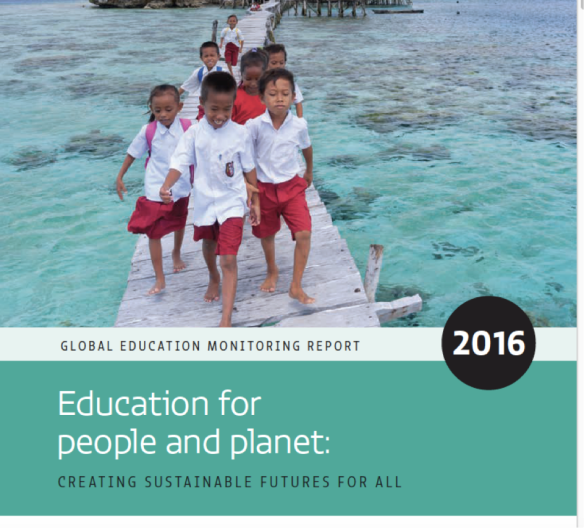
Wat voor type onderwijs, wat voor soort leerprocessen en leeromgevingen zijn nu bij uitstek geschikt om te breken met onduurzame waarden, routines, leefstijlen en systemen? Hoe kun je gedrag en mogelijkheden om duurzaam te handelen creëren die kunnen leiden tot een transitie naar een duurzamere wereld? Een wereld waarin alle Duurzame Ontwikkelingsdoelen (SDG’s) in samenhang een plek krijgen. Zie ook mijn eerder blog post hierover in het kader van het verschijnen van het Global Education Monitor Report 2016.

In de vijfde aflevering van de online masterclass-serie over UNESCO en de SDG’s zal ik ingaan op deze vragen.

De gratis online masterclass wordt live uitgezonden in samenwerking met de Open Universiteit en vindt plaats op 25 november om 13.00 uur. Nadien is deze ook via https://www.unesco.nl/node/3567 terug te kijken.

De live uitzending van de masterclass kunt je gratis volgen. Voor deelname aan de chatsessie met de expert, is het nodig je vooraf te registreren. Dat kan via de website van de Open Universiteit.

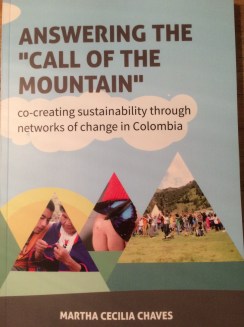
Answering the “Call of the Mountain”: Co-creating Sustainability through Networks of Change in Colombia

It is one thing to talk about wanting to live in harmonious relations with people, nature and Planet or Mother Earth, but quite another to put this into practice.

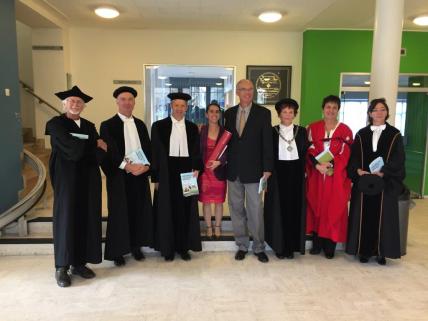
Today, Tuesday November 22nd, the day the FARC and the Colombian government are signing a new peace treaty, one of PhD students, Martha Chaves, successfully defended her dissertation. Martha’s thesis represents a systematic attempt to investigate individuals, communities, networks and gatherings of networks that seek to develop a more relational and caring way of living and of being in the world. In her native Colombia she studied what is it like to attempt to bring the principles of buen vivir such as; reconnecting to ancestral wisdom, questioning values of competition and individuality, and forming new relations to place and territory, into practice. Below you see a happy group of people who all played a role in the ceremony.

marthacover

Her research unveils the tensions between the dominant ontology or (ways of being) of modernity, and other marginalized more relational and cosmological ones such as those of Indigenous Andean communities. Her thesis also re-affirms the importance of plurality in creating the ‘dissonance’ that invites continuous learning that is sometimes at the edges of people’s comfort zones. More so, she shows how intercultural encounters between different ontological positions can lead to more a confronting and overcoming of our unsustainable habits. As such the thesis can help inform socio-ecological niches and movements across the globe that seek to provide a counter narrative to economic globalization, modernity and the neo-liberal agenda.

marthadefense1

After the defence – from left to right: Prof. Danny Wildemeersch, Prof. Rutgerd Boelens, myself, Dr. Martha Chaves, Dr. Gerard Verschoor, Deputy Rector Prof. Francine Govers, Prof. Heila Lotz-Sisitka and Prof. Noelle Aarts.

Furthermore, her results show or at least suggest that encounters between different ontologies can result in transformative and potentially ‘transgressive’ learning in terms of disrupting stubborn routines, norms and hegemonic powers which tend to accelerate unsustainablity. This finding connects well with here future work within the ISSC-funded project on T-learning (www.transgressivelearning.org) that I blogged about in the post below this one.

Afterwards there was a WASS seminar Symposium “Disruptive Networks of Change: Can ‘Transgressive’ learning alter the status quo?” where some critical follow-up questions were asked such as: What types of learning are needed to disrupt ingrained unsustainable behaviour? And how can learning-based change be upscaled? With invited speakers from the fields of environmental education and social learning, and building on the ISSC funded T-learning project which addresses issues of transformative/transgressive learning, we will set out to explore these questions, and possible paths towards more sustainable futures. Martha Chaves first presented here work briefly (presentation-for-defense-22-nov-2016), followed by responding presentations by Prof. Heila Lotz-Sisitka of Rhodes University in South Africa (issc-tkn-seminar-wageningenn) and by Prof. Danny Wildemeersch (paper-presentation-maynooth) of the University of Leuven in Belgium.


Time for ‘T-learning’ – transformative, transgressive learning in times of climate change

transgressive

Still feeling very privileged and a bit lucky to be part of a very rich consortium of partners from 4 different continents – as one of 3 selected proposal out of more than 500 (!) original expressions of interest – to work on this ICSS-funded project on T-learning. The project just launched its website: http://transgressivelearning.org/ with the case studies form the 10 different countries. Here is what we are talking about:

Radical changes in society are needed for responding to climate change, and for transforming to sustainability. It is increasingly clear that people everywhere will need to learn to transform to sustainability in ways that are socially just, peaceful and ecologically sustainable.

It is now already widely known that transformations to sustainability can occur if people learn to make changes at niche level. This can drive wider social changes and regime shift transformations, especially if such forms of learning become more collective.

Transformations to sustainability do not come about easily because of ‘lock-ins’ in the system. Transformative, transgressive types of learning are needed to help ‘unlock’ the lock-ins and to strengthen wider forms of collective social learning.

Yet, we know little about the type of transformative, transgressive learning (t-learning) that enables such change.

Here’s the initial ‘academic’ paper we wrote: transgressiveSocialLearning (only to have a look, not for sharing with others).

Full reference: Lotz-Sisitka H, Wals AEJ, Kronlid D, McGarry D. (2015) ‘Transformative, transgressive social learning: rethinking higher education pedagogy in times of systemic global dysfunction’, Current Opinion in Environmental Sustainability , 16, 73-80, doi:10.1016/j.cosust.2015.07.018

Go visit the website! http://transgressivelearning.org/ or here: Join T-learning form

Does the GEM 2016 report signify a change from the dominant neo-liberal agenda that sees education as an extension and a driver of the globalizing economy and the its push for infinite growth, innovation and expansion?

Does the GEM 2016 report signify a change from the dominant neo-liberal agenda that sees education as an extension and a driver of the globalizing economy and the its push for infinite growth, innovation and expansion?

In a recent interview for EurActive.com  Environmental Education Professor and a dear colleague and critical friend of mine already for many years, Lucy Sauvé from Quebec, sees in the GEM 2016 report more evidence that there is no substantial change in the ‘language’ of the latest UN Report on education and sustainable development. She cherry picks some statements from the report to illustrate this. I agree, there are some or even many cherries to pick with a neo-liberal flavour. But I can also pick cherries with a different flavour – a flavour that was completely or mostly absent in the UN ESD world.

gem2916

I have both worked with the UNESCO DESD and the Global Education Monitor Team which operates separate from the DESD – even though it is located on the same floor in the UNESCO headquarters as the ESD-team – indeed as a critical friend in the sense that I am sympathetic to any attempt that can re-orient education towards planet and people, but that I am also cautious of co-optation of such efforts by that same neoliberal agenda.

So when I read about People-Planet-Profit (as the GEM team used initially) then I must ask ‘who or what got the P for Profit in there?’ Why not just People and Planet? If you need to have something more explicitly related to economy in there, then let us at least use the P of Prosperity.

When I read that education for all is important for all, because it will lead to economic development which is prerequisite for ecological and environmental sustainability then this logic must be questioned: is education there to serve the economy first and foremost? Is all education by definition good or can it be highly problematic? Etc.

When the ‘world of business’ jumps on the sustainable development, sustainability and ‘green’ bandwagon, then we must look critically at what the underlying motives are and what their efforts really entail. A car company promoting its hydride car using ‘sustainable excitement’ as its slogan, while at the same time manipulating its emission tests, needs to be questioned. Critical thinking is essential and asking disruptive questions is a part of that.

When we read about sustainable development we must also ask ‘must we always develop?’ Or can sustainability represent an alternative TO development? When we read UN DESD documents or the GEM2016 report we must also ask are there any references to ethics? the non-human world? Indigenous ways of knowing and being in the world? Etc.

Of course it is always easier to critique than it is to transform. Being near or within UNESCO circles I feel can have more impact in changing the dominant discourse than staying outside of it by raising the above questions from within in dialogue. Sure the UN is an enormous bureaucracy that doesn’t change overnight, but change does happen.

Working with the GEM Team for about 5 months has given me some insights in how such a comprehensive report is written: framing of the key issues, commissioning papers to mostly external experts, carefully selecting, re-organising and editing texts, distilling key messages as GEM reports are message-oriented, creating a coherent grand document, several rounds of ‘fact-checking’ and copy-editing.

The initial framing and the choice of experts who are to write about the key issues has a huge influence on the tone and direction of the narrative. When I came in, half a year before the report had to be finalized, the framing had been done and could not be changed much really (the thematic section, that I was involved in, is framed around 6 Ps: Planet, Prosperity, People, Places, Participation and Partnerships, whereas the second part of the report, the monitoring part, is framed around SDG 4 (Education) and 17 (Partnerships).

Where I could still have some influence was the tone and direction of the narrative, tweaking it towards a more critical perspective on the role of education and the current economy – with regards to gender, equity, indigenousness and participation the people from the GEM team working on those sections already had a rather critical perspective.

I should point out that initially I was surprised that the framing and selecting of experts was done without any consultation of the UNESCO ESD section. I asked the GEM Team why there was no or little interaction between the two sections. The response was that the Team wanted to write a more evidence-based report not using a potentially too rosy ESD lens but using a sober education lens to get a more accurate picture of the role of education in creating more sustainable futures for all. I also checked with the ESD section if this annoyed them but they were not. In fact they welcomed such an ‘independent’ attempt and hope it would lead to new insights and bring in new and more people into the conversation.

Now back to the initial question of this post: Does the GEM 2016 report signify a change from the dominant neo-liberal agenda that sees education as an extension and a driver of the globalizing economy and the its push for infinite growth, innovation and expansion?

If you are looking for confirmation of replication and affirmation of this agenda you will find it – as Lucy did, however, if you look for a shift in the common discourse, you will also find it. Below I have done some cherry-picking of my own by selecting some key messages that I think represent a counter narrative and a potential shift away from business as usual. Here are my cherries from the GEM2016 report, and believe me, some of them are quite radical and signify a departure form standard UN rhetoric:

  • Current models of economic growth cause environmental destruction
  • For education to be transformative in support of the new sustainable development agenda, ‘education as usual’ will not suffice.
  • Education cannot fight inequality on its own. Labour markets and governments must not excessively penalize lower income individuals. Cross sectoral cooperation can reduce barriers to gender equality.
  • A whole-school approach is needed to build green skills and awareness. Campaigns, companies, as well as community and religious leaders must advocate for sustainability practices. Non-formal education and research and development should also help solve global environmental challenges.
  • Expand education on global citizenship, peace, inclusion and resilience to conflict. Emphasize participatory teaching and learning especially in civic education. Invest in qualified teachers for refugees and displaced people, and teach children in their mother language. Incorporate education into the peacebuilding agenda.
  • Distribute public resources equitably in urban areas, involving the community in education planning.
  • Mobilize domestic resources, stop corporate tax evasion and eliminate fossil fuel subsidies to generate government revenue for fundamental needs such as education and health.
  • Include education in all discussions on urban development. Improve and fund urban planning programmes and curricula to include cross-sector engagement and develop locally-relevant solutions.
  • Promote the value of indigenous livelihoods, traditional knowledge and community-managed or -owned land through actions such as land conservation and locally relevant research.
  • Engage community elders in curricular development and school governance, produce appropriate learning materials and prepare teachers to teach in mother languages.
  • Incentivize universities to produce graduates and researchers who address large-scale systemic challenges through creative thinking and problem-solving.
  • Promote cooperation across all sectors to reduce policy-related obstacles to full economic participation by women or minority groups, as well as discrimination and prejudice that also act as barriers.
  • Support multistakeholder governance for the sustainable management of natural resources and of public and semi-public rural, urban and peri-urban spaces.

But there’s more – the GEM2016 has a somewhat different take on Sustainable Development than previous UN reports recognizing that there are different perspectives, including ones that critique the notion of continuous development (the quote below comes form page 4 of the report):

‘The different perspectives of sustainable development include viewing it as a model to improve current systems (endorsed by those focusing on viable economic growth), a call for major reforms (supported by those who advocate for a green economy and technological innovation) and an imperative for a larger transformation in power structures and embedded values of society (supported by transition movements). Some ecologists, such as deep ecologists, believe present-day human development focuses too much on people and ignores the plant, animal and spiritual parts of this world (Leonard and Barry, 2009). They believe humans must learn to be less self-interested and place the needs of other species alongside their own. Transformation advocates say societies should go back to ways of living that are locally sustainable – consuming and wasting less, limiting needs to locally available resources, treating nature with respect, and abandoning polluting technology that has become an integral part of modern society. Culture advocates believe sustainable living can happen only if communities truly embrace it as part of daily culture (Hawkes, 2001) so that it affects decisions about what to eat, how to commute to work and how to spend leisure time.

The South American buen vivir movement rejects development as materialistic and selfish, implying that living sustainably means finding alternatives to development (Gudynas, 2011). The buen vivir belief system comes directly from traditional values of indigenous people, and posits that collective needs are more important than those of the individual. In Ecuador, this concept is called sumak kawsay, the Quechua term for fullness of life in a community. It involves learning to live within boundaries, finding ways to reduce use or to do more with less, and exploring non-material values. Ecuador and the Plurinational State of Bolivia have incorporated buen vivir into their constitutions.

Most definitions of sustainable development challenge the status quo, believing human development lacks meaning without a healthy planet. This view requires people, communities and nations to reconsider basic values of daily living and change the way they think. Understanding one’s own values, the values of one’s community and society, and those of others around the world is a central part of educating for a sustainable future. This means education systems need to continuously evolve and change in order to identify what practices work best within a given context and how they need to change over time. Indeed, for many of its advocates in education, sustainable development is best understood as a journey, rather than a destination.’

So in short – yes it is easy to critique this report as an extension of hegemonic globalizing thinking and  as another attempt to hijack any efforts to change the dominant discourse, but I think that is too easy and not very generative. Rather I would look for the elements that represent a potential shift and a transition towards alternatives and help amplify them by highlighting and sharing them. Some of the texts above would have been unthinkable in mainstream UN-speak only 10 years ago. The glass is half full, not half empty this time.

Arjen Wals, September 14th, 2016

Online Masters Course on Education in the context of Sustainable Development at Gothenburg University – starting November 1st

New Course: Education for sustainable development – an introduction

There is only one Earth. With global challenges such as climate change, mass extinction of species, rising inequity and a growing world population, the prospects for a quality life for all, forever seem rather bleak. Central in this new course is the question: What is the role and responsibility of education in not only responding to sustainability problems but also in preventing them and in creating more sustainable futures? But also what might such education look like? The course will take advantage of some of the materials and lessons learnt from the recently finished Global Environmental Education Course Gothenburg University supported – along with other universities and the US EPA- which was lead by Cornell University in association with the NAAEE’s EECapacity Program.

sutainabilitypie

In this 15 credit Master’s course you will critically and actively explore central concepts and perspectives in the field of education for sustainable development. The course content will be related to the participants’ own backgrounds, specific interests and prior experiences. Master students with different study backgrounds (e.g. environmental sciences, social sciences, economics, arts and humanities) can enrol in this course as long as you have an interest in both sustainable development and education.

The course is offered by Gothenburg University online at half time during the second half of autumn 2016 (Start: November 1 – Finish: March 22, 2017). The main course language is English. There are four blocks: 1) Understanding Sustainable Development, 2) Understanding Education in relation to SD, 3) Understanding learning environments, processes and outcomes conducive to SD and 4) Education in relation to your own SD-challenge (personal project). Each block is divided up in course weeks, each with short introductory videos, background literature, discussion questions and online discussion. Periodically there will be assignments that will be used in providing feedback and assessing the quality of your contributions. The new Global Education Monitor Report on Education for People and Planet: Creating Sustainable Futures for All will be one of the texts used in the course.

For the pilot course we are admitting a maximum of 50 students. You will need to formally register for the course through Gothenburg University via this link to the GU course web-page.

More information about course content contact me at: Arjen.wals@gu.se

More information about course logistics and registration can be found via the link to the course’s webpage (hyperlink).

Note: eligible students from European Union can participate without paying tuition to Gothenburg University. Students from outside the European Union will have to pay a tuition fee. It is assumed that participants have a bachelor degree or equivalent and have a proficient mastery of the English language (evidence of this may need to be provided).

GEM2016 – Education for People and Planet: creating sustainable futures for all – now available (open access)

gem2916

On September 6th the new Global Education Monitor report was launched – and it comes highly recommended as a comprehensive report that can help re-orient education towards sustainability and helping education become more responsive, relevant and responsible in light of today’s global challenges. It was a pleasure for me to help the GEM2016 team in preparing this report – especially in the Introduction and the first two chapters. The full report can be downloaded at: http://gem-report-2016.unesco.org/en/home/ or by clicking gem2016educationforpeopleandplanet. The report – over 550 pages – will appear in multiple languages in due time and is also available in a summary form. It can be an useful text in higher education when read critically and properly discussed.

Below is a short introduction to the report from the GEM2016 website.

At the 70th Session of the United Nations General Assembly in September 2015, member states adopted a new global development agenda, Transforming our world: the 2030 Agenda for Sustainable Development. At its heart are 17 Sustainable Development Goals (SDGs), including SDG 4 on education. The SDGs establish development priorities to 2030 and succeed both the Millennium Development Goals and the Education for All (EFA) goals, whose deadlines expired in 2015.

Education will not deliver its full potential to catapult the world forward unless participation rates dramatically improve, learning becomes a lifelong pursuit and education systems fully embrace sustainable development

The Global Education Monitoring Report (GEM Report), which builds on the experience of the previous EFA Global Monitoring Report series, received a new mandate to assess the progress of education under the 2030 Agenda. The 2016 GEM Report, the first of the new 15-year series, explores the complex relationship between education and other facets of sustainable development, along with the monitoring implications for SDG 4. It shows that education will not deliver its full potential to catapult the world forward unless school participation rates dramatically improve, learning becomes a lifelong pursuit and education systems fully embrace sustainable development.

The thematic part of the report highlights evidence, practices and policies that demonstrate how education can serve as a catalyst for the overall sustainable development agenda. It presents compelling arguments for the types of education that are vital for achieving the goals of poverty reduction, hunger eradication, improved health, gender equality and empowerment, sustainable agriculture, resilient cities and more equal, inclusive and just societies.

The monitoring part tackles the many challenges concerning how to assess progress on SDG 4, including concrete recommendations for policy change. Each of the seven education targets and three means of implementation in SDG 4 are examined in turn. In addition, education finance and education systems are analysed, as is the extent to which education can be monitored in the other SDG goals. Building blocks and potential synergies for a more effective and efficient global education monitoring agenda over the next 15 years are identified at the national, regional and international levels.


Sustainability Citizenship in Cities: Theory and Practice – now available!

sustainability-citizenship-in-cities-theory-and-practice-by-ralph-horne-1317391071

Australian colleagues Ralphe Horne, John Fien, Beau Beza and Anitra Nelson edited a fascinating book on ‘sustainability citizenship’ to which I was priviledged to contribute a chapter together with Frans Lenglet. Urban sustainability citizenship situates citizens as social change agents with an ethical and self-interested stake in living sustainably with the rest of Earth. Such citizens not only engage in sustainable household practices but respect the importance of awareness raising, discussion and debates on sustainability policies for the common good and maintenance of Earth’s ecosystems.

The publisher’s website describes the book as follows:

Sustainability Citizenship in Cities seeks to explain how sustainability citizenship can manifest in urban built environments as both responsibilities and rights. Contributors elaborate on the concept of urban sustainability citizenship as a participatory work-in-progress with the aim of setting its practice firmly on the agenda. This collection will prompt practitioners and researchers to rethink contemporary mobilisations of urban citizens challenged by various environmental crises, such as climate change, in various socio-economic settings.

This book is a valuable resource for students, academics and professionals working in various disciplines and across a range of interdisciplinary fields, such as: urban environment and planning, citizenship as practice, environmental sociology, contemporary politics and governance, environmental philosophy, media and communications, and human geography.

The chapter Frans Lenglet and I wrote is titled: “Sustainability citizens: collaborative and disruptive social learning” and emphasizes the role of learning and cultivating diversity and generative conflict in co-determining what it means to be sustainable within the everyday realities people find themselves. It is argued that in order to brake with stubborn unstustainabel routines – that are heavily promoted and strenghtened in a market, growth and consumption-oriented society, citizens will also need to develop disruptive capacity and engage in transgressive learning (see my earlier post about transgressive learning and the work within the ICSS project on T-learning led by Prof. Heila Lotz-Sisitka from Rhodes Univerity in South Africa). If you want to have a look at our chapter you can find it here: SustainabilityCitizenshipWalsLenglet2016 (for personal use). The full reference is:

Wals, A.E.J. & F. Lenglet (2016). Sustainability citizens: collaborative and disruptive social learning. In: R. Horne, J. Fien, B.B. Beza & A. Nelson (Eds.) Sustainability Citizenship in Cities: Theory and Practice. London: Earthscan, p. 52-66.

If you want to get a hold of the entire book visit: https://www.routledge.com/Sustainability-Citizenship-in-Cities-Theory-and-practice/Horne-Fien-Beza-Nelson/p/book/9781138933637


The relevance of Jane Jacobs and Elinor Ostrom to urban socio-ecology

jane+in+news+slideshowJane Jacobs and Elinor Ostrom were both giants in their impact on how we think about communities, cities, and common resources such as space and nature. But we don’t often put them together to recognize the common threads in their ideas.
Jacobs is rightly famous for her books, including The Death and Life of Great American Cities, and for her belief that people, vibrant spaces and small-scale interactions make great cities—that cities are “living beings” and function like ecosystems.

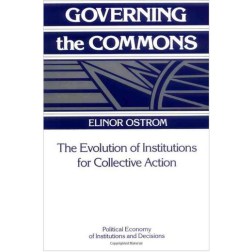
Ostrom won a Nobel Prize for her work in economic governance, especially as it relates to the Commons. She was an early developer of a social-ecological framework for the governance of natural resources and ecosystems.ostrombook

These streams of ideas clearly resonate together in how they bind people, economies, places and nature into a single ecosystem-driven framework of thought and planning, themes that deeply motivate The Nature of Cities. In this roundtable we ask sixteen people to talk about some key ideas that motivate their work, and how these ideas have roots in the ideas of either Jacobs or Ostrom, or both.

The natureofcities.com is a wonderful resource and platform for people interested in re-designing urban spaces to make them more liveable and sustainable. Every two months the site organises a Global Round Table that starts with input from scholars and practitioners from around the world. I was asked to provide an short input piece as well which can be found in the online discussion forum. In the past these roundtables  have been getting about 12,000+ readers, from 1000+ cities and 70+ countries and I encourage anyone to have go to visit and contribute at this roundtable by clicking on the link below.

Common threads: connections among the ideas of Jane Jacobs and Elinor Ostrom, and their relevance to urban socio-ecology

For more of their ideas, directly from them, good places to start are:

Jacobs, J. 1961. The Death and Life of Great American Cities. Random House, New York, USA.

Ostrom, E. 1990. Governing the commons: The evolution of institutions for collective action. Cambridge University Press, Cambridge, MA, USA

Moving from Citizen Science to Civic Science in Tackling Wicked Conservation Issues

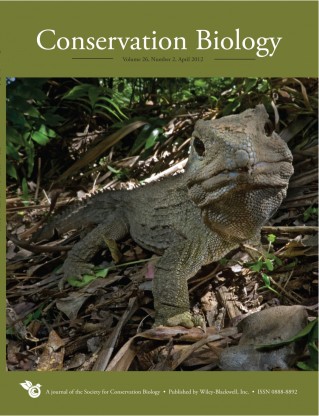
April_Front_Full

(note the cover page above is not the one of the current issue).

Together with good friends and colleagues, Justin Dillon and Bob Stevenson I was given the opportunity to edit a Special Section for one of the key journals in the field of Biology and Nature Conservation – ‘Conservation Biology’ – on Citizen Science.

We were invited to do so shortly after our paper on using sustainability and citizen science as a bridge between science education and environmental education that was published in Science (see: ScienceWalsetall2014) well over a year ago. In the paper we use a heuristic that Bob Jickling and myself developed a while ago to position different strands of citizen science – from more science-driven ones to more policy-driven ones to more transition-driven ones. The later strands we refer to as CIVIC Science, rather than Citizen Science. The Special Section included 11 interesting papers from authors and places from around the world. What is clear is that the Civic Science, transition-driven strands are rare but represent a very important niche that is likely to grow in the years to come. Here’s the link:

http://onlinelibrary.wiley.com/doi/10.1111/cobi.12689/abstract

Some of the papers are open-access for all to down-load – but some you may need to pay for or get through your library. Our introductory paper presently is not listed as open-access but we trust that the publisher Wiley will make this open-access shortly. UPDATE: WILEY HAS DONE SO NOW! YOU CAN DOWNLOAD THE PDF FOR FREE NOW FOR PERSONAL USE.

Feel free to share with interested colleagues – also those working in conservation.

Transformative Learning for Sustainability: Special Issue

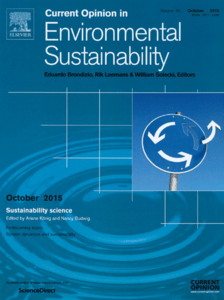
Ariane König and Nancy Budwig have edited a cutting edge Special Issue for the Journal Current Opinions of Environmental Sustainability on Transformative Learning for Sustainability and more specifically on ‘New requisites to universities in the 21st century’.

elseviercover_large

This Special Issue focuses on how universities engage in sustainability issues by staging transformative learning opportunities. The special issue features ten case papers from five continents illustrating the changing relationship of learning, research and practice in such programmes. The issue includes a paper on the Luxembourg Certificate in Sustainability and Social Innovation and an introductory overview by Dr König.to which I will contribute in May with a talk on “Sustainability transitions in society: changing science/citizen relations with citizen science for social learning“. The University of Luxembourg has made the entire special issue open access which means that anyone can download all the papers for free, including the one I co-authored with Heila Lotz-Sisitka, David Kronlid and Dylan McGary on Transgressive Learning which you can also download the paper here: transgressiveSocialLearning Transgressive Social Learning

Highlights from the paper are:

  • Pedagogies are required that are not constrained by current use of limited concepts, or by disciplinary decadence.
  • Concepts such as resilience are problematic if they hold unsustainable systems and patterns in place.
  • Disruptive capacity building and transgressive pedagogies are needed for a more sustainable world.
  • Transformative, transgressive forms of learning requires co-learning in multi-voiced and multi-actor formations.
  • Higher education should provide possibilities for engaged, lived experience of transformative praxis for students.

Global Environmental Education and Wicked Problems – free Online Course

GlobalEE

What a global response!

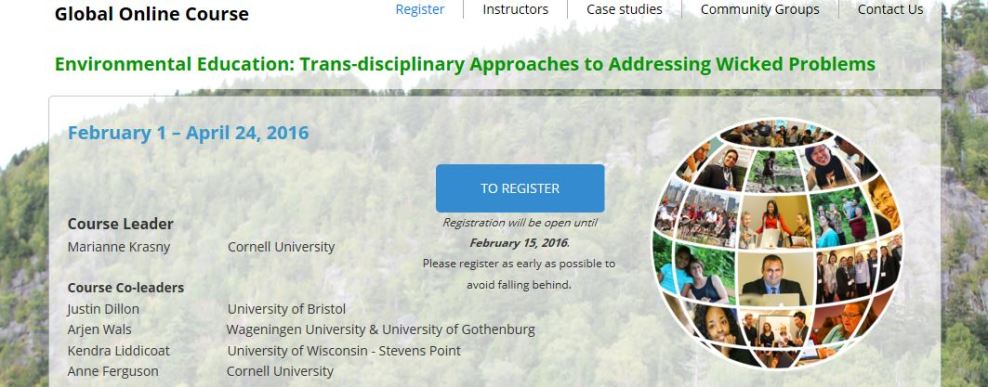
There is still one week to go to: http://www.globalee.net to register for this fascinating course that has already attracted more than 2500 students and professionals from over 130 countries. Just reading the short introductions of the participants on the Course’s Facebook site is educational and inspiring:

  https://www.facebook.com/groups/GlobalEE/

The registration closes on February 15th – have a look at the website to see how we are running the course – module one focuses on the meaning of wicked sustainability problems. Participants are sharing their own interpretations and examples of such problems.

Students who wish to take the course for credit can do so via the University of Wisconsin in Stevens Point – check out the website to find out how.

Course overview

The goal of this course is to create an environmental education “trading zone”—an online space where scholars and students gather to learn about multiple disciplines that shed light on how to improve environmental quality and change environmental behaviors. Each of the lectures, readings, discussions, and case studies will focus on the implications of a particular discipline for environmental education, as well as what environmental education has to contribute to related disciplines and sectors. Learn about how environmental education, environmental governance, environmental psychology, environmental sociology and other disciplines can work together to address ‘wicked problems,’ not readily addressed by working in disciplinary silos.

Some of the ideas I will be sharing can be found here in a nutshell: Sustainability & Education in Two Minutes

But if you have more time… then you can read a recent open-access publication based on an inaugural address I gave in December of 2015 titled: “Beyond Unreasonable Doubt: Education and learning for socio-ecological sustainability  in the anthropocene” which can now be downloaded here: 8412100972_RvB_Inauguratie Wals_Oratieboekje_v02Complete Text Beyond Unreasonable Doubt Complete Text Beyond Unreasonable Doubt

BeyondUnreasonableDoubtInvite


“Beyond unreasonable doubt – learning for socio-ecological sustainability…”

InauguralInvitationcomplete

As my ‘special professorship’ has been converted into a ‘personal professorship,’ (I know this is confusing to academics from around the world but I don’t want to use up valuable blog-space to explain it) I was invited to give a second inaugural address titled: Beyond unreasonable doubt –  education and learning for socio-ecological sustainability in the anthropocene in the Aula of the Wageningen University on December 17th 

The special day happened to be the warmest December 17th on record… quite fitting for the talk and the cover of the accompanying booklet (with people sitting on an terrace a cold Fall evening in Gothenburg under so-called ‘space heaters’).

A short introduction to the new Chair has been placed on youtube:

Transformative Learning for Socio-ecological Sustainability in less than 3 minutes

Here’s the back flap text of the booklet is now available:

‘For the first time in history one single species has succeeded in living in a way on planet Earth that disrupts major natural systems and forces in such a way that our survival is at stake. A transition is needed to break with resilient unsustainable systems and practices. Such a transition requires active civic engagement in sustainability. New forms of education and learning, including ‘disruptive capacity building’ and ‘transgressive’ pedagogies are urgently needed to foster such engagement.’


If you want to receive the booklet containing the accompanying text to the lecture then send an email to office.ecs@wur.nl with unreasonable doubt in the ‘subject’ and put your name and address in the body of the message and we will post you one.
 If you wish you can still attend, sort of,  the event by going to:
Here you can see the entire ceremony which starts at minute 9 with an introduction by our Vice-Chancellor (Rector Magnificus) Arthur Mol and with me starting the speech (battling the flu but hanging in there – I think/hope) at minute 15. Sometimes the animations I used do not fly-in on WURTV for some reason but fortunately they did in the auditorium). But it’s of good quality and you can advance the timer if you wish to.


Focus of the new Chair in transformative learning for socio-ecological sustainability

In short the new Chair in transformative learning for socio-ecological sustainability explores three important questions: 1) What sustain’abilities’ and responsibilities we need to develop in learners? 2) What learning spaces or ecologies of learning are most suitable in developing those abilities? and 3) How can the cultivation of these abilities, responsibilities and spaces be designed and supported? In other words, the main focus of the chair lies on understanding, designing and supporting learning processes that can help citizens understand complex socio-ecological issues through meaningful engagement and interactions with and within the social, physical and virtual realities of which people are part and the development of the capacities they need to contribute to their resolution.

The addition of ‘socio-ecological’ to sustainability is intentional, as much work done on sustainability nowadays tends to focus on economic sustainability, often without people and planet in mind. In a way sustainability has lost its transformative edge ‘sustainability’ during the last decade as the much of the private sector embraced it as a marketing opportunity. Adrian Parr (2009) even suggests that sustainability has been hijacked and neutered. While economics inevitably is part of the sustainability puzzle, the need to (re)turn to the ecological boundaries in which we have to learn to live together, as well as to the well-being and meaning of life issues for all, has prompted me to make the social-ecological more prominent in the description of this Chair. Therefore, I am particularly interested in understanding and supporting forms of learning that can lead to the engagement of seemingly unrelated actors and organizations in making new knowledge and in taking the actions necessary to address socio-ecological challenges.
Note 1: The booklet containing the inaugural address will be posted to you for free (as long as supplies last) when you email office.ecs@wur.nl with “Unreasonable doubt” in the subject area and your name and postal address in the body of the text).
Note 2: The inaugural address can be followed live via WURTV where it will also be archived: https://wurtv.wur.nl/P2G/cataloguepage.aspx


Envisioning Futures for Environmental and Sustainability Education – Call for Chapters!

The submission deadline for abstracts has now passed unfortunately!  – see the link to the full call in the blog post.

arjenwals's avatarTransformative learning

** NEW SUBMISSION DEADLINE: DECEMBER 1ST, 2015 **

Together with my good friend Peter Blaze Corcoran and with support of the Dutch government I have been involved in a Series of books on Education and Learning in for Sustainability published by Wageningen Academic Publishers in The Netherlands. This year we are starting to collect contributions from around the world for the fifth book in this Series ‘Envisioning Futures for Environmental and Sustainability Education’. Earlier books included: Social Learning towards a Sustainable World (2007) – available for free via http://www.wageningenacademic.nl), Young People, Education and Sustainable Development (2009), Learning for Sustainability in Times of Accelerating Change (2012) and Intergenerational Learning and Transformative Leadership for Sustainable Futures (2014).

sustainabilityfutures

In ‘Envisioning Futures for Environmental and Sustainability Education’ the editors (Peter Blaze Corcoran, Joe Weakland and myself – with support of Heila Lotz-Sisitka) invite educational practitioners and theorists to speculate on – and craft visions…

View original post 630 more words

Envisioning Futures for Environmental and Sustainability Education – Call for Chapters!

** NEW SUBMISSION DEADLINE: DECEMBER 1ST, 2015 **

Together with my good friend Peter Blaze Corcoran and with support of the Dutch government I have been involved in a Series of books on Education and Learning in for Sustainability published by Wageningen Academic Publishers in The Netherlands. This year we are starting to collect contributions from around the world for the fifth book in this Series ‘Envisioning Futures for Environmental and Sustainability Education’. Earlier books included: Social Learning towards a Sustainable World (2007) – available for free via http://www.wageningenacademic.nl), Young People, Education and Sustainable Development (2009), Learning for Sustainability in Times of Accelerating Change (2012) and Intergenerational Learning and Transformative Leadership for Sustainable Futures (2014).

sustainabilityfutures

In ‘Envisioning Futures for Environmental and Sustainability Education’ the editors (Peter Blaze Corcoran, Joe Weakland and myself – with support of Heila Lotz-Sisitka) invite educational practitioners and theorists to speculate on – and craft visions for – the future of environmental and sustainability education. We wish to explore what educational methods and practices might exist on the horizon, waiting for discovery and implementation. How might the collective project of imagining alternative futures help us rethink environmental and sustainability education institutionally, intellectually, and pedagogically? How might we use emerging modes of critical speculation as a means to map and (re)design the future of environmental and sustainability education today?

The future of environmental education is an urgent question in the larger context of the Anthropocene, the geological epoch in which human activities have become the dominant driver in the ongoing evolution of Earth’s biosphere. Our contemporary ecological moment is characterized by complexity, uncertainty, and “accelerating change” (Wals and Corcoran 2012). While the global impact of anthropogenic climate change is undeniable, the pace of temperature and sea-level rise depends on ecological feedback loops that are not fully understood – and which may be increasing the rate of biosphere destabilization (Hansen et al. 2015). From a social perspective, the Anthropocene is an age of what humanities scholar Rob Nixon (2011) terms “slow violence,” or ecological violence and environmental injustice that occurs on spatial and temporal scales that are hard to understand or represent, most often against the world’s poorest peoples. In light of such developments, educators need strategies for anticipatory engagement with changing socio-ecological realities – both in the present and future – in order to be effective within their various embodied contexts. This volume explores how environmental educators can engage in imaginative mapping concerning large scale, global processes, as well as create useful, situated knowledge for dissemination within their respective socio-ecological contexts.

The full Call can be found here: envisioning futures book CFP 11-14-15!

Specific topics of interest might include but are not limited to the following: the role of academic centers in education for sustainability; education and the United Nations Sustainable Development Goals; environmental education, climate change education; global citizenship; environmental education past, present, and future; learning about the future through critical analysis of the past; post-UNDESD 2015 era; forecasting, backcasting, future studies; critical speculation, science fiction prototyping; big data, data mining, data analytics, predictive algorithms; indigenous futurism, afrofuturism; the Earth Charter; epistemological uncertainty, “wicked problems,” feedback loops, accelerating change; religion, eschatology; virtual environments, gaming, digital spaces; transhumanism, posthumanism, animality; extinction, Anthropocene, geoengineering; social implications of demographic shifts, population increase and decline; social innovation for a green economy; the economy of aging; slow violence, intergenerational justice; transformative leaders.

Contributors and chapters

Contributions to the book will be solicited through open call and invitation. Please feel free to suggest authors you’d like us to invite. Because we seek to research the role that centers play in universities in transition to sustainability, we will invite partners in the International Intergenerational Network of Centers to contribute to this volume. We strive to include a diversity of genders, geographical locations, and generations.

“Book +”

We plan that this will be “more than a book.” We see this book as an initiative of a new network of university centers researching the role of charting speculative futures in education for sustainable development. We hope the book and network will be connected to additional resources on a companion website. These might include blogging the editorial process, social networking around the theme of (re)imagining futures, collaboration between centers, augmented reality/QR codes, and open source/downloadable chapters.

Abstract submission instructions

In order for your chapter to be considered, please submit an abstract to futuresbook2015@gmail.com no later than November 13 2015. Abstracts should be approximately 300 words. Please include 2-5 key references in your abstract; these will not count towards your word limit. Please identify the part of the book in which you’d like your chapter to be considered. Also include a short professional biography for all co-authors.

Education, Transformation and Sustainability – Sharing the stage with a president

Newspaper article covering Mugabe's speech the day after

When asked by good SWEDESD colleague Shepherd Urenje whether I would accept an invitation  to give a keynote at an Education Expo in Zimbabwe on “Growing Socio-economic Opportunity through Quality Education in the 21st Century” I accepted knowing that some excellent people I have worked with over the years are Zimbabweans who are working hard to improve education, learning and People and Planet (Kaleb, Tich Pesanayi, Shepherd, Soul Shava and Mutizwa Mukute). Once I accepted I got a little anxious when the communication about the event was rather limited and I could find little or no information on the Internet… But, two days for my scheduled departure I did receive my ticket to Harare. I was somewhat puzzled by the fact that my keynote was scheduled at 12:00 and my flight was scheduled to land at 12:20… Also, the organizers reserved the whole morning for ‘registration and opening’ without providing any further details. So I made the trip with somewhat tempered expectations. At the airport in Harare I was met by some of the organizers. My first question was – “Has my talk been re-scheduled?” The answer changed my expectation right away: “The President is still giving his opening address. He discarded his prepared written speech and is speaking from the heart”. Apparently the opening was done by President Robert Mugabe… My next question was: “How many participants do you have?” The answer added to my increasing anxiety: “Between 5 and 6 thousand educators, administrators, principals, district heads and some notables including our Ministers of Education, of Women Affairs as well as the Minister of Education from Namibia and the Deputy Minsters of Education from Botswana and South Africa…”

I don’t think I have underestimated and event the way I had done this time… What on Earth was I going to talk about… as the first key note (followed by a Director from Intel Southern Africa who would speak about ICT in Education).

I had 20 minutes to make the point that education is not there to only serve the economy, but also people and planet, that ICTs can be helpful but can be a distraction from the things that really matter as well (I had to be diplomatic knowing the Intel-keynote was after me), and that we need to dare to ground teaching and learning in real issues that cannot be captured by the traditional subjects but demand a more holistic and localised approach. I also was able to squeeze in that the persistent emphasis on testing kids, measuring performance and ranking schools, teachers and pupils, can kill deeper learning.

I quickly learnt in the discussion afterwards that ICT is more ‘ sexy’  than sustainability and that Education for Sustainability does not resonate among most of the audience members (I should point out that most participants had left by the time the keynotes started, as had Mugabe who had to go to parliament that afternoon to open the new session (what energy for a 91 year-old…). What does resonate is: relevance, quality education, teacher’s professional development, and using ICTs but also empowering learners to make change. Very little about climate change, food and nutrition security, agriculture, biodiversity, inequity, poverty reduction. In fact it was Robert Mugabe who came closest of all speakers… Here’s an excerpt from the newspaper article covering his speech:

Excerpt Robert Mugabe's Speech from

Excerpt Robert Mugabe’s Speech from “The National”

The other, even more encouraging sign that there is a transformation in education going on – in the margins – came from one of the many exhibits at the conference (90% of them related to ICTs run by commercial companies). It came from an exhibit by a local Primary school where young pupils ran projects on seed diversity and nutrition. The young man on the left in the picture below was extremely articulate and passionate about this project and had a bigger impact on me than all speakers together (which is not to discredit the speakers, many of them were very interesting). And so was the young man on the right who developed a self-refilling drinking water supply mechanism for animals using the same float ball mechanism as used in toilets to regulate water.

On the left: Ziyanda Moyo, Form 1 (first form in secondary school education, immediately after completing Grade 7); Pumula High School. On the right: Muziwandile Moyo, Grade 7, Senzangakhona Primary School

On the left:  On the left: Muziwandile Moyo, Grade 7, Senzangakhona Primary School. On the right: Zivanda Moyo, Form 1 (first grade in secondary education, Pumula High School.

All in all this was a remarkable experience that I will need to reflect on some more for sure.

Let me end this post with the latest publication by PhD student Joana Ameyaw from Ghana who works on ‘responsive curriculum development’ for creating a more sustainable forestry sector. She shows in her work that these new, grounded and interactive forms of curriculum development are not only possible, they are happening!

Her paper was published recently in Forestry and Economics and is titled: “Challenges to responsible forest governance in Ghana and its implications for professional education” Here you can find the AmeyawArtsWals(1) paper for personal use.