Imagining Sustainability: A Nomadic Inquiry of Applied Drama in Higher Education

At last a chapter appeared in the wonderful Handbook of Ecological Civilization published by Springer that I am proud of both for its content and for the pleasure of working with PhD candidate from Stockholm University, Julia Fries. Julia over the years has developed a wonderful collection of arts-based, drama-inspired research in a somewhat unusual setting: business education. Her research embodies her pedagogy which is fascinating. This chapter explores how drama can contribute to the necessary renewal of higher education to meet the sustainability challenges of our time. Results are presented from a drama-based research project in higher education, and in a youth project. In the chapter, so-called nomadic enquiry is combined with an arts-based approach to participant interviews. Through this innovative method, an image of a rhizome emerged. This rhizome of expanded learning highlights five necessities or critical nodes for expanded sustainability-oriented learning: emer-gence, expansion through role, embodiment, connection to self and others, and crucial conditions. The rhizomatic perspective not only shows the transformative potential of drama in higher education and adult learning but also identifies the levers and barriers teachers, students, and the academy as an institution are likely to encounter when trying to move towards a socio-ecologically more civilized world. The results point to how the integration of knowledge and wisdom that are striven for in the philosophy of ecological civilization can be put into pedagogical practice through the holistic learning of drama.

The Handbook of Ecological Civilization, unfortunately, is not an Open Access Handbook – but your library may have access. But I am happy to share the corrected proffs for your own use here!

Full citation: Fries, J., Wals, A. (2025). Imagining Sustainability: A Nomadic Inquiry of Applied Drama in Higher Education. In: Peters, M.A., Green, B.J., Misiaszek, G.W., Zhu, X. (eds) Handbook of Ecological Civilization. Springer International Handbooks of Education. Springer, Singapore. https://doi.org/10.1007/978-981-97-8101-0_73-1

New Open Access Paper: River Co-Learning Arenas: principles and practices for transdisciplinary knowledge co-creation and multi-scalar (inter)action

This collaborative multi-authored paper develops the methodological concept of river co-learning arenas (RCAs) and explores their potential to strengthen innovative grassroots river initiatives, enliven river commons, regenerate river ecologies, and foster greater socio-ecological justice. The integrity of river systems has been threatened in profound ways over the last century. Pollution, damming, canalisation, and water grabbing are some examples of pressures threatening the entwined lifeworlds of human and non-human communities that depend on riverine systems. Finding ways to reverse the trends of environmental degradation demands complex spatial–temporal, political, and institutional articulations across different levels of governance (from local to global) and among a plurality of actors who operate from diverse spheres of knowledge and systems of practice, and who have distinct capacities to affect decision-making. In this context, grassroots river initiatives worldwide use new multi-actor and multi-level dialogue arenas to develop proposals for river regeneration and promote social-ecological justice in opposition to dominant technocratic-hydraulic development strategies. This paper conceptualises these spaces of dialogue and action as RCAs and critically reflects on ways of organising and supporting RCAs while facilitating their cross-fertilisation in transdisciplinary practice. By integrating studies, debates, and theories from diverse disciplines, we generate multi-faceted insights and present cornerstones for the engagement with and/or enaction of RCAs. This encompasses five main themes central to RCAs: (1) River knowledge encounters and truth regimes, (2) transgressive co-learning, (3) confrontation and collaboration dynamics, (4) ongoing reflexivity, (5) transcultural knowledge assemblages and translocal bridging of rooted knowledge.

Citation:

De Souza, D. T., Hommes, L., Wals, A., Hoogesteger, J., Boelens, R., Duarte-Abadía, B., … Joy, K. J. (2024). River co-learning arenas: principles and practices for transdisciplinary knowledge co-creation and multi-scalar (inter)action. Local Environment, 1–23. https://doi.org/10.1080/13549839.2024.2428215

The full paper can be downloaded here!

Competences for socio-ecological stewardship: a qualitative assessment of the transformative potential of farmers’ learning processes in Eastern Uganda

Theoretically, this study expands Roczen’s environmental competence model by including social, ethical, and conservation and restoration action competences. This study is one of the first to identify socio-ecological stewardship competences and the learning processes that can foster these competences.

Full citation:

Misanya, D., Tassone, V. C., Kessler, A., Wals, A. E. J., & Kibwika, P. (2024). Competences for socio-ecological stewardship: a qualitative assessment of the transformative potential of farmers’ learning processes in Eastern Uganda. The Journal of Agricultural Education and Extension, 1–21. https://doi.org/10.1080/1389224X.2024.2403597

Exploring environmental stewardship among youth from a high-biodiverse region in Colombia – new study!

Source: Salva La Selva

Led by Daniel Couceiro, I was priviledged to join a group of reflective practitioners and colleague Valentina Tassone on the meaning of stewardship in a troubled highly biodiverse region Here you have the main premise of the paper but please go to the full paper for a more in-depth encounter with the work.

Nature degradation is rooted in the disruption of the human-land connection. Its restoration requires the regeneration of environmental stewardship as a way to live within environmental limits, especially for younger generations. In this study we used the implementation of a year-round, non-formal environmental education program during COVID-19 times to explore environmental stewardship in adolescents between 14- and 18-years old from the Sierra Nevada de Santa Marta, Colombia. Using a qualitative methodology, we mapped expressions of environmental stewardship among local youth. We found several barriers that can be challenged and levers that can be nurtured through inclusive, place-based and collaborative environmental education strategies to foster youth’s environmental stewardship in Colombian’s high-biodiverse regions.

Full citation and link to open access paper:

Daniel Couceiro, Ivona Radoslavova Hristova, Valentina Tassone, Arjen Wals & Camila Gómez (2023) Exploring environmental stewardship and youth engagement in biodiversity among youth from a high-biodiverse region in Colombia, The Journal of Environmental Education, DOI: 10.1080/00958964.2023.2238649

I couldn´t resist: A SWOT analysis of ChatGPT – implications for educational practice and research

Source: https://evaluationcomics.freshspectrum.com/comic/chatgpt-and-plagiarism/

After a very good impromptu explanation of how ChatGPT works and will affect the future of research and education by ELS colleague Auke Westerterp in a homemade videoclip (have a look here), a lively discussion started among colleagues about the pro´s and cons of ChatGPT.

I found myself on the side of being skeptical and, indeed, worried. But there were also colleagues who see AI and chatbots as inevitable and potentially beneficial. In fact, it turned out they were already using it in both research and education, and, upon asking around a bit, I found out that many students are using it to (re)write their papers and to save the time of reading (which apparently is seen as an inefficient activity).

I then tried it out myself and was perplexed by what ChatGPT can create in seconds. I out in key words we use in our RiverCommons project which focuses on things like ´rights to nature´, ´water justice,´ ´decolonization´ and sustainable development, social learning, etc. I put in these words and asked ChatGPT to write a 300-word paper, with references APA style. To convince the project leader – Prof Rutgerd Boelens of Wageningen University´s Water Resource Management Group, I also asked to refer to the work of Boelens in the. article. The result was impressive and could have easily fooled the reviewers of a bunch of journals. To top things off, I asked ChatGTP to include a 100 biography of Rutgerd Boelens.

In fact, a good colleague of mine, also active in sustainability in higher education, Debby Cotton based at the University of Plymouth, submitted a paper to a journal, together with colleagues, to a journal which had been written by ChatGTP. They told the editor beforehand. The editor was in for an experiment and the paper went through a proper review process and… was accepted and then published with a discussion of what happened and what might be possible implications of this. The paper – have a look here – got featured in major newspapers like the Guardian and the Washington Post.

In the meantime, my colleagues working on ICT-supported learning had already started working on a SWOT of the use of ChatGPT in education. When I showed my interest in the debate, they asked me to join. Given the magnitude of the phenomenon, I could not resist and agreed to join. The paper just got published in Innovations in Teaching International and can be downloaded here. Have a look and see what you think. One of my concerns, not highlighted in the paper, is that these technologies will only expand our screen time (videophilia) and further disconnect us from places and people and the relations between them. As such they serve Nasdaq-listed companies and their shareholders most, while further eroding life on this Earth (biophilia). Perhaps, now that the AI is becoming so powerful, it will lead to a new discussion about the purpose of education and people´s motivations to learn. That, in the end, might be the best outcome.

Full citation:

Farrokhnia, M., Seyyed Kazem Banihashem, Omid Noroozi & Arjen Wals (2023) A SWOT analysis of ChatGPT: Implications for educational practice and research, Innovations in Education and Teaching International, DOI: 10.1080/14703297.2023.2195846

High school biology students’ use of values in their moral argumentation and decision-making in times of polarization, confusion and unsustainability

Another paper based on PhD Tore van der Leij just appeared in the Journal of Moral Education. I took the liberty to add a few words to the title… ‘in times of polarization, confusion and unsustainability’ to emphasize the importance of this work.

In this qualitative case study Tore examined the impact of a specially-designed classroom intervention for a group of 15–16-year-old Dutch biology students’ use of values in contemplating five socioscientific issues in the human-nature context. The students worked in small groups to support various aspects of their morality. An ethical matrix was used as a heuristic to explore different arguments and moral values from different perspectives. The collected data consisted of written assignments, group conversations, and individual interviews. The results show that students’ use of values differed from one issue to another. The values they used in their moral decision-making indicated that the influence of the intervention activities, aimed at enhancing a relationship between moral agent (student) and moral object (topic), was limited. The study provides evidence that the intervention positively conduced to students’ cognition of the values that are personally relevant. Recommendations for further theorization, research and practice are discussed.

Here is the link: https://www.tandfonline.com/doi/full/10.1080/03057240.2023.2185595

Full citaton:Leij, Tote, van der, Martin Goedhart, Lucy Avraamidou & Arjen Wals (2023) High school biology students’ use of values in their moral argumentation and decision-making, Journal of Moral Education, DOI: 10.1080/03057240.2023.2185595

White Paper on Regenerative Higher Education – Rethinking education in times of dysfunction and collapse

Regrettably this white paper is only available in Dutch. Some ot the ideas artuclated in the paper can also be found in The Regenerative Education Podcast Series created by PhD Bas van den Berg see: The Regenerative Education Podcasts – Planting the seeds of change

Ik maak sinds een paar jaar deeluit van een Nederlandse  Community of Practice rondom Regenerative Higher Education bestaande uit PhDs en medewerkers van verschillende universiteiten en hoge scholen. Dit White Paper is het resultaat van de samenwerking in de Community of Practice en is samengesteld door Martine de Wit en gebaseerd op interviews met Bas van den Berg, Daan Buijs, Mieke Lopes Cardozo, Marlies van der Wee en Arjen Wals. Met input van Nina Bohm, Linda de Greef, Michaela Hordijk, Naomie Tieks, Koen Wessels, Rosanne van Wieringen, en Roosmarijn van Woerden. De illustraties en vormgeving zijn verzorgd door Mari Genova.

Het paper vertrekt vanuit de vraag:

Onderwijs dat het beste haalt uit onszelf en onze studenten, op weg naar herstel van de aarde. Hoe komen we daar?

Lees hier ons verhaal en laat ons weten wat resoneert, schuurt of wat het anderzins losmaakt!

A regenerative decolonization perspective on Education for Sustainable Development (ESD) from Latin America – new research

Central Figure in the article:  Regenerative education through decolonial praxis.

Led by former Wageningen University PhD Dr. Thomas Macintyre and current Wageningen University Post-Doc, Dr Daniele Tubino de Souza, I was priviledged to collaborate on this new paper that appeared in the latest issue of Compare: A Journal of Comparative and International Education. This paper provides a Latin American perspective on ESD, with a focus on transformative and participatory learning in community contexts. With a long history of critical pedagogies, Latin America provides a fertile ground for exploring alternative forms of education as a means to address deep-rooted challenges in western traditional strands of education. We start by providing an overview of pertinent educational currents present in Latin America, then ground these perspectives in two case studies carried out by the authors – one from Colombia, the other from Brazil – which explore grassroots initiatives in community settings that utilise different forms of education and learning. We then propose an integrative model to foster alternative educational approaches that might lead to decolonial and regenerative praxis, finishing with a discussion on how Latin American-rooted regenerative decolonisation perspective and praxis can inform global ESD discourses.

You can find the full paper here: https://www.tandfonline.com/doi/full/10.1080/03057925.2023.2171262

Full citation: Macintyre, T. Tubino de Souza, D. & Wals, A.E.J. (2023) A regenerative decolonization perspective on ESD from Latin America, Compare: A Journal of Comparative and International Education, DOI: 10.1080/03057925.2023.2171262

In search of healthy policy ecologies for education in relation to sustainability: Beyond evidence-based policy and post-truth politics

pfe-cover-social

A new paper just came out in ‘Policy Futures in Education’ that I co-authored with Robert Stratford critiquing evidence-based approaches to policy making in the context of (re)orienting education towards sustainability in times of post-truth and alternative facts. In the aper we pose that there is a rational assumption built into some research projects that policy contexts are influenced by the quality of the evidence. This is, at best, only somewhat true some of the time. Through policy ethnographies, two education researchers working in the context of sustainability discuss their experiences with evidence-based policy. Central to both accounts is how critical messages about such issues as race, wellbeing and sustainability can become diluted and even lost. In the existing ‘politics of unsustainability’, and at a time of ‘post-truth’ politics, these accounts also show the limits of evidence-based policy.

We argue that those working with ‘the evidence’ need to be open about how evidence-based approaches can end up supporting the ‘status quo’. Moreover, while approaches such as knowledge mobilisation emphasise the relational qualities of policy contexts, and the importance of simple compelling narratives for decision-makers, they, like many other practices, do not sufficiently theorise the power structures surrounding knowledge and the policy context. In addition to the careful use of evidence, we argue that there needs to be greater emphasis on building healthy policy ecologies – including far more emphasis on building critical and creative policy alternatives, especially in areas like sustainability and education.

The paper can be found/downloaded here: Healthy Policy Ecologies Paper


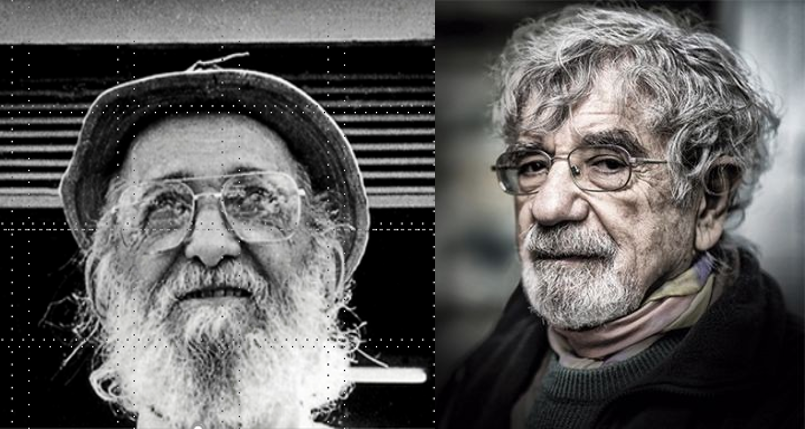
Learning-based transformations towards sustainability: a relational approach based on Humberto Maturana and Paulo Freire

FreireMaturanaPhoto

Recently a new paper I co-authored with lead author Daniele Tubino Souza and second co-author Pedro Jacobi appeared in Environmental Education Research – see: https://doi.org/10.1080/13504622.2019.1641183 or click:  Relational Pedagogy Freire & Maturana  

Here is the abstract. This paper is a part of Daniele’s PhD work at the University of Sao Paulo in Brazil which Pedro and I co-supervise. The paper is a first attempt to link the thinking of Paulo Freire and Humberto Maturana to each other and to emancipatory sustainability-oriented transformations in urban area’s.

Abstract

This article investigates the relevance of the work of the Latin-American thinkers Humberto Maturana and Paulo Freire to learning-based transformations towards sustainability. This analysis was inspired by a case study of a Brazilian urban community seeking to develop pathways towards sustainable living and was informed by a review of their key works. The paper aims to obtain a better conceptualization of learning-based transformations and provide insights into collective learning processes focused on advancing sustainable practices. We present notions of the transformative social learning approach that underpins the case study, using the concepts of Maturana and Freire as a lens. Our results indicate the importance of a relational approach in fostering collective learning processes. Finally, we derive three principles that can guide such processes: (1) facilitating transformative interactions between people and places, (2) enabling dialogic interaction within a climate of mutual acceptance, and (3) creating space for ontological pluralism.

One of the two key figures can be seen below – please go to the the publisher’s website to find the paper and the other figures!
FreireMaturana

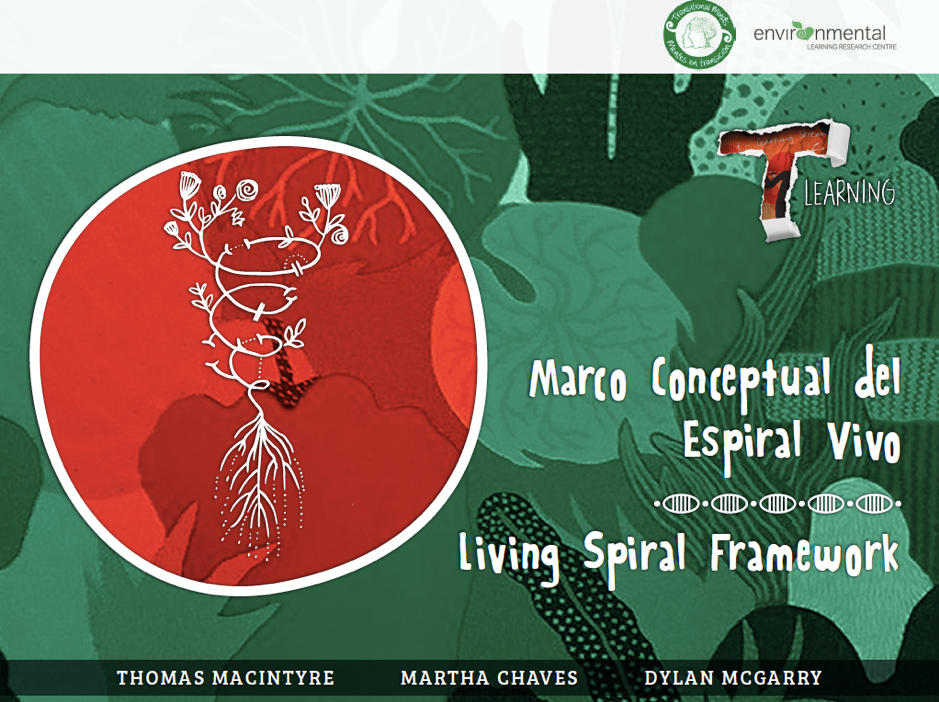
Living Spiral Framework – Seeds of Sustainable Transitions

LivingSpiral

Over the past three years I have been fortunate to be a part of an ISSC supported Transformative Knowledge Network (TKN) called the T-Learning Network (see: T-Learning Network Website). The network has yielded several highly cited academic papers but, fortunately, also more practical ideas, concepts and tools. Three young and talented people in the network -Thomas Macintyre, Martha Chaves and Dylan McGary – co-created a lovely guide in both Spanish and English introducing one of the networks most exciting ideas: the Living Spiral Framework. This guide is targeted at researchers and practitioners interested in sharing their research into transformative and transgressive learning in the field of sustainability, climate change, and social and environmental justice.

In the introduction the guide states:

“We can understand transformative learning as transformations in beliefs, values and practices in a way that helps us live a more socially and ecologically responsible way. Delving deeper into the intricacies of transformation, we arrive at the emerging field of ‘transgressive learning,” a critical and action-oriented form of learning which challenges normalised systems which have become oppressive and detrimental to life.

We believe questioning our unsustainable beliefs, worldviews and practices as well as offering alternatives, is needed for such deeper learning to occur and transgress. To achieve this we need voices and narratives from actors within and outside of academia: from social learning facilitators, to indigenous shamen; from the city-based sustainability practitioners to the rural farmer, to have different perspectives on understanding transformation towards sustainability.

This guide provides a step-by-step guide for discovering how and to what extent, personal and collective learning journeys result in transformations towards sustainability, including the challenges and tensions experienced along the way. Moreover, it will allow you to follow the process cautiously to find your own indicators of transformation, unexpected results and opportunities, as well as other experiences along the way.” (Macintyre, Chaves, McGary, 2018 – p. 8).

Below you see the core of the framework which can be found here in its entirety Living Spiral Framework. If you want to more you can go http://www.transgressivelearning.org or email one of the authors: Thomas Macintyre <thomas.macintyre@gmail.com>

SpiralYou can also read our latest academic paper related to this work in the Journal of Action Research in its recent special issue on action research and climate change here: T-labs and climate change narratives: Co-researcher qualities in transgressive action–research

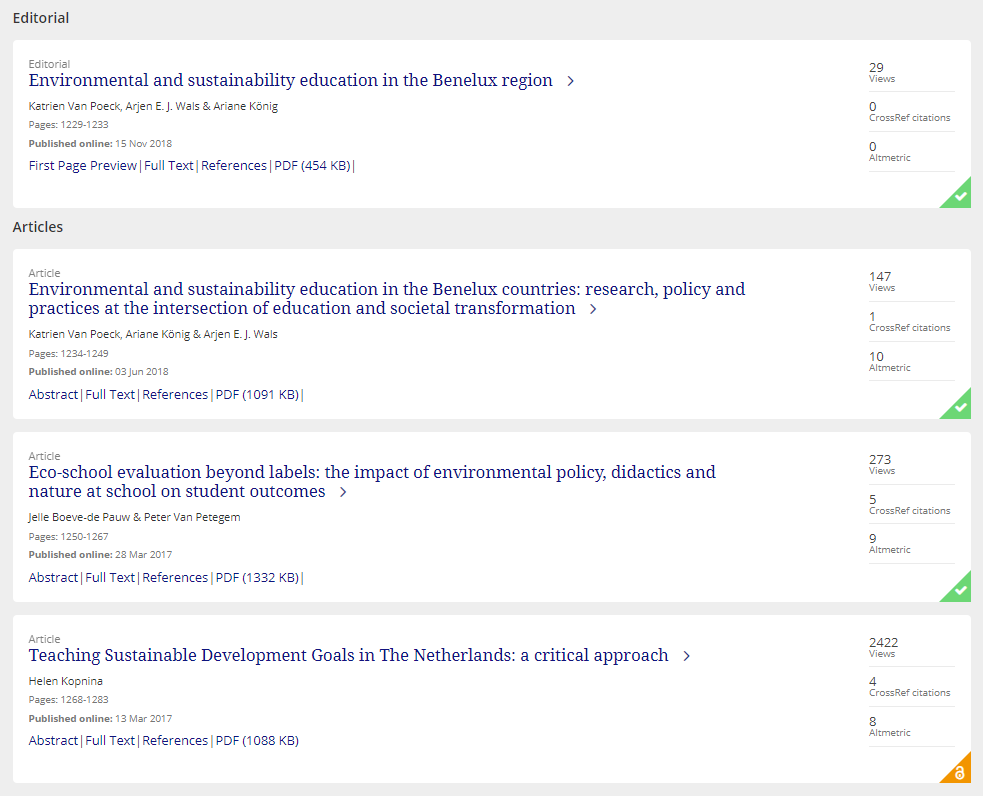
Environmental and sustainability education in the Benelux countries: research, policy and practices at the intersection of education and societal transformation

The journal Environmental Education Research recently published its third regional special issue covering trends and research in environmental and sustainability education in the BeNeLux countries. Together with Katrien van Poeck (UofGhent, Belgium) and Katrien van Poeck (UofLuxembourg, Luxembourg, I was a co-editor. Earlier regional special issues focussed on the Nordic countries (Scandinavia) and on Germany. Here you find a link to the introductory paper we wrote: BeNeLux Special Issue and here is a link to the Special Issue itself: Routledge Link to SI

Below some more information.

SIBeneLux

Table of Contents

Toc_1

ToC_2

ToC_4

Just out: Serious games as a catalyst for boundary crossing, collaboration and knowledge co-creation in a watershed governance context

GamingBoundaryCrossing

Thanks to the wonderful work mainly of Steven Jean and Wietske Medema I am glad to be part of the above paper that appeared in the latest issue of the Journal of Environmental Management (Jean et al., 2018, JEMA, 223, 1010-1022). You can have a look here: Serious Gaming, Boundary Crossing and Water Governance

ABSTRACT

Novel methods for enhancing collaboration and interactions are required to ensure that stakeholders and governments are able to develop a shared vision that supports sustainable watershed governance. Particular attention must be placed on integrating stakeholders who would otherwise have limited decision-making power. By crossing professional, ideological and jurisdictional boundaries, stakeholders’ perspectives are more likely to change than when staying within those boundaries. This process, known as boundary crossing, requires boundary objects; either artifacts, people, or institutions that play a bridging role between different boundary spaces. For this study, serious games powered by scientific models are identified as potentially effective boundary objects. A serious game simulation called Aqua Republica was used to organize game simulation events allowing stakeholders to connect in an in-person, informal and novel setting. This exploratory research aims to study the role and impact of serious games as boundary objects to enhancing collaboration and knowledge co-creation. The following research questions are addressed: (1) Do interactions increase over the course of a game simulation event? (2) Does the quality of interactions change over the course of a game simulation event? (3) Are the quantity and quality of interactions affected by pre-existing relationships? And if so, how? (4) How does the relationship between participants change over the course of a game simulation event? As part of this study, four game simulation events were organized that included students, professionals and diverse stakeholder groups working in watershed management contexts across Eastern Canada with 40 participants in total. Participants were divided into teams of 3–5 members and were surveyed and their interactions recorded. An interaction and social network analysis of the audiovisual recordings of each game simulation event indicates that interactions between participants increase in both quantity and quality as the game progresses. The analysis shows that serious game simulations provide an intervention platform not only to facilitate cross-boundary interactions, but also to strengthen relationships between diverse stakeholders, as expressed by an increase in mutual trust and empathy, as well as an improved understanding among the participants of the watershed system and the complex issues at stake.

Reflexively Stumbling towards Sustainability – understanding social learning in regional governance networks

JifkeProefschrift

This afternoon of June 8th, one of my PhD students, co-supervised with Dr. PJ Beers of DRIFT in Rotterdam and Prof Peter Feindt of the Humbolt University in Berlin, successfully here beautiful dissertation in the Aula of Wageningen University. You can download the dissertation and the 4 published papers that are a part of the work via the Wageningen University Library shortly. You can also watch the defense still via WUR-TV Getting to the defense and the thesis

Using a social learning configuration to increase Vietnamese smallholder farmers’ adaptive capacity to respond to climate change

LocEnvPaper

Link to the T&F site for the article

My former PhD-student Le Thi Hong Phuong now has a fourth paper from her dissertation which she only defended a few months ago, accepted in Local Environment a T&F journal on justice and sustainability (one of the oldest journals in this area!). Here is the abstract:
ABSTRACT

Social learning is crucial for local smallholder farmers in developing countries to improve their adaptive capacity and to adapt to the current and projected impacts of climate change. While it is widely acknowledged that social learning is a necessary condition for adaptation, few studies have systematically investigated under which conditions particular forms of social learning are most successful in improving adaptive capacity of the most vulnerable groups. This study aims to design, implement and evaluate a social learning configuration in a coastal community in Vietnam. We make use of various methods during four workshop-based interventions with local smallholder farmers: interviews with key farmers and commune leaders, farmer-to-farmer learning, participatory observations and focus group discussions. The methods for evaluation of social learning configuration include in-depth interviews, focus group discussions and structured survey interviews. Our findings show that the social learning configuration used in this study leads to an increased problem ownership, an enhanced knowledge-base with regard to climate change impacts and production adaptation options, improved ability to see connections and interdependencies and finally, strengthened relationships and social cohesion. The results suggest that increased social learning in the community leads to increase in adaptive capacity of smallholder farmers and improves both their economic and environmental sustainability. We discuss the key lessons for designing learning configurations that can successfully enhance adaptive capacity and smallholder farmers’ agency and responsiveness to the challenges posed by climate change impacts.